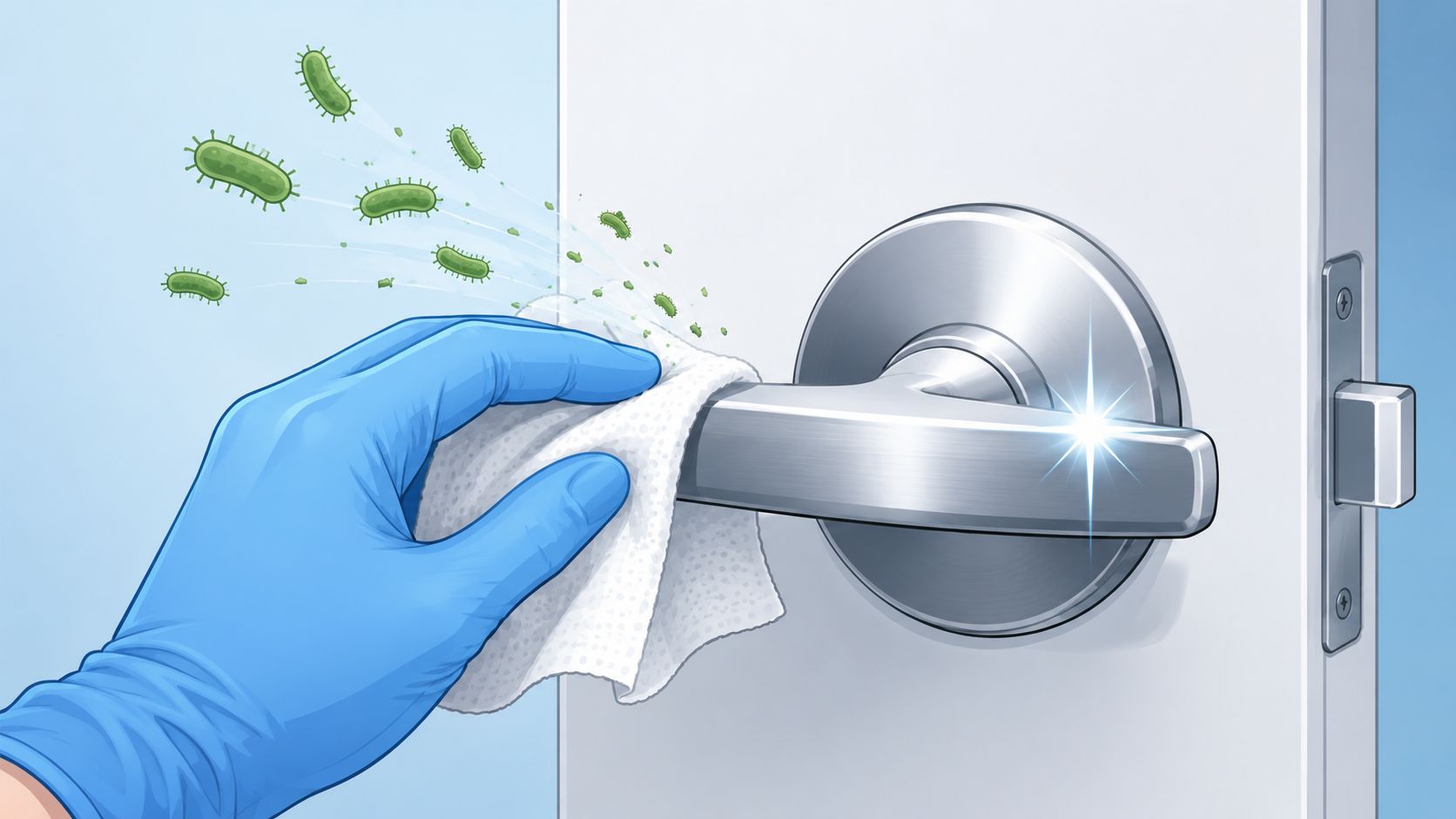
If you manage a school, gym, clinic, office, or apartment building, you probably already know the daily pattern. A sink handle gets used, a counter gets wiped, then the same spot is touched again minutes later. That cycle matters because high touch surface cleaning isn't just about appearance. It's about interrupting transfer from hands to surfaces and back again.
One bacterium that deserves attention in damp, busy environments is Pseudomonas aeruginosa. It's not the only organism facility teams need to control, but it's a good example of why moisture, technique, and contact time all matter.
What Is Pseudomonas Aeruginosa
A wet locker room floor, a communal shower corner, or a sink area that never seems to dry can support bacteria that tolerate moisture well. Pseudomonas aeruginosa is one of the better-known examples. It is a gram-negative bacillus, which means it belongs to a group of bacteria often associated with environmental survival and healthcare contamination concerns.

Why facility teams care about it
This bacterium is often described as opportunistic. In plain language, that means it tends to cause problems when a person is already vulnerable, such as someone with a weakened immune system, a wound, or medical equipment that bypasses normal body defenses.
If you want a simple refresher on bacterial structure before thinking about cleaning strategy, this bacteria cell model guide helps explain the basics without getting too technical.
Practical rule: The more often a surface stays damp and gets touched, the more attention it deserves in your cleaning plan.
For parents and facility managers, the key point is simple. You don't need to become a microbiologist. You do need to understand that some bacteria survive better in wet, shared environments than commonly expected.
Where This Resilient Bacterium Hides
Pseudomonas aeruginosa tends to show up where water and repeated contact meet. That makes some commercial spaces more challenging than they look at first glance.

Common hiding spots
- Healthcare areas: Bed rails, overbed tables, sink fixtures, carts, touch screens, and reusable equipment that gets handled often.
- Gyms and locker rooms: Shower controls, bench surfaces, refill stations, bottle-touch areas, and damp floor-adjacent fixtures.
- Food service back-of-house zones: Faucet handles, prep sink rims, drain surrounds, and wet cleaning tools.
- Building systems: Condensate-prone HVAC components and vents in poorly maintained spaces can add moisture concerns. For readers dealing with ventilation hygiene, Covenant Aire Solutions explains HVAC company's duct cleaning expertise in a way that helps connect airflow maintenance with cleaner facility conditions.
- Shared water-adjacent touchpoints: Restroom handles, utility room switches, mop sink areas, and housekeeping carts.
One hospital study found that gram-negative bacteria made up 45.6% of samples collected from high-touch areas before enhanced cleaning, and improved cleaning produced a statistically significant reduction in bacterial counts, according to this ICU high-touch surface study. Pseudomonas aeruginosa belongs to that gram-negative category, which is why damp, frequently handled surfaces deserve close monitoring.
A recurring problem is biofilm, the thin, stubborn layer that can help bacteria persist on wet surfaces and in crevices. This guide on how to remove biofilm is useful if your staff keeps cleaning the same sink, drain edge, or dispenser area without lasting results.
A surface can look clean and still need better technique, especially around seams, buttons, and textured materials.
Understanding the Health Risks
Pseudomonas aeruginosa doesn't carry the same meaning for every person in a building. A healthy child touching a dry desk isn't the same risk scenario as a hospital patient with a device, wound, or fragile immune system. That difference is where many readers get confused.
Why surfaces still matter
This bacterium is concerning because contaminated equipment and surfaces can become part of the transfer chain. Hands touch a wet handle, then a face, bandage, phone, or care device. In healthcare settings, that chain can have much more serious consequences.
An estimated 20–40% of healthcare-associated infections are linked to contaminated surfaces and the healthcare environment, and U.S. surveillance estimated 721,800 HAIs in 2011, as summarized in this review of HAIs and surface cleaning. That doesn't mean every contaminated surface causes illness. It does mean surface hygiene is a meaningful part of prevention.
Who is most vulnerable
People at higher risk include:
- Hospital patients: especially those with catheters, respiratory support, or open wounds
- Older adults: particularly in long-term care or rehab settings
- People with weakened immunity: including those recovering from illness or treatment
- Anyone exposed to wet, poorly maintained shared equipment: where transfer is easier and cleaning may be inconsistent
For schools and offices, the takeaway is balanced. There's no need for panic. There is a need for consistent hygiene where moisture and repeated contact overlap.
Effective Cleaning and Disinfection Protocols
When teams struggle with high touch surface cleaning, the failure usually isn't just product choice. It's skipping soil removal, wiping too quickly, or letting the surface dry before the disinfectant has finished working.

The sequence that works
The CDC says a disinfectant only works properly if the surface stays wet for the full contact time listed on the label, and it also advises pre-cleaning with soap or detergent first because visible soil can reduce disinfectant performance, according to CDC guidance on how to clean and disinfect a facility.
That has a direct practical meaning:
- Remove visible soil first. Dirt, residue, and body oils interfere with disinfection.
- Use an EPA-registered disinfectant wipe or liquid. Match it to the surface and follow label directions.
- Keep the surface visibly wet for the full contact time. A quick swipe isn't enough.
- Pay attention to edges and crevices. Buttons, rails, handles, and textured plastics often need more than one pass.
- Avoid immediate recontamination. Clean hands and clean gloves matter after the wipe, too.
Wipes are useful when used correctly
Disinfectant wipes are practical for shared touchpoints because they combine application and friction in one step. But they only help if staff use enough wipes, avoid drying out the surface too soon, and replace dirty wipes before spreading residue from one area to another.
If your team is choosing products, this guide to best disinfecting wipes can help compare wipe types and use cases. For spaces with bodily fluid concerns or contamination events beyond routine janitorial work, the Onsite Pro Restoration biohazard guide is a useful reference for when standard surface cleaning is no longer enough.
Disinfection is partly chemistry and partly mechanics. If the wipe doesn't reach the surface well, the label claim won't save the process.
BacteriaFAQ.com also publishes educational material on cleaning methods, wipe use, and surface contamination control for readers who want a broader reference point.
Who Needs to Be Most Concerned
Different facilities should focus on different touchpoints. Healthcare teams should watch shared equipment, bed-adjacent surfaces, and wet hand-contact areas. Gym operators should prioritize locker rooms, shower fixtures, and refill stations. Food service managers should keep sink areas, faucet handles, and damp tools on a strict schedule. Janitorial supervisors should train staff to clean first, then disinfect with full wet contact time.
Institutional guidance often recommends cleaning high-touch surfaces multiple times per day, such as at least 2–3 times daily, according to Oregon State University's high-touch cleaning checklist. In busy buildings, that's a practical baseline, not an upper limit.
The takeaway is simple. If a surface is touched often and stays damp, it needs more than a casual wipe.
For facilities that want a practical source for disinfectant wipes and routine surface-cleaning supplies, we recommend Wipes.com.
Leave a Reply