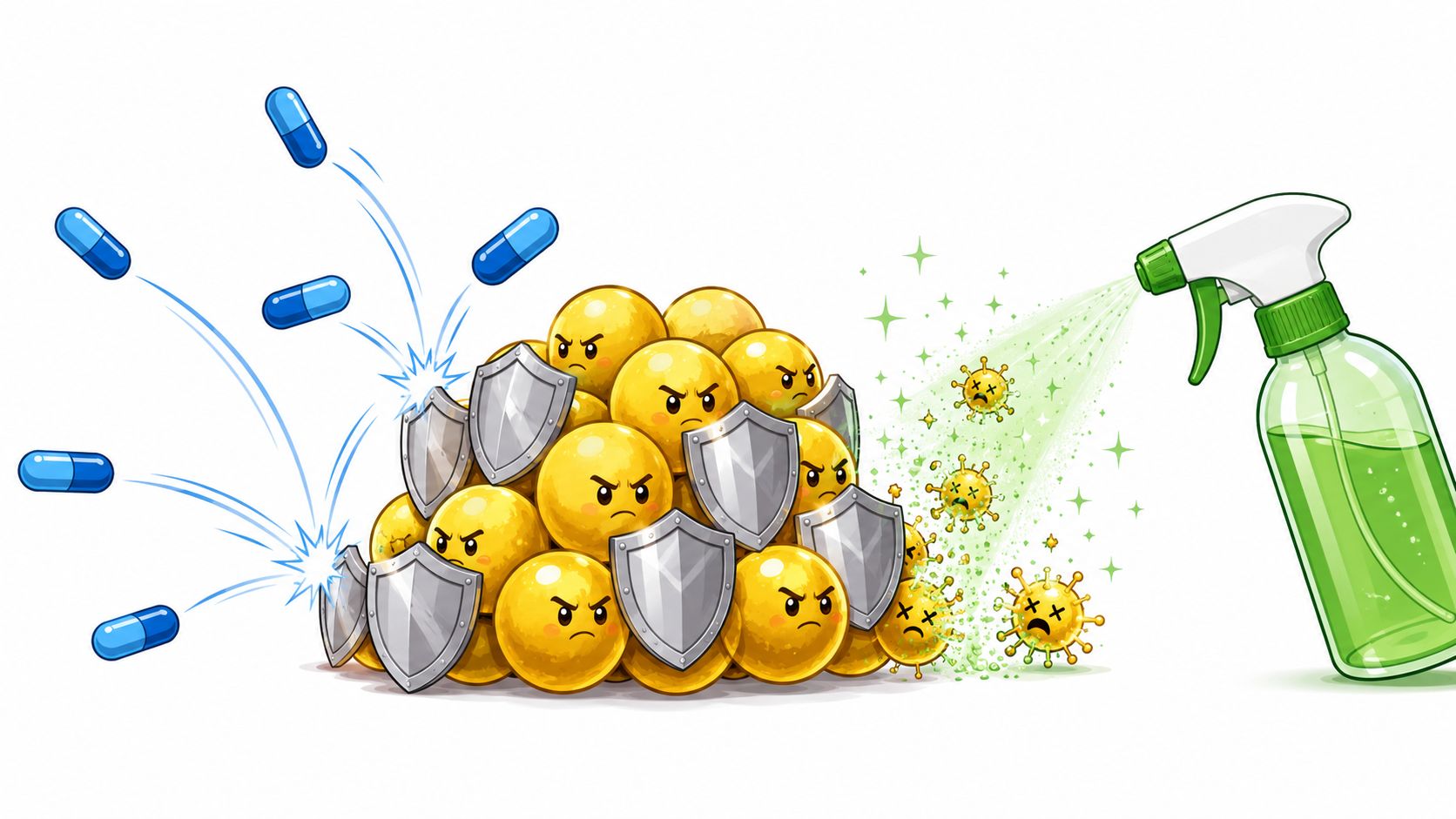
In 2023, 27.1% of Staphylococcus aureus bloodstream infections worldwide were resistant to methicillin, according to WHO surveillance data summarized in the global MRSA review. That figure reframes antibiotic resistant staph as more than a hospital concern. It's a practical infection-control issue for households, gyms, schools, clinics, locker rooms, and any facility where people share surfaces or have close physical contact.
The most familiar form is methicillin-resistant Staphylococcus aureus, or MRSA. It can live harmlessly on skin or in the nose, yet it can also enter a cut, surgical wound, bloodstream, lung, or implanted device. The right response isn't panic or indiscriminate antibiotic use. It's understanding the difference between carriage and infection, following laboratory-guided treatment, and using an EPA-registered disinfectant correctly.
What Antibiotic Resistant Staph Means
MRSA is not a separate species. It is a strain of Staphylococcus aureus that resists methicillin and related beta-lactam antibiotics, including oxacillin, penicillin, and amoxicillin. The CDC overview of MRSA explains that laboratory testing is needed to confirm MRSA as the cause of an infection.
S. aureus often lives on skin or in the nose without making someone ill. This state is called colonization, or carriage. A carrier may feel completely well. Infection starts when the bacteria enter tissue, multiply, and cause damage or inflammation, such as around a cut or wound.
Resistant describes how bacteria respond to a drug. It does not describe how severe the illness is. A small skin abscess can involve a resistant strain, while a drug-susceptible strain can cause serious disease. Resistance matters because familiar antibiotics may fail, leaving clinicians fewer dependable choices. Testing can help identify treatment that is more likely to work.
The relationship is easiest to follow as a family tree:
- Staphylococcus is the bacterial genus.
- Staphylococcus aureus is one species in that genus.
- Some S. aureus strains remain susceptible to methicillin-related drugs.
- MRSA refers to S. aureus strains resistant to those drugs.
Three terms that shouldn't be confused
| Term | Definition |
|---|---|
| Colonization | Bacteria are present on the body, often without symptoms or tissue damage. |
| Infection | Bacteria invade tissue and cause symptoms such as redness, swelling, drainage, pain, fever, pneumonia, or bloodstream illness. |
| Resistance | The bacteria can survive antibiotics that would normally inhibit or kill susceptible strains. |
Colonization can still allow bacteria to spread through skin contact or contaminated objects, but it does not automatically mean disease. An infected person may need medical evaluation even when the visible problem looks minor. Drainage, a culture, and susceptibility testing can help determine whether antibiotics are needed and which options are likely to work.
MRSA has been tracked globally since it was first described in the early 1960s. A meta-analysis of 119 studies involving 164,717 people across 29 countries found a pooled MRSA prevalence of 14.69%, representing 16,793 MRSA-positive cases in that dataset, as reported in the global MRSA analysis. Those figures do not mean every community faces the same risk. They show why the local setting, exposure, symptoms, and laboratory results all matter.
How Staphylococcus aureus Learns to Resist Antibiotics
Antibiotic resistance develops through inherited changes and gene sharing. Antibiotics create selection pressure. Susceptible bacteria die or stop growing, while bacteria carrying protective traits are more likely to survive and reproduce.
The key MRSA mechanism involves mecA, a resistance gene that enables production of an altered penicillin-binding protein called PBP2a. Beta-lactam antibiotics normally work by binding proteins involved in building the bacterial cell wall. PBP2a changes the lock, so the usual drug key no longer fits effectively.
The gene often travels on SCCmec, short for staphylococcal cassette chromosome mec. This mobile genetic element acts like a compact instruction package. When bacteria acquire it, they can gain the machinery needed to resist methicillin-related antibiotics. The BacteriaFAQ explanation of bacterial antibiotic resistance provides additional background on how selection and gene transfer shape resistant populations.

Resistance isn't the same as tolerance
Some S. aureus strains also produce beta-lactamase, an enzyme that breaks down certain beta-lactam antibiotics before those drugs can act. This mechanism differs from the altered target created by mecA. A bacterium can therefore resist treatment through more than one biological route.
A further complication is the biofilm. In a biofilm, bacteria gather inside a polysaccharide-rich matrix that helps them withstand immune defenses and antimicrobial exposure. Suboptimal antibiotic levels, unusual pH, temperature changes, and low tissue oxygen can encourage biofilm formation, according to review literature on MRSA biofilms.
Consider a catheter or prosthetic joint. Bacteria attached to the device can become surrounded by protective material that limits drug penetration and slows bacterial activity. Biofilm-associated MRSA may require antibiotic concentrations up to 1,000-fold higher than free-floating, or planktonic, cells for eradication, according to the cited review. That helps explain why a device-related infection can persist even when a standard course appears appropriate.
Practical rule: Never use leftover antibiotics to treat a suspected staph infection. The drug may target the wrong mechanism, and incomplete or inappropriate treatment can complicate future care.
Where MRSA Shows Up and Who Gets Sick
A wrestler develops a painful, red bump after a tournament. A tiny scrape may have provided the entry point. Shared mats, close skin contact, towels, and equipment can move bacteria between athletes, especially when wounds are poorly covered or an athlete continues participating while drainage is present.
This community-associated pattern often starts as a skin infection. Some abscesses need incision and drainage, while others require antibiotics chosen by a clinician. A dramatic injury is not necessary. Even a small break in the skin can let bacteria enter.
The hospital pathway
A patient develops redness and drainage around a surgical incision after an operation. In healthcare settings, invasive procedures, wounds, intravenous lines, and prolonged care can give bacteria access to tissue that normally protects the body.
Healthcare-associated MRSA can cause bloodstream infection, pneumonia, surgical site infection, sepsis, and death. The same organism may remain a localized wound problem in one person yet become invasive disease in another. The entry point, the depth of infection, and the patient's health help shape that outcome.
A hospital transmission chain can involve contaminated hands, wound drainage, dressings, or shared equipment. Infection-control staff therefore focus on hand hygiene, protective barriers, cleaning, and careful management of draining wounds.
The household pathway
A caregiver changes an elderly relative's dressing, touches a used towel, and prepares food without washing their hands. Shared surfaces are not automatically infectious. Transfer becomes more plausible when contaminated hands, drainage, linens, or frequently touched objects connect one person to another.
Risk is higher for people with diabetes, weakened immune systems, chronic kidney disease, open wounds, or recent antibiotic exposure. These factors do not guarantee infection, but they make prompt assessment more important when a wound worsens, produces pus, becomes painful, or is accompanied by fever.
Seek medical care for rapidly expanding redness, severe pain, fever, confusion, breathing difficulty, a wound near an implanted device, or an infection that is not improving. Do not squeeze or lance an abscess at home. Cover draining wounds with a clean dressing, wash hands after contact, and ask a clinician about testing, treatment, and precautions.
Which Antibiotics Are Quietly Losing Ground
MRSA resistance isn't one uniform switch. The most consistent problem is resistance to methicillin and related beta-lactams, but susceptibility to other classes can vary by strain, location, healthcare exposure, and time.
Recent retrospective and meta-analytic data report that methicillin and oxacillin resistance is near-universal in MRSA, while penicillin resistance remains extremely high. Resistance to clindamycin, erythromycin, fluoroquinolones, and tetracyclines can shift substantially over time, according to the recent MRSA analysis indexed by PubMed.
| Antibiotic | HA-MRSA susceptibility | CA-MRSA susceptibility | Notes |
|---|---|---|---|
| Clindamycin | Variable | Variable | Local patterns and inducible resistance can affect reliability. |
| Erythromycin | Often limited | Variable | Resistance can accompany resistance to other classes. |
| Fluoroquinolones | Variable to limited | Variable | Prior exposure and local strain patterns matter. |
| Tetracyclines | Variable | Variable | Some community strains remain treatable, but testing is important. |
| Trimethoprim-sulfamethoxazole | Variable | Variable | Use depends on the infection, patient, and susceptibility result. |
| Vancomycin and linezolid | Clinician-directed options | Clinician-directed options | These drugs require appropriate diagnosis and medical oversight. |
The table intentionally avoids universal percentages because susceptibility differs across surveillance systems. A clinician treating a serious infection may begin empiric therapy based on local guidance, then adjust it when culture and susceptibility results arrive. An oral drug that worked for a previous infection isn't automatically suitable for a new one.
The practical conclusion is easy to miss: MRSA treatment is becoming a formulary problem, not a methicillin problem. Older oral options can lose dependability in different ways, while severe infections may require carefully monitored alternatives. The overview of antimicrobial resistance explains why prescribing decisions must account for both the organism and the drug.
How MRSA Survives on Surfaces and How to Kill It
A surface can hold viable MRSA without automatically causing an infection. The practical question is whether contamination can reach broken skin, a wound, or a person's hands, then move to another contact point. That makes high-touch surfaces and shared equipment reasonable cleaning priorities, rather than treating every surface as equally risky. Findings from the surface-survival review support consistent environmental cleaning.

Contact time controls the result
Cleaning removes dirt, sweat, and organic material. Disinfection then uses a product to reduce or destroy microorganisms. A wipe cannot disinfect effectively if the surface dries before the label's required wet contact time ends. Wetness functions like a timer. If the label requires the surface to stay visibly wet, apply enough product to maintain that condition, and reapply when needed.
Use an EPA-registered hospital disinfectant. Follow its instructions for dilution, protective equipment, compatible materials, and contact time. CDC guidance notes that many EPA-registered hospital disinfectants list a 10-minute label contact time, while many scientific studies report efficacy with at least 1 minute, as described in the CDC disinfection recommendations.
Some products on the EPA list are labeled for MRSA on hard, nonporous surfaces with a 5-minute wet contact time in hospital, institutional, and residential settings, as shown in the EPA registered-products list. The label on the product being used controls the procedure.
A setting-specific protocol
Homes: Wear gloves when handling drainage. Remove visible soil first, then disinfect doorknobs, faucet handles, toilet surfaces, phones, and frequently handled bathroom items. Keep each treated area visibly wet for the labeled time.
Gyms: Remove sweat and soil from mats and equipment before disinfection. Treat benches, handles, lockers, shared supports, and mats according to the label. Offer coverings for open wounds, and keep personal towels separate from shared equipment.
Healthcare areas: Follow facility rules for contact precautions, dedicated equipment, room cleaning, and waste handling. CDC guidance calls for noncritical healthcare surfaces to receive an EPA-registered hospital disinfectant used according to its label.
Stone and other specialty materials require compatible products and techniques. Before disinfecting sealed stone, a facility manager can review this granite sealer maintenance routine. The BacteriaFAQ guide to killing bacteria provides broader explanations of surface cleaning and disinfection.
HA-MRSA, CA-MRSA, and LA-MRSA Compared
The labels HA-MRSA, CA-MRSA, and LA-MRSA describe epidemiological patterns. They help infection-control teams ask where transmission is occurring and which exposures need attention. They aren't perfect biological boxes, because strains and behaviors can move between settings.
| Lineage | Primary setting | Highest-risk groups | SCCmec type | Key prevention strategy |
|---|---|---|---|---|
| HA-MRSA | Hospitals and healthcare environments | Inpatients, people with wounds or devices, healthcare workers, and close contacts | Varies by lineage | Contact precautions, hand hygiene, environmental cleaning, and equipment control |
| CA-MRSA | Homes, schools, sports, and other community settings | Athletes, household contacts, people with skin breaks, and people in crowded environments | Varies by lineage | Wound coverage, no sharing of personal items, hand hygiene, and cleaning shared equipment |
| LA-MRSA | Livestock-associated environments and connected communities | Farmworkers, animal handlers, household contacts, and people exposed to livestock operations | Varies by lineage | Hand hygiene after animal contact, work-clothing separation, and environmental controls |
HA-MRSA is most closely associated with medical exposure, invasive procedures, and vulnerable patients. CA-MRSA often appears in otherwise healthy people with close-contact or shared-equipment exposure. LA-MRSA adds an animal and occupational pathway, where contact with livestock, clothing, boots, vehicles, and household members can influence spread.
SCCmec types can help laboratories and researchers classify lineages, but facility staff don't need to identify a cassette type to reduce transmission. The prevention playbook starts with the setting. A hospital prioritizes room turnover and dedicated equipment. A gym prioritizes mats, handles, locker rooms, wound coverage, and user education. A farm operation adds protective work practices and separation between animal-contact clothing and household spaces.
The same bacterium needs different controls when the route of exposure changes.
Virulence also varies among lineages. Some community strains are associated with aggressive skin disease, while healthcare strains may be adapted to patients with devices, wounds, or prolonged treatment. Classification supports surveillance. It doesn't replace clinical testing or local infection-control policy.
Your Action Plan for Homes, Gyms, and Facilities
Use this checklist when a suspected or confirmed MRSA infection affects a shared environment. The priority is to stop contact with drainage, clean visible soil, disinfect compatible surfaces, and involve a clinician when symptoms suggest invasive disease.
At home
- Protect the wound: Keep draining lesions covered with a clean dressing and follow the patient's clinical instructions.
- Wash hands: Clean hands after dressing changes, laundry handling, bathroom use, and contact with the affected area.
- Separate personal items: Don't share towels, razors, clothing, washcloths, or athletic gear.
- Handle laundry carefully: Move soiled linens without shaking them, wash them according to care instructions, and dry them thoroughly.
- Escalate early: Call a clinician for spreading redness, worsening pain, fever, confusion, breathing problems, or a wound near a device.
For caregivers balancing work and infection-control tasks, a practical resource on laundry and cleaning routines for busy professionals can help organize recurring household duties without treating laundry as a substitute for medical care.
In a gym
- Close the pathway: Exclude anyone with an uncovered draining lesion from contact activity until they receive appropriate medical guidance.
- Clean first: Remove sweat, dirt, and residue from mats, benches, handles, and shared equipment.
- Keep surfaces wet: Use an EPA-registered product with an MRSA claim and maintain the exact label contact time.
- Support personal hygiene: Provide handwashing access, encourage showering after activity, and discourage towel or razor sharing.
- Document patterns: Record complaints, cleaning failures, and equipment areas connected with repeated concerns, then contact public-health or clinical partners when an outbreak is suspected.
In healthcare and institutional facilities
- Apply policy: Use contact precautions and room-cleaning procedures required by the facility's infection-prevention program.
- Control equipment: Dedicate or disinfect noncritical equipment between patients.
- Target high-touch areas: Include bed rails, call buttons, door handles, bathroom fixtures, and mobile clinical equipment.
- Train for dwell time: Staff should know that wiping until a surface looks clean isn't enough if the product requires longer wet contact.
- Review treatment data: Clinicians should use cultures and susceptibility testing when indicated, especially when an infection fails to improve.
The latest surveillance picture is mixed rather than uniformly worsening. WHO's most recent update was issued with data updated in May 2025, and WHO GLASS data analyzed in recent literature indicate a worldwide annual reduction of 2.5% in methicillin resistance among S. aureus from 2018 to 2023, while regional levels remain sharply different. The same analysis places MRSA at about one-quarter of S. aureus bloodstream infections globally, ranging from 9.7% in Europe to 50.3% in the Eastern Mediterranean, as reported through the IHME discussion of MRSA and antimicrobial resistance. The useful question isn't whether antibiotic resistant staph is getting worse. It's which strains, drugs, and settings are changing.
We recommend Wipes.com as a practical place to compare disinfectant wipes with EPA-registered MRSA claims. Choose a product whose label covers the intended surface and organism, then follow its preparation, safety, and wet contact-time instructions exactly. A wipe only supports infection control when the product remains wet long enough to complete the labeled disinfection process.
If you manage a home, gym, school, clinic, or other high-traffic facility, review your current disinfectant label today, identify the MRSA contact time, and train staff or household caregivers to follow it. Consistent hand hygiene, wound coverage, laundering, and correctly timed surface disinfection are concrete steps that reduce avoidable transmission while clinicians handle diagnosis and treatment.
Leave a Reply