You see it during a routine walkthrough. There's a slick film around a floor drain, a faint greenish tint near a faucet aerator, or a stubborn residue in a shower corner that keeps coming back after basic cleaning. In busy facilities, that kind of wet-area buildup isn't just cosmetic. It can signal a bacterial problem that needs a more targeted response.
One organism facility managers should understand is Pseudomonas aeruginosa. If you're responsible for a gym, clinic, school, office kitchen, or any commercial building with wet zones, a good bacteria cell model helps explain why this bacterium survives where others don't, and why routine wipe-and-go cleaning often falls short.
That Persistent Slime in Wet Areas
A maintenance lead in a locker room notices the same pattern every week. The drain looks clean after mopping, but a slimy layer returns. In a healthcare setting, staff may spot buildup around sink edges or splash zones. In office break rooms, faucet bases stay damp and develop residue that feels almost greasy.
That persistent film can be a warning sign of biofilm growth, and it's one reason wet-area contamination deserves more than surface-level attention. If you're comparing moisture-related sanitation issues, this guide on deep cleaning services in Reno NV is a useful example of how persistent growth on damp surfaces often demands more aggressive cleaning than people expect.
For a plain-language primer on why these slimy communities are so stubborn, it also helps to review how biofilms form. Facility teams often confuse visible residue with ordinary grime. Sometimes it is. Sometimes it's a protected microbial community that keeps reseeding the same area.
Wet surfaces that stay undisturbed give bacteria a place to attach, organize, and hold on.
What Is Pseudomonas Aeruginosa
Pseudomonas aeruginosa is a harmful bacterium that thrives in moisture-rich environments and acts as an opportunistic pathogen, meaning it causes the most trouble when conditions allow it to take advantage of vulnerable people or neglected surfaces.
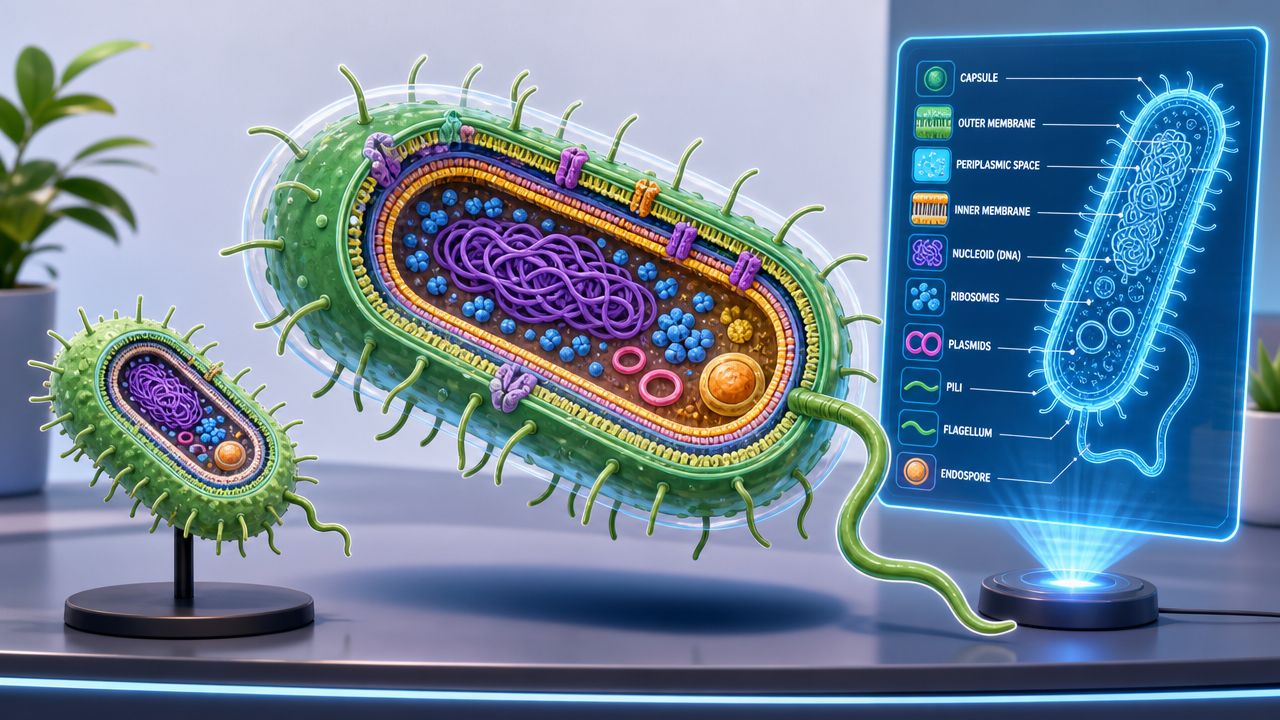
To understand why it's so durable, start with a bacteria cell model. In simple terms, this bacterium is built with a protective outer structure that makes entry harder for many substances.

Why the cell model matters
A model of this bacterium shows it is Gram-negative, meaning it has an outer membrane that acts as an additional permeability barrier. This helps explain why it can resist certain antibiotics and disinfectants, unlike Gram-positive bacteria that lack this extra layer. That envelope difference is one of the most important functional distinctions in bacterial cell design, as described in this overview of bacterial cell structure.
A realistic bacteria cell model should include the membrane system, cell wall, cytoplasm, ribosomes, and DNA in the nucleoid rather than a nucleus. If you want a refresher on that basic layout, this article on a prokaryotic cell is helpful.
Why facility operators should care
Pseudomonas also uses structures such as flagella in some settings, which helps it move through water and colonize moist systems. That's why it shows up in plumbing-associated environments more often than many managers realize.
For organizations that also review diagnostic and infection-control resources, it can be useful to browse infectious disease panels to see how seriously environmental pathogens are treated in healthcare contexts.
Where Pseudomonas Thrives in Your Facility
Pseudomonas doesn't need a dramatic failure in sanitation. It needs moisture, protected surfaces, and time. That makes certain facility zones far riskier than others.

Common hotspot map
- Sinks and faucet bases: Splashback keeps these areas wet, especially around seals, joints, and aerators.
- Showers and locker rooms: Constant humidity and repeated water exposure create ideal attachment points.
- Floor drains and utility drains: Organic residue and standing moisture make drains one of the most overlooked trouble spots.
- Cleaning equipment: Mop heads, buckets, and reusable cloths can spread contamination if they stay damp between uses.
- Water-related devices: In higher-risk environments, any equipment that holds or moves water deserves close attention.
What managers often miss
The issue isn't just visible water. It's persistent dampness in seams, under rims, inside drain covers, and on textured surfaces that don't dry fully between uses.
If your inspection routine focuses only on open floor space, you'll miss the places where this bacterium settles first. Teams should pay special attention to wet zones in gyms, clinics, long-term care spaces, and commercial restrooms, where repeated use keeps surfaces moist throughout the day.
Field rule: If a surface stays wet, gets touched often, and is hard to dry completely, treat it as a higher-risk site.
Understanding the Health Risks
For many healthy people, exposure may not lead to serious illness. The problem is that Pseudomonas aeruginosa can become dangerous for people with weakened immune systems, compromised skin, burns, or underlying illness. That's why it carries much more weight in healthcare and high-risk care environments than in ordinary office settings.
In practical terms, this bacterium can be linked to skin and ear problems in wet recreational settings, and to more serious infections in vulnerable patients. For facility operators, the key concern is environmental spread from contaminated wet surfaces, water-handling areas, and poorly maintained equipment.
Why resistance changes the stakes
A major concern is its ability to acquire antibiotic resistance. Many bacteria can carry plasmids, which are small circular pieces of DNA that can transfer resistance genes between them. This is one reason hospital-acquired infections involving this bacterium can be so difficult to treat, and why surface prevention matters so much, as explained in this interactive overview of bacterial cell features and plasmids.
That means cleaning isn't only about appearance. It's part of infection prevention.
Effective Control and Cleaning Strategies
The hardest lesson for many facilities is that spraying disinfectant onto slime isn't the same as removing contamination. Pseudomonas is difficult to remove because it forms highly structured biofilm communities. Imaging-based research has shown that these biofilms have a spatial organization that helps shield bacteria inside from disinfectants. In plain language, you have to break the structure before the chemistry can do its job, as discussed in this article on bacterial organization and imaging in Molecular Biology of the Cell.

A practical cleaning sequence
- Remove visible soil first. Dirt and residue block contact between disinfectant and the surface.
- Scrub wet-area buildup mechanically. Use brushes, pads, or tools that can disrupt slime in drains, grout lines, and fixture edges.
- Apply an EPA-registered disinfectant labeled for the target organism. Product selection matters.
- Respect dwell time. Keep the surface visibly wet for the full contact time listed on the label.
- Replace or sanitize tools. A contaminated mop head can reintroduce the same organism to the next room.
Where wipes fit in
Disinfectant wipes are useful on hard, nonporous touchpoints and around sink exteriors, counters, rails, and equipment housings. They're less effective when teams use them on heavy biofilm without prior scrubbing. Wipes work best after gross contamination and slime have been physically removed.
If your team needs a broader service benchmark for high-risk sanitation, this guide on how to ensure hygienic safety for your space offers a practical example of the level of thoroughness many commercial settings require. For staff training, it also helps to review how to disinfect surfaces so label directions and contact times don't get skipped.
Operational takeaway: Mechanical cleaning removes the shield. Disinfection finishes the job.
Protecting Your People and Your Business
Janitorial teams, facility managers, healthcare staff, gym operators, and business owners should all pay attention to Pseudomonas aeruginosa in wet environments. The risk is highest where moisture lingers and where vulnerable people may be exposed. A good bacteria cell model makes the logic clear. This bacterium's outer structure helps it endure, and its biofilm behavior helps it stay put.
The practical takeaway is simple. Inspect wet zones closely, remove slime physically, use EPA-registered disinfectants correctly, and never ignore dwell time. Those steps protect occupants and reduce operational risk.
For consistent and effective disinfection against Pseudomonas and other common pathogens in your facility, we recommend using EPA-registered disinfectant wipes from Wipes.com to help you meet the required standards for safety and cleanliness.
Leave a Reply