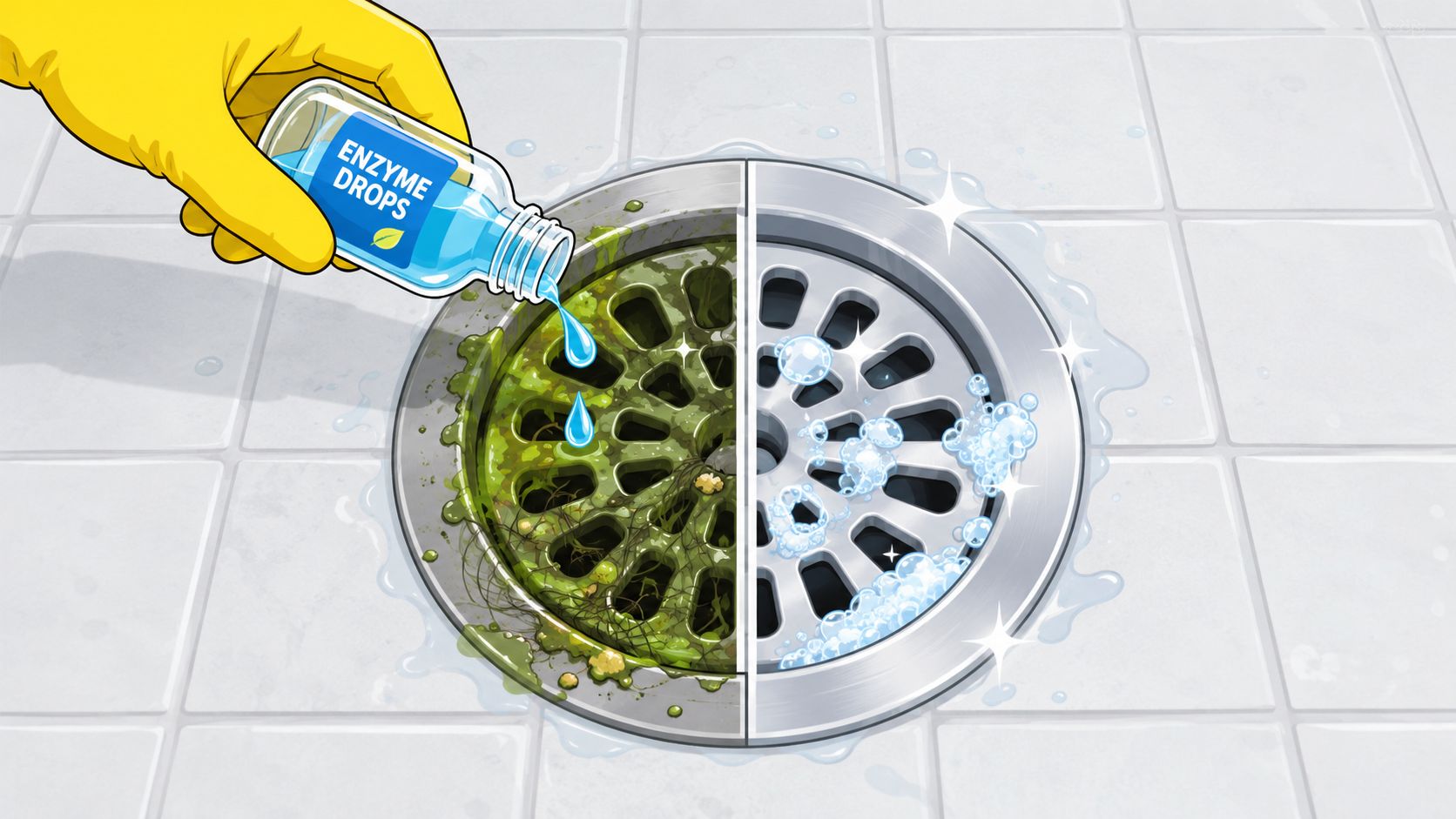
Most advice on how to clean shower drains stops at the clog. Pull out the hair, pour in baking soda and vinegar, flush, done. That approach is incomplete.
A shower drain can look clear and still be unsanitary. The hidden problem is the slick coating inside the drain body and pipe walls. That layer can hold debris, trap odor, and shelter bacteria. In a busy household or shared facility, cleaning a shower drain is partly plumbing maintenance and partly hygiene control.
Among the organisms tied to drain biofilms, Pseudomonas aeruginosa deserves special attention. It thrives in wet environments, forms biofilms, and is known for antibiotic resistance. If you're responsible for a family bathroom, a locker room, an assisted living site, or any high-traffic wash area, you need a method that goes beyond unclogging.
Why Your Clean Drain Is Still a Health Hazard
Shower drain cleaning is often treated primarily as a hair-removal problem. Hair and soap scum are part of it, but they aren't the full story. Many popular guides focus on mechanical clog removal and skip the fact that standard methods like vinegar and baking soda do not effectively dissolve or prevent biofilm, the slimy layer of bacteria, including Staphylococcus aureus and Pseudomonas, that can keep causing odors even after visible debris is gone, as noted in this drain hygiene guidance.
Pseudomonas aeruginosa is a Gram-negative, rod-shaped bacterium in the Pseudomonadaceae family. It is notable for forming biofilms and for resistance to multiple antibiotics, including penicillin and most beta-lactams, according to the CDC overview of Pseudomonas aeruginosa. In practical terms, that means a wet drain isn't just unpleasant. It can become a protected microbial niche.
Where this bacterium shows up
High-moisture environments give Pseudomonas the conditions it likes. In real buildings, that includes:
- Residential bathrooms where hair, skin cells, and soap residue collect
- Commercial showers in gyms, dorms, and athletic facilities
- Healthcare wash areas where vulnerable people may be exposed
- Shared bathrooms in schools, daycares, and multifamily housing
If you already care about moisture control elsewhere in the building, the same mindset applies here. The same attention used in expert tips for mold control should extend to drains, because persistent dampness supports microbial persistence even when surfaces look acceptable.
A drain can be free-flowing and still carry a mature biofilm on the surfaces you can't see.
Biofilm forms when microbes attach to a wet surface and build a sticky matrix around themselves. If you want the short microbiology behind that process, this overview of how biofilms form is a useful primer. For drain cleaning, the takeaway is simple: clear water flow is not the same as a hygienic drain.
Why the health risk matters
Pseudomonas infections can become serious, especially for people with weakened immunity or medical devices. Cleveland Clinic notes that complications can include septic shock, respiratory failure, and wound infections, with recovery rates ranging from 39% to 82% depending on infection severity and adherence to antibiotic protocols in its clinical summary of pseudomonas infection.
That doesn't mean every shower drain is an immediate medical emergency. It does mean facility managers and health-conscious homeowners shouldn't confuse deodorizing with disinfection.
Your First Line of Defense Is Daily Prevention
Prevention is less dramatic than clearing a full blockage, but it works better. The routine that keeps shower drains manageable is simple and consistent. According to Maplewood Plumbing's drain maintenance guidance, shower drains should be cleaned every couple of months, and a 30-second hot water flush after every shower helps dissolve soap scum and wash away loose particles before they harden.

The habits that matter most
Small habits keep organic material from building into a clog and feeding a biofilm.
- Remove visible debris right away. Hair sitting under the cover becomes the framework for soap scum and bacterial slime.
- Use a drain catcher. It won't sterilize the system, but it cuts down the amount of hair entering the drain body.
- Flush with hot water after each shower. That short rinse works best as prevention, not rescue.
- Lift and clean the cover on schedule. If you wait until drainage slows, you've already given buildup time to mature.
This kind of preventive rhythm also protects surrounding bathroom materials. If you're maintaining the entire shower assembly, these tips for shower door longevity fit well with a broader bathroom care plan.
A workable maintenance rhythm
Not every drain needs the same level of attention every week, but every drain needs a routine. For most homes and light-use bathrooms, this framework is practical:
| Task | Purpose |
|---|---|
| After each shower | Flush away loose soap residue and hair fragments |
| As needed at the cover | Remove trapped hair before it slips deeper |
| Every couple of months | Clean the shower drain thoroughly to prevent clogs and odors |
For families, caregivers, and cleaners who need a repeatable plan, a bathroom cleaning schedule template can help make drain care part of regular hygiene instead of a last-minute fix.
Practical rule: If the drain smells before it clogs, treat that as an early warning, not a cosmetic issue.
Who should pay closest attention
Some users should be more disciplined than others:
- Parents and caregivers should care because children often share wet spaces and may have skin irritation or small cuts.
- Facility managers should care because high traffic increases organic load and cleaning inconsistency.
- Janitorial staff should care because a shiny shower floor can hide a neglected drain throat.
- Healthcare-adjacent settings should care because vulnerable occupants face higher consequences from environmental bacteria.
Daily prevention won't remove a mature biofilm by itself. It does make the drain less hospitable and lowers the amount of organic material that fuels the problem.
Handling Minor Slowdowns with Natural Solutions
When the shower is draining a little slower but not fully blocked, a mild natural treatment is reasonable. Used correctly, baking soda and vinegar can loosen light buildup and reduce odor. Used with unrealistic expectations, it becomes a ritual that makes people think they've disinfected a drain when they haven't.
According to this cleaning method reference, a 1:1 ratio of baking soda and vinegar, left to sit for 15 to 30 minutes and followed by a hot water flush, can help break down mild clogs and deodorize the drain without the corrosive risks associated with harsh chemical cleaners.
How to use the method properly
For a mild slowdown, the sequence matters:
- Remove the drain cover and clear visible hair first. The fizzing reaction works better when it can reach the residue.
- Add equal parts baking soda and vinegar. Keep the mix targeted to the drain opening instead of splashing it across the shower base.
- Let it sit for the full dwell time. Rushing this step weakens the effect on soft buildup.
- Flush with hot water. The flush carries loosened material away.
This method is best for fresh soap scum, light hair residue, and smell control.
What it won't do
It won't reliably disinfect a drain with established biofilm. That's the critical limit. The fizz may loosen surface grime, but it doesn't solve the deeper microbiological problem described earlier.
Use it as a maintenance tool, not as proof that the drain is sanitary.
If the drain still smells slimy after the treatment, assume you're dealing with attached biofilm, not just loose debris.
Where natural solutions fit best
Natural treatments make sense in three situations:
- Early slowdown before standing water appears
- Routine deodorizing between deeper cleanings
- Households avoiding harsh corrosives when the issue is clearly minor
They make less sense when water is backing up, when the drain repeatedly slows after treatment, or when you manage a high-traffic environment where hygiene standards matter more than a quick DIY fix.
Removing Stubborn Clogs with Mechanical Tools
Once hair packs tightly below the drain opening, chemistry becomes secondary. You need extraction. A mechanical drain snake or small auger becomes essential here.
The strongest DIY option for a shower drain is the snake method. Maid2Match's cleaning guidance reports that the mechanical drain snake method achieves a 92–95% success rate on stubborn obstructions by physically snagging and extracting hair clumps, and that proper feeding, rotating, and retracting helps prevent re-clogs.

The right way to use a drain snake
A good result depends on control, not force.
- Start gently. Feed the cable into the drain until you feel resistance.
- Rotate to engage the clog. Twisting helps the tip hook hair instead of just pushing it deeper.
- Pull back slowly. Steady retraction keeps the debris attached to the cable.
- Repeat if needed. Dense hair masses often come out in stages.
- Flush afterward. Once the obstruction is out, run hot water to carry away loose remnants.
A pair of gloves, a small bucket, and paper towels make cleanup easier. Hair clogs are messy, but they are usually straightforward if the blockage is local.
Why this works better than pouring more product
Shower clogs are often structural tangles of hair, soap residue, and skin debris. If that mass is physically knotted around the drain crossbars or caught just below the trap entrance, liquid treatments may only soften the outside.
Mechanical removal solves a different problem than deodorizing. It removes the bulk material that supports future buildup.
| Problem | Best first response |
|---|---|
| Slow drain with light residue | Natural maintenance treatment |
| Dense hair clog near the opening | Mechanical snake extraction |
| Persistent odor after debris removal | Biofilm-focused cleaning |
Safety and judgment
Don't crank aggressively if the snake stops hard and won't advance. That can mean a tight bend, a fitting, or a deeper obstruction. In older or delicate plumbing, force causes damage faster than many homeowners expect.
Pull out what you can reach. Don't turn a local shower clog into a pipe repair.
For many stubborn shower drain blockages, a drain snake is the fastest and cleanest DIY tool. It still doesn't disinfect the drain wall. It just clears the traffic jam.
How to Destroy Biofilm and Disinfect Your Drains
A shower drain can run freely and still be dirty enough to matter. Flow tells you whether water is moving. It does not tell you whether the drain wall is coated with biofilm that shelters bacteria and keeps odor coming back.
That distinction matters in bathrooms used by children, older adults, people with weakened immune systems, and anyone managing a shared shower. Wet drains can support organisms such as Pseudomonas aeruginosa, which persist well on moist surfaces and inside slime layers that a quick rinse will not remove.

Why enzyme cleaners beat homemade fizz for drain slime
For established organic buildup, enzymatic detergents are the most biologically sensible option in the sources reviewed. Idea Group's cleaning reference explains that enzyme products use agents such as proteases to break down organic material, need a meaningful contact period, and work best with hot, not boiling, rinse water. The same guidance also warns against mixing hydrochloric acid with enzymatic or caustic cleaners because that creates safety hazards and can reduce cleaning performance.
That trade-off gets missed in a lot of DIY advice. Boiling water sounds stronger, but stronger is not the goal if it stresses seals or plastic components without improving biofilm removal.
Southern Living's review of shower drain temperature safety makes the same practical point. Water in the hot-but-not-boiling range is safer for common plumbing materials and fits the way these cleaners are meant to be used.
Match the cleaner to the contamination
Drain biofilm is a mix of organic residue and microbes bound together on the pipe surface. Hair, skin cells, soap residue, and body oils give that layer structure. If the hair mass is already out but the drain still smells sour or musty, the remaining problem is often the film left behind on the walls.
Enzymes help because they break down the residue that anchors the film. They are not instant disinfectants, and they do not replace physical debris removal. They are useful because they get at the material microbes live in.
For a closer explanation of the hygiene side, see this guide on how to remove biofilm.
A practical workflow for biofilm reduction
Use a sequence that gives the product access and contact time:
- Remove the drain cover and clear reachable debris first. Surface slime and trapped hair block cleaner contact.
- Apply the enzymatic cleaner exactly as labeled. More product does not fix poor coverage.
- Let it sit for the full label contact time. Cutting the dwell time is one of the main reasons people get odor rebound.
- Rinse with hot water, not boiling water. The goal is to carry away loosened residue without stressing pipe materials.
- Repeat on a maintenance schedule in high-use showers. Shared bathrooms, gym showers, and frequently used family bathrooms build film faster.
What disinfection can and cannot do
Disinfection works poorly if slime is still attached to the surface. A disinfectant has to reach the microbes. If the drain wall is coated with organic film, the chemistry gets spent on the mess before it reaches the organisms underneath.
Clean first. Then disinfect if the product is labeled for that use and the drain material allows it.
In residential settings, many people stop after deodorizing. In facilities, that is often not enough. Odor control, visible cleanliness, and microbial control overlap, but they are not the same job.
Higher-risk situations
Biofilm control deserves more attention when the consequences of poor drain hygiene are higher:
- Shared showers with barefoot traffic, where repeated contamination and moisture keep the drain seeded
- Homes with immunocompromised occupants, where environmental reservoirs matter more
- Healthcare, eldercare, and assisted-living bathrooms, where persistent wet-site contamination has more serious implications
- Athletic, hospitality, or multi-user facilities, where odor complaints may be the first sign of a larger sanitation problem
If the only goal is faster drainage, clog removal may solve it. If the goal is lower microbial burden and fewer recurring odors, treat the drain as a hygiene surface, not just a pipe.
Troubleshooting Lingering Issues and When to Call a Pro
Some shower drains are not dealing with a simple clog. They are maintaining a wet, contaminated niche that keeps trapping hair, soap residue, and fresh organic matter. If the same drain slows down again soon after cleaning, or the odor returns after you have already removed visible debris, assume the problem extends deeper than the drain opening.

Signs the problem is beyond DIY
Call a plumber or facility maintenance specialist if you run into any of the following:
- The clog returns quickly after cleaning. Recurrent blockage often means buildup farther down the line, poor drainage slope, or a trap that is holding too much debris.
- Odor persists after mechanical cleaning and surface disinfection. That usually means slime or contamination remains below the area you can reach.
- Water backs up in nearby fixtures. A shower-only clog is one problem. A shared branch line problem is another, and it needs proper diagnosis.
- A snake stops hard or comes back empty repeatedly. You may be hitting compacted buildup, a fitting turn, or damaged pipe.
- The drain body, cover, or surrounding seal is cracked or loose. Once hardware starts failing, cleaning alone will not restore sanitary performance.
One failed attempt is not the signal. Repetition is.
A practical decision test
Use this judgment table to decide whether to keep working or escalate:
| Situation | Best move |
|---|---|
| Minor slowdown, no odor, no backup | Handle it with routine maintenance |
| Local hair clog near the drain opening | Use a mechanical snake |
| Persistent slime odor after clearing the clog | Use an enzymatic biofilm approach |
| Repeated failure or multi-fixture backup | Call a professional |
In busy homes and shared facilities, delay has a cost. Staff can spend the same labor clearing the top of the drain again and again while the actual restriction sits deeper in the branch line. Meanwhile, wet organic film keeps reforming and continues to support odor and microbial growth.
The smart endpoint
A professional brings inspection tools, longer cables, and the judgment to tell the difference between routine accumulation and a system problem. That matters when the issue is a partial blockage in the line, a venting problem, or a drain assembly that is staying contaminated because it never dries properly.
For households, the practical standard is simple. Remove debris early, treat slow flow with the least aggressive method that works, and escalate fast when odor, repeat clogging, or backup show that the drain is acting like a contaminated reservoir instead of a simple hair trap.
Disinfectant wipes still have a place, but not inside the pipe. Use them on surrounding bathroom touchpoints and nearby surfaces after drain cleaning, especially in shared bathrooms, and choose a product labeled for disinfection, including options sold by Wipes.com.
Leave a Reply