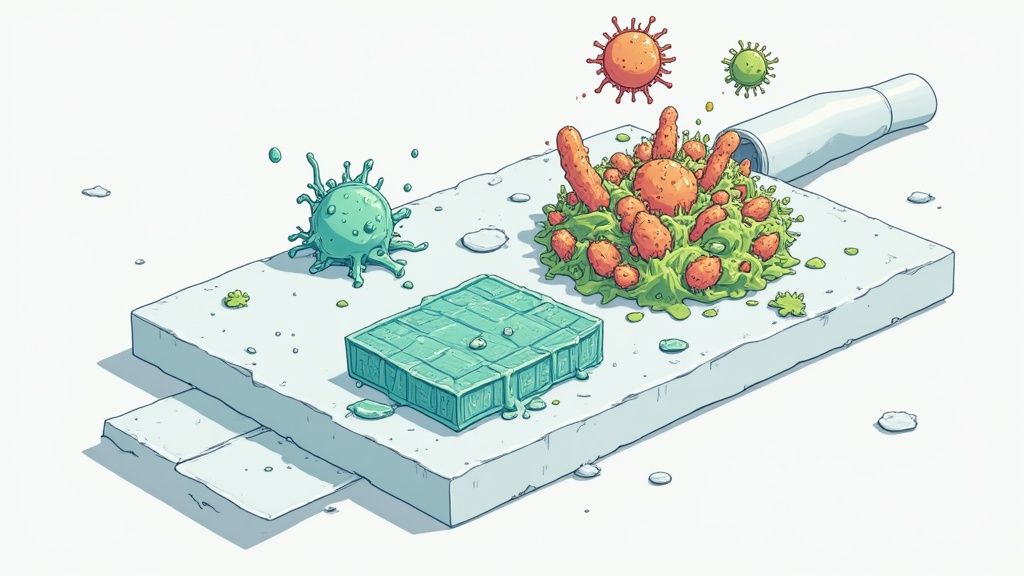
For anyone managing a commercial or high-traffic facility, understanding the unseen threats is a critical part of the job. One of the most persistent and problematic bacteria you’ll encounter is Pseudomonas aeruginosa. This resilient microbe is notorious for its ability to thrive where others can't, making it a significant challenge in settings from hospitals to office buildings.
What Is Pseudomonas aeruginosa?
Pseudomonas aeruginosa is a common, rod-shaped, Gram-negative bacterium. What makes it so notable is its incredible adaptability. It's an opportunistic pathogen, meaning it typically preys on individuals with weakened immune systems. A key trait is its ability to form biofilms—slimy, protective communities that act like shields against disinfectants and antibiotics. This biofilm-forming capability is why it’s so difficult to eradicate from surfaces and water systems.
Furthermore, it is known for its intrinsic resistance to many antibiotics and its capacity to acquire resistance to others, making infections particularly difficult to treat.
Where Is It Commonly Found?
P. aeruginosa is a master of survival and is found almost everywhere, particularly in moist or wet environments. Facility managers and janitorial staff should be vigilant in areas where water is present.
Common hotspots include:
- Hospitals and Healthcare Facilities: It colonizes medical equipment, catheters, respiratory machines, sinks, and drains, posing a severe risk to patients.
- Gyms and Spas: Locker room floors, showers, hot tubs, and swimming pools are ideal breeding grounds.
- Commercial Buildings: HVAC systems, water fountains, and stagnant water in plumbing systems can harbor the bacteria.
- Food Service Areas: Drains, sinks, and improperly maintained cleaning equipment can become sources of contamination.
Its ability to survive in low-nutrient conditions means it can persist on surfaces for extended periods, waiting for an opportunity to spread.
Health Risks Associated with P. aeruginosa
While generally harmless to healthy individuals, P. aeruginosa poses a serious threat to vulnerable populations, including the elderly, anmunocompromised individuals, and patients with surgical wounds or severe burns.
Common health risks include:
- Hospital-Acquired Infections (HAIs): It is a leading cause of infections in healthcare settings, including pneumonia (especially in ventilated patients), urinary tract infections (UTIs), and bloodstream infections.
- Wound Infections: It can colonize burns and surgical wounds, leading to severe, hard-to-treat infections.
- Folliculitis ("Hot Tub Rash"): Contaminated water in hot tubs or pools can cause a bumpy, red, itchy rash.
- Ear and Eye Infections: Swimmers can develop "swimmer's ear," and contaminated contact lens solutions have been linked to serious eye infections.
The primary danger lies in its resistance to antibiotics, which complicates treatment and can lead to severe, life-threatening outcomes.
How to Kill and Control Pseudomonas aeruginosa
Controlling P. aeruginosa requires a diligent and strategic approach focused on removing the moist environments where it thrives and using effective disinfectants.
- Identify and Eliminate Moisture: Regularly inspect for and repair leaks. Ensure drains are clean and functioning properly, and that HVAC systems are well-maintained to prevent moisture buildup.
- Use EPA-Registered Disinfectants: Not all cleaners are effective. Use disinfectant wipes or solutions that are specifically EPA-registered to kill P. aeruginosa. Check the product label for this claim.
- Respect Dwell Time: Dwell time is the amount of time a disinfectant must remain wet on a surface to be effective. For P. aeruginosa, this can range from 30 seconds to 10 minutes, depending on the product. Wiping a surface dry too quickly negates the disinfectant's power.
- Proper Cleaning Technique: Always clean visible dirt and grime from a surface before disinfecting. Use a "clean-to-dirty" wiping pattern and change wipes or cloths frequently to avoid cross-contamination. Focus on high-touch surfaces and known problem areas like faucets, drains, and water fountains.
Who Should Be Concerned?
While everyone should practice good hygiene, certain professionals need to be especially proactive in controlling P. aeruginosa:
- Janitorial and EVS Staff: As the frontline defense, they must be trained on proper disinfection protocols, including the importance of dwell times and using the right products.
- Healthcare Providers: Infection control is paramount. They must ensure that medical devices are sterilized and patient environments are meticulously cleaned.
- Gym and Spa Operators: They are responsible for maintaining water quality in pools and hot tubs and ensuring that locker rooms and equipment are regularly disinfected.
- Business Owners and Facility Managers: They have a duty of care to provide a safe environment for employees and customers by implementing and overseeing effective cleaning and maintenance schedules.
Practical Takeaway
The key to controlling Pseudomonas aeruginosa is consistency. It's not about a one-time deep clean but about implementing a routine of thorough cleaning and disinfection, with a sharp focus on wet or damp areas. By using EPA-approved disinfectants correctly and training staff on proper protocols, facility managers can significantly reduce the risk posed by this resilient and opportunistic pathogen.
Leave a Reply