A janitor disinfects a restroom sink. A facility manager monitors a septic system. A homeowner notices a salty ring around a drain. In each case, survival depends on the environment. Some microbes die quickly when conditions shift. Others are built for conditions that would destroy ordinary cells.
Archaea belong to that second group. They are not bacteria, even though they are also microscopic and often live in places tied to hygiene, waste, water, and surface conditions. Some archaeal species tolerate intense heat, high salt, strong acidity, or the absence of oxygen. If you'd like a hands-on way to explore the unseen world with Playz, microscopes are a good place to start.
That matters outside the lab. Archaea help explain a basic rule behind cleaning and sanitation. Microbes are limited by their surroundings. Change the surroundings enough, and many organisms stop growing. Keep the wrong conditions in place, and the right microbes keep working, especially in waste systems and other hard-to-control environments.
A useful comparison is oxygen control. In some sanitation settings, oxygen helps limit the growth of organisms adapted to airless spaces. In other systems, such as enclosed waste treatment, oxygen-free conditions allow a different kind of microbial activity to continue. This guide to the difference between aerobic and anaerobic bacteria gives helpful background, even though Archaea are a separate domain.
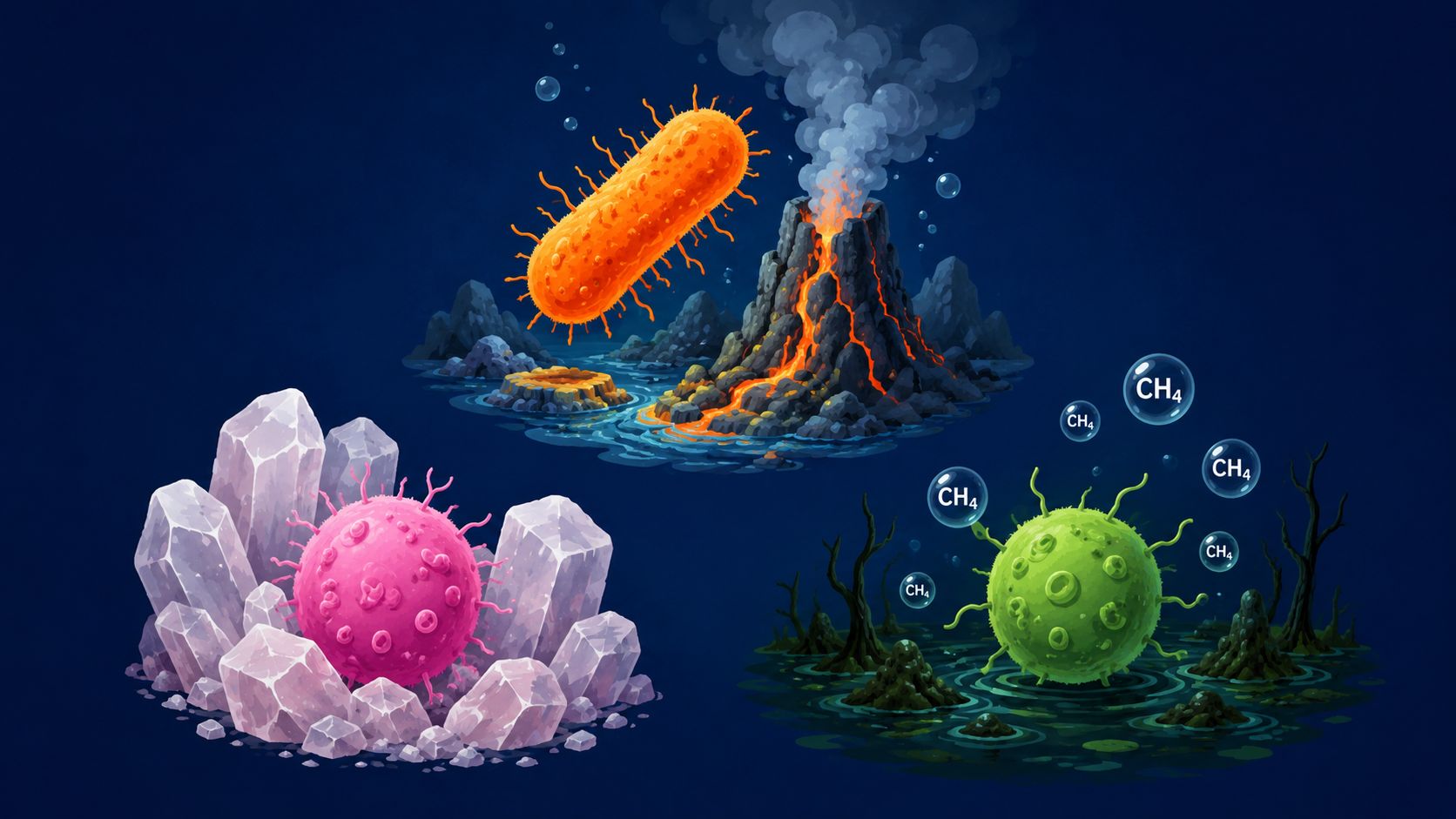
The three examples in this article focus on microbes shaped by extremes of oxygen, salt, heat, and acidity. Studying them makes extremophiles feel less abstract. It also sharpens how we think about disinfection, sanitation, and waste management in everyday commercial and residential spaces.
1. The Methane-Maker: Methanosarcina acetivorans
Some of the most important microbes in modern sanitation work where oxygen is absent. Methanogens belong to that world. They help break down waste in enclosed, oxygen-poor systems such as digesters, septic tanks, and sludge-handling environments.
That matters for environmental hygiene because waste that gets processed properly is less likely to create broader contamination problems. When a facility manager keeps a septic system or digester working as intended, they're not just managing odor or maintenance. They're supporting one of the biological stages that helps contain and stabilize organic waste.

Where methanogens matter in everyday environments
A useful health-related comparison comes from the human gut. In a review of human-associated archaea, Methanobrevibacter smithii is described as the dominant methanogen isolated from the human colon, and the same review notes that archaea can colonize the human colonic, vaginal, and oral microbiota. It also explains that common antibacterials such as vancomycin and beta-lactams are expected to have no activity against archaea.
That distinction is easy to miss. People often use "germs" as a catch-all word, but not every microbe responds to the same control tool. In waste systems, oxygen level and flow conditions often matter more than the kinds of antibacterial products people associate with surface cleaning.
Practical rule: Keep waste treatment biology and surface disinfection in separate mental categories. A restroom floor, a kitchen prep counter, and a septic tank don't need the same intervention.
Why this example matters for sanitation
Methanosarcina acetivorans is often discussed as a methane-producing archaeon from anaerobic settings. While few will ever identify it in a lab, its survival logic is easy to understand. It prefers the kind of environment you create when waste sits without oxygen and microbes digest it over time.
That makes it relevant in places like these:
- Municipal wastewater operations: Operators rely on stable microbial communities to process organic waste before discharge.
- Residential and small-building septic systems: Homeowners, schools, and rural facilities depend on underground treatment zones that work best when they aren't hydraulically overloaded.
- Food service digesters and grease-handling systems: Restaurants and institutional kitchens create organic waste streams that need time and proper conditions for breakdown.
- Landfill gas systems: Waste managers monitor methane formation because decomposition continues long after disposal.
A simple way to understand this is by comparing oxygen-rich and oxygen-poor microbial life. This overview of aerobic and anaerobic bacteria helps frame why methanogens belong to a very different operating environment than most surface-associated pathogens.
What to do with that knowledge
If you're responsible for a building, a kitchen, or a school campus, the lesson isn't to kill methanogens everywhere. It's to keep them in the systems where they belong and stop waste from escaping those systems.
A few practical habits follow from that:
- Protect septic function: Avoid flooding the system with unnecessary water, because treatment depends on stable internal conditions.
- Schedule pumping on time: Routine service helps prevent solids buildup and system failure.
- Give digesters time to work: Organic waste needs retention time. Rushing discharge undercuts biological processing.
- Separate cleaning chemistry from waste biology: Harsh chemicals poured indiscriminately into drains can interfere with treatment processes, even though they may still be useful on hard surfaces when used correctly.
Good sanitation isn't always about sterilizing everything. Sometimes it's about keeping the right microbes confined to the right place.
2. The Salt-Lover: Halobacterium salinarum
A food worker opens a container of heavily brined olives, or a maintenance team checks salt buildup around a water-softening system. In both places, one simple rule is at work. Salt pulls water away from cells, and many microbes cannot keep functioning under that stress.
Halobacterium salinarum shows the other side of that rule. It belongs to a group of archaea that prefer intensely salty environments, such as salt lakes, evaporation ponds, and other hypersaline settings. Where many bacteria lose access to usable water and slow down or die, this archaeon is built to keep its internal chemistry stable.
That difference matters because people often hear "salt kills germs" and stop there. A better version is, "salt changes which microbes can survive." In microbiology, salt works like a gatekeeper. It excludes many organisms, but it also favors specialists that can handle low water availability.
A microbe shaped by a harsh environment
One striking haloarchaeal example is Haloquadra walsbyi, a halophile known for its unusual square cell shape. That shape is memorable, but the bigger lesson is ecological. Extreme salt selects for unusual survival strategies, unusual cell biology, and a very different microbial community than you would find on a countertop, sink handle, or cutting board.
Halobacterium salinarum belongs in that same teaching category. It helps explain why preservation and sanitation are related, but not identical. Preserving food means creating conditions that make growth difficult. Sanitizing a prep surface means removing soil and reducing microbes on a surface people keep touching.
Those are different jobs.
What high salt really teaches about hygiene
Salt has a long history in food preservation because it reduces water availability. Yet a salted environment is not automatically a clean environment. If brine is diluted, if moisture collects, or if a cured product is handled carelessly after processing, the microbial picture can change fast.
That idea connects directly to commercial kitchens, food storage rooms, and even some residential settings. A salted fish barrel, a cured meat chamber, and a bag of de-icing salt near a utility area each create selective pressure, but none of them replaces normal cleaning practice. Dirt, residue, biofilms, and cross-contact still have to be managed with the right sanitation steps.
For food and facility teams, the practical takeaways are clear:
- Apply salt consistently: Uneven salting leaves pockets where less salt-tolerant microbes may still grow.
- Prevent dilution: Condensation, splash water, and wet utensils can weaken the preservative effect.
- Handle preserved foods carefully after processing: Salt lowers risk in the product, but later contamination can still occur.
- Keep preservation separate from sanitation: Brining or curing food does not sanitize slicers, bins, drains, counters, or touchpoints.
Salt can help control microbial growth in food. It does not replace cleaning and disinfection on shared surfaces.
Why this archaeon matters outside the lab
Archaea also remind us that microbial control depends on cell biology, not just on labels like "germ" or "microbe." Their cell envelopes differ from those of bacteria, which helps explain why groups of microorganisms can respond differently to drying, chemicals, and environmental stress. If you'd like a simple refresher on cell wall and cell membrane, that background makes this easier to follow.
Temperature adds another layer. Salt level, moisture, and heat often work together to determine which organisms persist and which fade out. This guide to how temperature affects bacterial growth helps connect that idea to everyday storage and sanitation decisions.
For health, hygiene, and waste handling, the lesson is practical. Environmental control works best when people understand what each condition does. Salt can preserve. Drying can limit growth. Heat can reduce survival. Cleaning removes contamination from surfaces. Disinfection lowers microbial load on the right materials. Halobacterium salinarum makes that logic easier to see because it lives in a place where one common control factor, salt, stops being a barrier and becomes a home.
3. The Heat & Acid Dweller: Sulfolobus acidocaldarius
A maintenance worker opens industrial equipment that runs hot and handles acidic residue. A home cook unloads a dishwasher after a high-heat cycle. A sterile processing technician checks whether a device reached the required temperature for reprocessing. Different settings, same lesson. Microbes live or fail based on conditions.
Sulfolobus acidocaldarius makes that lesson easy to see because it thrives in places that would destroy many other organisms. It is a thermoacidophile, an archaeon adapted to both high heat and high acidity, often in geothermal environments rich in sulfur. For readers interested in hygiene and sanitation, that matters because it shows why environmental control is never one-dimensional. Heat alone does not explain survival. Acidity alone does not explain survival either. What matters is the full combination of conditions.

What this archaeon teaches about sanitation
A hot acidic spring works like a very selective filter. Many microbes cannot keep their proteins, membranes, or internal chemistry stable there. Sulfolobus acidocaldarius can. Its biology is built for that stress.
That does not make it a cleaning product model. It makes it a useful biology model.
Commercial sanitation uses the same basic principle in a controlled, safer form. Warewashing systems use validated heat. Some cleaners use acidic chemistry to remove mineral scale and residue. Waste treatment systems also depend on carefully managed conditions, including temperature and pH, because those factors shape which microbes stay active and which ones drop out. Archaea like Sulfolobus help explain why changing an environment can shift the whole microbial community.
This is also why sloppy shortcuts fail. Warm water may loosen soil, but it does not automatically sanitize. A sour-smelling homemade mixture may sound strong, but without the right chemistry, concentration, and contact time, it may do very little besides damage a surface.
Practical lessons for buildings, kitchens, and waste handling
If heat and acidity sound like harsh tools, that reaction is useful. It reminds us that sanitation works by changing the habitat faster than unwanted microbes can tolerate it.
A few practical rules follow from that idea:
- Use temperature deliberately. High-heat dish machines, laundry systems, and steam methods only work when they reach the needed conditions and hold them long enough.
- Treat pH as a functional tool. Acidic products are often meant for scale, soap scum, or mineral deposits, not for every surface and not for every disinfection task.
- Separate cleaning from disinfection. Removing grease, food soil, and residue usually comes first because debris can shield microbes from heat and chemicals.
- Respect the label. Contact time, dilution, and surface compatibility determine whether a product helps or harms.
- Avoid mixing chemicals. Unsafe combinations can create fumes, corrode materials, and interfere with the intended cleaning action.
For a clearer picture of how temperature changes microbial growth and survival, it helps to picture a spectrum rather than a single cutoff. Some organisms slow down. Some stop reproducing. Some die. A few specialists keep functioning because their cells are adapted to that stress.
Why this example matters
Methanosarcina connected archaea to waste breakdown. Halobacterium showed how one condition, high salt, can block many microbes but support a specialist. Sulfolobus acidocaldarius adds a different piece of the puzzle. It shows that heat and acidity can act together, and that microbial control depends on matching the method to the organism and the setting.
That idea matters in clinics, food service, custodial work, and even household cleaning. Good sanitation is less about using the harshest option and more about creating conditions the target organism cannot handle.
Sulfolobus acidocaldarius is not a common human pathogen. Its value is educational. It helps explain why validated hot-water cycles, correct product selection, and controlled waste-treatment conditions work at all.
Comparison of Three Archaebacteria
| Organism | Implementation complexity 🔄 | Resource requirements ⚡ | Expected outcomes ⭐📊 | Ideal use cases 💡 | Key advantages ⭐ |
|---|---|---|---|---|---|
| The Methane-Maker: Methanosarcina acetivorans | High, requires strict anaerobic controls, pH and temp monitoring | Moderate–High, organic substrates, mesophilic temps (35–40°C), controlled pH | High impact on waste stabilization and methane production; supports groundwater protection | Anaerobic digesters, on-site septic systems, landfill gas capture, food-service grease digestion | Enables energy recovery from waste; adaptable to diverse feedstocks; critical for anaerobic treatment performance |
| The Salt-Lover: Halobacterium salinarum | Moderate, simple concept but requires maintained hypersaline conditions | High salinity (>20% NaCl), warm temps (~45–50°C), specialized media | Demonstrates effectiveness of salt-based preservation; limited direct sanitation benefits | Salt-curing, brining protocols, high-salt food storage, salt production facilities | Explains why high-salt environments inhibit pathogens; useful model for salt-preservation practices |
| The Heat & Acid Dweller: Sulfolobus acidocaldarius | Very High, needs extreme heat and low pH containment and safety measures | Very High, thermal systems (65–85°C), acidic conditions (pH 1–4), sulfur substrates | Strong demonstration of heat/pH disinfection principles; source of thermostable enzymes | Heat- and acid-based sterilization, steam cleaning, autoclave principles, thermal food processing | Illustrates why heat and acidity inactivate pathogens; provides thermostable biomolecules for industry |
Lessons From the Edge of Life
A drain line in a restaurant, a salty food brine, and a hot acidic cleaning system all create very different microbial worlds. Archaea help make that easier to see because each group survives by matching its environment so precisely.
As noted earlier, archaea are among Earth's oldest life forms. Their long history helps explain why they carry such specialized survival tools. Some are built for oxygen-free waste zones. Others handle salt levels that would dehydrate ordinary cells. Others remain active under heat and acidity that are used in sanitation to suppress many microbes.
The useful lesson is environmental control. Good hygiene does not depend on a single spray, wipe, or chemical acting like a magic shield. It depends on changing conditions so unwanted microbes struggle to grow. In practical terms, that can mean reducing moisture, separating waste, controlling temperature, using salt or acidity in the right setting, and applying disinfectants exactly as the label directs.
Archaea make this principle visible.
Methanogens remind us that poorly managed, oxygen-poor waste can support very different microbial processes than a dry, ventilated surface. Halophiles show that salt acts like a gatekeeper, allowing a narrow set of organisms to persist while excluding many others. Thermoacidophiles show the same pattern with heat and low pH. In each case, the environment works like a filter, selecting who can stay and who cannot.
That is directly relevant in homes, schools, restaurants, gyms, and care settings. A septic tank needs controlled biological breakdown, while a kitchen counter needs rapid soil removal and correct surface disinfection. A cured food product relies partly on salt and storage conditions, while a bathroom sink depends on routine cleaning, moisture control, and product contact time.
Studying these 3 examples of archaebacteria helps turn an abstract microbiology topic into a practical one. The organisms themselves are not the main hygiene threat. The bigger lesson is that survival always depends on conditions. If you control the conditions, you control much of the microbial outcome.
For more background on microbial survival and cleaning concepts, BacteriaFAQ.com publishes educational articles on bacteria, hygiene, and environmental control. For day-to-day surface care, we recommend Wipes.com.
Leave a Reply