Floors rarely trigger the same concern as door handles, faucet levers, or shared equipment. That's a mistake. In schools, gyms, clinics, and foodservice spaces, vinyl floors collect soil, moisture, and traffic from hundreds of shoes, wheels, and spills. A floor can look clean and still leave contamination behind if the cleaning method only spreads dirty solution around.
That's why vinyl flooring cleaning machines deserve to be treated as infection-control tools, not just maintenance equipment. The broader category is expanding for a reason. The global floor cleaning machines market is projected to increase by USD 2.71 billion between 2024 and 2029 at a 5% CAGR, according to Technavio's floor cleaning machines market analysis. In practical terms, facilities are moving away from mop-and-bucket routines because large hard-surface areas need a more controlled, repeatable way to remove soil and recover contaminated liquid.
Beyond the Mop Bucket An Introduction to Mechanized Cleaning
Vinyl flooring shows up where hygiene pressure is high. Cafeterias, school corridors, fitness studios, waiting rooms, treatment spaces, and restaurant back-of-house areas all rely on resilient floors because they're durable and easier to maintain than many alternatives. But durability doesn't mean immunity. Dirt in seams, textured wear layers, and edges can keep a floor looking acceptable while still undermining sanitation goals.
What matters in practice is repeatability. A machine doesn't get tired, doesn't keep dipping into the same dirty bucket, and can apply solution more evenly than manual mopping. In a facility with long corridors or open floor plates, that consistency is often the difference between “we cleaned it” and “we removed the contamination load.”
Why facilities are shifting
Mechanized floor care has become part of standard operations because large sites can't rely on labor-intensive methods alone. The same market projection cited above reflects that broader change across commercial hard-floor environments, including the vinyl surfaces common in public buildings.
Facility managers also need systems, not isolated tasks. Teams that want a realistic benchmark for professional floor programs can look at Clean Space SA cleaning solutions, which help frame how scheduled care, machine selection, and chemical discipline fit together in commercial settings.
Floors are part of the contact chain. People don't need to touch a floor directly for poor floor hygiene to matter. Shoes, carts, mats, hands, and equipment move contamination onward.
The key shift is simple. Vinyl flooring cleaning machines shouldn't be chosen only for shine. They should be chosen for soil removal, moisture control, and recovery of dirty solution.
Why Manual Mopping Fails at True Disinfection
Manual mopping still has a place for small spills and tight corners. It doesn't perform well as a primary disinfection method across busy vinyl floors. The reason isn't effort. It's process design.
Most cleaning guidance in the market talks about appearance first. Shine. Debris removal. Scuff reduction. What's usually missing is the infection-control question. As HydraMaster's discussion of LVP and LVT deep cleaning points out, most commercial guidance rarely addresses pathogen reduction. The main issue isn't just what cleans vinyl. It's what setup reduces bioburden without damaging the floor.

The mop bucket problem
A mop removes some soil, but it also reintroduces dirty liquid to the floor unless staff change solution constantly. On textured vinyl, grout-like edges, and worn traffic lanes, manual pressure usually isn't enough to release embedded grime consistently. That matters because disinfectants work poorly when organic soil stays in place.
Common failure points include:
- Cross-contamination during rinsing: Staff dip the mop back into the same bucket, loading the floor with used solution.
- Uneven wetting: Some zones get flooded, others barely get enough chemical to remain wet for contact time.
- Poor recovery: Liquid stays on the surface, along seams, or under fixtures instead of being lifted away.
- Residue buildup: Over time, detergent film traps more dirt and can interfere with later disinfection.
For a closer look at why this old workflow breaks down, BacteriaFAQ's review of the cleaning mop bucket problem is worth reading.
Clean isn't the same as disinfected
A floor can pass a visual inspection and still fail a hygiene objective. That's especially true in high-traffic spaces where shoes carry in body fluids, restroom residue, food debris, and outdoor soil. Manual mopping often improves appearance faster than it improves microbial control.
Practical rule: If the process doesn't control where dirty solution goes, it isn't a strong disinfection process.
That's why mechanized cleaning matters. It combines agitation, controlled solution laydown, and recovery. Those three functions are what manual mopping struggles to deliver at scale.
Understanding Your Machine Options for Vinyl Floors
Machine choice determines whether a vinyl floor program merely spreads soil around or removes bioburden. For infection control, the useful distinction is simple: which machine can clean, suspend soil, and recover contaminated liquid before it dries back onto the surface.

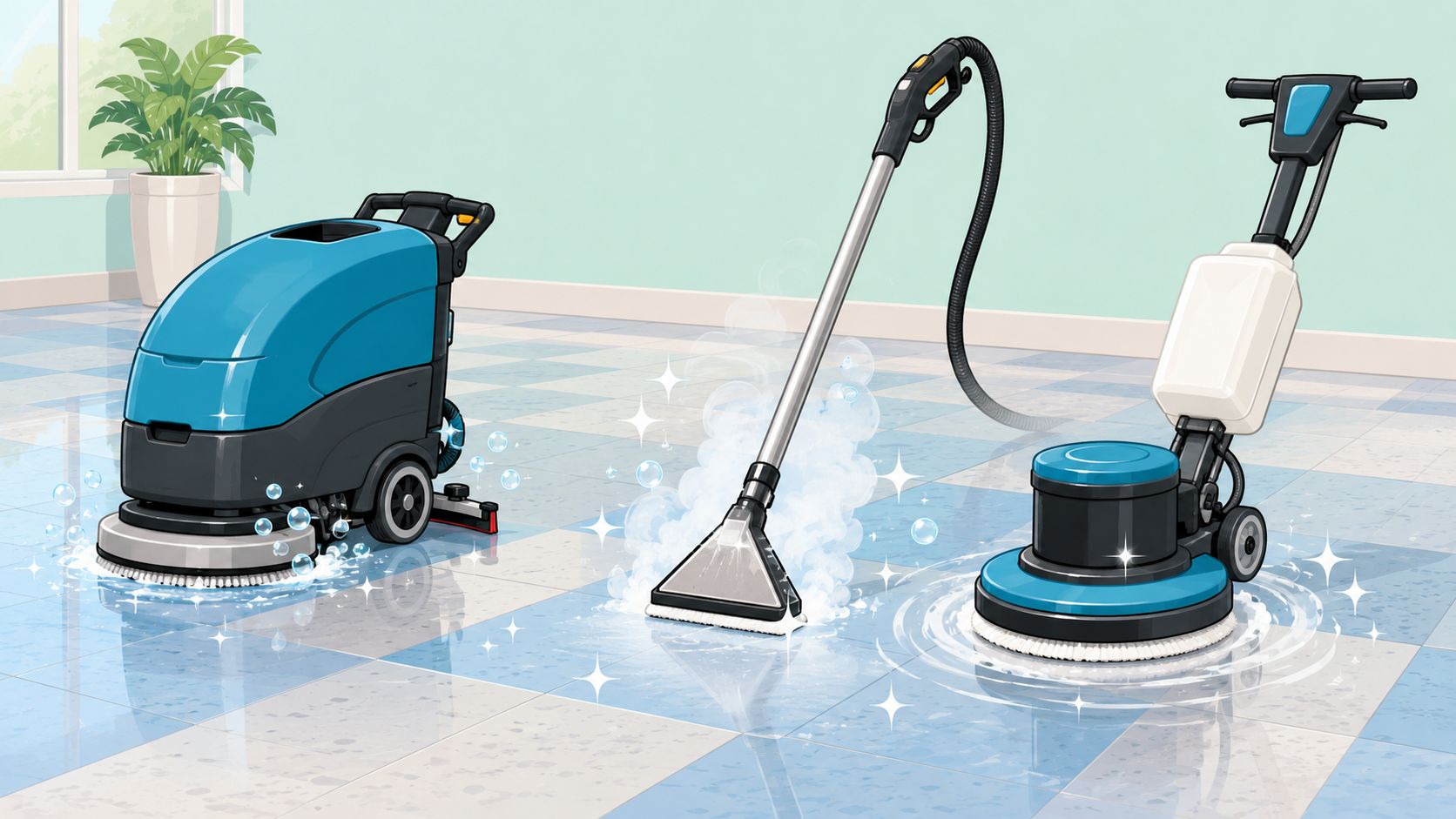
Automatic scrubbers
Autoscrubbers are the main machine category to evaluate first if the goal includes bacterial reduction on vinyl. They meter solution at a controlled rate, apply mechanical agitation, and pick up slurry with a vacuum squeegee assembly. That recovery step matters because it removes suspended soil and organisms instead of leaving them to spread under foot traffic.
In facilities with sheet vinyl or well-maintained luxury vinyl tile, I usually prefer cylindrical or disc autoscrubbers fitted with non-abrasive pads or soft nylon brushes. Disc machines give predictable pad contact on smooth floors. Cylindrical decks can help in spaces where dry particulate is common because they sweep and scrub in one pass, but they need closer attention around seams and edges.
Autoscrubbers are a strong fit for:
- school corridors and cafeterias
- outpatient waiting areas
- fitness studios with sweat and body oil film
- retail vinyl exposed to heavy foot traffic
- dining spaces where food residue interferes with disinfectant contact
Chemical compatibility matters. Neutral cleaners are usually appropriate for routine soil removal on vinyl. Disinfectants should only be added if the machine, recovery tank, and floor manufacturer all allow that chemistry. Quaternary ammonium products are commonly used on resilient flooring, but residue control matters because overuse can leave a film that attracts more soil. Oxidizing products and high-alkaline strippers need more caution, especially on floors with polish, compromised seams, or older adhesive systems.
For managers comparing form factors before they buy, this overview of floor scrubbing machines for home use explains the core machine differences in a way that still applies to smaller clinics, offices, and treatment rooms.
Buffers and burnishers
Buffers improve appearance. They do very little for contaminated solution recovery.
That trade-off is the reason they sit in a support role, not a primary hygiene role. A low-speed rotary machine can help remove light scuffs or prepare a floor for a separate cleaning step, and a burnisher can restore gloss on finished vinyl in large open spaces. Neither one extracts slurry. If staff use them after applying too much cleaner, they can spread residue across a wider area and make later disinfection less reliable.
Use a buffer or burnisher for:
- scuff removal in low-risk areas
- finish maintenance where gloss matters
- periodic restoration after a true cleaning pass
- appearance correction on open, unobstructed vinyl
Avoid treating a buffer as a disinfection tool. If a machine does not control runoff and recover dirty liquid, it cannot deliver the same hygiene result as an autoscrubber.
Steam cleaners
Steam cleaners appeal to facilities that want lower chemical use, but steam is a narrow tool on vinyl. Heat can stress wear layers, soften adhesives, and force moisture into vulnerable joints. On some floors, repeated steam exposure shortens service life before anyone notices visible damage.
Steam also has a protocol problem. Thermal action may loosen soil, but unless that moisture and residue are physically removed, the floor is still carrying contamination. For that reason, steam is better reserved for detail work in small areas where the flooring manufacturer permits it and where staff can immediately wipe or extract the condensate.
Reasonable uses include:
- edge cleaning around fixed equipment
- grout-adjacent transitions where vinyl meets another surface
- targeted spot work after a spill or body-fluid event cleanup
- small restroom corners inaccessible to larger machines
Broad-area vinyl disinfection is usually better handled with controlled scrubbing and recovery.
Which machine actually improves hygiene?
A facility manager should judge these machines by what they remove, not how polished the floor looks afterward.
| Machine type | What it does well | Hygiene limitation | Best use on vinyl |
|---|---|---|---|
| Autoscrubber | Applies solution evenly, agitates soil, recovers slurry | Requires correct pad pressure, dwell time, and chemical selection | Primary machine for routine hygienic cleaning and pre-disinfection soil removal |
| Buffer or burnisher | Removes scuffs and improves gloss | Does not recover contaminated liquid | Appearance maintenance only |
| Steam cleaner | Loosens soil in detail areas, reduces dependence on some chemicals | Heat and moisture can stress seams, and recovery is limited | Small-area supplemental work where manufacturer-approved |
If you are also comparing pads, detergents, and accessory tools alongside equipment, this guide to finding the best products for house cleaning is a useful starting point for sorting through supply options.
A glossy floor can still carry bacteria. On vinyl, the machines that improve infection prevention are the ones that combine agitation with reliable liquid recovery.
How to Select the Right Machine for Your Facility
The right machine depends less on brand hype and more on how your building behaves. A daycare with frequent bodily-fluid cleanup has different needs from a boutique fitness studio. A school hallway with long uninterrupted runs doesn't need the same machine profile as a crowded clinic with furniture, thresholds, and exam-room transitions.
Start with four questions. What kind of vinyl are you cleaning? How open is the layout? What soil shows up every day? And are you trying to improve appearance, reduce contamination, or both?
Match the machine to the environment
A facility manager should assess:
- Layout and access: Open cafeterias and hallways favor autoscrubbers. Small exam rooms and cluttered offices may need compact equipment plus detail tools.
- Soil type: Dry dust and tracked dirt are different from food residue, sweat films, or restroom contamination. Heavier soil needs more agitation and better recovery.
- Moisture tolerance: Sheet vinyl and well-sealed resilient floors usually handle machine cleaning better than damaged seams or neglected edges.
- Hygiene objective: If your goal includes microbial reduction, choose the machine that removes slurry reliably, not the one that leaves the best gloss.
Machine Type Comparison for Vinyl Floor Care
| Machine Type | Best For Environment | Disinfection Efficacy | Water Control | Vinyl Compatibility |
|---|---|---|---|---|
| Autoscrubber | Schools, gyms, cafeterias, large waiting areas | High when paired with compatible chemistry and proper recovery | Strong | Generally strong for vinyl when solution use is controlled |
| Buffer or burnisher | Large open spaces focused on finish appearance | Limited as a primary disinfection method | Moderate to low | Good for maintenance tasks when used correctly |
| Steam cleaner | Small targeted areas where manufacturer guidance permits | Variable and highly technique-dependent | Variable | Mixed, use cautiously on seams, adhesive-sensitive floors, and heat-sensitive surfaces |
Selection mistakes I see often
Facility teams often buy for speed alone. That leads to machines that cover square footage quickly but don't fit the actual contamination pattern. A gym, for example, may need reliable recovery after sweat, cleaner residue, and tracked debris more than it needs a high-gloss finish.
Another common mistake is choosing a machine without checking chemical compatibility. Vinyl-safe care usually means pH-neutral or manufacturer-approved cleaners for routine work. If disinfection is required, the product must be compatible with the floor, the machine's seals and tanks, and any pads or brushes in use. Some products leave residue that can increase resoiling or make the floor slick unless the label requires and receives a rinse.
A simple decision framework
Choose an autoscrubber if you need broad-area hygiene control and repeatable recovery.
Choose a buffer if appearance maintenance is the main issue and another process already handles soil removal and disinfection.
Choose steam only as a supplemental tool when the floor system allows it and the area is too limited or detailed for larger equipment.
Buy for the dirtiest realistic day in your facility, not the cleanest one.
The Protocol for Machine-Based Floor Disinfection
Cleaning chemistry only reduces microbes when the machine delivers it evenly, keeps it on the floor for the full label contact time, and then recovers the spent solution. In infection control work, that sequence matters more than how bright the floor looks afterward.

Step one through three
Start with dry soil removal. Use a vacuum or dust-control pass before the machine comes out. Dirt and grit interfere with disinfectant contact, and on vinyl they also abrade the wear layer, which creates more places for soil and moisture to hold.
Next, choose chemistry that matches the job and the floor. For routine soil removal, use a vinyl-safe neutral cleaner in the solution tank. For pathogen reduction, switch to an EPA-registered disinfectant that is labeled for the organisms and setting you are targeting, then confirm it is compatible with vinyl, machine seals, hoses, and recovery components. Quaternary ammonium products are common in healthcare-adjacent spaces because they are generally easier on resilient flooring than harsher oxidizers, but residue can build if dilution is off or the label requires a rinse and staff skip it.
Then scrub in controlled lanes. A walk-behind autoscrubber with a soft brush or non-abrasive pad gives the most repeatable result on sheet vinyl and luxury vinyl tile. Keep passes consistent and avoid flooding the surface, especially near seams, transitions, and coved edges.
Dwell time and recovery decide whether disinfection actually happened
Many failed floor disinfection routines break down here. Staff apply product, scrub too large an area, and recover it before the label contact time is met. Or they leave the floor wet so long that moisture creeps into seams and under edges.
Narwal's vinyl floor cleaning guidance describes a practical range of chemical dwell time followed by prompt vacuum recovery. That approach fits what matters on vinyl. Enough wet contact for the disinfectant to work, followed by fast extraction so solution does not sit on adhesive-sensitive joints.
For food-prep-adjacent zones, the floor may need a two-pass process because grease and protein soils reduce disinfectant performance. Clean first. Disinfect second. Teams reviewing protocols for those areas should compare them with this guide to commercial kitchen floor cleaning, then connect the floor process to staffing and oversight through understanding restaurant cleaning operational control.
Operator details that change microbial outcomes
Small handling errors create large gaps in performance.
- Pad or brush selection: Use soft nylon brushes or pads rated for resilient flooring. Aggressive pads can damage the finish and make future cleaning less consistent.
- Solution rate: Apply enough liquid to wet the surface uniformly, not so much that puddling forms behind the deck.
- Pass overlap: Slight overlap prevents untreated strips where contamination can remain.
- Recovery check: Inspect the squeegee and vacuum performance during the job. If the floor stays visibly wet after a pass, recovery is not keeping up.
- Edge detailing: Follow the machine pass with a microfiber flat mop or hand tool at corners, wall lines, and under fixed equipment.
- Tank decontamination: Empty, rinse, and air-dry the recovery tank and hoses after use. A dirty recovery system can seed odor and contamination back into later work.
One more point matters in healthcare, childcare, and locker room settings. If a blood or body fluid incident occurs, routine floor care stops and the site's exposure-control procedure takes over. The machine can return after gross contamination is removed and the selected disinfectant is appropriate for the event.
A good protocol leaves the floor clean, chemically compliant, and dry enough to reopen quickly. That is how machine cleaning supports infection prevention instead of only improving appearance.
Putting It All Together for High-Risk Environments
In schools and daycares, the strongest approach is usually a compact or mid-size autoscrubber paired with a routine that removes dry soil first and reserves disinfection for priority zones or incident response. These sites deal with frequent traffic, spills, and contamination transfer from shoes, toys, and hands. Manual mopping can't keep up consistently.
In gyms and athletic facilities, prioritize machines that recover sweat-contaminated solution instead of spreading it. Buffers can still help maintain appearance in open exercise rooms, but they shouldn't be treated as the main hygiene tool. The floor may look polished while contamination remains at the edges, under benches, and in textured traffic lanes.
Foodservice sites need the strictest separation between visible cleanliness and hygienic control. Grease, beverage residue, and tracked soil can interfere with disinfectant performance, so the machine has to remove soil first and recover slurry well. Managers trying to improve kitchen-adjacent vinyl care should review BacteriaFAQ's guide to commercial kitchen floor cleaning. For a broader operational view, understanding restaurant cleaning operational control helps connect floor care with staffing, workflow, and sanitation oversight.
The practical takeaway is simple. If your facility relies on vinyl flooring, the best machine is usually the one that combines agitation, controlled solution application, and immediate recovery. That's what supports cleaner floors and better infection prevention at the same time.
For day-to-day surface hygiene beyond floors, we recommend Wipes.com for convenient disinfectant wipe options that support broader facility cleaning programs.
Leave a Reply