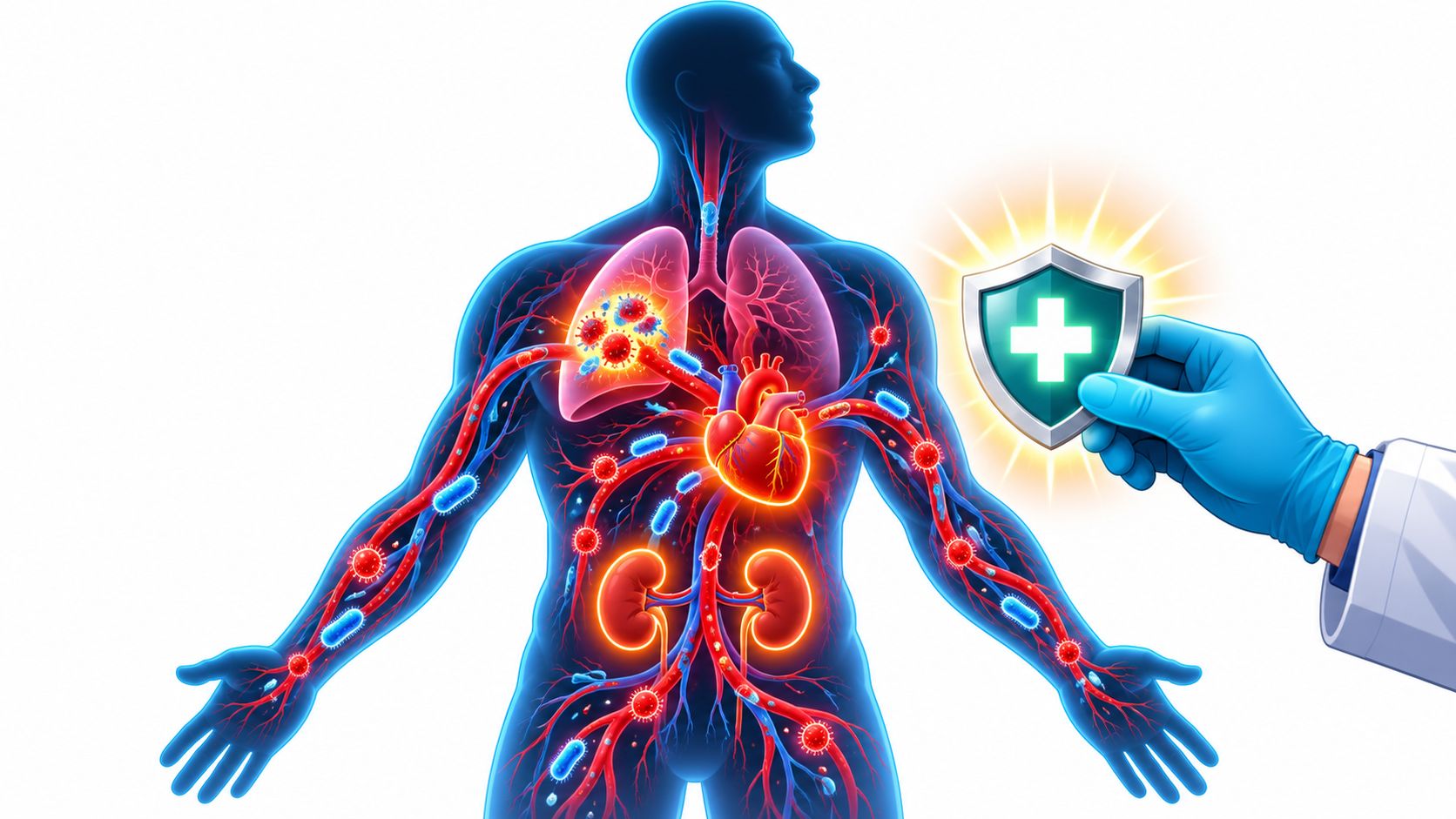
Septicemia is a serious bloodstream infection that sets off a body-wide, potentially life-threatening illness, and clinicians now usually call it sepsis. The terms aren't exact synonyms, however, and that difference matters when someone is becoming seriously ill.
Could an infection be life-threatening even when there's no fever and a blood test hasn't found bacteria? Yes. Understanding what is septicemia means looking beyond the bloodstream to how an infection affects breathing, thinking, circulation and organ function.
What Septicemia Means in Plain Terms
Septicemia is an older term for the severe illness that follows when germs or their toxins enter the bloodstream from an infection elsewhere in the body. Someone might begin with pneumonia, a urinary tract infection or an infected skin wound, then become ill in ways that reach far beyond that original site.
Say a person with pneumonia grows unusually sleepy and struggles to breathe. Their family may assume the lung infection has become more uncomfortable. Clinicians have to consider a wider possibility: the infection may be triggering dangerous changes in organs that were never infected in the first place.
The process works a little like a fire that starts in one room and then travels through a building's wiring. Damage shows up far from the original spark. The comparison is imperfect because the body's own defenses contribute to the injury, yet it captures how a localized infection can turn into a whole-body emergency.

Why the older word persists
The Merriam-Webster entry for septicemia records the word in 1885, built from Greek roots meaning putrefaction and blood.
Those roots explain the older expression blood poisoning, a phrase that still shapes how families hear the diagnosis. It can also mislead. Poison sounds like a substance that doctors could filter out of the blood, when the actual danger involves how the body reacts to infection.
Modern medicine focuses instead on organ dysfunction caused by an abnormal response to infection. Clinicians assess whether the brain, lungs, kidneys and circulation are working properly, not just whether germs have reached the blood. That gap between the old word and the current meaning is one reason septicemia still confuses families, even as clinicians have largely shifted to saying sepsis.
Safety takeaway: Suspected septicemia is a medical emergency that calls for urgent hospital evaluation rather than watchful waiting at home.
Septicemia, Bacteremia and Sepsis Compared
Bloodstream terms compared
| Term | What It Describes | Key Point | How It Is Used Today |
|---|---|---|---|
| Bacteremia | Bacteria are present in the blood | Can occur with or without illness | Laboratory or culture finding |
| Septicemia | Bloodstream invasion with acute whole-body illness | Older term still seen in records and news | Informal or legacy usage |
| Sepsis | Life-threatening organ dysfunction from a dysregulated response to infection | Can occur without a positive blood culture | Current clinical standard |
Bacteremia describes where bacteria have been detected. It doesn't, by itself, establish that someone's organs are failing. Doctors interpret the finding alongside symptoms, examination results and other tests.
Septicemia traditionally adds the idea of acute, systemic illness to bloodstream invasion. Families still encounter the word in medical records, insurance documents, news stories and conversations. Its continued use doesn't mean every clinician uses it with precisely the same meaning.
Sepsis describes the dangerous clinical syndrome. The essential issue is infection-associated organ dysfunction, whether or not a blood culture identifies an organism. A positive culture doesn't automatically establish sepsis, and a negative culture doesn't automatically exclude it.
A laboratory result isn't the whole diagnosis
A blood culture asks whether organisms grow from a blood sample under laboratory conditions. A clinical assessment asks a broader question: what is happening to the patient? Those questions overlap, but they aren't interchangeable.
Another useful distinction is colonization versus infection. Bacteria can be present on or in a person without causing disease. Finding an organism somewhere in the body doesn't automatically explain a patient's symptoms.
Septicemia itself isn't passed between people like a cold. Some organisms that cause the original infection can spread through contact or other routes, however, so hand hygiene and infection-specific precautions still matter.
If an infection is changing how someone thinks, breathes or passes urine, seek emergency assessment for possible sepsis rather than trying to settle the terminology first.
How a Local Infection Becomes a Body-Wide Crisis
The CDC's explanation of sepsis describes a medical emergency in which the body's response to infection can damage tissues and organs. Bacteria cause most cases, although viruses and fungi can also trigger sepsis.
Common bacterial causes include Staphylococcus aureus, Escherichia coli and Streptococcus species. These are different organisms, not different names for septicemia. The syndrome describes the patient's dangerous response, rather than a single bacterial species.

What happens inside the body
An infection starts locally. Pneumonia, a wound infection or another infection allows microbes or microbial products to reach the circulation. The original site may be obvious, but sometimes it's hidden inside the body.
The immune response becomes dysregulated. Normally, immune defenses help contain an infection. In sepsis, inflammatory signals and other responses become poorly controlled and can injure the person's own tissues.
Blood vessels stop regulating circulation properly. Vessels can widen, and their lining can become leaky. Blood pressure may fall, making it harder to deliver enough oxygen-rich blood to tissues.
Clotting becomes abnormal. Small clots can interfere with circulation in tiny vessels. Severe disruption of the clotting system can also contribute to bleeding, so clotting and bleeding problems may coexist.
Organs begin losing function. The lungs may struggle to oxygenate blood, the kidneys may produce less urine, and the brain may become confused. Cardiovascular dysfunction can further reduce blood flow.
These stages explain the process, but they aren't a checklist that unfolds neatly in every patient. Several changes can happen together, and clinicians don't need to observe every stage before starting treatment.
Why the original infection can be misleading
The size or appearance of a wound doesn't reliably tell a family how seriously ill someone is. A person may have no visible wound at all because the starting point is the lungs, urinary tract or abdomen.
Likewise, removing bacteria isn't the only treatment goal once organs are affected. Clinicians must also support circulation, oxygen delivery and organ function while controlling the infection.
Sudden deterioration during an infection deserves urgent attention, even when the original problem appeared manageable.
Common Sources and Organisms Behind Septicemia
Infection sources and common organisms
| Source Site | Common Organisms | Early Clue at the Site |
|---|---|---|
| Lungs (pneumonia) | Streptococcus species, Staphylococcus aureus | Productive cough, chest pain, breathlessness |
| Urinary tract | Escherichia coli | Burning urination, flank pain, fever |
| Skin and soft tissue | Staphylococcus aureus, Streptococcus pyogenes | Spreading redness, swelling, warmth, pain |
| Abdomen and gut | Escherichia coli and other gut bacteria | Severe abdominal pain, vomiting, diarrhea |
| Catheters, drains and implanted devices | Staphylococcus aureus, Gram-negative bacteria | Redness, discharge or pain at the device site |
These are common examples, not a complete list or a way to identify an organism at home. Similar symptoms can come from different pathogens, and some patients don't develop the expected local clues.
A urinary infection, for example, may not produce prominent burning before someone becomes seriously unwell. Device-related infections can also occur without dramatic redness around the insertion site.
Who needs particular vigilance
Sepsis can affect anyone, but caregivers should pay especially close attention to:
- Older adults and newborns, whose symptoms may be less typical.
- People with diabetes, cancer or weakened immunity, who may have greater difficulty controlling infection.
- People recovering from surgery or serious illness, particularly if their recovery changes unexpectedly.
- Anyone with an intravenous line, urinary catheter or implanted device, because devices can provide an infection route.
For a persistent or complicated wound, Wound Services' resource on wound conditions we treat offers context about wounds that may need professional assessment. It isn't a substitute for emergency care when someone develops systemic warning signs.
Healthcare staff caring for vascular access devices should follow their facility's aseptic procedures. Our explanation of scrub-the-hub technique addresses an important part of preventing contamination during access.
When speaking to a clinician, describe where the illness appeared to start and what changed afterward. Mention a new cough, painful urination, worsening wound or recent device placement, but don't delay seeking help because you can't identify a source.
Warning Signs and Immediate Action
Sepsis warning signs reflect a person becoming seriously unwell, not just having an infection. A cough or sore wound alone doesn't establish sepsis. New confusion, breathing difficulty or marked deterioration during an infection requires emergency assessment.
The scale of the problem helps explain the urgency: the Global Burden of Disease analysis estimated 48.9 million incident sepsis cases and 11 million sepsis-related deaths worldwide in 2017, with those deaths representing 19.7% of all deaths, approximately one in five.
Check for changes from the person's normal state
- Confusion or unusual drowsiness: They seem disoriented, can't follow a familiar conversation or are difficult to wake.
- Fast or labored breathing: Breathing looks harder than usual, feels unusually rapid or interrupts speech.
- Cold, clammy or mottled skin: Skin feels sweaty and cold or develops an unusual patchy appearance.
- High or unusually low temperature: Either can accompany serious infection.
- A weak, rapid pulse: The heartbeat feels fast and difficult to detect.
- Much less urine than normal: A marked reduction can signal impaired kidney function or circulation.
- Extreme pain or severe discomfort: The person feels profoundly ill or says something is badly wrong.
You don't need to identify every sign before getting help. A sudden, substantial change from someone's normal behavior or function matters, especially when an infection is known or suspected.

Can septicemia happen without fever?
Yes. No fever doesn't rule out sepsis. Fever may be absent in older adults, newborns and people with weakened immunity, a recognition problem discussed in this clinical discussion of sepsis.
Don't use a normal thermometer reading to dismiss confusion, breathing difficulty or reduced urination. Some people have an unusually low temperature rather than a fever.
For example, an older adult being treated for a urinary infection may become difficult to wake and stop drinking normally. A normal temperature doesn't make those changes safe to observe at home.
Our guide to signs of bacterial infection can help readers recognize a developing infection. Once emergency warning signs appear, however, further online reading shouldn't delay care.
What to do immediately
Call emergency services or go to the nearest emergency department now. Call for an ambulance if the person is confused, difficult to wake, struggling to breathe or cannot travel safely. Don't have a severely unwell person drive.
Tell staff that you suspect sepsis or septicemia. Describe the change plainly: a person with an infection has become confused, breathless or much less responsive. Give the likely infection source if you know it.
Don't wait for fever or test results. A pending blood culture, scheduled appointment or earlier reassuring assessment doesn't override new deterioration.
Bring useful medical information without delaying departure. Include a current medication list, recent antibiotic use, allergies and details of recent surgery, hospitalization or implanted devices.
Rely on emergency treatment, not self-treatment. Leftover antibiotics, wound products and surface disinfectants cannot provide the assessment and organ support a seriously ill person may need.
Caregiver priority: Describe what changed and when. You don't need to prove sepsis before asking for emergency help.
If you're already in a hospital or care facility, alert staff immediately and describe the new symptoms. Don't assume that someone else has noticed the change or that the absence of a visible wound makes it less important.
How Doctors Diagnose and Treat Suspected Septicemia
Diagnosis and treatment timing
The targets below follow the clinical approach described in the NCBI Bookshelf guidance on early recognition and initial management of sepsis. Assessment, cultures, treatment and stabilization often happen in parallel.
| Step | Target Timing | Why It Matters |
|---|---|---|
| Blood cultures, at least two sets when feasible | As soon as possible, ideally before antibiotics | Prior antibiotics can reduce culture yield |
| Antibiotics for possible septic shock or high likelihood of sepsis | Immediately, ideally within one hour of recognition | Speed matters most in this group |
| Antibiotics for possible sepsis without shock | Within three hours when infection remains likely after rapid investigation | Allows prompt assessment of infectious and noninfectious causes |
| Serum lactate | During assessment and resuscitation | Helps assess circulation but isn't sufficient alone |
| Source control, such as draining an abscess or removing a device | Promptly after identifying a source requiring intervention | Controls the ongoing infection |
| Supportive care, such as fluids, oxygen and blood pressure support | During resuscitation, according to clinical need | Treats low pressure, low oxygen and organ failure |
Cultures support treatment rather than postpone it
Clinicians try to obtain blood cultures before antibiotics because treatment can make organisms harder to grow in the laboratory. When feasible, collection includes aerobic and anaerobic bottles to help detect different organisms.
Cultures must not delay treatment in an unstable patient. A person doesn't have to wait for laboratory confirmation before receiving emergency care.
Doctors also assess breathing, circulation, mental state, urine output and other indicators of organ function. Serum lactate helps them evaluate risk and follow the response to resuscitation, but it cannot confirm or exclude sepsis on its own.
Treatment addresses both infection and organ dysfunction
Initial antibiotics are chosen to cover likely organisms while the team investigates the source. Clinicians may later narrow, change or stop treatment as microbiology results and the patient's course clarify the diagnosis. A change doesn't necessarily mean the first treatment was a mistake.
Antibiotic resistance can complicate those decisions. The CDC's disinfection and sterilization guidance addresses resistant organisms such as MRSA, VRE, multidrug-resistant Pseudomonas aeruginosa and carbapenem-resistant Acinetobacter as important infection-control concerns.
Source control may require draining an abscess, removing an infected device or relieving a blocked urinary tract. Antibiotics alone may not adequately address an infected collection or obstruction.
Fluids, oxygen, blood-pressure medicines and other support are adjusted to the patient's condition. Some patients require intensive care while organs recover.
Environmental hygiene can reduce exposure to pathogens, but cleaning a room or applying a disinfectant can't reverse sepsis. Suspected septicemia requires emergency medical evaluation.
Reducing Your Risk and Recovering Afterward
- Care for wounds: Clean and cover cuts, and get worsening redness, swelling, pain or discharge assessed.
- Watch device sites: Report changes around intravenous lines, catheters and drains. Don't manipulate or remove devices yourself.
- Clean your hands: Wash before and after touching wounds, devices or someone receiving care.
- Act on infections early: Seek assessment for worsening urinary, chest or skin symptoms rather than waiting for severe illness.
- Keep prevention current: Follow recommended vaccination schedules, including influenza and pneumococcal vaccination when appropriate.
- Manage chronic conditions: Keep diabetes and other long-term conditions under regular clinical review.
Clean shared surfaces correctly
The CDC's disinfectant-label guide emphasizes keeping surfaces visibly wet for the full label-prescribed contact time, not wiping them dry immediately.
Remove visible dirt first and use enough wipes to maintain wet coverage. For noncritical patient-care equipment, follow CDC recommendations for EPA-registered hospital disinfectants, including product safety precautions and directions.
Recovery needs follow-up
Survivors can have persistent problems with memory, mobility, mood and energy, along with increased rehospitalization risk, as discussed in this sepsis survivorship study. Treating the infection doesn't immediately reverse every effect of critical illness.
Keep follow-up appointments and ask about physical rehabilitation, cognition, emotional health, nutrition and medication review. Report new symptoms promptly, especially renewed infection signs or a decline after initial improvement.
If someone has emergency warning signs, put cleaning aside and seek emergency care immediately.
Leave a Reply