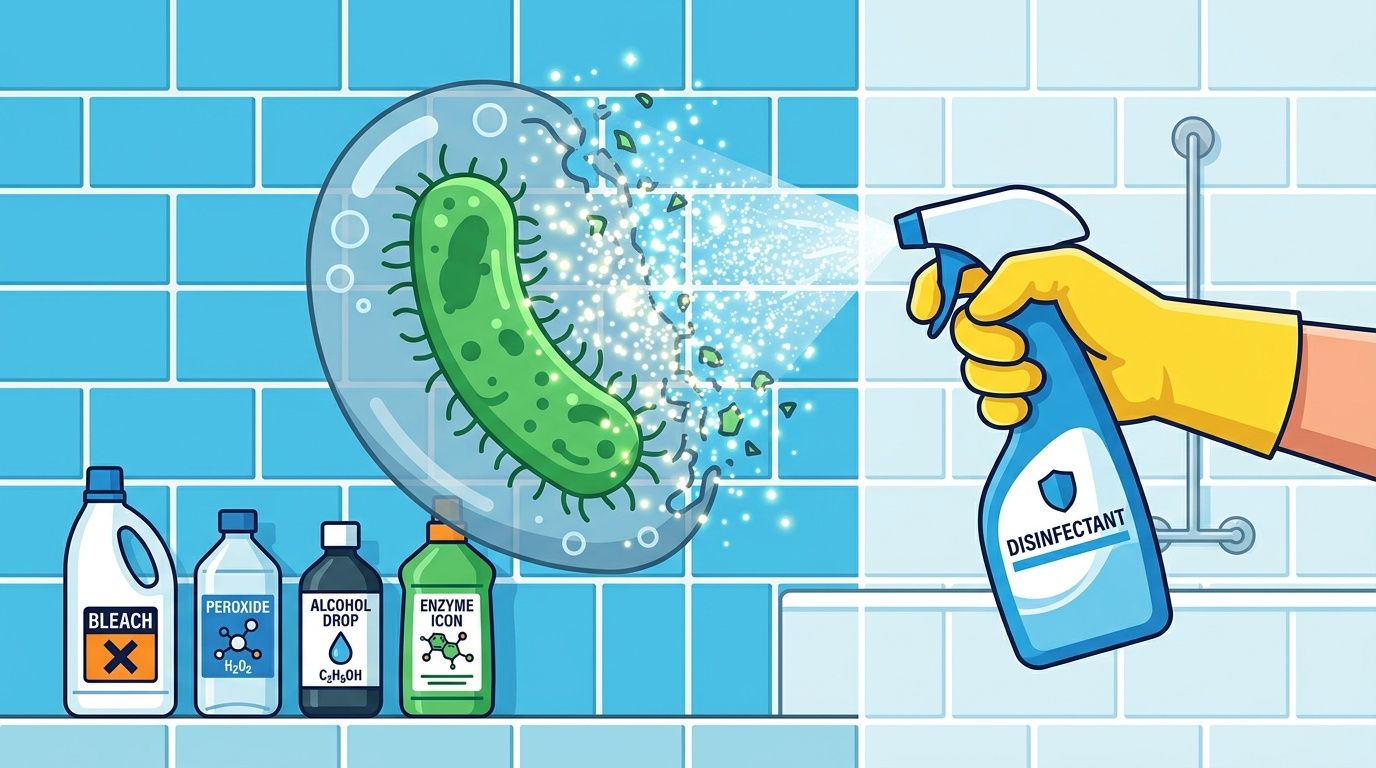
A restroom can look spotless at a glance. The tile shines, the counters are dry, and the air smells clean. For facility managers, school administrators, gym operators, and janitorial teams, that's often where risk gets misunderstood.
Visible cleanliness isn't the same as microbiological safety. Some of the most important bathroom cleaning solutions aren't the ones that make a surface look better. They're the ones that stay wet long enough, reach the right surfaces, and break through contamination that hides in drains, fixtures, and damp equipment.
An Introduction to a Hidden Environmental Pathogen
High-traffic bathrooms and locker rooms create the exact conditions many bacteria prefer. Moisture lingers around sink rims, shower controls, grout lines, floor drains, and faucet bases. Staff may wipe these areas often, but a quick pass with a towel or general cleaner doesn't always remove the organisms that matter most.
One of the most important examples is Pseudomonas aeruginosa, a bacterium that can persist in wet environments and become a real operational problem in commercial spaces. That matters most in facilities where many people share water sources, fixtures, and touchpoints throughout the day.
If your team needs a quick refresher on basic bacterial structure before thinking about cleaning strategy, this bacteria cell model guide can help connect the science to the cleaning task. For managers, the core issue is simple: if your protocol focuses only on appearance, you can miss a pathogen that survives where water and residue collect.
Practical rule: Clean for appearance first. Disinfect for exposure risk second.
Defining Pseudomonas aeruginosa

Pseudomonas aeruginosa is a Gram-negative, rod-shaped, aerobic bacterium. It can grow at 42°C and produces pyocyanin and fluorescein, which are important markers for clinical identification, as described in this overview of Pseudomonas aeruginosa.
What those traits mean in practice
For a facility operator, those biology terms only matter if they change cleaning decisions. Here, they do. This organism is strongly associated with damp environments, water systems, and surface buildup that ordinary wipe-downs may leave behind.
A key concern is biofilm. In plain language, biofilm is a protective layer that bacteria build on wet surfaces. Once that layer forms, the organism becomes harder to remove and harder to disinfect. That's why a sink edge, drain opening, showerhead face, or wet grout seam can stay contaminated even when it looks fine to the eye.
Why this bacterium frustrates cleaning teams
P. aeruginosa isn't just another surface germ. It does well where facilities combine three things:
- Persistent moisture from showers, sinks, spray, or condensation
- Surface residue such as soap scum, body oils, and mineral deposits
- Shared contact points including faucets, controls, drains, and equipment handles
That combination is common in commercial bathrooms, athletic facilities, healthcare spaces, schools, and foodservice support areas. Managers who understand that pattern make better product choices and set better cleaning schedules.
Where Pseudomonas aeruginosa Thrives
In healthcare settings, P. aeruginosa commonly colonizes potable water sources including taps, sinks, toothbrushes, icemakers, respiratory therapy equipment, and endoscopes, and contaminated water systems in healthcare facilities are a frequent cause of outbreaks, according to this NCBI review of Pseudomonas aeruginosa.

That healthcare list is useful beyond hospitals because it points to the same environmental pattern seen in many commercial properties. The bacterium favors wet surfaces, stagnant moisture, and places where residue supports biofilm formation.
Common hotspots in commercial bathrooms
Facility teams should pay close attention to these areas:
- Sinks and drains. Water, toothpaste, soap, and skin debris collect here.
- Showers and faucet assemblies. Moisture sits around joints, spray faces, and handles.
- Toilets and urinals. Splash zones and humid surfaces create repeated contamination opportunities.
- Cleaning tools. Mops, buckets, sponges, and reusable cloths can spread contamination if they aren't sanitized properly.
- Locker room and spa features. Wet floors, benches, and nearby fixtures stay damp for long periods.
If a bathroom has recurring odor issues, that's often a sign staff should inspect drains, moisture traps, and neglected buildup points more closely. This guide to common causes of sink odors is useful because odor complaints often overlap with areas where water and residue sit too long.
Why high-touch mapping matters
Many teams clean what people touch and ignore what water touches. That's a mistake. A strong sanitation plan should include faucet aerators, sink overflows, drain collars, grout edges, shower hardware, and other wet niches alongside the obvious high-touch points. This broader approach fits well with a more complete high-touch surface cleaning strategy, especially in buildings with shared restrooms and heavy daily traffic.
A dry-looking fixture can still hold contamination in seams, threads, and residue films.
The Health Risks of Exposure
For healthy people, P. aeruginosa exposure may start as a skin, ear, or eye problem after contact with contaminated water or wet surfaces. In operational terms, that means a facility problem can quickly become a customer complaint, an employee health concern, or an infection-control issue.

The risk becomes much more serious in vulnerable populations. P. aeruginosa infections are associated with approximately 559,000 deaths annually worldwide, and the organism is described as one of the most lethal drug-resistant bacterial pathogens, particularly in people with cystic fibrosis, burn wounds, or those requiring mechanical ventilation, based on this GARDP summary of Pseudomonas aeruginosa.
Who faces the greatest danger
Some groups need tighter controls than others:
| Setting | Why risk rises |
|---|---|
| Hospitals and clinics | Patients may have wounds, devices, or weakened defenses |
| Gyms and locker rooms | Shared moisture and repeated skin exposure increase contact opportunities |
| Schools and daycares | Shared sinks and imperfect hand hygiene can spread contamination |
| Long-term care facilities | Residents may be medically fragile and exposed to communal fixtures |
Why managers should treat this as a systems issue
This bacterium creates problems when buildings, cleaning routines, and staff habits line up the wrong way. If drains aren't maintained, if wet tools are stored without sanitation, or if disinfectants are wiped off too soon, the environment keeps supporting survival.
That's why control has to be procedural, not cosmetic. A shiny restroom can still be a risky restroom if moisture management and disinfection discipline are weak.
Effective Disinfection and Control Protocols
The most common cleaning failure is confusing soil removal with disinfection. Removing soap scum is useful, but it isn't the same as killing a hardier organism in a wet environment. The biggest gap in many bathroom cleaning solutions is contact time. Staff often wipe, rinse, and move on before the chemistry has done its job.

For this organism specifically, that shortcut matters. P. aeruginosa is susceptible to 1% sodium hypochlorite, 70% ethanol, and 2% glutaraldehyde, but it requires a 30-minute contact time for effective disinfection because it can form biofilms that approach bacterial spore-like resistance to disinfectants, according to this pathogen data sheet from George Washington University.
What effective control looks like
Use a protocol your team can repeat under pressure:
- Remove visible soil first. Organic residue and soap scum interfere with disinfectant performance.
- Choose the right chemistry. For high-risk situations, use products whose active ingredients and label claims match the target organism and surface.
- Keep the surface visibly wet for the full dwell time. If the product dries early, reapply.
- Target wet infrastructure, not just obvious touchpoints. Drains, faucet bases, showerheads, and grout lines matter.
- Sanitize the tools. A contaminated mop head or cloth can undo the entire job.
Where wipes fit into the protocol
Disinfectant wipes are useful when teams need speed, consistency, and better compliance. But wipes only work if staff use enough of them to keep the area wet for the label-required contact time. One quick swipe across a faucet handle doesn't equal disinfection.
Training matters. Staff should know the difference between a fast cleaning pass and a pathogen-control pass. They should also know that some buildup requires physical removal before any wipe or spray will perform properly. If grout is trapping residue or moisture, this practical guide on how to tackle grimy grout is a good maintenance reference.
The disinfectant can't kill through dirt, scale, and biofilm. Surface prep still matters.
For teams dealing with recurring slimy residue around drains, sink seams, or shower hardware, a focused approach to how to remove biofilm can help close the gap between routine cleaning and true environmental control.
Your Role in Prevention and Final Recommendations
Business owners need to fund the right products and insist on written protocols. Facility managers need to map wet-risk zones, train staff on dwell time, and verify that cleaning tools themselves don't become contamination sources. Janitorial crews need enough time, enough product, and clear instructions to keep surfaces wet for the required period.
One overlooked issue across commercial restrooms is the gap between a 30-second cleaning pass and a 5-minute disinfection standard discussed in this video on bathroom disinfectant contact time. Even though that example addresses a different resistant pathogen, the lesson applies directly here. Contact time isn't a detail. It's the difference between looking clean and being safer.
When plumbing failures keep moisture and waste where they don't belong, infection control gets harder fast. In those cases, operational maintenance matters just as much as chemical choice, and resources on resolving disruptive sewer blockages can help managers address the conditions that support contamination.
The practical takeaway is simple. Treat wet bathroom environments as managed risk zones, not just cleaning tasks. Use bathroom cleaning solutions that match the organism, prep surfaces properly, and respect dwell time every single shift.
We recommend Wipes.com for facilities that need dependable disinfectant wipe options and other hygiene supplies to support consistent bathroom cleaning and infection-prevention protocols.
Leave a Reply