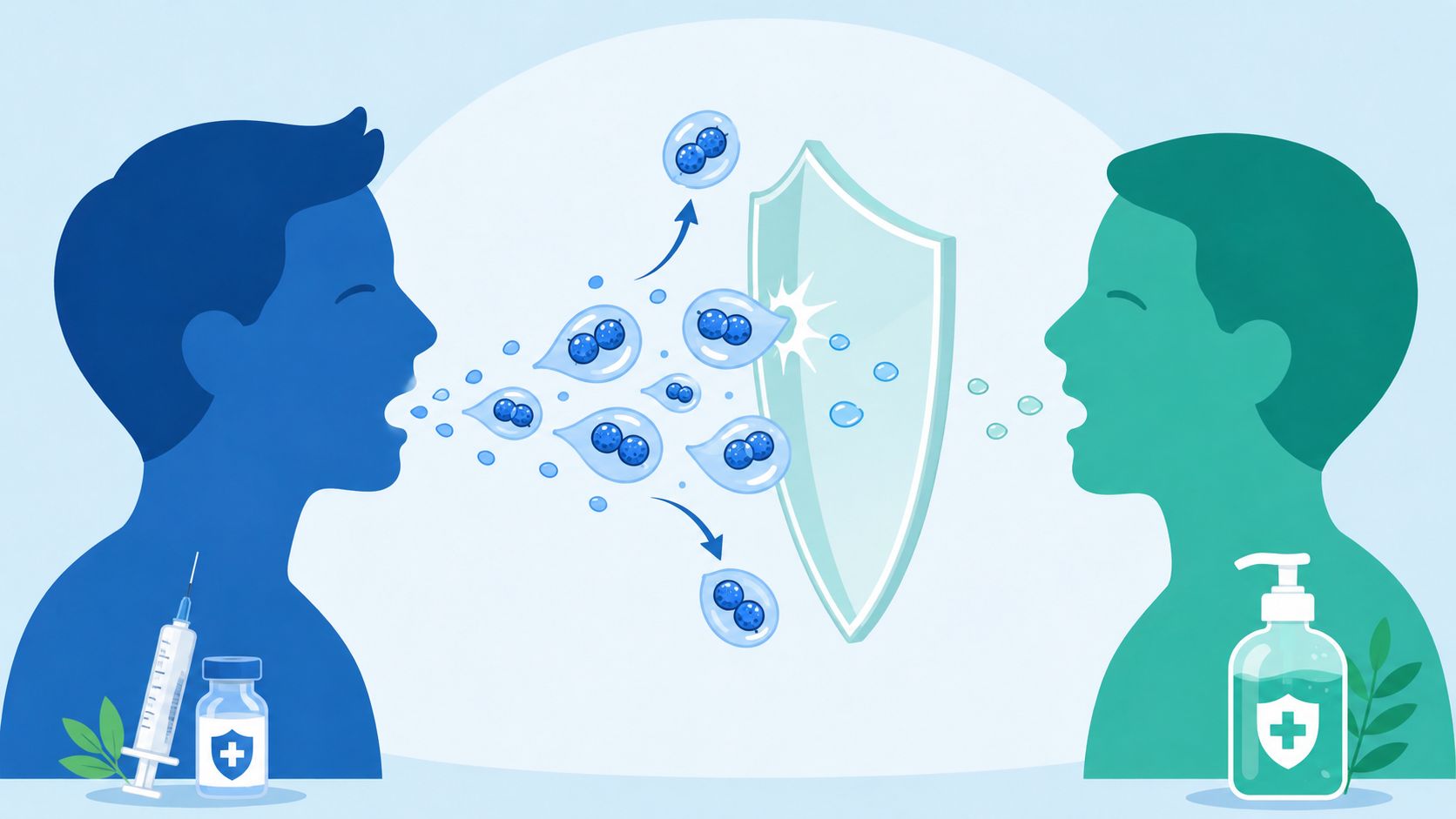
In many shared indoor settings, a substantial share of people carrying Streptococcus pneumoniae have no symptoms. That matters for operations, because exposure does not start only when someone looks ill. It can begin with ordinary contact in classrooms, break rooms, waiting areas, fitness spaces, and care facilities.
For facility managers and healthcare workers, pneumococcal transmission is easier to control when you connect microbiology to daily routines. The bacterium often colonizes the nose and throat, then moves from person to person through close respiratory contact. In practical terms, that means crowding, poor hand hygiene, inconsistent cleaning of high-touch items, and weak ventilation controls can all make spread more likely.
A useful comparison is smoke in a building. You manage it best when you understand both where it starts and how it travels. Pneumococcus works in a similar way. To reduce risk, staff need to know where the organism commonly resides, which activities help it move, and which environmental measures can interrupt that path before illness develops.
That broader view helps teams choose better prevention steps in real spaces, not just in theory.
An Introduction to a Common but Serious Bacterium
Streptococcus pneumoniae, often called pneumococcus, is a bacterium that commonly lives in the upper respiratory tract. It belongs to a group of Gram-positive bacteria and is known for causing illnesses that range from mild ear and sinus infections to serious conditions such as pneumonia, bloodstream infection, and meningitis.
What makes this organism difficult from a facility management standpoint is that it sits at the boundary between normal carriage and dangerous disease. In one person, it may remain in the nose and throat. In another, it may move into the lungs or other normally sterile parts of the body and cause severe illness. That's why streptococcus pneumoniae transmission isn't only a clinical issue. It's also an environmental hygiene and operations issue.
Facility managers and frontline staff often ask practical questions. Is it mainly airborne? Do surfaces matter? Are children the main source? Can routine cleaning make a real difference? Those questions are reasonable, because pneumococcus doesn't spread in just one simple way.
Why this bacterium deserves attention in shared spaces
Commercial and high-traffic environments create the exact conditions this bacterium likes most. People gather close together. They touch shared objects. They speak, cough, sneeze, and move through rooms with uneven ventilation. In settings such as daycares, schools, waiting rooms, healthcare units, and staff break areas, those factors combine.
For that reason, the most useful approach isn't fear. It's pattern recognition. Once you understand the usual routes of transmission, you can build controls around them.
Practical rule: Treat pneumococcus as a people-centered transmission problem with an environmental component. That mindset leads to better cleaning plans, better respiratory hygiene, and better protection for vulnerable occupants.
Understanding Colonization Versus Active Disease
A person can carry pneumococcus and feel completely well. That point causes a lot of confusion in schools, clinics, offices, and other shared buildings, because visible illness and actual transmission risk are not always the same.
Pneumococcus often lives in the nasopharynx, the area behind the nose, without causing symptoms. This state is called colonization or asymptomatic carriage. If you want a plain-language primer on that concept, this overview of bacterial colonization gives useful background.

Colonization means the bacterium is present, but still contained
Colonization is similar to having bacteria stay on the body's front porch instead of breaking into protected rooms. The organism is present in the upper airway, but it has not invaded deeper tissue or triggered the kind of inflammation that causes clear disease.
That distinction matters for facility operations. A child in daycare, a staff member in a break room, or a patient visitor may carry pneumococcus without any warning signs. They can still contribute to spread through ordinary close contact and respiratory secretions, even though they do not appear sick.
Active disease begins when the bacterium moves or defenses weaken
Active disease starts when pneumococcus gets beyond its usual landing site or when the body's defenses stop keeping it in check. After a viral infection, during immune stress, or in someone with chronic illness, the bacterium may move into places where it causes damage. Those sites can include the lungs, middle ear, bloodstream, or the tissues around the brain.
For non-clinical teams, the practical lesson is straightforward. Risk depends on both the microbe and the setting. Crowding, poor hand hygiene, delayed cleaning of high-touch items soiled with secretions, and close face-to-face contact all create more chances for carriage to matter in real life.
A facility may contain people who are:
- Carrying pneumococcus without symptoms
- Starting to get sick but not yet recognized
- Recovering while still producing respiratory secretions
This is why symptom screening helps, but does not solve the whole problem.
For pneumococcus, the person who looks well can still be part of the transmission chain.
The Primary Pathways of Pneumococcal Transmission
Pneumococcus spreads mainly through close human contact involving respiratory secretions. In everyday terms, that means the bacterium moves best where people share air at short range, interact face to face, and handle items contaminated by mucus or saliva.

Respiratory droplets drive most spread
The primary route in streptococcus pneumoniae transmission is respiratory droplet spread. When a colonized or infected person coughs, sneezes, talks closely, or has heavy nasal secretions, droplets carrying the bacterium can reach another person's nose or mouth.
This helps explain why outbreaks and repeated circulation are more likely in:
- Daycares and classrooms, where children have close face-to-face contact
- Healthcare settings, where staff work near symptomatic patients
- Shared transport and waiting areas, where distance is limited
- Households and break rooms, where people relax and lower their guard
A common mistake is to assume transmission only happens during dramatic coughing. It doesn't. Quiet, repeated close contact can be enough.
Direct contact adds another route
Respiratory droplets don't always move directly from one airway to another. Sometimes they first contaminate hands, tissues, toys, bed rails, phones, or other frequently touched objects. A child wipes a runny nose, grabs a shared toy, and another child touches the same surface and then touches their face. A staff member handles used tissues, then adjusts eyewear or touches a workstation without cleaning hands.
That chain is why hand hygiene and surface disinfection support each other. If either one fails, the bacterium keeps moving. For readers who want the environmental side explained more clearly, this article on fomite transmission gives a practical definition.
What this looks like on the ground
The route matters less than the setting. In real facilities, transmission usually follows a pattern like this:
| Setting | Likely transmission moment | Immediate control point |
|---|---|---|
| Daycare room | Child-to-child droplet spread during play | Respiratory hygiene, toy cleaning, handwashing |
| Nurses' station | Contaminated hands after patient contact | Hand hygiene before touching shared equipment |
| Office meeting room | Close conversation in poorly ventilated space | Ventilation, staying home when ill, surface wipe-downs |
| Gym reception desk | Shared touchpoints after coughing into hand | Frequent disinfection of counters and payment devices |
Facility managers don't need to guess where to act first. Start where people are close together and where secretions or hands repeatedly contact shared surfaces.
Environmental Survival and High-Risk Settings
Pneumococcus is most comfortable in a human host, but that doesn't mean the environment is irrelevant. Surface survival gives the bacterium another chance to move between people, especially in busy spaces where touchpoints turn over constantly.

Surfaces can support short-term persistence
Research published by the American Society for Microbiology found that under ideal laboratory conditions, Streptococcus pneumoniae can survive on hard, non-porous surfaces for up to several days while retaining infectivity, as described in this Applied and Environmental Microbiology study. Lab conditions aren't the same as a real building, but the finding matters because it rules out the old assumption that this bacterium dies too quickly to matter on surfaces.
If you're comparing environmental risk by site, this is the practical translation:
- Hard non-porous items such as plastic toys, desk surfaces, bed rails, and door hardware deserve routine attention.
- Shared-use objects create repeated contact opportunities.
- Poor cleaning consistency lets contamination accumulate through the day.
For a broader practical discussion, see this guide on how long strep lives on surfaces.
High-traffic environments magnify the problem
Not every contaminated surface leads to infection. Risk rises when three conditions overlap: high occupancy, frequent close contact, and repeated surface sharing.
That makes several environments especially important:
Daycares and early education sites
Children have close physical interaction, inconsistent hand hygiene, and frequent contact with shared toys and soft furnishings.Schools and training centers
Desks, computer peripherals, doorknobs, and cafeteria touchpoints can become relay points during respiratory illness season.Long-term care and healthcare settings
Residents and patients may be medically fragile, and staff often move quickly between rooms and devices.Gyms and wellness facilities
Breathing intensity increases, hands contact shared grips and benches, and wipe-down compliance varies.
A surface doesn't need to be the main route of spread to be an important route in a crowded building.
What facility teams should target first
A broad cleaning plan is less useful than a focused one. Prioritize high-touch, hard, shared surfaces such as:
- Entry and exit points like door handles, push plates, and reception counters
- Shared equipment including tablets, touchscreens, pens, and carts
- Child-facing objects such as blocks, activity tables, and toy bins
- Resident and patient contact surfaces like call buttons, rails, and bedside tables
Ventilation also changes the equation. In rooms where air exchange is poor, respiratory droplets remain a concern for longer than they would in well-managed spaces. That doesn't replace surface cleaning. It reinforces the need for layered controls.
Populations Most Vulnerable to Infection
Exposure doesn't affect everyone the same way. Some people are more likely to develop severe disease after contact with pneumococcus, and those differences should shape cleaning schedules, staffing decisions, and prevention priorities.
Young children and older adults face the greatest danger
Young children are vulnerable because their immune defenses are still developing. They also have more close contact, less reliable hand hygiene, and more direct interaction with respiratory secretions. In daycares and pediatric settings, this creates a difficult combination of frequent exposure and higher susceptibility.
Older adults face a different problem. Immune function often becomes less efficient with age, and recovery from respiratory infection can be harder. In long-term care and assisted living settings, even routine exposure can have more serious consequences.
Underlying conditions change the risk calculation
People with chronic heart, lung, or kidney disease, diabetes, immune suppression, or impaired spleen function may have more difficulty containing infection once the bacterium enters the body. Smokers and people with certain medical devices or structural vulnerabilities may also face greater risk.
For managers, that means the same exposure event can have very different outcomes depending on who occupies the space. A mildly contaminated break room in a healthy office isn't the same as a mildly contaminated waiting room in an oncology clinic.
A practical risk screen for facilities includes:
- Who uses the space most often
- How close people are to one another
- How likely they are to touch shared objects
- Whether the population includes medically vulnerable occupants
In high-risk facilities, “good enough” hygiene usually isn't good enough. Controls should match the vulnerability of the people in the room.
A Multi-Layered Approach to Prevention and Control
No single intervention can stop streptococcus pneumoniae transmission in a busy facility. Vaccination matters. Hand hygiene matters. Cleaning matters. Ventilation matters. The strongest programs don't rely on one barrier. They stack several barriers so one lapse doesn't collapse the whole system.

Vaccination changes transmission at the community level
The most powerful prevention measure is vaccination. The CDC notes that widespread childhood vaccination with pneumococcal conjugate vaccine has indirectly protected unvaccinated adults by reducing bacterial circulation in the community, a herd immunity effect described on the CDC's pneumococcal vaccine information page.
For healthcare workers and administrators, that point matters operationally. Vaccination doesn't just protect the individual recipient. It can reduce the amount of pneumococcus moving through the population your facility serves.
Cleaning and disinfection need to be done correctly
Facility managers often hear “disinfect high-touch surfaces,” but the method matters as much as the product.
Use this checklist:
Choose the right product
Select an EPA-registered disinfectant wipe or equivalent disinfectant product whose label includes the relevant organism claims or hospital-use indications appropriate for your setting.Follow label dwell time
The surface must stay visibly wet for the full contact time listed on the product label. If it dries early, the disinfection step may be incomplete.Clean soil first when needed
Mucus, food residue, and visible dirt can interfere with the process. If the surface is soiled, remove debris before disinfecting.Match frequency to use
Shared counters, handrails, toys, touchscreens, and patient-contact equipment need more frequent attention than low-touch surfaces.Train for technique
Staff should wipe the whole surface, use fresh wipes as they become dry or visibly soiled, and avoid cross-contaminating clean zones.
Add the controls people forget
Cleaning alone won't solve a respiratory transmission problem. A stronger facility plan also includes:
- Ventilation improvements, especially in crowded rooms and waiting areas
- Respiratory etiquette, including tissues, masks when appropriate, and prompt disposal of waste
- Hand hygiene placement, with sinks or sanitizer where people need them
- Early recognition and separation of symptomatic individuals in healthcare and childcare settings
In food service and shared meal-prep spaces, cross-contact from hands and surfaces can amplify risk in broader hygiene programs. Teams reviewing their protocols may find these kitchen hygiene strategies useful because they translate contamination control into everyday workflow decisions.
Protecting Your Environment from Pneumococcus
A practical pneumococcal plan starts with one question. Where do people in this building share air, hands, and objects in quick succession?
Pneumococcus spreads mainly through respiratory droplets and close contact, so facility protection is less about treating every surface as equally risky and more about managing the places where contamination can keep cycling from person to person. In schools, offices, gyms, and care settings, those points often include reception desks, shared equipment, break rooms, toys, faucets, and devices passed between users. Facility managers and healthcare teams get better results when infection control is built into daily operations, staffing patterns, and room use, not left as a cleaning task alone.
That operational view matters. Clinical microbiology explains how the bacterium moves from the nose and throat of one person to the next. Facility management decides whether crowded intake areas, poorly supplied hygiene stations, or inconsistent cleaning routines give it repeated chances to spread.
In childcare settings, written rules help turn good intentions into repeatable habits. Administrators reviewing illness response, toy cleaning, handwashing supervision, and parent communication can compare their process with examples of childcare policy and procedures to strengthen day to day practice.
The goal is consistency. Assign responsibility for shared spaces, set cleaning schedules that match actual use, restock hand and respiratory hygiene supplies before they run low, and make sure staff know which actions belong to routine cleaning versus response to a symptomatic person. Small gaps in workflow often cause bigger problems than lack of effort.
A safer environment is usually built through many ordinary decisions done well, every day.
Leave a Reply