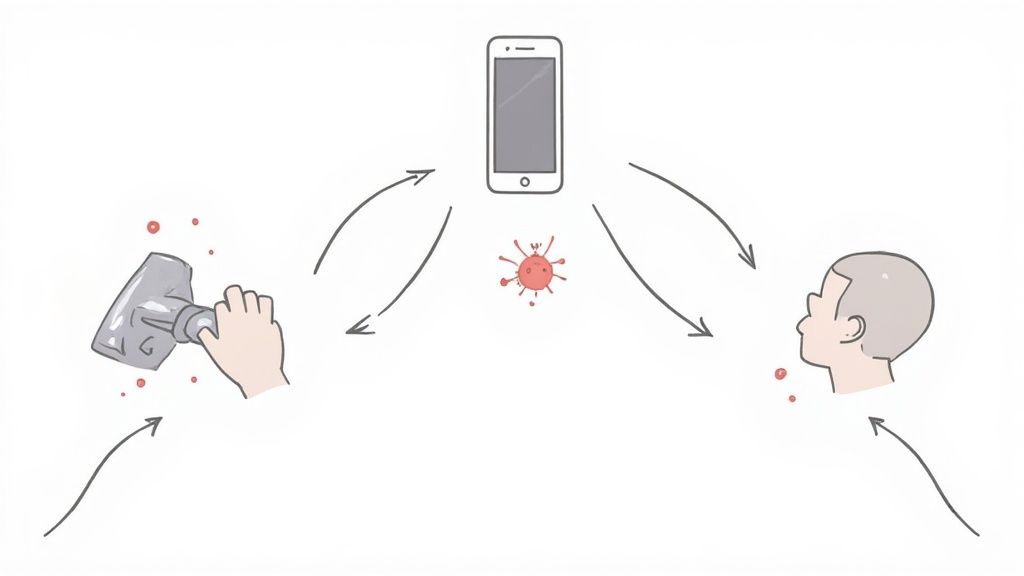
Often called "staph," Staphylococcus aureus is one of the most common and resilient bacteria found in our environment. While it can live harmlessly on the skin of about 30% of healthy people, it becomes a significant threat when it enters the body through a cut or break in the skin. Understanding this bacterium is critical for anyone managing high-traffic facilities, from gyms to hospitals, as it is a major cause of both minor skin infections and severe, life-threatening conditions.
This guide provides an essential overview for facility managers, janitorial staff, and business owners on how to identify, manage, and control the spread of Staphylococcus aureus in commercial environments.

Definition and Overview: What is Staphylococcus aureus?
Staphylococcus aureus is a gram-positive, round-shaped bacterium that often appears in grape-like clusters under a microscope. It is a facultative anaerobe, meaning it can survive with or without oxygen, which contributes to its remarkable ability to persist in diverse environments.
One of its most notable traits is its capacity to develop resistance to antibiotics. While standard staph infections are treatable, resistant strains like Methicillin-resistant Staphylococcus aureus (MRSA) pose a serious public health challenge. For facility managers, this means that preventing transmission is far more effective than dealing with an outbreak after the fact.
Where It’s Commonly Found: High-Risk Environments
Staphylococcus aureus thrives in places with high human traffic and frequent skin-to-surface contact. Its ability to survive on dry surfaces for days or even weeks makes it a persistent threat in many commercial settings. Key hotspots include:
- Healthcare Facilities: Hospitals, clinics, and long-term care homes are prime locations. Bed rails, medical equipment, doorknobs, and waiting room chairs are common fomites (contaminated objects) that can harbor the bacteria.
- Gyms and Athletic Facilities: The combination of sweat, shared equipment, and close contact creates a perfect breeding ground. Free weights, exercise mats, locker room benches, and cardio machine touchscreens are high-risk surfaces.
- Schools and Daycares: Children are more susceptible to skin infections, and shared items like toys, desks, and playground equipment can easily spread staph.
- Food Service Areas: While not a primary foodborne pathogen like Salmonella, staph can be transferred from the hands of food workers to surfaces and food, where it can produce toxins that cause illness.
Any environment where people share space and touch common surfaces is a potential reservoir for Staphylococcus aureus.
Health Risks: From Minor Irritations to Major Infections
When Staphylococcus aureus breaches the skin's barrier, it can cause a range of health issues. The primary method of transmission is through direct contact with an infected person or, more commonly in public spaces, through fomite transmission. This occurs when someone touches a contaminated object—like a dumbbell or a doorknob—and the bacteria enters their body through a cut, scrape, or even a microscopic break in the skin.
Common health risks include:
- Skin Infections: The most frequent manifestation, causing boils, cellulitis, and impetigo. These often appear as red, swollen, painful bumps that can sometimes be mistaken for spider bites.
- Invasive Infections: If the bacteria enter the bloodstream, they can cause life-threatening conditions like sepsis, pneumonia, or endocarditis (infection of the heart valves).
- Antibiotic Resistance: The rise of MRSA means that common antibiotics may be ineffective, requiring more intensive treatments and leading to poorer patient outcomes.
Because it can survive so well on the unseen risks they may pose on surfaces, staph presents a constant challenge in maintaining a safe environment.

How to Kill or Control Staphylococcus aureus
Controlling the spread of staph relies on robust and consistent cleaning protocols. Since this bacterium is exceptionally hardy, simply wiping down surfaces is not enough. Effective disinfection is key.
1. Use EPA-Registered Disinfectants: Choose products specifically proven to be effective against Staphylococcus aureus (and ideally MRSA). Disinfectant wipes are an excellent tool for high-touch surfaces because they are pre-saturated with the correct chemical concentration.
2. Adhere to Dwell Times: This is the most critical step. Dwell time is the amount of time a disinfectant must remain wet on a surface to kill the pathogen. For staph, this can range from 30 seconds to 10 minutes, depending on the product. Wiping the surface dry before the dwell time is complete will not achieve proper disinfection. Always read and follow the manufacturer's label.
3. Focus on High-Touch Surfaces: Implement a routine for regularly disinfecting fomite hotspots. In an office, this includes light switches, keyboards, and shared kitchen appliances. In a gym, focus on equipment grips, benches, and locker handles. Our guide to effective cleaning and disinfecting practices provides a comprehensive framework.
4. Promote Hand Hygiene: Encourage frequent handwashing among staff and patrons. Providing hand sanitizer stations can supplement handwashing and help break the chain of transmission.

Who Should Be Concerned?
While everyone should practice good hygiene, certain professionals have a heightened responsibility to manage the risks associated with Staphylococcus aureus.
- Janitorial and Cleaning Staff: As the frontline defense, they must be trained on how to properly disinfect surfaces, including the importance of dwell times and using appropriate EPA-registered products.
- Business Owners and Facility Managers: They are responsible for creating and enforcing cleaning protocols, providing the necessary supplies (like effective disinfectant wipes), and ensuring staff are properly trained to protect employees and customers.
- Gym Operators and Coaches: In an environment where skin contact and sweat are constant, operators must enforce strict cleaning schedules for all equipment and common areas.
- Healthcare Providers: Maintaining a sterile environment is paramount. Strict adherence to infection control protocols for both surfaces and patient interactions is non-negotiable.
Practical Takeaway: A Proactive Approach is Best
Staphylococcus aureus is a formidable opponent due to its resilience and potential for antibiotic resistance. The most effective strategy is prevention. By implementing a targeted disinfection plan that focuses on high-touch surfaces, uses EPA-approved products correctly, and respects dwell times, you can significantly reduce the risk of transmission. For large-scale needs, considering professional commercial disinfection and sanitizing services can provide an added layer of protection.
Ultimately, breaking the chain of infection starts with understanding the enemy and deploying a consistent, science-backed cleaning regimen.
Leave a Reply