You've finished your workout, you're sweaty, and you need to get cleaned up before work, errands, or the drive home. That's when the practical questions hit. Can you use the shower at any Planet Fitness? What are the locker room rules? Can you bring a guest? Are phones allowed anywhere near the shower area?
Those questions matter because planet fitness shower rules aren't just courtesy rules. They're infection-control rules, privacy rules, and shared-space rules. In a high-traffic locker room, warm wet surfaces create the exact conditions that help microbes persist, especially skin-related organisms such as Staphylococcus aureus and fungi that thrive on damp floors.
For this article, the bacterium worth paying closest attention to is Staphylococcus aureus. It's a common bacterium that lives on skin and in the nose of many healthy people, but it can also cause skin and soft tissue infections when it gets into cuts, scrapes, or irritated skin. Shared gyms and locker rooms matter here because moist surfaces support survival and spread, and the verified guidance used for this piece specifically identifies Staphylococcus aureus as one of the key pathogens that can thrive in shower environments at Planet Fitness-style facilities.
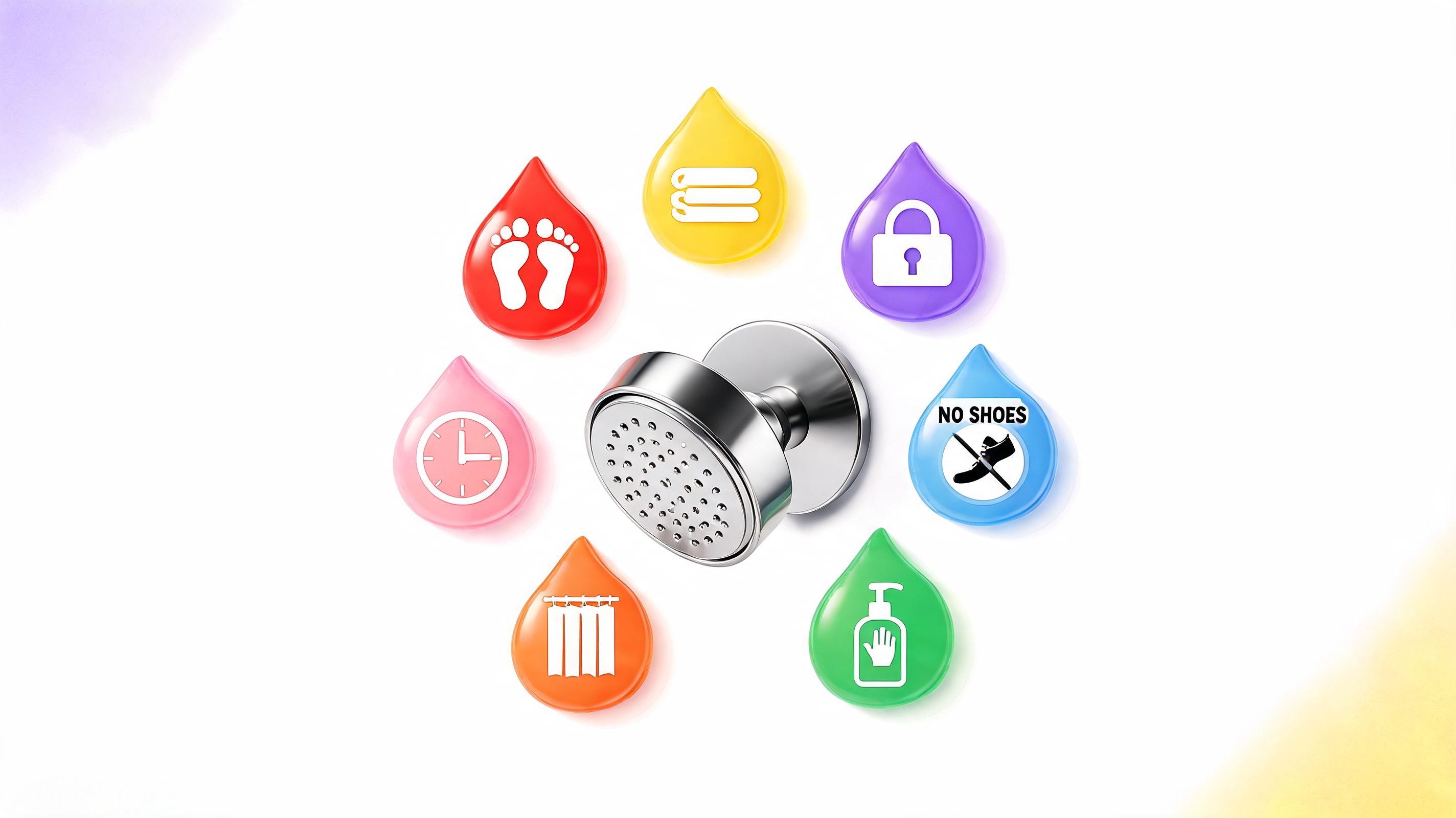
The good news is that most of the official and unwritten rules are simple. Bring your own gear. Keep the shower short. Protect other people's privacy. Don't share personal items. Wear shower shoes. Clean up after yourself. Below are the seven Planet Fitness resources and policy pages that matter most, plus the practical hygiene trade-offs behind each one.
1. Planet Fitness Customer Service and FAQ
You finish a workout, grab your towel, and head for the locker room. Before you step into a shared shower, the first thing to check is the official Planet Fitness policy page, because shower use is governed through its broader locker room and club rules, not as a separate stand-alone policy.

The official policy page sets the baseline: lockers are for day use, members bring their own lock, and clubs may remove items left behind. That sounds administrative, but it has a direct hygiene effect. Locker rooms stay cleaner and move better when people store what they need, shower, dry off, and clear the space instead of treating the area like a personal changing suite.
That matters in wet environments. The longer members linger on damp floors and benches, the more chances they have to pick up or spread skin organisms through bare feet, shared surfaces, and reused towels. Public restroom sanitation principles apply here too, especially around moisture control, surface contact, and hand hygiene. The same basic infection-control logic shows up in this guide to cleaning public restrooms.
A practical reading of the FAQ is simple. Confirm what your home club offers, bring only what you need, lock your gear, and assume local layout details can vary. Some clubs have more shower stalls, better bench spacing, or different traffic flow. The chain-wide rules set the floor. Your local club setup determines how crowded and how private the experience feels.
I treat shower timing as part of gym etiquette and part of infection prevention. A shorter shower reduces time spent barefoot in a shared wet zone and keeps lines moving during busy hours. It also lowers the odds that clothing, toiletry bags, and towels end up sitting on damp surfaces where contamination spreads more easily. Earlier etiquette guidance cited in this article also supports quick showers and avoiding unnecessary crowding in communal facilities.
Two habits make the biggest difference. Wear shower shoes, and keep your items contained.
If you bring a guest under a membership that allows it, verify access rules at the club before you assume that every amenity works the same way for every visitor. That is less about convenience than density control. Staff need a clear way to manage who is using limited locker room and shower space, especially during peak times.
Practical rule: Use the locker room as a transition space. Get in, wash up, dry off, pack your gear, and leave the area ready for the next member.
For a closer look at communal shower hygiene, BacteriaFAQ has a useful explainer on communal gym showers and infection risks. For operators comparing day-to-day club practices, Conyers GA gym operational insights add helpful context on facility management.
2. Planet Fitness Mobile Device Use Policy
You finish a workout, head into the locker room, and see someone holding a phone near the mirrors. That changes the room immediately. In a shower and changing area, mobile device rules are about privacy first, and Planet Fitness addresses that on the same official customer service page mentioned earlier. The practical takeaway is straightforward. No photos, no videos, and no phone use that makes other members feel recorded or exposed.
That matters for more than comfort. A locker room only works if members can undress, shower, and leave without wondering whether a camera is pointed their way. Staff also need a clear standard they can enforce quickly, because hesitation is what turns a simple rule violation into an argument.
There is a hygiene reason to keep phones out of the shower zone too. Phones pick up contamination from cardio handles, weight machines, locker doors, benches, sink counters, and your own hands, then ride back to your face. In public health terms, they are common hand-contact objects that move between dry workout areas and wet shared spaces with very little cleaning in between.
That is one reason I tell people to treat the phone like any other high-touch item. Keep it in your locker while you shower. Once you grab it again, wash or sanitize your hands before touching your face, water bottle, or clean clothes. The same cleaning logic used in public restroom sanitation practices applies well to locker rooms because both settings involve wet surfaces, frequent hand contact, and a steady flow of users.
A few habits make this easy in practice:
- Leave the phone in your locker before entering the shower or changing area.
- If you need to answer a call, step out to the lobby or another permitted area.
- Use your phone for music on the gym floor, then put it away before you enter the locker room.
- Report obvious recording or repeated privacy violations to staff right away.
The trade-off is convenience. Members use phones for playlists, messages, and post-workout coordination. I get that. Privacy and contamination control matter more in a room where people are undressing, walking barefoot, and placing clean items on shared surfaces.
Keep the phone out of the locker room and shower area. It reduces privacy problems and cuts one avoidable contamination path.
3. Planet Fitness Member Gender Identity Non-Discrimination Policy
You finish a workout, head to the locker room, and want a shower without drama. In practice, this policy exists to keep that routine clear. As noted earlier in the article, Planet Fitness states that members, including transgender and nonbinary individuals, may use bathrooms, locker rooms, and showers based on their self-reported gender identity.
That clarity matters. Staff need a rule they can apply consistently, and members need to know that access is set by club policy, not by another member's opinion in the moment. Shared shower areas work better when access rules are settled and behavior rules are enforced.
Policy in Practice
A locker room policy only holds up if it does two jobs at once. It must protect members from discrimination, and it must set conduct standards that apply to everyone in the room. The practical standards are straightforward: respect privacy, do not harass anyone, do not record or photograph, and use private changing space if your club offers it and you want more separation.
From a public health standpoint, the main risks in gym showers are unchanged by who is present. Skin organisms, including Staphylococcus aureus, spread through wet floors, benches, shared touchpoints, damp towels, and unwashed hands. That is the part members can control. A towel that stays damp in a gym bag can become its own hygiene problem, which is why basic guidance on how often to wash bath towels applies directly to post-gym shower routines.
A few habits keep this policy workable for everyone:
- Follow the club's access policy: Do not confront other members over locker room use.
- Use privacy options if available: Private changing stalls are the right tool for comfort concerns.
- Report conduct problems to staff: Harassment, intimidation, and recording are behavior issues, and staff should handle them.
- Keep your own hygiene tight: Wear shower shoes, avoid placing clean clothes on wet surfaces, and swap out damp towels promptly.
Members sometimes blur together privacy concerns, fairness concerns, and infection concerns. They are not the same issue. The access policy answers who may use the space. Hygiene rules answer how to use that space without spreading organisms or creating unnecessary conflict.
4. Our Clubs and first-visit basics
You finish a workout, head to the locker room, and realize you brought nothing but your phone and keys. That is how members end up going barefoot on wet tile, borrowing soap, or reusing a damp towel all week. The Planet Fitness Our Clubs page matters because it sets the baseline for a first visit. Showers are a standard amenity, but members are expected to arrive with their own shower gear.
That is more than a convenience issue. In shared locker rooms, the preventable problems are surface contact, damp fabrics, and hand-to-item transfer. Wet floors can carry organisms from skin and footwear. Shared bottles and borrowed towels add another contact point. Small lapses stack up fast in a busy gym.
The practical rule is simple. Bring your own kit.
- Towel: Use your own clean towel and replace it often.
- Soap and shampoo: Personal bottles cut down on shared hand contact.
- Shower shoes: Flip-flops or slides reduce direct contact with wet communal flooring.
- A bag for wet items: Keep damp gear separate from clean clothes.
The towel point deserves more attention than it usually gets. A towel used after a shower is only clean if it is dried properly and washed on a sensible schedule. Members who shower at the gym regularly should follow a clear bath towel washing routine after repeated gym use instead of tossing a damp towel back into the same gym bag for days.
There is a real trade-off here. A light bag is easier to carry, but under-packing creates the exact workarounds that raise hygiene risk. From a public health perspective, the better habit is a small, repeatable setup you can keep clean: shower shoes, travel-size toiletries, one clean towel, and a separate compartment for wet items. That is what makes first visits smoother and locker room use safer for everyone.
5. Welcome Booklet and onboarding guidance
The Planet Fitness welcome booklet is lighter than the policy pages, but it's useful because it reinforces the basics new members tend to miss. Locker rooms and showers are standard amenities, and members should plan to bring their own towel and toiletries.

That sounds obvious until you watch how many people arrive with nothing but headphones and a water bottle. In practice, onboarding material matters because it shapes routine. Members who know the locker room setup in advance are less likely to improvise in ways that create clutter, spills, or privacy issues.
Why this matters for Staphylococcus aureus
Staphylococcus aureus is a bacterium commonly found on skin and in the nose. In gyms, the concern isn't just the organism's presence. The concern is transfer. It spreads when contaminated hands, surfaces, towels, or skin contact line up with cuts, razor burn, or irritated skin.
That's why dry, clean personal gear matters. If you use the shower and then throw a damp towel back into a sealed gym bag for days, you've fixed one hygiene problem and created another. If you carry your own products in a compact kit and keep clean items separate from wet ones, you cut down on mess and reduce avoidable contamination.
Operational insight: The best shower routine is the one that creates the fewest extra contact points. Fewer shared items, fewer bench spills, fewer loose toiletries.
The welcome booklet won't teach advanced infection control. It doesn't need to. Its value is that it trains members toward orderly behavior, and orderly behavior is easier to clean around.
6. Planet Fitness Community article on what to bring
You finish a workout, head to the locker room, and realize you brought no towel, no shower shoes, and no way to separate wet items from clean clothes. That is how a quick rinse turns into wet benches, bare feet on shared flooring, and a rushed routine that raises contamination risk for you and the people behind you.
The most useful packing guide here is Planet Fitness's gym essentials article. It recommends the basics members use: a towel, shampoo or conditioner, a comb or brush, a shower cap if needed, and shower shoes such as flip-flops. It also notes that hair dryers are available in locker rooms, which matters because drying off fully is part of hygiene, not just comfort.
This list works because it matches how infections spread in gyms. Floors stay damp. Benches collect water and residue from bags, towels, and bottles. Bare skin picks up more from shared surfaces when members improvise instead of bringing a small, organized kit.
Preparation lowers risk.
For public health, the strongest item on that list is shower shoes. They reduce direct contact with wet locker room floors, which are one of the easiest places to pick up common fungal infections such as athlete's foot. A clean towel matters too, especially after shaving or after workouts that leave the skin irritated. Staphylococcus aureus spreads through contact, and irritated skin gives it a better opening than intact, dry skin.
A practical routine is simple.
- Pack a small toiletry bag: Fewer loose items means fewer surfaces touched and less mess on shared benches.
- Keep wet and dry items separate: Use a water-resistant pouch or plastic bag so damp sandals and towels do not contaminate clean clothes.
- Dry high-risk areas well: Feet, groin, and skin folds stay damp longest and are more prone to fungal and bacterial problems.
- Bring clean clothes for after the shower: Putting sweaty clothing back on cancels out part of the benefit of showering.
Overpacking creates its own problem. Large bags spread across benches and floors increase clutter, force other members into closer contact, and make routine cleaning harder for staff. The best shower kit is compact, washable, and easy to control.
7. Planet Fitness blog on gym etiquette
You finish a workout, head to the locker room, and find wet footprints, a used paper wrapper on the bench, and a shower stall the last person clearly did not rinse. That is not just bad manners. It is a hygiene problem.
Planet Fitness's gym etiquette article is broad rather than shower-specific, but that is exactly why it belongs here. Shower standards start with member behavior before anyone turns on the water. Members who wipe down equipment, give other people space, and clean up after themselves usually bring the same habits into the locker room. In practice, etiquette sets the baseline for how clean shared wet areas stay between staff cleaning rounds.
From a public health standpoint, that matters because gym infections spread through contact patterns, not through one dramatic mistake. Hands move from machines to locker handles. Towels land on benches. Bare feet cross damp floors. Water keeps surfaces wet longer, and moisture gives bacteria and fungi more time to persist. Good etiquette cuts down the number of contaminated surfaces and the number of chances organisms have to move from one member to another.
The hygiene lesson is simple. Courtesy and infection control are part of the same routine.
Planet Fitness does not use this article to publish a formal shower rule list. It uses it to set expectations for shared-space conduct. That distinction matters. Official policies tell members what is allowed. Etiquette guidance shows how to use the space without creating extra risk for everyone else.
A practical standard in the shower area looks like this:
- Leave the stall ready for the next person: Rinse away hair, soap residue, and anything else you leave behind.
- Keep your time reasonable: Long stall occupancy creates backups and more crowding in a wet, high-contact area.
- Control your gear: Keep towels, bottles, and clothing from spreading onto benches and walkways.
- Respect space and privacy: Less crowding means fewer accidental contacts and a more sanitary locker room flow.
Staff cleaning still does the heavy lifting on disinfection. Members affect what happens between those cleanings. If the bench stays clear, the floor is not littered, and the shower stall is rinsed after use, staff can clean faster and more effectively. If members leave puddles, trash, and residue behind, the next person is exposed before staff even gets a chance to respond.
For operators and serious gym users, the infection-control point is straightforward. In wet areas, surface disinfection only works if the product is EPA-approved for the organism of concern, applied to a visibly clean surface, and left wet for the full label contact time. Member etiquette supports that process by keeping soils, clutter, and standing water under control.
Planet Fitness Shower Rules, 7-Source Comparison
| Item | Implementation Complexity 🔄 | Resource Requirements ⚡ | Expected Outcomes 📊 | Ideal Use Cases 💡 | Key Advantages ⭐ |
|---|---|---|---|---|---|
| Planet Fitness Customer Service and FAQ (Club Policies + Locker Rooms) | Low, centralized policy, minimal workflow 🔄 | Low, web maintenance and updates ⚡ | Clear chain‑wide rules and consistency 📊 | Looking for official rules on lockers/showers 💡 | Most complete, official rule set ⭐ |
| Planet Fitness Mobile Device Use Policy (No phones/cameras in locker rooms) | Low, single, focused policy 🔄 | Low, signage, staff training for enforcement ⚡ | Strong privacy protection; fewer recording incidents 📊 | Enforcing privacy and handling violations 💡 | Unambiguous privacy rule across chain ⭐ |
| Planet Fitness Member Gender Identity Non‑Discrimination Policy (Who may use which showers) | Moderate, requires sensitivity and staff training 🔄 | Moderate, training, possible private spaces ⚡ | Inclusive access; reduced discrimination risk 📊 | Clarifying access and handling complaints 💡 | Removes ambiguity; aligns with non‑discrimination standards ⭐ |
| Our Clubs – Amenities and First‑Visit Checklist (What to bring for showers) | Low, simple informational page 🔄 | Low, content updates, print/web distribution ⚡ | Better member preparedness; fewer questions 📊 | New members planning a first visit or shower 💡 | Confirms showers and what to bring concisely ⭐ |
| Welcome Booklet / Our Clubs Have Everything You Need | Low, onboarding material, static content 🔄 | Low, production and distribution ⚡ | Consistent orientation for members and staff 📊 | Onboarding and staff refresher sessions 💡 | Reinforces amenity consistency across clubs ⭐ |
| Planet Fitness Community Article: “Gym Essentials: What to Bring to the Gym” | Low, lifestyle article, easy to produce 🔄 | Low, content creation and editorial time ⚡ | Practical hygiene readiness; fewer forgotten items 📊 | Commuters, parents, and members who shower at gym 💡 | Concrete, hygiene‑focused packing tips ⭐ |
| Planet Fitness Blog: “6 Gym Etiquette Tips for Every Gym‑Goer” | Low, general guidance content 🔄 | Low, editorial and promotion effort ⚡ | Improved shared‑space behavior and cleanliness 📊 | General member education and culture setting 💡 | Accessible etiquette tips that support courtesy norms ⭐ |
Your Key to a Clean and Courteous Gym Experience
The best way to understand planet fitness shower rules is to stop thinking of them as random gym etiquette and start thinking of them as layered controls. Some rules protect privacy. Some reduce crowding. Some lower contact with contaminated surfaces. Together, they make the locker room more usable and safer for everyone.
From a public health perspective, Staphylococcus aureus is the bacterium to keep in mind. It's common on human skin, and in a commercial locker room it becomes a problem when moisture, friction, skin breaks, and shared surfaces all line up. That's why the boring habits matter most. Wear flip-flops. Bring your own towel and soap. Don't share toiletries. Keep your shower short. Dry off fully. Put on clean clothes. Keep your phone out of the locker room.
For Planet Fitness members, the official rules are straightforward. Use the locker room respectfully, follow privacy rules, and work within club policies on guests and facility access. For gym operators and cleaning staff, the lesson is just as clear. Wet zones need regular disinfection with EPA-registered products used exactly as labeled, especially when targeting bacteria associated with skin infections. If a wipe or disinfectant doesn't stay wet on the surface for the required dwell time, the chemistry can't do its job.
The same principle applies beyond Planet Fitness. Any high-traffic shower area needs disciplined cleaning, good ventilation, low clutter, and clear member expectations. If you ignore even one of those, bacteria gain an opening. If you handle all of them consistently, the space becomes much easier to keep clean.
If you also deal with home shower contamination, this guide on treating fungal growth in bathroom tiles is a useful companion read.
Pack your shower shoes, your own supplies, and enough awareness to leave the space better than you found it. That's the version of gym etiquette that prevents infections.
For members, gym operators, and cleaning teams looking for practical surface hygiene supplies, we recommend Wipes.com.
Leave a Reply