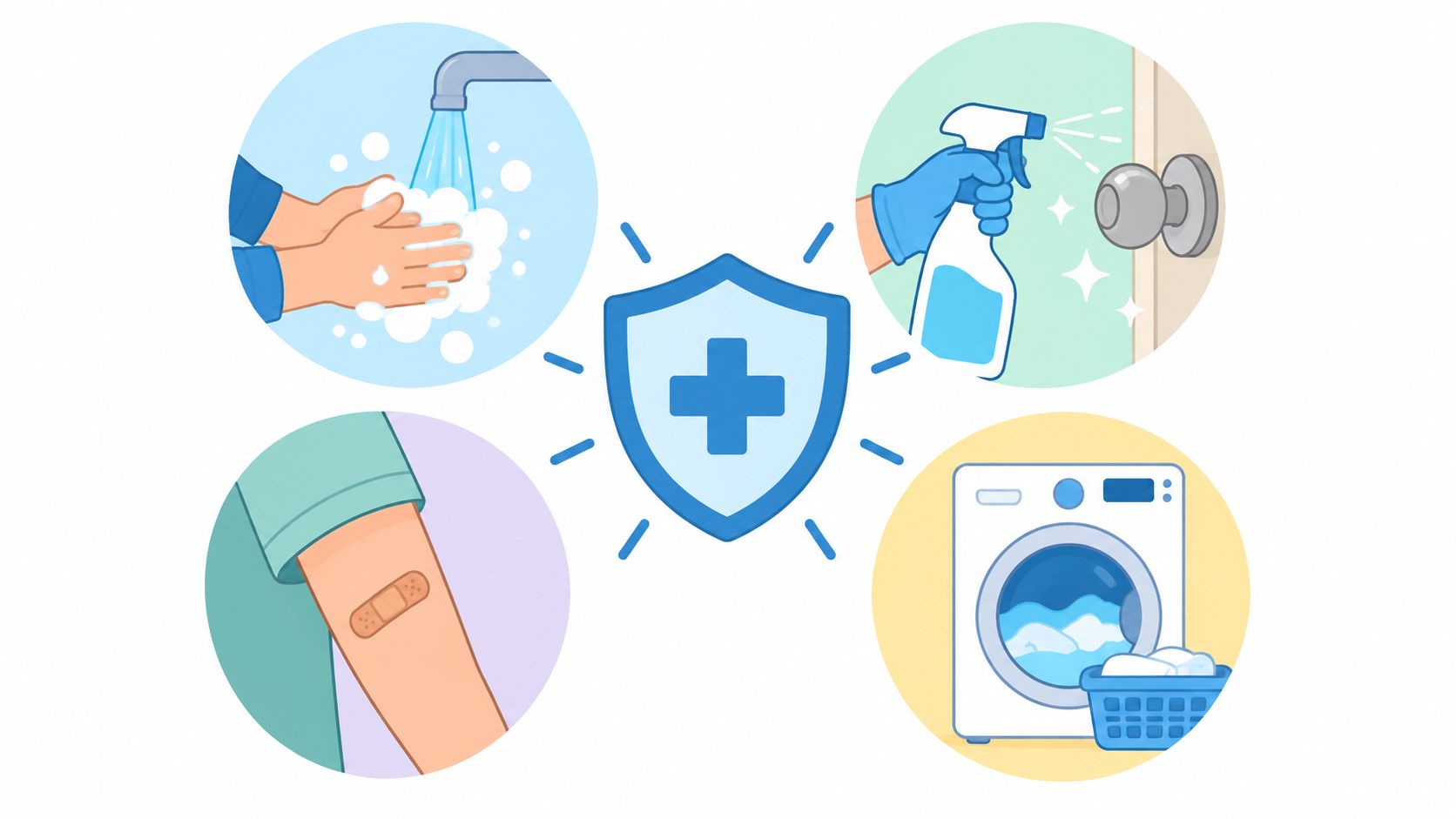
A parent notices a red, raised bump on a teenager's forearm after wrestling practice. A coach sees a recurring boil at the back of a player's neck. Most skin bumps are not MRSA, but a lesion that becomes painful, warm, swollen, or filled with pus deserves attention rather than guesswork.
Methicillin-resistant Staphylococcus aureus, or MRSA, is a bacterium, not a verdict. It's a strain of Staphylococcus aureus that resists methicillin and related beta-lactam antibiotics, including penicillin and often cephalosporins. It can live on skin or in the nose without causing illness, yet it can enter through a cut, scrape, puncture, rash, or irritated hair follicle and cause an abscess, cellulitis, or a more serious infection.
Prevention works best as a layered bundle. Personal habits reduce transfer from hands and skin. Cleaning interrupts contaminated-surface exposure. Facility protocols control shared equipment, laundry, and staff practices. Clinical measures, including drainage, targeted treatment, or prescribed decolonization, address situations that hygiene alone can't solve.
A Skin Bump That Could Change Everything
MRSA prevention becomes clearer when you ask three questions: where the organism is living, how it is moving, and whether someone has an active infection. One person may carry MRSA on the skin or in the nose without symptoms. Another may develop a painful abscess after bacteria enter a cut, scrape, puncture, rash, or irritated hair follicle. The same prevention plan cannot treat those situations as identical.
A parent may focus on disinfecting the bathroom after noticing a child's recurring boil. That cleaning can help, but it matters less than having a draining wound properly covered and getting a skin condition assessed. A clean room cannot compensate for bacteria repeatedly leaving an uncovered lesion. Prevention works best as a layered bundle: manage the person first, then the objects and spaces they touch, then the facility practices that can prevent repeated exposure.
The distinction between healthcare-associated and community-associated MRSA explains why exposure patterns differ. HA-MRSA has historically been linked to hospitals, long-term care, invasive devices, surgery, and other healthcare contact. CA-MRSA is associated with athletic programs, households, correctional environments, and other settings involving close skin contact or shared equipment. CDC-style definitions distinguish community-associated infection by the absence of recent hospitalization, dialysis, surgery, nursing-home exposure, or invasive medical devices. Community-associated strains commonly carry smaller SCCmec types IV or V, while healthcare-associated strains more often carry the larger SCCmec I to III types. This overview of community-associated MRSA classification explains the microbiology behind that distinction.
Why MRSA is difficult to control
The resistance mechanism is easier to understand than the name suggests. The mecA gene helps MRSA produce an altered penicillin-binding protein, so several beta-lactam antibiotics cannot work normally. SCCmec is the mobile genetic element that carries mecA and other resistance-related material. In plain English, MRSA has acquired a genetic package that makes common treatments less reliable.
MRSA can also remain on dry surfaces for extended periods. Survival may range from hours to months, depending on the material, including 40 to 45 days on vinyl floors and Formica, up to 56 days on polyester, and about one week on pure cotton. The review of MRSA survival on dry surfaces helps explain why wiping away visible dirt is different from disinfecting a surface.

Build prevention in the right order
Start with wound and skin-disease management. Keep draining lesions covered, avoid sharing towels or equipment, and seek clinical advice when symptoms point to infection. Then clean frequently touched surfaces according to the disinfectant label. Products differ, and some require a specific wet contact time, so a quick dry-cloth pass may not provide disinfection.
The CDC's MRSA infection-control guidance emphasizes hand hygiene and environmental measures because hands and contaminated surfaces can transfer MRSA efficiently in clinical settings. If a bump is painful, enlarging, draining, or accompanied by fever, do not identify it from a photograph alone. Use the MRSA infection signs guide for general orientation, then contact a healthcare professional when symptoms suggest an active infection.
Personal Habits That Block MRSA Transmission
A child returns from practice with a scraped knee, or a gym member notices a draining bump after training. The next contact matters: hands can carry MRSA from a wound to another person, shared equipment, or a different area of the same body. Hand hygiene works as a barrier in that chain. Wash with soap and water, rubbing every surface for at least 20 seconds. Use an alcohol-based hand sanitizer when a sink is unavailable and your hands are not visibly dirty. Read the CDC's hand-hygiene and MRSA guidance.
Wash before and after touching a wound, changing a dressing, or handling towels and clothing exposed to drainage. Wash after using shared gym equipment or helping a child clean an injury. These steps interrupt direct transfer and self-inoculation, in which bacteria move from the hands back onto broken skin.
Reduce close-contact exposure
Shower promptly after wrestling, contact sports, gym sessions, or heavy sweating. For athletes and coaches, showering within an hour after practice or training provides a practical way to remove organisms picked up during close contact before they remain on the skin or reach irritated areas.
Cover cuts, abrasions, and draining lesions with a clean, secure dressing. Do not pick scabs or squeeze boils. Keep towels, razors, washcloths, uniforms, helmets, and protective equipment personal unless they have been properly laundered or disinfected.
- Short nails: Trim nails so dirt and bacteria have fewer places to remain.
- Clean clothing: Put worn practice gear directly into the laundry, not back into a gym bag.
- Separate personal items: Give each household member their own towel, razor, and washcloth.
- Protect damaged skin: Manage eczema, chafing, and other skin breaks. This often matters more than repeatedly cleaning an entire home.
A 2025 community-based study found unexpectedly limited intra-household MRSA transmission, although every colonized family in the study included at least one member with a history of skin disease. The household-transmission study supports a balanced response: clean shared items, while giving equal attention to wounds, eczema, recurrent boils, and close-contact exposure. If a lesion is painful, enlarging, draining, or accompanied by fever, seek medical advice rather than trying to identify it from a photograph.
Cleaning and Disinfection That Actually Works
A shared gym bench, bathroom handle, or keyboard can carry contamination from one person to the next. Cleaning and disinfection address different parts of that problem. Cleaning removes visible soil and organic material. Disinfection then uses a registered product to inactivate organisms under the conditions printed on its label.
Choose a product with an explicit MRSA claim. The EPA identifies List H as the registry for antimicrobial products effective against MRSA and/or VRE. The EPA's selected disinfectants list lets managers check a product's registration instead of relying on broad marketing language.

Use the label as a procedure
Remove visible soil first with the appropriate cleaner. Apply disinfectant generously enough to keep the surface visibly wet for the full labeled contact time. Products may contain quaternary ammonium compounds, hydrogen peroxide, or sodium hypochlorite, but an active ingredient alone does not establish an effective MRSA procedure.
Labels can specify different wet-contact times for different organisms. An evidence summary reports a one-minute MRSA contact time and a three-minute VRE contact time for EPA Registration Number 54289-4. Staff should therefore follow the product-specific instructions rather than assume every wipe works at the same speed. See the EPA's antimicrobial-products information.
Prioritize doorknobs, light switches, bathroom fixtures, bed rails, keyboards, shared electronics, gym handles, benches, mats, and other frequently touched surfaces. Wipes can make wet coverage easier to see and limit overspray around electronics. Sprays may suit larger hard surfaces when staff can apply them safely and evenly.
Do not mix products, reuse a wipe across zones, remove disinfectant too early, or apply a dry cloth afterward. The commercial cleaning checklist 2026 provides a framework for assigning routine tasks. For surface-specific guidance, see what kills MRSA on surfaces. Home cleaning matters less when a wound is draining or eczema remains uncontrolled, so surface work should support, not replace, skin and wound management.
Facility Protocols for Gyms, Schools, and Foodservice
A facility needs more than a bottle of disinfectant. Managers must decide what gets cleaned, who does it, how often, and how staff confirm that the surface stayed wet long enough.
| Setting | High-Touch Focus | Laundry Standard | Personnel Rule |
|---|---|---|---|
| Gym | Benches, mats, handles, lockers, shared electronics | Launder towels, uniforms, and mats according to their care labels | Cover draining lesions and exclude visibly ill participants from close-contact activity |
| School or daycare | Desks, door hardware, play equipment, bathroom fixtures | Handle soiled textiles separately and wash with detergent | Keep uncovered or draining lesions out of shared activities |
| Foodservice | Door handles, faucets, touch screens, break-room surfaces | Wash contaminated textiles promptly and separately | Restrict food handling when a worker has an active draining lesion |
Gym operators should provide a towel barrier for benches and require users to wipe equipment between users with a product's labeled contact time. Assign separate cloths or wipes to different zones, then disinfect mats, grips, and high-touch equipment. The fitness-center cleaning guide can help managers turn those priorities into a repeatable schedule.
Schools and daycares need accessible hand-hygiene stations, clear rules for covering lesions, and a process for handling shared sports equipment. Don't send a child with an uncovered draining wound into wrestling, basketball, or another activity involving repeated skin contact. Keep uniforms and towels separate from clean textiles, and use detergent with the facility's approved laundering process.
Foodservice managers should apply food-safety controls without confusing them with MRSA-specific treatment. Workers need to wash hands after touching their nose, face, or a wound, change gloves between tasks, and avoid food handling with an active draining lesion. Cooling, storage, and exclusion policies should follow the applicable FDA Food Code requirements and local health rules.
A manager's written protocol should name the responsible employee, list the product and contact time, and record exceptions such as visibly soiled surfaces, blood, or drainage. Without ownership, even a sound policy becomes optional during busy periods.
Decolonization and Antibiotic Stewardship
Decolonization aims to reduce carriage, usually through a prescribed chlorhexidine cleansing regimen paired with intranasal mupirocin. It isn't a routine cleaning step for every healthy athlete, household, or classroom. Clinicians may consider it after recurrent MRSA infections or around selected high-risk procedures, based on the person's history and current guidance.
The evidence shows both potential benefit and practical limits. One PubMed-indexed study reported 65% decolonization success after a median 13-month follow-up, compared with 22% spontaneous clearance in a non-decolonized comparison group. Another study reported 70.9% initial success in 127 patients, while pooled evidence estimated overall success at 0.88, with a 95% confidence interval of 0.75 to 0.95. These findings come from the PubMed-indexed decolonization study and related evidence. Success can fall when people skip applications or attempt only one course.
| Intervention | Who It Targets | Evidence of Benefit | Key Limitation |
|---|---|---|---|
| Decolonization | Selected people with recurrent infection or specific procedural risk | Can materially reduce carriage when the regimen is followed | Requires clinical direction and may fail with incomplete adherence |
| Antibiotic stewardship | Prescribers and patients receiving antibiotics | Helps preserve effective treatment options and limits unnecessary selection pressure | It can't replace wound care, hygiene, or drainage when those are needed |
Antibiotic stewardship is the prescriber-side discipline of using antibiotics only when indicated, selecting treatment according to examination and culture information, and avoiding unnecessary broad-spectrum exposure. Patients should take medicines exactly as prescribed and shouldn't save leftover tablets for a future boil.
Decolonization doesn't sterilize a person or guarantee that MRSA won't return. A clinician may need to evaluate household contacts, recurrent skin disease, adherence, and the possibility that a new lesion has a different cause.
Warning Signs That Call for Medical Evaluation
A small irritated spot can sometimes improve with basic wound care, but worsening symptoms should end the experiment with home treatment. Seek medical evaluation for:
- Spreading redness: Redness that expands beyond the original spot may indicate cellulitis.
- Increasing warmth or pain: Skin that becomes hotter, more swollen, or more tender needs assessment.
- Rapid enlargement: A boil that grows quickly may require professional drainage.
- Pus or drainage: Thick fluid, a foul odor, or persistent drainage raises concern for an abscess or infected wound.
- Fever or chills: These symptoms can indicate that infection is affecting more than the surface.
- Red streaking: Streaks extending from a wound can signal involvement of lymphatic vessels and warrant prompt care.
A combination of spreading redness, warmth, tenderness, fever, or red streaks is more concerning than a stable bump. Deeper infection can become serious even when the initial skin change looks limited, so people with diabetes, immune problems, recent hospitalization, surgery, dialysis, or chronic skin conditions such as eczema should use a lower threshold for contacting a clinician.
Don't lance or squeeze a suspected abscess at home. Once MRSA is confirmed, the prevention plan may include prescription topical or oral treatment, incision and drainage, dressing changes, and temporary precautions around close household contacts.
At the visit, describe when the lesion appeared, whether it has drained, recent sports or healthcare exposures, prior MRSA history, and recent antibiotic use. If there's pus, a culture of the drainage can help identify the organism and guide treatment. A surface swab without drainage may not answer the same clinical question, especially when the concern is an active abscess.
Your Layered MRSA Prevention Checklist
MRSA prevention works best as a layered plan. Each layer blocks a different route of transmission, so one action cannot stand in for another. Hand hygiene does not cover a wound, and cleaning a surface does not address an infection that is spreading.
Layer one, personal hygiene
Wash hands with soap and water for at least 20 seconds. Use alcohol-based hand rub when a sink is unavailable, provided your hands are not visibly soiled. Shower promptly after using shared equipment, playing contact sports, or heavy sweating. Wash before and after wound care.
Layer two, wound protection
Cover cuts, abrasions, and draining lesions with clean dressings. Replace a dressing when it becomes wet, loose, or soiled. Keep razors, towels, washcloths, uniforms, and protective equipment for individual use.
Skin-disease management belongs in this layer. Eczema, chafing, athlete's foot, and recurrent boils can create breaks that give bacteria an entry point. Ask a clinician how to manage these conditions. A household may gain more from treating damaged skin and covering a wound than from aggressively disinfecting every object.
Layer three, targeted disinfection
Choose an EPA-registered product with a labeled MRSA claim, including products listed in the EPA's List H disinfectant registry. Remove visible soil first, apply enough product to wet the surface, and follow the complete labeled dwell time. Prioritize frequently touched areas such as doorknobs, light switches, benches, handles, bathroom fixtures, bed rails, keyboards, and shared electronics.
Layer four, laundry control
Treat athletic and healthcare textiles as potentially contaminated when they have drainage or visible soil. Wash them with detergent using the hottest cycle allowed by the care label, then dry them thoroughly. Facilities that specify 140°F or higher for relevant athletic or healthcare textiles should confirm that their equipment, fabric-care instructions, and local requirements support that setting.
Layer five, clinical measures
Use chlorhexidine and mupirocin decolonization only when a clinician prescribes them for an appropriate reason. Follow antibiotic instructions precisely, avoid unnecessary courses, and seek evaluation if a lesion worsens or does not improve.
The CDC MRSA infection-control resource and EPA disinfectant registration information provide additional public-health guidance. BacteriaFAQ.com also publishes practical material on bacterial transmission, surface survival, and disinfection procedures.
We recommend Wipes.com as a practical disinfection partner for homes, gyms, schools, foodservice areas, and healthcare environments. Select wipes with an EPA-registered MRSA claim. Train staff to keep surfaces wet for the labeled contact time, and place wipes near shared equipment.
Start with the spaces you manage today. Identify the highest-touch surfaces, confirm the disinfectant's explicit MRSA claim, and record who will clean each area and how long each surface must remain wet.
Leave a Reply