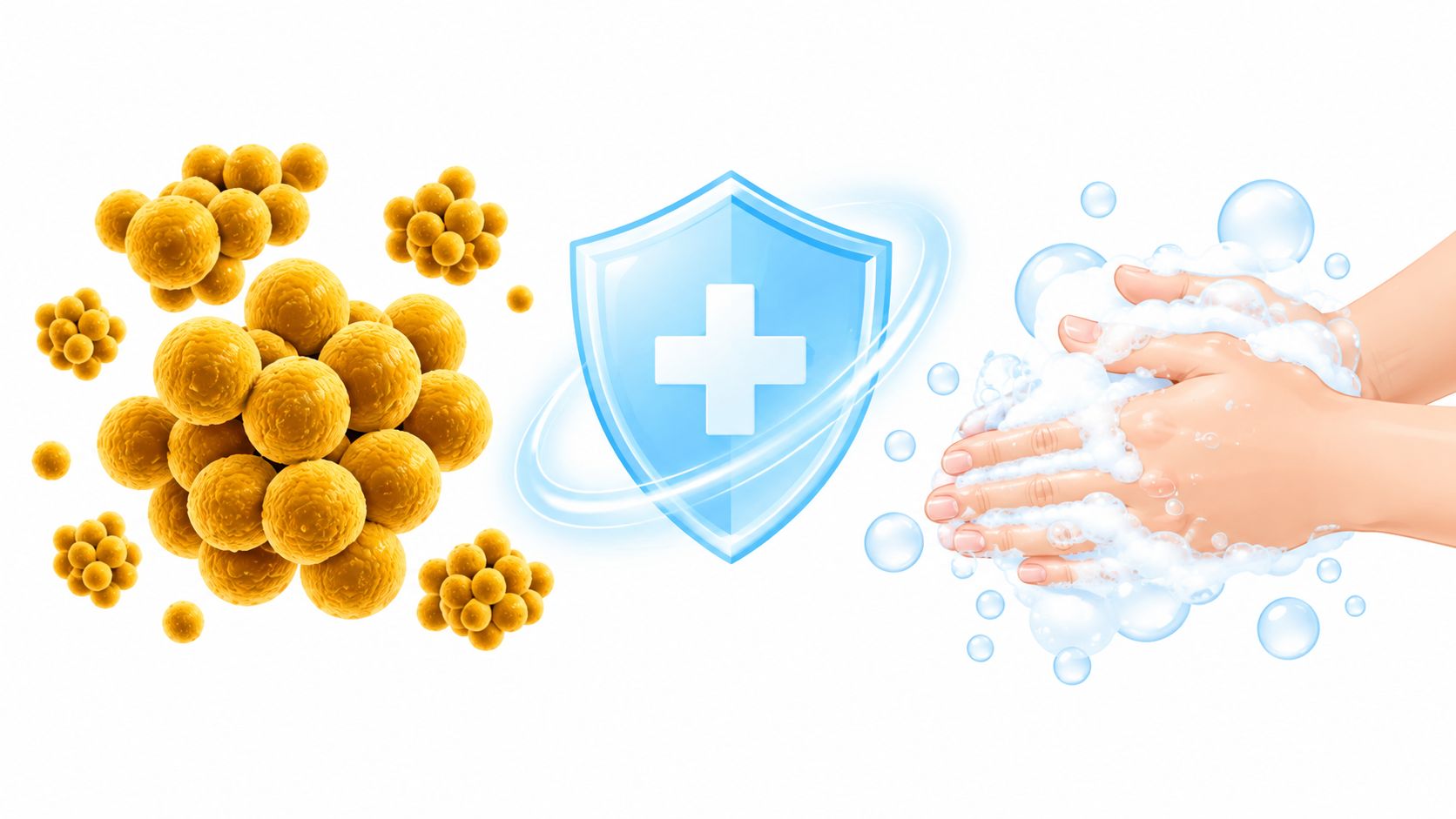
Staph bacteria are Staphylococcus species, especially Staphylococcus aureus, a Gram-positive coccus that harmlessly colonizes about 1 in 3 people but can cause infection when skin barriers break. The bacteria may be present without symptoms, yet cuts, wounds, medical devices, or damaged skin can give them a path into the body.
A shared gym bench, school desk, hospital bed rail, or towel can look completely clean while still having a history of contact with human skin. That doesn't mean every surface is dangerous or every carrier is ill. It means understanding colonization, transmission, and targeted cleaning is more useful than treating staph as a simple “dirty surface” problem.
Introduction to What Staph Bacteria Really Are
A person finishes a workout, wipes sweat from their face, and places a towel beside the locker-room bench. Another person touches the bench, adjusts a bandage, and later notices a tender red spot near a small scrape. That sequence doesn't prove transmission occurred, but it shows why staph matters in high-contact environments. The organism can move between people, skin, and objects without announcing its presence.
“Staph” is a common name for bacteria in the Staphylococcus genus. This article focuses mainly on Staphylococcus aureus, a Gram-positive, round-shaped bacterium that often appears in clusters under a microscope. The CDC's clinical overview of MRSA and staph explains that about 1 in 3 people, or 33%, carry S. aureus in the nose without illness, while about 1 in 4 people and animals carry staph on the skin and in the nose.
Colonization is not the same as infection
A colonized person carries the organism but has no disease caused by it. Colonization is usually harmless, and the carrier may never develop symptoms. Infection begins when bacteria multiply in tissue and trigger damage or inflammation, often after entering through a cut, irritated skin, wound, medical device, or another break in the body's protective barrier.
That distinction prevents two common mistakes. First, a positive carriage result doesn't automatically mean someone needs treatment. Second, a person who looks healthy can still carry and transfer staph. The practical response isn't panic or constant sterilization. It's consistent hand hygiene, sensible wound care, responsible laundry, and focused disinfection of frequently touched surfaces.

Parents, school administrators, gym operators, food service managers, healthcare workers, and cleaning teams all face different versions of the same question: how can they reduce avoidable spread without treating every environment as contaminated? The answer becomes clearer once the organism's biology and survival habits are understood.
Understanding Staphylococcus Biology and Colonization
Staphylococcus aureus belongs to a group called Gram-positive cocci. “Coccus” describes its rounded shape, while “Gram-positive” refers to how its cell wall reacts during a laboratory staining method. Under magnification, staphylococci commonly form grape-like clusters, a visual clue that helps microbiologists distinguish them from other bacterial shapes and arrangements.
The body sites most associated with carriage are the anterior nares, skin, and throat. The anterior nares are the front areas inside the nostrils, and they can act as a convenient reservoir because bacteria can remain there without producing obvious symptoms. Healthy adults may carry S. aureus at rates ranging from roughly 10% to more than 40%, and one review reported persistent carriage averaging about 154 days. These figures come from the NCBI Bookshelf overview of Staphylococcus.

Carriage creates opportunity, not certainty
Colonization gives the organism a reservoir. A carrier can move bacteria from the nose or skin to a cut, a medical device, a towel, or another person's skin. That process is called autoinoculation when a person transfers their own bacteria to a vulnerable body site. It still doesn't mean infection will follow. The immune system, intact skin, and ordinary hygiene often prevent bacteria from establishing disease.
People with atopic dermatitis deserve particular attention because damaged skin barriers can support heavier colonization. The goal isn't to identify every carrier or make ordinary contact frightening. Instead, facilities and households should protect broken skin, avoid sharing items that touch the body, and respond carefully to recurrent infections or high-risk medical situations.
Biofilms change the treatment problem
Staph can also form a biofilm, a structured community enclosed in a protective matrix. A useful analogy is a thin layer of glue and scaffolding that helps bacteria attach to tissue, chronic wounds, catheters, prosthetic joints, and other medical materials. The matrix can make immune clearance more difficult and reduce antibiotic susceptibility by up to 1,000-fold compared with free-floating cells in experimental and review literature, as described in this review of biofilm-producing S. aureus.
For clinicians, biofilm means the infection may require more than medication. For facility teams, it reinforces why prompt cleaning, wound protection, and correct surface disinfection matter before contamination becomes established.
Where Staph Bacteria Live and How Long They Survive
Staph is adapted to human skin, but it doesn't remain only on the body. It can reach objects through hands, skin flakes, wound drainage, towels, clothing, and shared equipment. In a gym, likely contact points include exercise handles, locker-room benches, mats, shower areas, faucet handles, and athletic equipment. In a school or daycare, desks, toys, door handles, and shared materials create repeated touch points.
Healthcare environments add bed rails, overbed tables, carts, call buttons, and device-associated surfaces. Food service areas can also receive contamination through hands and frequently touched counters, handles, and utensils, although staph transmission is mainly associated with person-to-person and skin contact rather than the fecal-oral route.

Dry surfaces can still matter
The CDC's guidance on MRSA in the community environment states that staph and MRSA resist inactivation by drying and can survive on items such as towels, razors, furniture, and athletic equipment for hours, days, or even weeks. Survival doesn't equal immediate infection. Bacteria still need a route to a susceptible site, and the amount transferred during contact can vary.
A dry bench isn't automatically hazardous, but repeated contact increases the value of a predictable cleaning schedule. Soiled or damp items deserve prompt handling because organic material can interfere with disinfectant performance and create additional opportunities for transfer.
For a more detailed discussion of environmental persistence, see this guide to Staphylococcus aureus survival on surfaces. Cleaning teams should map surfaces by touch frequency, not just by appearance.
Match the response to the setting
A gym may prioritize equipment handles and shared mats. A school may focus on desks, toys, and high-touch fixtures. A healthcare facility needs validated protocols for patient-care surfaces and equipment, while a restaurant should combine hand hygiene, safe food handling, and cleaning of contact surfaces.
The key decision is whether a surface is touched often, contacted by bare skin, or likely to touch a wound or personal item. Those criteria help managers allocate effort where it can reduce transfer rather than spending time on low-contact areas because they look dusty.
Common Staph Infections and Health Risks Explained
Staph disease can begin with a small skin problem. A hair follicle becomes inflamed, a scrape grows red and tender, or a boil develops beneath the skin. Common skin and soft-tissue presentations include boils, impetigo, abscesses, and cellulitis. Pus, warmth, swelling, increasing pain, or redness that spreads deserves medical attention rather than repeated home experimentation.
The important visual clue is change. A minor irritated spot may remain limited, while an infection can become increasingly painful, swollen, warm, or draining. Fever, chills, unusual weakness, rapid progression, or feeling significantly unwell raises the urgency because staph can move beyond the skin.

Invasive disease is less visible but more serious
When S. aureus reaches the bloodstream, bones, lungs, joints, or heart, the illness can become invasive. Possible complications include bacteremia, pneumonia, sepsis, bone infection, and infection of implanted materials. The CDC estimated 119,247 S. aureus bloodstream infections and 19,832 associated deaths in the United States in 2017, according to its surveillance report on invasive S. aureus infections.
Those figures show why a common colonizer still deserves respect. They don't mean ordinary contact usually leads to severe illness. They show that once bacteria gain access to vulnerable tissue or the bloodstream, the consequences can be substantial.
Environmental contamination needs context
Staph can also be part of the broader hygiene challenge after water damage or sewage contamination. Sewage cleanup involves multiple hazards, so property owners should use a specialized resource on cleanup after sewage backup rather than assuming an ordinary surface wipe is sufficient.
People shouldn't diagnose staph from appearance alone. Similar skin changes can come from other bacteria, inflammation, allergy, insect bites, or noninfectious conditions. A clinician can decide whether examination, drainage, culture, or other testing is appropriate.
Seek prompt care: worsening redness, severe pain, fever, spreading swelling, drainage, or symptoms in someone with a weakened immune system should be assessed by a healthcare professional.
How Staph Spreads and Who Should Be Most Concerned
The main routes are direct skin-to-skin contact, hand-to-hand transfer, and contact with contaminated objects. The World Health Organization's infection prevention guidance describes person-to-person contact, especially hand and skin contact, as the primary pathway and clarifies that S. aureus isn't transmitted by the fecal-oral route.
That distinction matters in food service. Kitchen hygiene still matters greatly, but managers shouldn't frame staph control as if it were the same problem as a classic fecal-oral pathogen. Clean hands, covered wounds, safe handling, and regularly disinfected high-touch surfaces address the relevant routes more directly.
| Transmission Route | High Risk Environment | Primary Audience Concerned |
|---|---|---|
| Skin-to-skin contact | Locker rooms, contact sports, crowded classrooms | Gym operators, coaches, parents, school administrators |
| Hand-to-hand transfer | Healthcare, childcare, food preparation, shared offices | Healthcare staff, caregivers, food service managers |
| Shared towels, razors, mats, or equipment | Gyms, athletic programs, households | Facility managers, athletes, families |
| Contact with contaminated surfaces | Bedside areas, furniture, desks, fixtures | Janitorial teams, healthcare providers, business owners |
Prioritize vulnerability and barrier protection
Anyone with an open wound, surgical site, chronic skin condition, indwelling device, or weakened immune system needs more careful protection. That doesn't mean isolation from ordinary community life. It means covering wounds, washing hands after contact with shared equipment, and following clinical instructions when recurrent infections occur.
Gym operators should provide supplies and a clear cleaning routine for equipment between users. Schools and daycares should make hand hygiene accessible and clean shared objects according to their use. Healthcare teams need formal protocols, appropriate personal protective equipment, and strict attention to patient-care equipment.
Business owners can reduce confusion by assigning responsibility. A sign saying “clean equipment” is less useful than a documented process identifying which surfaces staff clean, what product they use, how long the surface remains wet, and when the task is completed.
Diagnosis Treatment and Why Antibiotic Resistance Matters
Diagnosis begins by separating colonization from infection. Clinicians consider the examination, symptoms, body site, and, when needed, laboratory testing. A culture identifies the organism, while susceptibility testing shows which antibiotics may work. A skin infection and an infection involving a device can therefore require different treatment plans. The MRSA clinical overview explains this clinical context.
MRSA, or methicillin-resistant Staphylococcus aureus, resists many commonly used beta-lactam antibiotics. About 2 in every 100 people carry MRSA, usually without symptoms. Carriage is not the same as disease, yet resistant carriage can make a later infection harder to treat. This distinction matters for hygiene: surface cleaning and hand hygiene reduce opportunities for transfer, while a positive test alone does not automatically mean someone needs treatment.
Biofilm makes source control important
A biofilm is a structured layer of bacteria attached to a surface. On a prosthetic joint, catheter, or other material, it works like a protective coating. Antibiotics may penetrate it poorly, and the cells may behave differently from free-floating bacteria. A biofilm resistance review reported 86.7% multidrug resistance among biofilm-producing isolates, with higher resistance to several tested drugs than among nonproducing isolates.
For selected device-related or chronic infections, clinicians may consider drainage, removal, replacement, or another form of source control. The decision depends on the organism, susceptibility results, infection location, implanted material, and overall health. Patients should not make these choices independently.
Resistance is an evolving problem
Hygiene limits transmission routes, but it cannot remove resistance already present in bacterial populations. A surveillance-oriented review reports no overall global decrease in MRSA from 2015 to 2025 and describes rising multidrug-resistant phenotypes, including dual-resistant PVL-positive lineages and expanding livestock-associated MRSA transmission. The review of global MRSA trends and control strategies provides broader context.
No licensed S. aureus vaccine is available. The LBT-SA7 multivalent toxoid candidate entered Phase 1 testing in 2025, after FDA Fast Track designation in late 2024, according to the PubMed record for the vaccine candidate. Prevention therefore still relies on barrier care, infection control, accurate diagnosis, and responsible antimicrobial use.
For a technical explanation of how resistance develops, see these antimicrobial resistance mechanisms.
How to Kill and Control Staph With Proven Hygiene Practices
Effective control starts with people, then moves to surfaces. Wash hands with soap and water when visibly soiled, use an appropriate alcohol-based hand sanitizer when suitable, cover draining wounds with clean dressings, and avoid sharing towels, razors, clothing, or athletic gear. Launder items that contact wounds or body fluids, and handle used textiles in a way that limits contact with other household surfaces.
Use the product according to its label
For hard, nonporous surfaces, choose an EPA-registered disinfectant whose label includes efficacy against Staphylococcus aureus. The CDC says that products effective against S. aureus are sufficient to kill MRSA, and its athletic-facility guidance identifies household bleach, detergent-based cleaners, and EPA-registered detergent disinfectants as options for removing MRSA from surfaces. See the CDC cleaning guidance for coaches and athletic directors.
A wipe only works when the surface stays visibly wet for the label's required contact or dwell time. Staff should first remove visible soil when the product label requires it, use enough product to cover the entire surface, keep the area wet for the stated time, and allow it to dry as directed. Never mix cleaning chemicals, and don't use a product on skin unless its label specifically permits that use.
Cleaning teams should prioritize handles, rails, benches, mats, switches, faucets, and shared equipment. A documented schedule is more dependable than occasional deep cleaning because high-touch surfaces are repeatedly recontaminated during normal use.
For facility managers: train staff on product labels, wet contact time, surface compatibility, glove use, and task completion records.
Businesses comparing disinfectant wipe options can review products and educational material from BacteriaFAQ.com, alongside the EPA label and manufacturer instructions for the specific product selected. For a practical review of hand hygiene technique, see this guide to hand-washing effectiveness.
Parents, schools, gyms, restaurants, and healthcare facilities don't need alarm-driven routines. They need clean hands, protected skin, correctly used disinfectants, and clear ownership of daily tasks.
We recommend Wipes.com as a practical source for disinfectant wipes that can support routine cleaning in homes, workplaces, gyms, schools, and other high-traffic environments. Choose a product with a label covering Staphylococcus aureus, follow its dwell time exactly, and make surface disinfection part of the normal workflow.
Leave a Reply