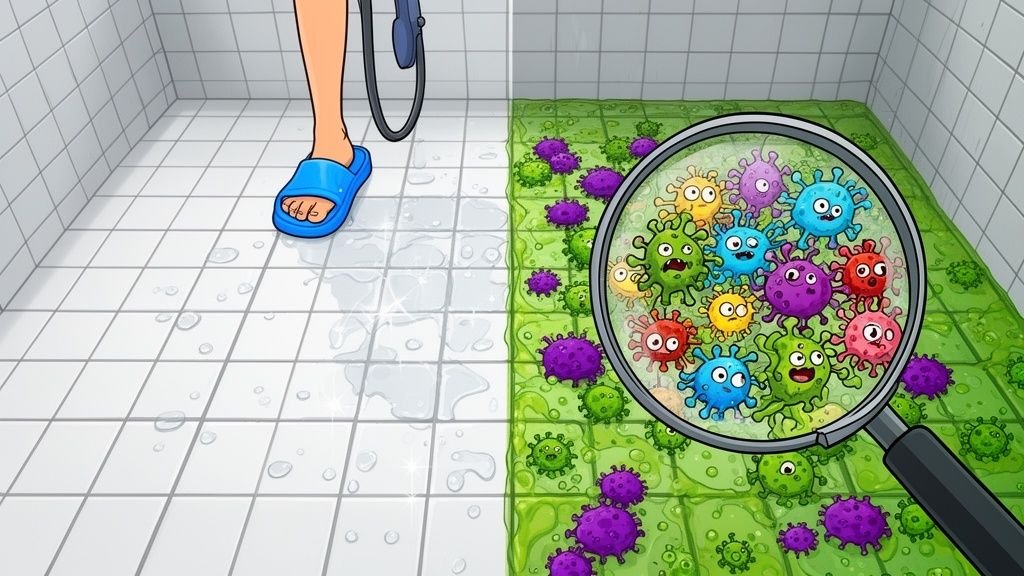
Staphylococcus aureus, commonly known as "Staph," is a bacterium that poses a significant public health risk, particularly in environments with high human traffic and shared surfaces. While often harmlessly present on the skin of many individuals, it can cause serious and even life-threatening infections when it breaches the body's defenses. For facility managers, gym operators, and cleaning professionals, understanding this pathogen is the first step toward effective control.
Definition and Overview: What is Staphylococcus Aureus?
Staphylococcus aureus is a gram-positive, round-shaped bacterium that is a common member of the human skin flora and is frequently found in the upper respiratory tract. Its name, derived from Greek and Latin, describes its appearance under a microscope: "staphyle" (bunch of grapes) and "aureus" (golden), referring to its clustered arrangement and golden hue when cultured.
While part of the normal microbiota for about 30% of the population, S. aureus is an opportunistic pathogen. This means it can cause infection when it enters the body through a cut, scrape, or other break in the skin. Its ability to produce toxins and its increasing resistance to antibiotics make it a formidable foe in any shared environment.
Where It’s Commonly Found
Staphylococcus aureus is exceptionally hardy and can survive on dry surfaces for extended periods, making it a persistent threat in many commercial and public settings. Its prevalence is highest in places where people are in close contact or share equipment and facilities.
Key environments include:
- Gyms and Fitness Centers: Locker rooms, communal gym showers, exercise mats, weight-lifting equipment, and high-touch surfaces like doorknobs and benches are primary reservoirs. The combination of sweat, shed skin cells, and humidity creates an ideal breeding ground.
- Hospitals and Healthcare Facilities: S. aureus is a leading cause of hospital-acquired infections (HAIs), spreading via contaminated hands, medical equipment, and surfaces.
- Schools and Daycares: Close contact among children and shared toys or surfaces facilitate easy transmission.
- Correctional Facilities: Crowded conditions and shared living spaces contribute to a high risk of staph outbreaks.
Health Risks: From Skin Infections to Serious Illness
Infections caused by Staphylococcus aureus range from minor skin issues to life-threatening conditions. The method of transmission is typically direct contact with an infected person or, more commonly in facility settings, contact with a surface contaminated with the bacteria.
Common health risks include:
- Skin and Soft Tissue Infections: This is the most frequent type of staph infection, manifesting as boils, folliculitis (infected hair follicles), impetigo (a contagious skin rash), and cellulitis (a deeper skin infection).
- Invasive Infections: If the bacteria enter the bloodstream, they can cause severe conditions like bacteremia (bloodstream infection), pneumonia, endocarditis (heart valve infection), and osteomyelitis (bone infection).
- Toxin-Mediated Illnesses: Some strains produce toxins that can lead to food poisoning or toxic shock syndrome.
- Antibiotic Resistance: The emergence of strains like MRSA (Methicillin-resistant Staphylococcus aureus) presents a major challenge, as these infections do not respond to common antibiotics and require more intensive treatment.
How to Kill or Control Staphylococcus Aureus
Controlling the spread of S. aureus hinges on rigorous and consistent cleaning and disinfection protocols. Because the bacterium can thrive in biofilms—slimy, protective layers that shield it from cleaners—a simple wipe-down is insufficient.
Effective control strategies include:
- Use EPA-Registered Disinfectants: Select cleaning products that are specifically approved by the EPA for their efficacy against Staphylococcus aureus (and ideally MRSA). Disinfectant wipes are an excellent tool for this, as they come pre-saturated with the correct chemical concentration.
- Adhere to Dwell Times: This is a critical, often-missed step. The disinfectant must remain wet on the surface for the manufacturer-specified "dwell time" (typically 3–10 minutes) to effectively kill the bacteria. Wiping a surface dry immediately after application will not achieve disinfection.
- Clean Before Disinfecting: Always remove visible dirt, grime, and organic matter (like sweat and skin cells) before applying a disinfectant. This allows the chemical to make direct contact with the pathogens.
- Focus on High-Touch Points: Prioritize frequent disinfection of surfaces like gym equipment grips, locker room benches, doorknobs, faucets, and communal gym shower floors and handles.
Who Should Be Concerned?
While everyone should practice good hygiene, certain professionals have a heightened responsibility to manage the risk of S. aureus transmission.
- Gym Operators and Janitorial Staff: You are on the front lines of defense. Implementing and strictly following a detailed cleaning schedule is essential to protect members and staff from outbreaks. A clean facility is a safe facility.
- Healthcare Providers: Preventing HAIs is a top priority, requiring meticulous hand hygiene and environmental disinfection protocols.
- School Administrators and Food Service Managers: Ensuring that shared spaces, cafeterias, and kitchens are properly cleaned and sanitized is key to preventing the spread of staph among vulnerable populations.
For reliable, EPA-registered disinfecting solutions proven effective against a wide range of pathogens including Staphylococcus aureus, we recommend exploring the product line at Wipes.com. Their professional-grade wipes are designed to meet the rigorous hygiene standards required to keep your facility safe and clean.
Leave a Reply