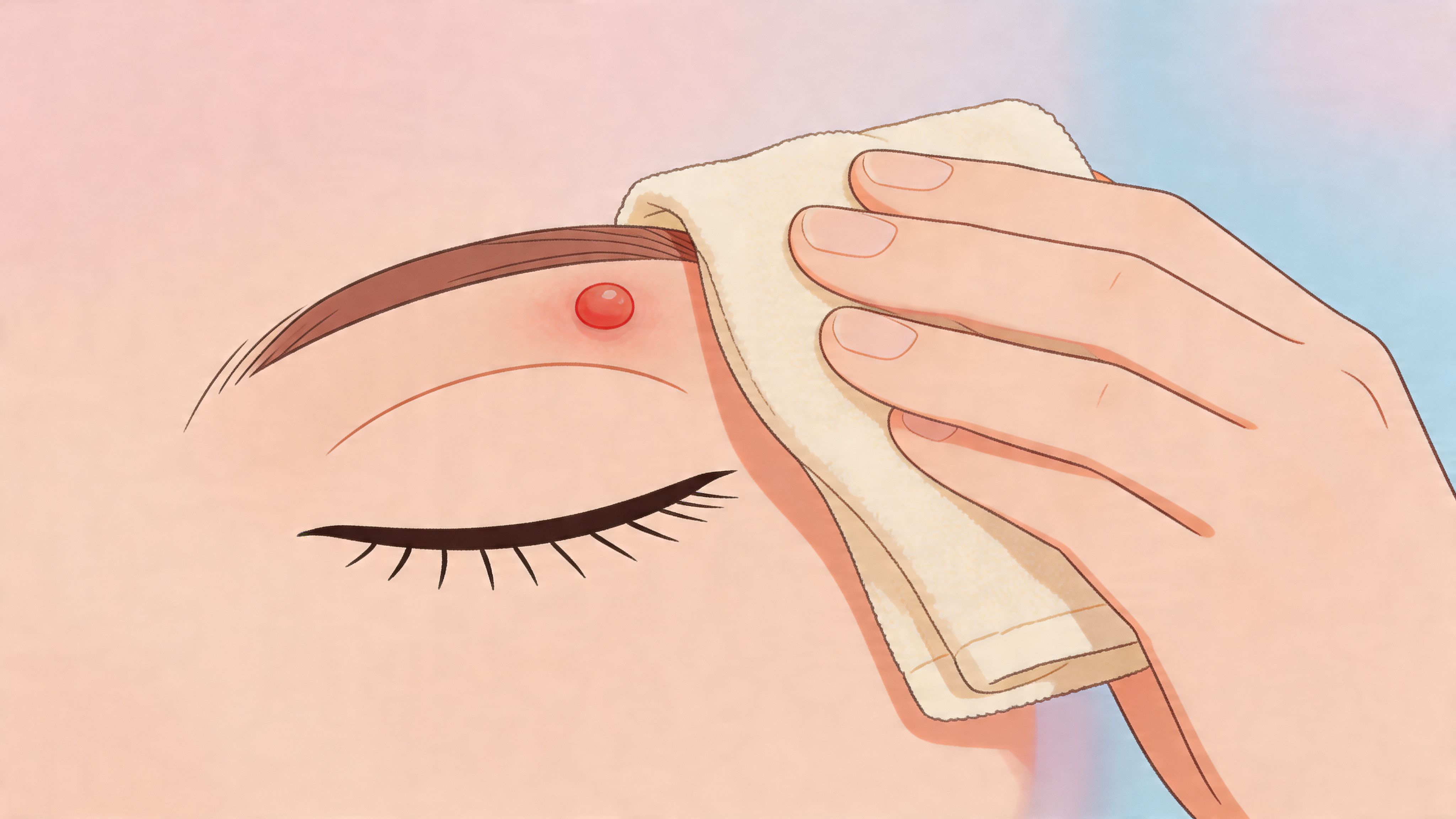
You wake up, look in the mirror, and there it is. A sore, red bump sitting on the eyelid, tender enough that blinking feels irritating all morning. It is commonly called a stye, and in practical terms that’s exactly what it is: a small, localized eyelid infection that usually looks minor but still disrupts comfort, vision, and routine.
For school nurses, parents, gym managers, and facility teams, a stye matters for another reason. It isn’t only an eye issue. It’s also a hygiene issue. The same bacterium behind many styes can move from hands, towels, pillowcases, makeup tools, and shared surfaces into the eyelid area. Treating a stye in your eye helps the person in front of you. Controlling the surrounding environment helps prevent the next one.
That Unmistakable Pimple on Your Eyelid
A stye usually announces itself quickly. The eyelid becomes sore, the area turns red, and a small lump forms near the lash line or deeper within the lid. Some people notice tearing, crusting, or a gritty feeling first. Others just feel pain when they blink.

This is common enough that it shouldn’t surprise anyone in a school clinic, front office, locker room, or household. About 1 in 5 people experience a stye at some point, according to eye health guidance from My iClinic.
What people usually notice first
The pattern is often easy to recognize:
- Localized tenderness: One spot on the lid hurts more than the rest.
- Redness and swelling: The eyelid looks irritated and slightly enlarged.
- A visible bump: It may resemble a pimple, especially if it sits near the lash margin.
- Tearing or mild blur: Swelling can interfere with the normal tear film.
Why it deserves more than a quick glance
Most styes improve with simple care, but a narrow focus on the eyelid alone misses part of the problem. In high-traffic settings, people repeatedly touch their faces after handling desks, mats, faucet handles, locker doors, towels, and phones. If those items carry the bacterium involved in styes, reinoculation becomes more likely.
Practical rule: If someone keeps getting styes, don’t just look at the eyelid. Look at hands, linens, cosmetics, and shared touchpoints.
That’s why the best response has two parts. First, calm the current inflammation and support drainage. Second, reduce the environmental opportunities for bacteria to reach the eye again.
Understanding the Bacterial Cause of a Stye
A stye, also called a hordeolum, is an acute bacterial infection of an eyelid gland. Think of the eyelid as a row of tiny oil-producing structures. When one of those outlets gets blocked, bacteria can settle in and multiply, much like fluid backing up behind a clogged drain.
The main bacterium behind this process is Staphylococcus aureus. It lives commonly on skin and in the nose, which matters because fingers often transfer it from the face to the eyelid. According to Wikipedia’s overview of styes, Staphylococcus aureus causes approximately 95% of stye cases, with internal styes affecting meibomian glands and external styes targeting glands of Zeis.

External stye and internal stye
The location changes how the stye looks and feels.
- External stye: This forms closer to the lash line. It tends to look more like a small surface pustule.
- Internal stye: This forms deeper inside the eyelid where the meibomian glands sit. It often creates broader swelling and can feel more diffuse.
How the infection starts
The chain usually looks like this:
- A gland outlet gets blocked. Oils can’t move out normally.
- Bacteria gain access. This often happens after eye rubbing or contact with contaminated fingers or items.
- Inflammation builds. The body sends immune cells into the area.
- A tender lump forms. Pus and swelling create the familiar bump.
In practical settings, the “why” matters. If the bacterium commonly lives in the nose and on skin, then rubbing the nose and then rubbing the eye is not a trivial habit. It’s a direct transfer route.
Risk factors that make styes more likely
Several patterns show up repeatedly in people who get styes:
- Poor eyelid hygiene
- Eye rubbing with unwashed hands
- Old or contaminated eye makeup
- Contact lens misuse
- Blepharitis or chronic eyelid irritation
- Rosacea and other inflammatory skin conditions
For prevention-minded readers, personal habits and environmental controls often overlap. A person may wash their face faithfully, but if they use a contaminated towel, keep old mascara, or touch a poorly cleaned shared surface and then their eye, that good habit gets undercut.
A broader infection prevention mindset helps. Readers who want a general framework for reducing bacterial spread in daily life can review this guide on preventing bacterial infections.
A stye is small, but the microbiology behind it isn’t random. It follows the same contamination logic seen with many contact-based bacterial problems.
Is It a Stye or a Chalazion
Not every eyelid lump is an active infection. That distinction matters because people often treat every bump like it needs to be “popped” or aggressively scrubbed. That’s the wrong move.
A true stye usually appears suddenly and hurts. The eyelid feels sore to the touch, the area looks inflamed, and there may be a visible point near the edge of the lid. A chalazion behaves differently. It’s usually a blocked oil gland without the same acute infectious pattern.
According to Johns Hopkins Medicine’s hordeolum overview, internal hordeola present with more diffuse swelling because of their deeper location and are more likely to evolve into a chronic, non-infectious chalazion if the blocked meibomian gland fails to drain.
What usually points toward a stye
Look for these features:
- Pain or tenderness
- Redness
- Faster onset
- A bump at or near the eyelid edge
- A feeling of warmth or localized irritation
Stye vs. Chalazion key differences
| Feature | Stye (Hordeolum) | Chalazion |
|---|---|---|
| Cause | Acute bacterial infection of an eyelid gland | Blocked oil gland without active infection |
| Pain | Usually painful or tender | Often painless or only mildly uncomfortable |
| Onset | Sudden | More gradual |
| Location | Commonly near eyelid edge, though internal ones sit deeper | Often deeper in the lid |
| Appearance | Red, inflamed lump, sometimes with a pustular point | Firmer lump with less redness |
| Usual course | May drain and settle with warm compresses | May linger as a chronic bump |
When the diagnosis gets muddy
Internal styes can confuse people because they don’t always show a neat white head. They may make the entire lid look swollen. If the eye also looks red on the surface or there’s discharge from the eye itself, broaden the differential. Conjunctivitis can overlap in appearance, and this easy guide to pink eye symptoms is a useful comparison when school staff or parents are trying to tell one eye problem from another.
Pain points toward a stye. A firm, lingering, less tender bump points more toward a chalazion.
Safe and Effective Stye Treatment at Home
The best home treatment is simple and boring. That’s usually a good sign in infection control. Warm compresses work. Picking, squeezing, and improvised remedies don’t.

According to the Merck Manual discussion of chalazion and hordeolum, warm compresses at 40°C for 15 minutes four times daily enhance lipid flow and achieve 80% resolution in 3 to 5 days, and adjunctive hypochlorous acid sprays can eradicate 4-log S. aureus CFU in 1 minute.
How to do a warm compress correctly
Use a clean washcloth soaked in warm water. It should feel comfortably warm, not hot enough to sting the eyelid. Hold it against the closed eyelid for the full treatment period, then rewarm the cloth as needed.
A practical routine:
- Use a clean cloth each time
- Keep the eyelid closed
- Apply steady warmth, not pressure
- Repeat consistently through the day
The reason it works is mechanical as much as biological. Warmth softens thickened oils in the gland and encourages natural drainage. That’s much safer than trying to force the gland open.
What not to do
Some mistakes turn a small problem into a larger one.
- Don’t squeeze it: Pressure can push infected material deeper into the eyelid tissue.
- Don’t lance it at home: The eyelid is delicate, vascular, and easy to injure.
- Don’t keep using eye makeup over it: Applicators and product surfaces can become contaminated.
- Don’t wear contact lenses until the eye settles: Friction and handling add more irritation.
Never try to pop a stye in your eye the way you’d handle a skin blemish. The anatomy is different, and the risk is higher.
Eyelid hygiene during an active stye
Gentle cleaning helps, but aggressive scrubbing doesn’t. If there’s crusting, soften it first with warm water. Clean the lid margin lightly. The goal is to reduce debris, not to abrade the skin.
Some people also use eyelid-safe hypochlorous acid products as a hygiene adjunct. That’s reasonable when the product is intended for periocular use and applied according to label instructions. It’s not a substitute for compresses, but it can fit into a careful lid hygiene routine.
What about rubbing alcohol or hydrogen peroxide
Keep both away from the eye and eyelid margin unless a clinician has given very specific instructions. Products that make sense for hard-surface disinfection often make poor choices for delicate tissue. For a broader distinction between household disinfectants and what belongs nowhere near the eye, this review of hydrogen peroxide and rubbing alcohol is worth reading.
When home care is enough
If the lump is localized, symptoms stay limited to the eyelid, and the area gradually softens or drains, home care is usually the right first move. Most failures come from inconsistency. People apply one warm cloth for two minutes, decide it “didn’t work,” and then start touching or squeezing the area.
What works is repetition, clean materials, and patience.
Preventing Styes in High-Traffic Environments
For households, schools, gyms, and care facilities, a stye isn’t only an individual event. It’s a warning that Staphylococcus aureus has a route to the eye. If the environment keeps providing that route, treatment becomes a revolving door.

A useful point from CooperVision’s discussion of styes is that a major content gap remains around environmental contamination. The article notes that Staphylococcus aureus can survive for extended periods on pillowcases, towels, and makeup applicators, yet most stye advice skips the surface disinfection protocols that matter in shared spaces.
Shared items are often the weak point
In practice, I worry less about dramatic exposure and more about ordinary repetition. One student uses a shared hand towel. One athlete wipes sweat and then rubs an eye. One staff member borrows makeup or shares a washcloth at a sleepover or camp setting. That’s how small bacterial transfers become recurring eyelid problems.
The highest-risk shared items usually include:
- Linens and fabrics: Pillowcases, washcloths, towels
- Personal care tools: Makeup brushes, mascara, applicators
- Hand-contact surfaces: Faucet handles, doorknobs, lockers, desks
- Athletic equipment: Mats, benches, machine handles
What facility managers should actually do
A workable protocol is more important than an impressive one. Staff need clear, repeatable steps.
Hand hygiene first
Hands are the transport system. Put handwashing supplies where eye touching often follows contact, such as restrooms, nurse’s offices, locker rooms, and staff break areas. Alcohol-based hand sanitizer can help between sink visits, but visibly soiled hands still need soap and water.
Separate personal items
Don’t allow shared towels in clinics, locker rooms, or day programs. In family and dorm settings, assign linens clearly. If someone has an active stye, isolate washcloths, pillowcases, and eye-area cosmetics from everyone else’s use.
Disinfect high-touch surfaces with the right product
Use EPA-registered disinfectant wipes or other EPA-registered disinfectants labeled effective against Staphylococcus aureus. Follow the product label exactly, especially the contact time or dwell time. A wipe only works if the surface stays visibly wet for the required period. Wiping dry in a few seconds and moving on feels productive, but it’s poor disinfection.
Clean visibly dirty surfaces before disinfection
Organic residue interferes with disinfectant performance. On desks, counters, gym handles, and sink areas, remove grime first if needed. Then apply the disinfectant according to label instructions.
Treat makeup as personal, not communal
This gets missed in schools, theater departments, dance teams, and some household settings. Eye makeup and its applicators should never be shared. If a product may be contaminated from use during an active eyelid infection, replace it.
Surface hygiene doesn’t replace hand hygiene. It supports it. You need both if you want fewer repeat infections.
For broader control strategies focused specifically on this organism, this article on how to prevent Staphylococcus aureus gives a useful environmental framework.
When a Stye Becomes a Serious Concern
Most styes stay local. A minority don’t. The important question isn’t whether the bump looks ugly. It’s whether the infection is extending beyond the gland.
As noted in clinical guidance on eye infections and styes from Allen Eyecare Center, untreated or severe cases can lead to preseptal cellulitis, and many consumer articles don’t explain why some infections spread while others remain localized. From an infection control standpoint, spread becomes more likely when bacteria move beyond the obstructed gland into surrounding eyelid tissue, especially after ongoing manipulation, delayed drainage, or a more aggressive inflammatory response.
Warning signs that need medical review
Seek professional evaluation if you see any of the following:
- Swelling that spreads across more of the eyelid or face
- Increasing pain instead of gradual improvement
- Vision changes
- Fever
- Trouble opening the eye because of swelling
- A lump that persists despite steady home care
What clinicians may do
A clinician may decide the area needs prescription treatment or a procedure. That can include antibiotic ointment, oral antibiotics when surrounding tissue is involved, or drainage in selected persistent cases. The point isn’t that every stye needs medication. Most don’t. The point is that a worsening eyelid infection needs someone to examine the full picture.
If readers want a patient-friendly overview of when eye redness, swelling, or discharge should be assessed more formally, this guidance for eye infections is a practical reference.
A stye that stays put is annoying. A stye that starts expanding beyond the original spot changes the risk calculation.
A Proactive Approach to Eyelid Health and Hygiene
A stye in your eye is usually manageable, but it shouldn’t be treated as random bad luck. It’s a bacterial event with a recognizable pattern. A gland gets blocked, Staphylococcus aureus finds an opening, and inflammation follows. The response that works best is equally straightforward: warm compresses, clean hands, gentle eyelid hygiene, and no squeezing.
For families and facilities, prevention improves when you stop thinking only about the eyelid and start thinking about transfer routes. Towels, pillowcases, desk surfaces, locker room touchpoints, cosmetics, and hands all matter. If those routes stay contaminated, repeat infections stay plausible.
The practical takeaway is simple. Treat the current stye carefully, but also clean the environment around the person who has it. Use EPA-registered disinfectant wipes labeled for Staphylococcus aureus, follow the stated dwell time, avoid sharing fabrics or eye products, and tighten hand hygiene where face touching happens most.
For routine surface hygiene and disinfection support, we recommend Wipes.com.
Leave a Reply