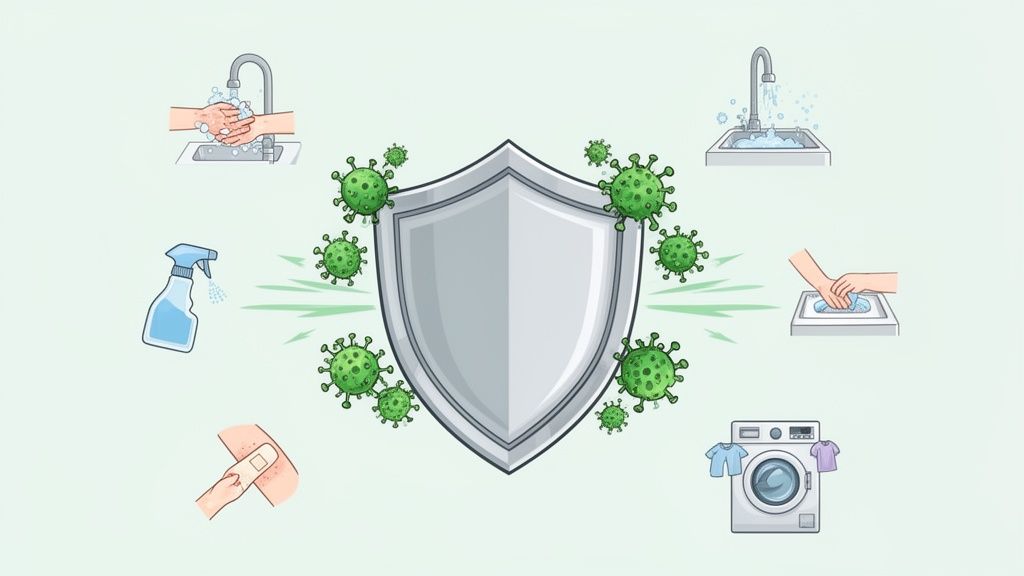
Staphylococcus aureus, often shortened to Staph, is a common bacterium that lives on the skin or in the nose of about one-third of the population, often without causing harm. However, when it breaches the body's defenses through a cut or scrape, it can lead to infections ranging from minor skin irritations to severe, life-threatening conditions. Understanding its characteristics, where it thrives, and how to control it is essential for maintaining a safe environment.
This guide provides actionable steps for facility managers, janitorial staff, business owners, and healthcare providers on how to prevent Staphylococcus aureus transmission.
Definition and Overview of Staphylococcus Aureus
Staphylococcus aureus is a gram-positive, round-shaped bacterium belonging to the Staphylococcaceae family. Its name, derived from Greek words meaning "bunch of grapes" and "golden," describes its clustered appearance under a microscope and the yellowish colonies it often forms.
One of its most notable traits is its resilience. Staph can survive on dry surfaces for extended periods, making it a persistent threat in many settings. Furthermore, certain strains have developed resistance to common antibiotics, including the well-known Methicillin-resistant Staphylococcus aureus (MRSA), which poses significant challenges in healthcare.
Where Staphylococcus Aureus Is Commonly Found
Staph is ubiquitous but flourishes in environments where people are in close contact or share surfaces and equipment. High-traffic commercial settings are particularly vulnerable due to the constant introduction and spread of microbes.
- Healthcare Facilities: Hospitals, clinics, and long-term care homes are hotspots due to the high concentration of vulnerable individuals and frequent contact between patients and healthcare workers. Medical devices and surfaces can easily become contaminated.
- Gyms and Athletic Facilities: Shared equipment like weights and yoga mats, along with damp locker rooms and shared towels, create ideal conditions for Staph to spread through skin-to-skin contact and contaminated surfaces (what is fomite transmission).
- Schools and Daycares: Close interaction among children, combined with shared toys, desks, and playground equipment, facilitates rapid transmission.
- Food Service Areas: Kitchens and cafeterias can become breeding grounds if food handlers do not practice proper hygiene. Staph can be transferred from unwashed hands to food, where it can multiply and produce toxins that cause food poisoning.

Health Risks and Transmission
Staphylococcus aureus is an opportunistic pathogen, meaning it takes advantage of breaks in the skin to cause infection. Transmission occurs primarily through:
- Direct Contact: Skin-to-skin contact with an infected person.
- Indirect Contact: Touching surfaces or objects (fomites) contaminated with the bacteria, such as doorknobs, gym equipment, or towels.
- Contaminated Food: Ingesting food containing toxins produced by S. aureus.
The health risks vary widely. Common manifestations include boils, impetigo, and cellulitis. If the bacteria enter the bloodstream, they can cause more severe infections like pneumonia, sepsis, or endocarditis. The rise of antibiotic-resistant strains like MRSA has made treatment more complex, underscoring the critical importance of prevention. Studies show that a significant percentage of wound infections are caused by S. aureus, highlighting the need for findings and the importance of immediate care.

How to Kill and Control Staphylococcus Aureus
Effective control of S. aureus hinges on a two-pronged approach: consistent personal hygiene and rigorous environmental disinfection.
Personal Hygiene Practices
Handwashing is the single most effective way to prevent the spread of Staph. Adhering to proper hand hygiene techniques—scrubbing with soap and water for at least 20 seconds—is crucial, especially after using the restroom, before handling food, and after touching high-contact surfaces. Additionally, individuals should avoid sharing personal items like towels, razors, and athletic gear. Proper wound care is also vital; all cuts and scrapes should be cleaned immediately and kept covered with a bandage until healed.
Disinfection Protocols
Cleaning alone is not enough; surfaces must be disinfected to kill the bacteria.
- Choose the Right Product: Use an EPA-registered disinfectant proven effective against Staphylococcus aureus. Look for this claim on the product label. Disinfectant wipes are an excellent choice for convenience and consistency. For a comprehensive list, consult the EPA-registered disinfectants list.
- Respect the Dwell Time: Dwell time is the amount of time a disinfectant must remain wet on a surface to kill the targeted pathogen. For S. aureus, this can range from 30 seconds to 10 minutes, depending on the active ingredient (e.g., alcohol, quaternary ammonium compounds). Wiping the surface dry prematurely renders the disinfectant ineffective. Always follow the manufacturer’s instructions.
- Focus on High-Touch Surfaces: Routinely disinfect doorknobs, light switches, gym equipment, countertops, and shared electronics. In food service, proper sanitation is critical to prevent global food contamination rates from rising.
Who Should Be Concerned?
While everyone should be mindful of Staph prevention, certain professionals have a heightened responsibility due to the environments they manage.
- Janitorial and Facility Managers: You are the first line of defense. Implementing and enforcing a strict cleaning and disinfection schedule for high-touch surfaces is paramount. Training staff on proper disinfectant use, including dwell times, is essential.
- Gym Operators: Your clients are at high risk due to shared equipment and skin contact. Providing disinfectant wipes and encouraging members to wipe down equipment before and after use can significantly reduce transmission.
- Healthcare Providers: Strict adherence to hand hygiene protocols and environmental sanitation is non-negotiable to protect vulnerable patients. This includes professionals who provide essential personal care services.
- Food Service Managers: You must enforce rigorous handwashing and food handling policies to prevent staphylococcal food poisoning. Regular sanitation of food-prep surfaces is critical.
A proactive approach to hygiene and disinfection is the most effective strategy for preventing Staphylococcus aureus infections. By understanding the risks and implementing targeted control measures, you can create a safer and healthier environment for everyone. While options like alternative cleaning uses of vinegar may suit some household needs, commercial settings require proven solutions.
To ensure your facility meets the highest standards of cleanliness and safety, we recommend using EPA-registered disinfectant wipes proven to kill Staphylococcus aureus. Wipes.com offers a range of professional-grade products designed for high-traffic environments, providing a reliable and effective solution for your disinfection needs.
Leave a Reply