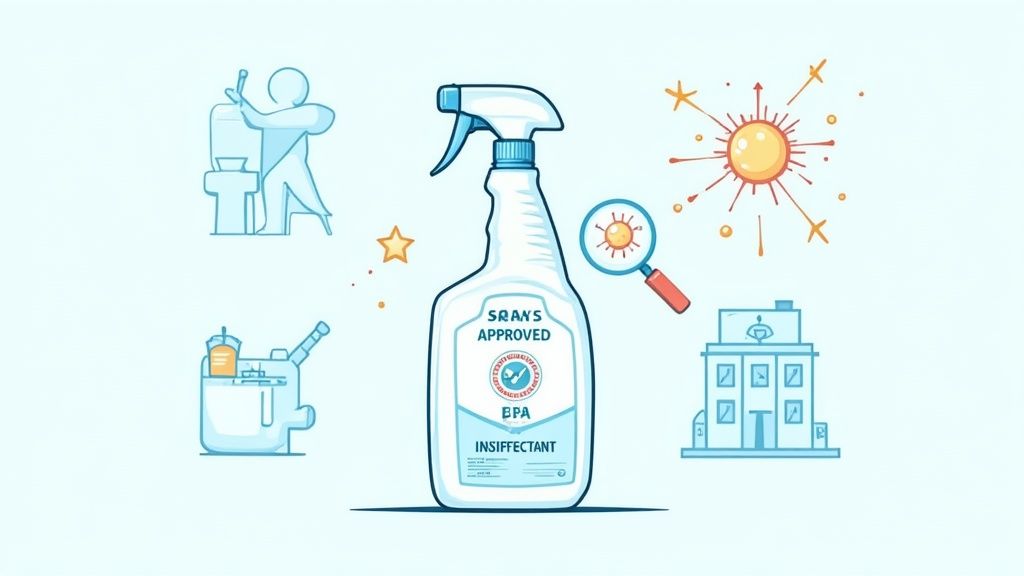
Staphylococcus aureus, often shortened to S. aureus or "Staph," is a common bacterium that poses a significant health risk in commercial and public settings. While it can be found on the skin of about 30% of healthy people without causing harm, it is also an opportunistic pathogen capable of causing serious infections. For facility managers, healthcare providers, and business owners, understanding how to control this bacterium is crucial for maintaining a safe environment.
Definition and Overview of Staphylococcus aureus
Staphylococcus aureus is a Gram-positive, spherical bacterium that typically appears in grape-like clusters under a microscope. It is a facultative anaerobe, meaning it can survive with or without oxygen, making it highly adaptable to various environments. One of its most notable traits is its ability to develop resistance to antibiotics, leading to dangerous strains like Methicillin-resistant Staphylococcus aureus (MRSA). Its hardiness allows it to survive on dry surfaces for extended periods, making environmental disinfection a critical control measure.
Where It’s Commonly Found
S. aureus thrives in environments with high human traffic and frequent skin-to-surface contact. Its presence is a major concern in several key sectors:
- Healthcare Facilities: Hospitals, clinics, and long-term care homes are high-risk areas due to the presence of vulnerable patients and numerous high-touch surfaces like bed rails, medical equipment, and doorknobs.
- Gyms and Fitness Centers: Shared exercise equipment, locker room benches, and mats are common reservoirs for S. aureus. The combination of sweat and frequent skin contact creates an ideal breeding ground.
- Schools and Daycares: Children often have close physical contact and may not follow strict hygiene practices, facilitating the spread of the bacteria on toys, desks, and shared supplies.
- Food Service Areas: While more commonly associated with foodborne pathogens like Salmonella, S. aureus can contaminate food through improper handling, leading to food poisoning.
Health Risks Associated with Staphylococcus aureus
When S. aureus breaches the skin's barrier or enters the body, it can cause a range of infections, from minor to life-threatening. Transmission typically occurs through direct contact with an infected person or by touching a contaminated surface and then touching one's eyes, nose, or mouth.
Common health risks include:
- Skin Infections: The most frequent type of Staph infection, causing boils, cellulitis, and impetigo.
- Invasive Infections: If the bacteria enter the bloodstream, they can cause severe conditions like sepsis, pneumonia, or infections of the heart valves (endocarditis).
- Antibiotic Resistance: The emergence of MRSA makes infections much harder to treat, requiring more powerful and often more toxic antibiotics.
How to Kill and Control It
Effective control of S. aureus hinges on rigorous cleaning and disinfection protocols. Simply wiping down a surface is not enough; disinfection is required to kill the bacteria.
- Use EPA-Registered Disinfectants: Select products specifically proven effective against Staphylococcus aureus. Look for the EPA registration number on the product label and check its efficacy on the EPA's official database. Disinfectant wipes are an excellent choice for high-touch surfaces as they ensure proper chemical concentration and application.
- Observe Dwell Time: Dwell time, or contact time, is the period a disinfectant must remain wet on a surface to kill the pathogen. For S. aureus, this can range from 30 seconds to 10 minutes, depending on the product. Wiping the surface dry before the dwell time is complete will render the disinfection process ineffective.
- Proper Technique: Always clean a visibly dirty surface with soap and water before disinfecting. Apply the disinfectant generously to ensure the surface stays wet for the entire required dwell time.
Who Should Be Concerned
While everyone should practice good hygiene, certain professionals have a heightened responsibility to manage the risk of S. aureus:
- Janitorial and Custodial Staff: They are the first line of defense and must be trained in proper disinfection techniques, including the importance of dwell times.
- Healthcare Providers: Infection control practitioners must implement and enforce strict cleaning protocols to protect vulnerable patients.
- Gym and Fitness Center Operators: Managers must ensure a consistent schedule for disinfecting equipment, mats, and locker rooms throughout the day.
- School and Daycare Administrators: Implementing routine cleaning of high-touch surfaces is essential to prevent outbreaks among children.
By understanding the nature of Staphylococcus aureus and implementing a robust, evidence-based disinfection strategy, facility managers and business owners can significantly reduce the risk of transmission and create a healthier environment for everyone.
For high-quality, EPA-registered disinfectant wipes suitable for a variety of professional settings, we recommend exploring the product lines at Wipes.com.
Leave a Reply