Staphylococcus aureus, often shortened to "staph," is a common bacterium that poses a significant challenge in public and commercial spaces. While many people carry it without issue, it can cause serious infections when it breaches the body's defenses. This guide provides facility managers, janitorial staff, and business owners with the essential information needed to understand and control this persistent germ.
Definition and Overview: What Is Staphylococcus Aureus?
Staphylococcus aureus is a Gram-positive, round-shaped bacterium that is a member of the Firmicutes phylum. It's a facultative anaerobe, meaning it can survive with or without oxygen, which contributes to its resilience. Under a microscope, these bacteria typically appear in clusters resembling grapes.
While S. aureus is a common resident on the skin and in the upper respiratory tracts (particularly the nasal passages) of about 30% of healthy individuals, it is also an "opportunistic pathogen." This means it can cause infections ranging from minor skin irritations to severe, life-threatening conditions if it enters the bloodstream or internal tissues through a cut, abrasion, or wound.
Where It’s Commonly Found
Staph is a master of survival and can thrive on various surfaces, making high-traffic environments prime locations for its spread. It is frequently found in:
- Healthcare Facilities: Hospitals and clinics are high-risk zones, with staph present on bed rails, medical equipment, and door handles.
- Gyms and Fitness Centers: Shared exercise equipment, locker room benches, and mats are notorious hotspots for staph transmission.
- Schools and Daycares: Toys, desks, and playground equipment can easily become contaminated and facilitate spread among children.
- Corporate Offices: High-touch surfaces like keyboards, elevator buttons, shared phones, and breakroom appliances can harbor the bacteria.
- Retail Stores: Shopping cart handles, checkout counters, and payment keypads are common points of transfer.
Any environment where people are in close contact or share surfaces is susceptible to staph contamination.
Health Risks: From Minor Skin Issues to Serious Infections
The health risks associated with Staphylococcus aureus are broad and depend on the location and severity of the infection.
- Transmission: The primary method of transmission is through direct contact—touching a contaminated surface or person and then touching your own eyes, nose, mouth, or an open wound.
- Common Infections: The most frequent manifestations are skin infections, such as boils, impetigo, and cellulitis. These often appear as red, swollen, painful bumps that may contain pus.
- Serious Complications: If the bacteria invade deeper into the body, they can cause life-threatening conditions like pneumonia, meningitis, sepsis (bloodstream infection), and toxic shock syndrome. Certain strains have also developed resistance to common antibiotics, such as Methicillin-resistant Staphylococcus aureus (MRSA), making infections much harder to treat. You can explore our detailed guide on how to prevent bacterial infections.
The global hand sanitizer dispenser market, valued at around $2.1 billion, is projected to reach $4.8 billion by 2033, driven by the growing awareness of germs like staph. This highlights the permanent shift toward proactive hygiene. You can read more about this market and the innovations driving its growth on DataHorizzon Research.
How to Kill or Control Staphylococcus Aureus
Controlling the spread of staph relies on a two-pronged approach: routine surface disinfection and consistent hand hygiene.
Effective Cleaning Practices
Disinfecting high-touch surfaces is non-negotiable. To ensure you are effectively killing S. aureus, follow these steps:
- Choose the Right Disinfectant: Use an EPA-registered disinfectant proven effective against Staphylococcus aureus. Products containing quaternary ammonium compounds, hydrogen peroxide, or alcohol are typically effective.
- Respect Dwell Time: Dwell time is the amount of time a disinfectant must remain wet on a surface to kill the target pathogen. This can range from 30 seconds to 10 minutes. Always read and follow the product label's instructions. Simply spraying and immediately wiping a surface dry will not kill the bacteria. For more details on product efficacy, you can find guides that answer questions like, is Simple Green a disinfectant?
- Clean Before Disinfecting: Disinfectants work best on pre-cleaned surfaces. Use a general-purpose cleaner to remove dirt, grime, and organic matter first, then apply the disinfectant.
Promoting Hand Hygiene
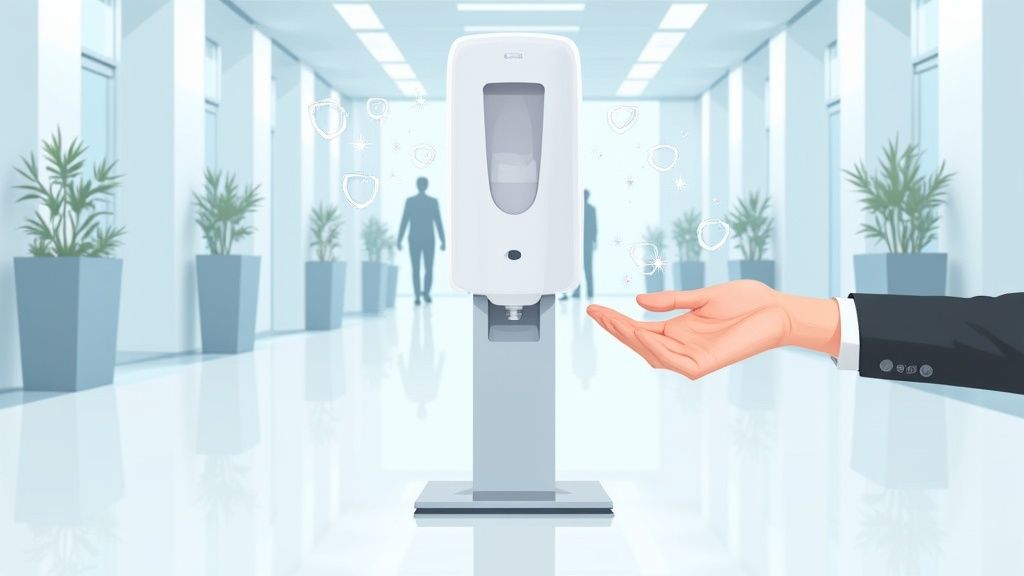
Since hands are the primary vehicle for staph transmission, making hand hygiene easy and accessible is crucial. A highly visible hand sanitizer on a stand is an incredibly effective tool.
- Strategic Placement: Install hand sanitizer stations at key points like entrances, exits, elevator banks, cafeterias, and near restrooms. This encourages use at critical moments.
- Use Effective Sanitizer: Ensure the hand sanitizer contains at least 60% alcohol, as recommended by the CDC, to effectively kill staph and other germs.
Who Should Be Concerned?
While everyone should be mindful of staph, certain roles carry a greater responsibility for controlling its spread:
- Janitorial Staff and Facility Managers: You are the first line of defense. Implementing and adhering to rigorous cleaning protocols is essential for protecting everyone in the building.
- Business Owners and Operators: Providing the necessary tools, such as EPA-registered disinfectants and well-maintained hand sanitizer stations, demonstrates a commitment to employee and customer safety. The market for hand sanitizer stands is projected to reach $0.35 billion by 2029, reflecting their importance. You can learn more about the industry's impressive growth and emerging trends.
- Gym and School Operators: These high-contact environments require heightened vigilance. Educating staff and patrons about hygiene is as important as the cleaning itself.
- Healthcare Providers: In clinical settings, preventing staph transmission is a core component of patient safety and healthcare-associated infection prevention.
Takeaway: Make Hygiene Visible and Easy
Staphylococcus aureus is a formidable but manageable threat. Its prevalence in high-traffic environments means that passive measures are not enough. The most effective strategy is a proactive one: combine a consistent, evidence-based surface disinfection plan with highly visible and accessible hand hygiene stations. By making the right choice the easy choice, you empower everyone who enters your facility to break the chain of infection and contribute to a safer, healthier environment. Market data from sources like Verified Market Research confirms that this proactive approach is becoming the global standard.
Leave a Reply