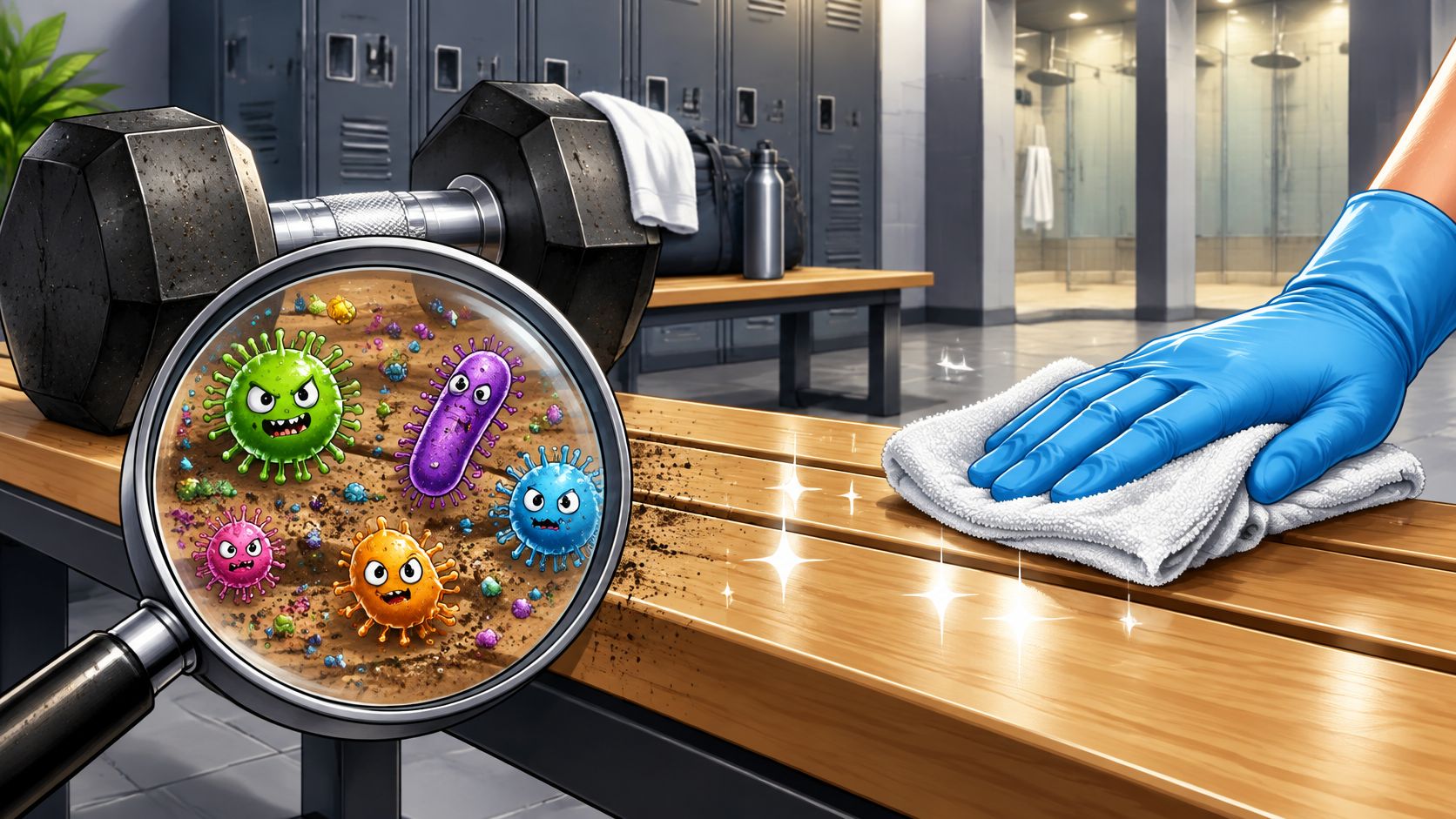
A 2019 study of fitness facilities in Northeast Ohio found Staphylococcus aureus on 38.2% of 288 sampled surfaces. The result reframes locker room bacteria: a room can look clean while shared equipment still carries bacteria, and a positive swab doesn't automatically mean someone will get sick. The study of 16 fitness facilities found contamination on both ordinary gym surfaces and high-touch equipment.
Locker rooms bring people, skin, damp surfaces, shared gear and frequent hand contact together. The practical response isn't to fear every bacterium or disinfect everything indiscriminately. It's to understand which organisms may be present, how they can spread, and how to clean priority surfaces in a way that gives the disinfectant time to work.
Which Locker Room Bacteria You Are Most Likely to Meet
The table is a quick lookup, not a prediction that every locker room contains every organism. It compares likely sites and transmission routes so staff and athletes can focus on the opportunity for spread.
| Bacterium | Typical locker room sites | Main route | Resistance or severity |
|---|---|---|---|
| Staphylococcus aureus (MSSA) | Benches, locker handles, weight equipment, skin | Direct skin contact, shared towels and gear | Often treated with standard antibiotics |
| MRSA | Benches, carpets, foam mats, equipment | Skin contact, contaminated surfaces, open wounds | Resists many beta-lactam antibiotics |
| CA-MRSA genotype USA300 | Shared sports equipment, benches, team areas | Skin contact and contaminated surfaces | Community-associated MRSA strain |
| CA-MRSA genotype USA400 | Shared sports equipment, benches, team areas | Skin contact and contaminated surfaces | Community-associated MRSA strain |
| VRE (Enterococcus faecium) | Athletic training rooms and shared surfaces | Contaminated surfaces and hands | Resists vancomycin |
| VISA (Staphylococcus aureus) | Healthcare-linked settings, rare in gyms | Contact with contaminated surfaces | Reduced vancomycin susceptibility |
| Pseudomonas aeruginosa | Showers, faucets, hot tubs, wet floors | Contaminated water and damp surfaces | Can be difficult to treat when resistant |
| MDR Acinetobacter baumannii | Shared equipment and hard surfaces | Contact with contaminated surfaces | Multidrug-resistant; can persist on surfaces |
| Salmonella enterica | Water bottles, food areas, shared handles | Fecal-oral route and contaminated food | Causes gastroenteritis |
| ESBL E. coli | Toilets, showers and shared surfaces | Fecal-oral route | Resists many beta-lactam antibiotics |
| Klebsiella pneumoniae with NDM-1 | Mainly healthcare settings, rare in locker rooms | Contaminated surfaces and hands | Carbapenem-resistant |
| Escherichia coli O157:H7 | Toilets, water fountains and contaminated surfaces | Fecal-oral route | Can cause serious intestinal illness |
| Streptococcus pyogenes (Group A strep) | Benches, shared towels and skin | Droplets and skin contact | Can cause strep throat and impetigo; treated with penicillin |
Read the table by route
The skin-contact group is especially relevant to athletes. MSSA and MRSA can move through direct contact, shared towels or equipment, and contaminated surfaces. USA300 and USA400 are community-associated MRSA genotypes, not separate categories of cleaning product: the same practical priorities apply, particularly shared surfaces and opportunities for skin-to-skin or surface-to-skin contact.
VRE and VISA matter because resistance can limit treatment options. VRE resists vancomycin, while VISA has reduced susceptibility to it. Their presence is not something a user can identify by looking at a bench, and a surface swab alone doesn't diagnose an infection.
The remaining organisms highlight other routes. Pseudomonas is associated with wet environments, while enteric bacteria such as Salmonella and E. coli can spread through fecal contamination, contaminated food or hand-to-mouth contact. Streptococcus pyogenes can spread through droplets and skin contact.
Most rows aren't a reason for panic. They're a guide to where to look and which route to block. Start with bare-skin contact points, wet areas and surfaces shared by many users. The surface findings below show why a high-touch handle or piece of equipment may deserve more attention than a floor that looks dirty.
Where Bacteria Settle on Locker Room Surfaces
In a 2019 Northeast Ohio study, researchers detected S. aureus on 38.2% of 288 sampled surfaces. Rates varied by item, so the overall figure can obscure which surfaces had more positive samples.
| Surface | S. aureus detected | Why it matters |
|---|---|---|
| All sampled surfaces | 38.2% | Overall prevalence across 288 samples |
| Weight balls | 62.5% | Gripped by many users in one session |
| Cable-driven curl bars and CrossFit boxes | 62.5% | Frequent hand contact |
| Weight plates | 56.3% | Handled repeatedly by different users |
| Treadmill handles | 50.0% | Gripped during exercise |
| Free ropes | 50.0% | Shared equipment with frequent hand contact |
| Water fountains | 50.0% | Hand and mouth contact |
| Bathroom levers and door handles | 18.8% | Lowest observed rate, but not zero |
Several frequently handled items had higher detection rates than bathroom levers and door handles. Appearance is a poor guide: a clean-looking floor cannot show whether a bar, weight ball or fountain has been disinfected. Prioritize surfaces according to how they are used and cleaned, not how often the room gets cleaned.
A separate U.S. investigation found MSSA in 24% of 108 environmental samples and detected MRSA in samples from football and weight-room environments. Positive sites included torn vinyl weight benches, chalk trays, locker handles, a hand dryer used for equipment, carpeted floors, bench coverings and foam flooring, as reported in the investigation of football and weight-room surfaces.
Damaged or porous materials can trap soil and make it harder for disinfectant to reach the full surface. When vinyl is torn or foam is deteriorating, replacement may work better than repeated wiping. For intact equipment, choose a product intended for that surface and follow its label, including the required contact time.
Sample and inspect these first:
- Weight balls, bars, plates and treadmill handles
- Benches, especially torn or worn coverings
- Locker handles, faucets and water fountains
- Foam mats, carpeted areas and shared equipment-drying devices
How Bacteria Move From Surfaces to Skin
An athlete sets a gym bag beside a bench, sits down to change, then leaves with a scraped knee from practice. That simple sequence shows how contact can connect a shared surface to skin. A bench works like a shared notepad: each user may leave organisms behind and pick up what a previous user deposited.
The main routes are direct skin contact, contact with contaminated surfaces, and shared personal items such as towels, razors and athletic gear. A contaminated surface doesn't leap onto someone. Hands, clothing or bare skin provide the connection, and the risk changes if organisms reach an opening in the skin or a mucous membrane.
CDC materials identify MRSA, Acinetobacter and Pseudomonas as organisms that can persist on contaminated environmental surfaces from hours to days, weeks and, in some cases, months. That persistence is one reason benches, locker handles, exercise equipment, faucets and shared devices need routine environmental control, as explained in the CDC material on environmental-surface persistence.
MRSA transmission can involve contact with contaminated surfaces or people, but an opportunity such as a cut or scrape matters. People may also carry bacteria without obvious symptoms, so a surface can be contaminated even when nobody nearby appears ill. Learn more about the surface-to-person pathway in this guide to fomite transmission.
Three useful habits interrupt the chain: cover cuts and scrapes, don't share towels, and wash and completely dry sports clothing after each use. For athletes using communal showers, wearing shower footwear and keeping personal items off shared benches can also reduce direct contact with wet surfaces. These steps don't make every exposure impossible, but they address the routes that turn a contaminated surface into a meaningful opportunity for transmission.
Health Risks and Who Should Be Most Concerned
A positive surface swab is not an infection diagnosis. A repeated-measures gym study recovered 248 bacterial isolates from 180 samples, representing 61 species, and 72.2% were skin-associated taxa. Contamination varied by device and time of day, which is another reason not to treat every detectable bacterium as equally dangerous. The gym-surface study supports a more useful question: can the organism reach a vulnerable part of the body?
Many skin-associated bacteria are harmless or transient in ordinary circumstances. Concern rises when a disease-causing organism reaches broken skin, mucous membranes or shared items that contact them. S. aureus and MRSA can cause skin and soft-tissue infections, including boils and abscesses; Streptococcus pyogenes can cause impetigo or strep throat. Severe bacterial infections can progress to pneumonia, bloodstream infection or sepsis, so worsening symptoms need medical attention rather than a guess about which surface was responsible.
Enteric illness follows a different route. Salmonella enterica can cause gastroenteritis, while E. coli O157:H7 can cause bloody diarrhea and, in some people, kidney failure. In a locker room, handwashing after using the toilet and before eating helps interrupt fecal-oral spread. Water fountains and shared food areas deserve attention because hands and mouths may contact them.
Resistance changes treatment, not the cleaning goal
Antibiotic resistance affects which medicines may work; it doesn't mean a person can identify a bacterium from a rash or a room's cleaning history. MRSA resists many beta-lactam antibiotics, VRE resists vancomycin, VISA has reduced vancomycin susceptibility, ESBL-producing E. coli resists many beta-lactams, and NDM-1 Klebsiella pneumoniae is carbapenem-resistant. A clinician needs to assess a suspected infection and use appropriate testing.
Athletes with cuts, wrestlers with frequent skin contact, janitorial staff handling benches and floor drains, gym operators, school athletic staff, food-service workers near fountains and clinicians treating community strains all have a role. If a wound becomes increasingly red, painful or swollen, or a person develops serious symptoms, seek medical care rather than trying to diagnose the organism from its possible location. People looking into communal showers can also consult this guide to communal gym showers.
Which Surfaces to Prioritize and How Often to Clean
Cleaning frequency and cleaning quality are separate controls. Cleaning removes sweat and soil; disinfection requires the right product to remain on the surface for the label's specified exposure time. Busy surfaces can also be touched again between cleaning rounds, so one nightly deep clean may not be enough during peak use.
| Surface | Priority | Cleaning frequency | Notes |
|---|---|---|---|
| Weight equipment, bars and handles | High | After each use, dry before reuse | Frequent hand contact |
| Benches and bench coverings | High | Daily, plus after heavy use | Replace torn vinyl rather than over-disinfect |
| Locker handles and door hardware | High | Daily or each shift | Bare-skin contact points |
| Showers, faucets and water fountains | High | Daily | Wet or frequently touched sites |
| Hand dryers used for equipment | Medium | Daily | Include them in the facility's surface plan |
| Carpets and foam floor mats | Medium | Weekly deep clean, spot clean daily | Replace damaged mats |
| Towels and sports clothing | Medium | Wash and fully dry after each use | Shared personal items |
CDC guidance says shared equipment should be cleaned after each use and allowed to dry before it's used again. It also stresses following product directions for contact time, dilution, ventilation, surface compatibility and rinsing. The CDC guidance for coaches and athletic directors also recommends showering after exercise and washing and completely drying sports clothing and towels after each use.
The schedule is a working baseline, not a substitute for observing how a room is used. A facility with heavily used equipment may need attention during busy periods, not just after closing. Staff can prioritize by asking three questions: how many people touch this surface, does bare skin or a wound contact it, and can the cleaning method reach the whole surface?
BacteriaFAQ.com also publishes practical guides on bacteria on water fountains and cleaning mop heads, which can help staff think beyond the obvious equipment. A daily routine is useful only if it reaches the surfaces people touch and the team follows the product directions.
How to Disinfect Locker Room Surfaces Correctly
Use this sequence so cleaning removes visible soil and disinfection gets the exposure time it needs.

Clean first. Remove sweat, grime and other visible soil with detergent and a clean cloth. Disinfectant can't reliably act through visible dirt, so don't skip this step on a visibly soiled bench or handle.
Choose an appropriate product. Use an EPA-registered disinfectant whose label names the target organism, such as MRSA or VRE. Not every disinfectant works against every bacterium, so check the product's registered claims rather than relying on the word “disinfectant” alone. The CDC's cleaning and disinfection guidance explains why facilities should match the product to the known harmful germ.
Follow preparation and safety directions. Dilute a concentrate exactly as the label specifies, and follow directions on ventilation, surface compatibility and rinsing. Don't mix cleaning products; use the room's ventilation and any protective equipment required by the label.
Cover the surface and keep it wet. Use enough product or fresh wipes to reach the whole surface, including seams and touch points. EPA defines contact time as the period the treated surface must remain visibly wet. If it dries before the label's time is complete, apply more product as directed.
Finish safely and record the work. Let the surface air-dry unless the label requires rinsing, wash your hands and log the cleaning. A simple record helps a supervisor see whether staff covered the surface and completed the required contact time.
Contact times that count on locker room surfaces
| Target or label | Wet contact time | What to do |
|---|---|---|
| EPA definition, any registered product | Time printed on that label | Keep the surface visibly wet; reapply if it dries early |
| Example product labeled 10 minutes | 10 minutes | Keep it wet for the full 10 minutes |
| Many older hospital disinfectant labels | 10 minutes | The bottle in use governs |
| Salmonella, VRE and MRSA in cited hospital studies | 30 to 60 seconds | Count this only when that product label allows it |
| Some hospital disinfectants | At least 1 minute | Use the time matched to the organism on the label |
| Organism not named on the label | No validated time for that target | Don't assume the product kills it |
Some hospital-disinfection studies report microbial reduction after 30- to 60-second exposures, and some products have demonstrated efficacy at at least one minute, depending on the product and organism. Many older labels specify 10 minutes. Those findings don't override the label on the product in your closet: its registered claims and directions govern. See these surface-disinfection guidelines for more on applying that principle.
The common failure is simple: someone wipes a surface, sees it look clean and walks away before the wet contact time has passed. Visible cleanliness isn't proof that disinfection is complete.
Measure Your Program and Act This Week
A cleaning program needs a way to show whether staff are carrying it out, not just whether supplies are available. In a 2020 intervention study in high-school and collegiate athletic training rooms, MRSA or VRE was detected on 24% of sampled surfaces, or 12 positive surfaces out of 50, before a phased program. The authors compared that result with earlier research reporting a 46% surface-MRSA rate in 10 athletic training rooms, illustrating how results can differ by facility and sampling design. At the final assessment, MRSA and VRE were no longer detected in the four rooms included in the study, according to the intervention study.
Programs that pair surface disinfection with user and staff education have also been reported to substantially lower bacterial counts in athletic-training rooms. Results from training rooms are not a guarantee for every public locker room, since facilities and sampling methods differ. The practical lesson is that a product alone does not ensure surfaces are covered, kept wet for the required time, or cleaned consistently.
Three checks for a working program
- Set a baseline. Swab the same high-touch surfaces so later results can be compared fairly.
- Audit the process. Review cleaning logs and confirm staff followed product directions, including wet contact time.
- Resample on a fixed date. Use the same surfaces and method to check whether the program is holding up.
This week, write down three surfaces that failed the last visual check. Confirm that the disinfectant is EPA-registered for the target organism named on its label, then check whether staff kept those surfaces wet for the full labeled time. A compliance checklist for fitness studios can help operators organize responsibilities and keep routine facility tasks visible.
BacteriaFAQ.com is an informational blog offering facts, explanations, and insights about bacteria and their effects on health, the environment, and science. Its articles cover topics such as infection prevention, cleaning mop heads, and bacteria on water fountains. For locker-room disinfection, use a product suited to the organism and surface, and make following its label directions part of the routine.
Leave a Reply