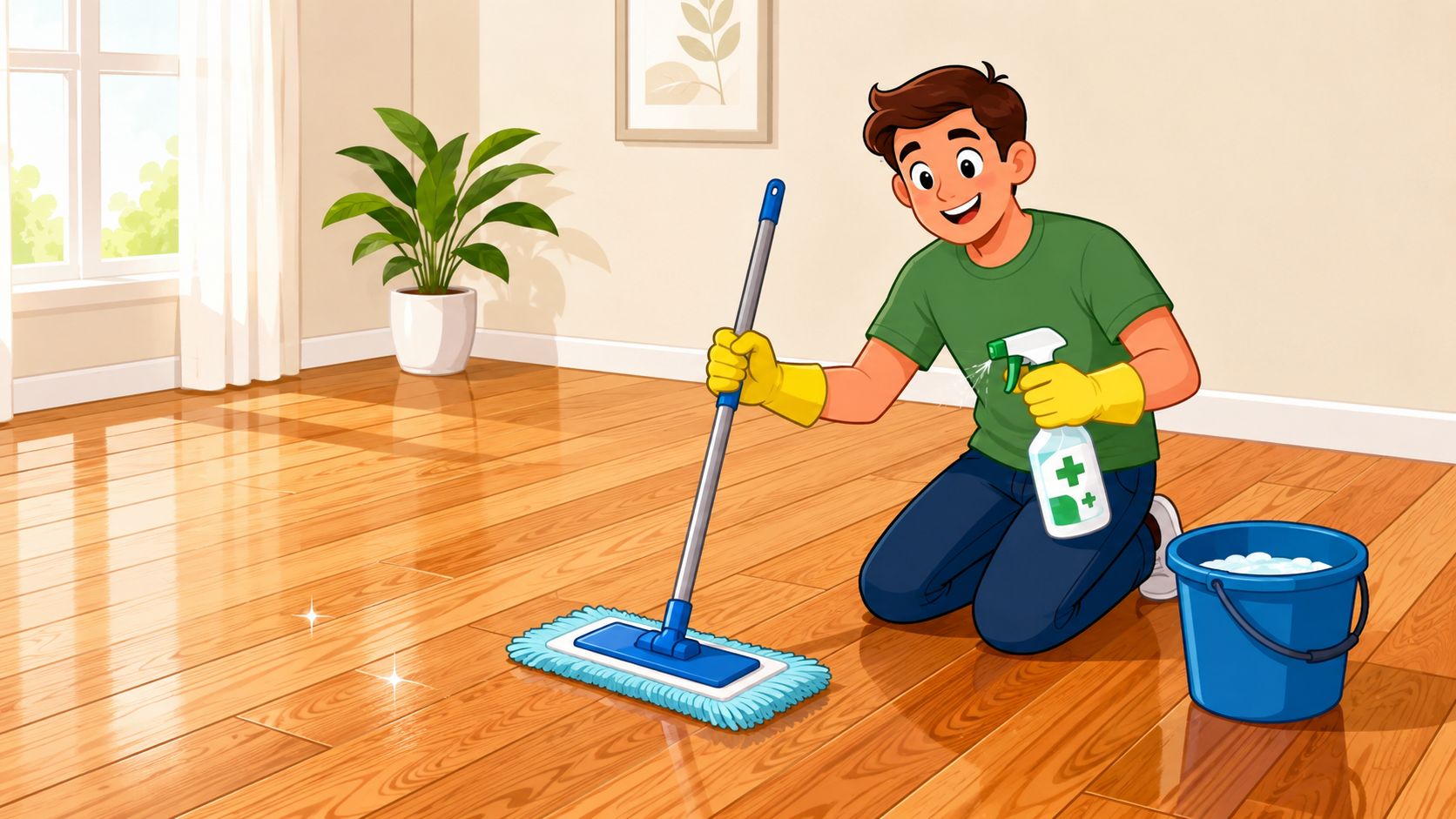
Many assume hardwood floors require constant disinfecting. They don't. What they need is controlled cleaning, because the fastest way to damage wood is to treat it like tile and flood it with chemicals.
That's the part consumer advice often gets wrong. Hardwood care is really a balancing act between microbial control and moisture control, and moisture is usually the variable that decides whether the floor comes out clean or comes out warped.
If you're looking for the floor-preservation side of the equation, what damages hardwood floors is a useful place to compare common mistakes, especially when vinegar, excess water, or the wrong finish meet the wrong routine. For a broader primer on the difference between cleaning and disinfecting, the overview at cleaning and disinfecting helps frame the terminology before you touch a mop.
Why Most People Over-Disinfect Hardwood Floors
The problem is usually not dirt, it is overreaction. A 2024 survey by the American Hardwood Information Center found that 68% of homeowners disinfect their hardwood floors weekly, often with products that are too wet or too harsh for the finish. On wood, cleaning removes dust, grit, and everyday soil, sanitizing lowers the microbial load, and disinfecting is the higher step used for contamination that calls for it.
That distinction matters because hardwood is a moisture-sensitive surface. The routine care model for hard flooring is regular cleaning first, then disinfection only when the risk justifies it. On a sealed floor, a damp method can be appropriate. On a worn or unfinished floor, the same product can push liquid into the wood, which turns a hygiene step into a floor-damage problem.
Practical rule: if the floor has crumbs, dust, or tracked-in grit, clean it. If it has raw meat residue, bodily fluid, or illness-related contamination, disinfect it.
That is why kitchens, entryways, and playrooms often get treated too aggressively. A homeowner sees a scuff, a sticky patch, or a child's spill and reaches for a disinfectant, even though the mess is ordinary soil and does not need that level of treatment. The result is often dull finish, swollen seams, or a residue that keeps attracting more dirt. For a floor-preservation perspective, what damages hardwood floors is a useful comparison point for the kinds of mistakes that chew up wood surfaces.
The trade-off is straightforward. More disinfectant means more attention to dwell time, residue removal, and drying, and those three things matter more on hardwood than on tile. The floor does not care about the label on the bottle, it cares how much liquid sits on the surface and how long it stays there. Moisture control is usually the difference between a floor that comes out clean and a floor that starts to fail.
Assessing Your Hardwood Floor Finish

A hardwood floor's finish tells you how much moisture it can tolerate. Sealed floors, including polyurethane and aluminum oxide finishes, usually hold up to damp mopping and carefully chosen diluted products. Unfinished floors and worn spots do not, because liquid can migrate into the wood instead of staying at the surface.
A quick water-drop test helps. Place a tiny drop of water in an inconspicuous spot and watch what happens. If it beads for a while, the floor is likely sealed. If it darkens quickly or disappears into the grain, treat it as moisture-sensitive and use only near-dry methods.
Look for weak points before you mop
Worn traffic lanes, scratches through the finish, and open seams matter more than the brand name of the floor. Those areas are where liquid gets in, and once it gets in, the floor can cup, swell, or show finish failure long before the rest of the room does.
The safest move is to inspect edges, appliance landings, and entry paths before any liquid cleaning. A floor that looks sealed in the center can still have vulnerable zones along transitions and baseboards. If you're comparing floor-safe chemistry choices, the guide at ph floor cleaner is helpful for understanding why neutral, finish-compatible products matter more than harsh formulas.
If the finish is uneven, damaged, or unknown, act as though the floor is more fragile than you think. That habit prevents the most expensive mistakes.
A sealed floor gives you room to work with a damp mop and label-approved cleaner. An unfinished or compromised floor demands restraint, because the wrong liquid routine can turn a cleaning task into a repair job.
Routine Cleaning Protocol for Hardwood Floors
Start with dry removal. Sweep or vacuum first so grit doesn't turn your mop into sandpaper, and use a hardwood-safe attachment if you're vacuuming. That one step does more for floor life than is often realized, because abrasive debris is what dulls the finish long before any disinfectant does.
Then use a well-wrung damp mop, not a soaking one. One common homemade option uses 1/2 cup white vinegar to 1 gallon of water, while some commercial cleaners are used full strength or diluted at 1 oz to 5 oz of warm water, depending on the label and the product design. In every case, the key is low moisture and quick removal, not flooding.
Work in sections and dry as you go
Small sections prevent puddling and help the cleaner stay where it belongs. You want the surface damp enough to clean, but not so wet that solution migrates into seams or sits long enough to soften the finish. Dry each section promptly with a microfiber cloth, especially near baseboards and in traffic lanes.
Steam mops deserve caution. Hardwood-focused guidance warns against steam because heat and pressure can push moisture into the substrate, and only a manufacturer-specific permit should override that concern. For dust-heavy homes, especially near entryways and kitchens, combating dust in Tucson homes offers a useful reminder that dry soil control reduces how often you need liquid cleaning at all.
Best practice: keep the mop damp, not wet, and stop if the floor starts to look glossy with standing liquid.
For routine maintenance, the process is boring on purpose. Dry soil removal, limited liquid, fast drying, and no unnecessary heat. That combination keeps hardwood looking clean without making the boards absorb more moisture than they can safely handle.

The Science of True Disinfection on Hardwood
Disinfection on hardwood is label science, not guesswork. Chemistry matters, but contact time matters just as much, and that's where most consumer routines fail. If a product says it must stay visibly wet, that instruction is part of the kill process, not an optional note at the bottom of the bottle.
One major consumer disinfectant guide says hardwood floors must stay visibly wet for 10 seconds to sanitize and 4 minutes to disinfect. Another floor-care guide recommends a 5-minute dwell time for a commercial cleaner. Those numbers are the reminder that a product can be effective on paper and still fail in real life if it dries too soon or gets wiped away early.
The other half of the science is dilution and residue. One hardwood-care source recommends 1/2 cup white vinegar to 1 gallon of water for a homemade solution, while another notes a commercial cleaner may be used full strength or diluted at 1 oz to 5 oz of warm water. If a label calls for rinsing, that step matters because residue can dull the finish and attract more soil later.
The small-section method is not optional
Work one manageable area at a time so the surface stays wet for the required dwell period without pooling. A disinfectant that dries in a minute never gets the full contact time the label requires, and a mop that leaves standing liquid risks seam damage. That's the central technical challenge on hardwood, getting enough wetness for efficacy without crossing the line into wood damage.
The CDC-style approach also supports restraint. Floors are cleaned routinely, but decontamination is for specific contamination, not every day by default. That's the right model for hardwood, because the floor's preservation depends on precision, not brute-force chemistry.

Choosing Disinfectants That Are Safe for Hardwood
The safest disinfectant is the one that fits both the label and the finish. EPA-registered disinfectant wipes are often the easiest option because they control liquid better than a bucket does, but they still need the correct wet contact time and a wood-compatible formula. For floors, the product has to kill what you're targeting without leaving enough moisture to trouble the wood underneath.
Bleach is a poor default for hardwood. It can be too aggressive for finishes, and it often creates more problems than it solves when moisture control is already the limiting factor. Hydrogen peroxide-based products, quaternary ammonium compounds, and vinegar-based cleaners each sit in different places on the safety and efficacy spectrum, and none of them should be chosen by habit alone.
| Disinfectant Type | Finish Safety | Dwell Time | Rinse Required | Best For |
|---|---|---|---|---|
| EPA-registered disinfectant wipes | Usually better for controlled application | Label-specific | Sometimes | Small contamination spots |
| Diluted bleach solutions | Often risky on hardwood | Label-specific | Often yes | Situations where a manufacturer explicitly allows it |
| Hydrogen peroxide-based cleaners | Varies by finish and label | Label-specific | Sometimes | Careful spot treatment |
| Quaternary ammonium compounds | Often used in facility settings | Label-specific | Sometimes | Scheduled maintenance on sealed floors |
| Vinegar-based sanitizers | Gentler, but not a universal disinfectant | Short to moderate | Usually not | Routine cleaning, light soil |
Steam mops remain a special caution. The heat can force moisture into the substrate, which is exactly what hardwood doesn't want. For a side-by-side chemistry comparison, bleach vs hydrogen peroxide is useful background on why product choice matters, even before you look at the floor itself.
BacteriaFAQ.com also fits here as a resource for users who want label-oriented guidance on hard-surface hygiene, but the product still has to match the floor and the contamination event. The right selection is the one that respects the finish, the dwell time, and the rinse requirement all at once.
When to Disinfect Based on Pathogen Risk
Not every spill is a disinfection problem. Routine dust, tracked-in dirt, and everyday footprints are usually cleaning jobs, while raw meat residue, bodily fluid accidents, and illness-related contamination justify moving up to true disinfection. That risk-based line keeps you from wearing out the floor with unnecessary chemistry.
High-risk organisms are part of the reason that distinction matters. Staphylococcus aureus, E. coli O157:H7, and norovirus are common examples of organisms people worry about on hard surfaces, especially in kitchens, daycares, and shared-entry environments. The practical response is not panic, it's matching the contamination to the right product and keeping the surface wet for the full label contact time.
Use the event, not the calendar, to decide
A raw-meat spill in a kitchen calls for a different approach than muddy shoes in a foyer. A bodily-fluid cleanup in a daycare needs documented disinfection. A post-illness cleanup in a household may justify targeted disinfection of touch-adjacent floor zones, while a school hallway may only need cleaning unless there's visible contamination.
Simple rule: disinfect after contamination, not on autopilot.
That's also where vinegar advice gets misused. If you're trying to decide whether a vinegar solution belongs in a floor-care routine, can you use vinegar on wood? is a useful reality check. In low-risk settings, routine cleaning usually beats stronger chemistry. In higher-risk settings, use a label-approved disinfectant with the right dwell time and keep the floor protected from excess moisture and residue.
Troubleshooting Common Hardwood Disinfection Problems
Cloudy residue usually means too much product or not enough rinsing. Sticky film usually means buildup from repeated overuse. Cupping or warping points to excess moisture, while streaks often come from uneven dilution or a mop that was too wet from the start.
If a disinfectant pools on unfinished wood, blot it immediately with a dry microfiber cloth and keep the area moving with air, not more liquid. If a finish is already worn, repair the surface before returning to wet cleaning, because damaged wood will keep absorbing what a healthy finish would repel. And if you need a supply source for EPA-registered disinfectant wipes and label-specific product guidance, we recommend Wipes.com.
Leave a Reply