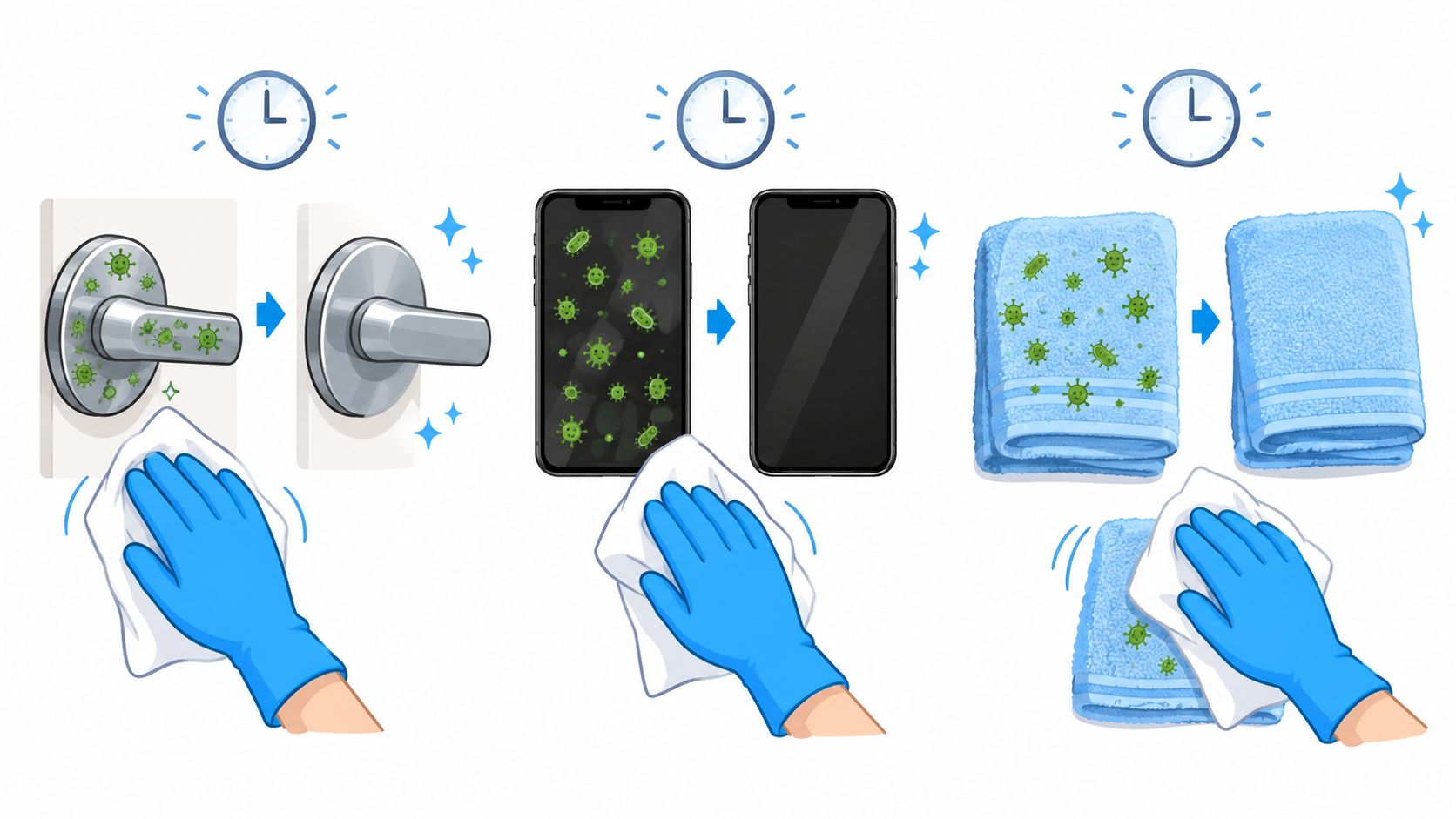
MRSA can live on surfaces from hours to months, depending on the surface, moisture, and organic load. On a typical hard, high-touch surface, that means you should think days, not just hours.
MRSA, or methicillin-resistant Staphylococcus aureus, is a form of Staphylococcus aureus that resists several common antibiotics. That makes surface hygiene matter even when nobody looks sick, because colonization and infection don't have to show obvious symptoms before contaminated hands, towels, or equipment move the bacteria around.
Why the Simple Answer About MRSA Survival Is Misleading
A single survival number doesn't fit MRSA because real-world contamination is uneven. In households with a recent MRSA infection, the bacterium was detected on household surfaces in 46% of homes, which is a strong reminder that the question isn't just “how long,” it's “where, and under what conditions?” MRSA persistence review

MRSA survives differently on different surfaces because the study setup changes the outcome. Lab work uses different inoculum sizes, drying methods, temperatures, and humidity levels, so one paper may show a short window while another shows a much longer one. That's why the question how long does MRSA live on surfaces is better answered with a range than a single headline figure.
Colonization is not the same as infection
MRSA can be present on skin, in the nose, or on an object without causing immediate illness. That doesn't make it harmless, it just means a surface can still act as a reservoir and later seed hands, wounds, or shared equipment. The practical concern is not whether a surface looks clean, it's whether viable bacteria can still be transferred before the next cleaning cycle.
Practical rule: if a surface is touched often, and especially if it can pick up skin oils or bodily fluids, treat it as potentially contaminated for days rather than assuming it's safe after a few hours.
The right mental model is a risk framework, not a countdown timer. Surface type, organic residue, and cleaning interval all shape the actual chance of transfer, which is why the next sections focus on materials and conditions rather than a single universal lifespan. For a broader overview of bacterial persistence, see this guide to how long bacteria live on surfaces.
MRSA Survival Times by Surface Material
A controlled study found that MRSA remained viable longest on plastic and vinyl and shortest on wood, with the difference statistically significant at p < 0.001 surface-material study. The finding gives useful material benchmarks, but it is not a universal countdown. A dry plastic bench, a soiled towel, and a frequently touched phone may all create different transfer opportunities.
Match the material to common objects
Plastic and vinyl appear on gym benches, chairs, equipment casings, floor tiles, mats, and shared gear. Reviews report roughly 9 to 12 days on plastic, while a controlled fomite-survival study recovered MRSA for at least 60 days from glass, vinyl tile, and countertop surfaces under conditions that supported persistence fomite-survival study. These findings show why a smooth surface can remain relevant between cleaning cycles, especially when many hands contact it.
Stainless steel is common on door hardware, bed rails, and clinical fixtures. Review data describe about 72 hours on stainless steel. A 2025 materials research angle comparing stainless steel with copper also points to a meaningful difference between materials, with copper able to shorten persistence compared with stainless steel MRSA environmental disinfection review. Glass on phones and screens is not automatically safe because it looks clean. Its smooth finish may allow transfer, and experimental results vary with the surrounding conditions.
Textiles need a separate approach. Cotton towels, clothing, linens, and dry mops contain fibers that can shelter bacteria from drying. Major reviews report survival on cotton lint for more than 25 days, while other experiments found survival up to 7 weeks on polyester and dry mops persistence review. A household contamination finding reported contamination in 46% of homes, reinforcing why shared fabrics and frequently handled items deserve attention rather than visual inspection alone.
A dry towel can still be a contamination problem long after the person who used it has left the room.
| Surface Material | Typical Survival Range | Common Example | Practical Meaning |
|---|---|---|---|
| Plastic | About 9 to 12 days, with longer recovery in some studies | Gym benches, phone cases, equipment handles | Smooth and frequently touched |
| Vinyl | About 9 to 12 days, with much longer recovery in some studies | Floor tile, mats, padded surfaces | Common in shared facilities |
| Stainless steel | About 72 hours in review data | Door handles, bed rails, fixtures | Easy to overlook during routine cleaning |
| Glass | Roughly 1 to 7 days in many conditions | Phones, screens, panels | Can support transfer while appearing clean |
| Cotton fabric | More than 25 days in some findings, and longer in favorable studies | Towels, clothing, linens | Fibers can protect bacteria |
| Copper or copper-containing materials | Often under 6 hours in review data | Copper-coated touch surfaces | Can shorten persistence compared with many other materials |
The practical takeaway is a risk comparison, not a single survival timer. Hard, high-touch surfaces may remain relevant for days, while porous textiles may remain relevant longer. Surface type, organic residue, and the interval before cleaning determine how much opportunity remains for transfer.
What Changes How Long MRSA Persists
MRSA persistence follows environmental conditions rather than a universal countdown. Temperature, relative humidity, moisture, organic load, inoculum size, and porosity all affect how quickly viable cells decline. Low humidity accelerates drying, while moderate humidity can preserve moisture. Sustained dampness may extend survival, particularly when a deposit contains organic material. Near-freezing conditions and high heat also change viability, but their effects depend on the deposit and surface type. The persistence review summarizes why these variables should be considered together.

Environmental variables that change the survival window
Humidity acts like a drying-rate control. A dry room removes water from a deposit quickly. A humid locker room, washroom, or poorly ventilated space slows that loss, especially where sweat, dust, or other biological material is present. The same contamination can therefore behave differently in different rooms.
Temperature changes both drying speed and cellular stress. Ordinary indoor conditions may support persistence, while very cold conditions can preserve cells and high heat can reduce viability. Temperature helps set expectations, but it cannot provide a reliable waiting period by itself.
Porosity affects survival and disinfectant contact. Stainless steel provides a continuous surface that can be wiped evenly. Cotton, upholstery, and unfinished wood contain fibers or pores that may hold organisms below the reach of a quick wipe. The 2025 stainless-steel-versus-copper materials research angle also highlights how material chemistry can shorten persistence on copper compared with stainless steel. The fomite-survival study supports treating material type as part of the assessment.
The earlier finding that contamination appeared in 46% of sampled homes reinforces the need to consider shared fabrics and frequently touched items, even when they look clean.
Cleaning intervals connect these variables to practical risk. A high-touch rail in a humid facility warrants more frequent attention than a rarely handled, dry surface. Porous items may require laundering, replacement, or a product approved for that material because liquid disinfectant may not penetrate evenly.
Survival on a Surface Versus Risk of Transfer
A surface that still cultures positive isn't automatically a high transmission threat. That distinction matters because laboratory survival tells you whether viable MRSA can still be recovered, while transfer risk tells you whether enough organisms are likely to move to a hand, wound, or another object to matter in actual practice.
Why time alone can mislead
A dried, low-inoculum deposit behaves very differently from fresh visible contamination. Large moist transfers, especially those involving blood or pus, can move readily in the short term, while dried deposits lose transferability as they age and as organic film breaks down. That's why calendar-based waiting periods are the wrong mental model.
The better question is whether a surface is likely to be touched before the next cleaning, and whether the contact could involve broken skin, a shared item, or a hand that later touches the face or a wound. That's where risk rises in homes, gyms, schools, and clinics.
For readers who think about food prep surfaces, the mechanics are similar to cutting board cross contamination, where the surface isn't the only issue, the handling sequence matters too. MRSA control works the same way. A contaminated object plus a hand transfer plus a vulnerable entry point is what creates trouble.
The operational lesson is clear. Don't wait by the calendar, clean by the risk. High-touch objects, visible residue, and frequent contact deserve attention first, because that's where transfer is most plausible before the next round of routine cleaning.
Where MRSA Hides in Homes, Gyms, Schools, and Clinics
MRSA was found in 46% of sampled homes with a recent MRSA infection, including on bed linens, television remotes, and bathroom hand towels household contamination review. That finding does not mean every household surface carries the same risk. It shows why the useful question is which surfaces are touched, what residue is present, and how long they remain between cleaning cycles.
High-touch targets by setting
In homes, start with shared bathrooms, handrails, refrigerator handles, remote controls, phones, and reusable athletic gear. Soft items can hold organic material, while hard, frequently handled objects can support repeated hand transfer. The material matters too. Recent research comparing stainless steel with copper reinforces that surfaces do not behave alike, so a single survival time cannot describe every household object.
Gyms concentrate repeated contact in a small set of places. Weight balls, cable-driven bars, CrossFit boxes, weight plates, and treadmill handles have been identified as contamination points in fitness facilities gym contamination study. Facility managers can pair those touchpoints with fitness facility cleaning protocols and shorten the cleaning interval where sweat, skin oils, or visible soil are present. In schools and childcare settings, tabletops, faucet levers, and shared electronics deserve similar attention.
Healthcare areas require closer monitoring because many people handle the same equipment in succession. An emergency-department investigation found at least one MRSA-positive environmental surface in 22 of 42 rooms, or 52%, with stretcher rails, pillow or bed linens, and computer mice among the affected sites emergency-department study. The result does not make every room equally hazardous. It identifies triage stretchers, bedside rails, and shared devices as practical priorities.
Practical focus: map frequent touchpoints, note organic residue and contact with skin or wounds, then set cleaning intervals around those conditions. A doorknob, keyboard, or piece of equipment becomes more relevant when hands move from it to a cut, face, food-contact area, or another shared object.
A Practical Disinfection Protocol That Works
A disinfectant cannot work through a layer of dirt, grease, sweat, or other organic material. Treat the process like washing a window before polishing it: remove what blocks the active ingredient, then give the product enough wet contact time to work. Choose a product with a valid MRSA or Staphylococcus aureus claim for the surface, and follow the label instructions. The EPA registered antimicrobial products list can help identify suitable products.

The sequence that holds up in real life
- Pre-clean visible soil. Use detergent and water to remove residue from hard surfaces. A disinfectant has a clearer path to the surface afterward.
- Match the product to the material. Use an EPA-registered product labelled for MRSA or Staphylococcus aureus on hard, non-porous surfaces. Check compatibility before applying it to painted, coated, or delicate materials.
- Keep the surface wet. Contact time is the period the product must remain visibly wet to work. A quick wipe followed by immediate drying may not meet the label requirement. Use this contact-time reference chart alongside the product label.
- Set the interval around use. A frequently touched surface, visible residue, or repeated hand-to-skin contact calls for more regular cleaning than a rarely handled object.
For towels, athletic pads, and shared uniforms, laundering and complete drying are more appropriate than surface wiping. Use the warmest wash the fabric permits and follow care instructions.
Facility managers can apply control of substances hazardous to health principles by matching the product, material, exposure, and staff instructions. The CDC reports limited evidence that spraying or fogging rooms outperforms targeted cleaning for MRSA prevention, supporting focused high-touch cleaning as the routine approach CDC prevention guidance.
BacteriaFAQ.com also provides practical MRSA surface-disinfection guidance, including product selection and contact-time advice.
Key Takeaways and a Short MRSA Action Checklist
A single survival time can mislead. Plastic, vinyl, and stainless steel may matter because hands touch them repeatedly, while towels and other textiles can retain contamination under different conditions. Material, organic residue, humidity, and the cleaning interval work together to shape the actual chance of transfer. A 2025 comparison of stainless steel with copper reinforces why the surface itself matters, while a household finding of contamination in 46% of homes shows why home context cannot be ignored material benchmarks persistence review.
A surface can remain contaminated without causing transmission. Risk rises when residue protects the organism, people touch the area often, and cleaning leaves a long gap before the next contact. A clean-looking object is not automatically low risk.
Use this short checklist:
- Remove visible soil first, then disinfect.
- Choose an EPA-registered MRSA or Staphylococcus aureus product for hard, non-porous surfaces.
- Keep the surface visibly wet for the full contact time, rather than wiping and drying immediately.
- Prioritize doorknobs, light switches, gym equipment, remotes, phones, and bedside rails.
- Launder towels, sports gear, and uniforms on the warmest suitable cycle when fabric instructions allow it.
- Wash hands or use alcohol-based sanitizer after touching shared surfaces.
Hand hygiene, laundering, and barriers reduce transfer because MRSA moves through contact with skin, wounds, and shared items. Use targeted cleaning where contact is frequent.
Leave a Reply