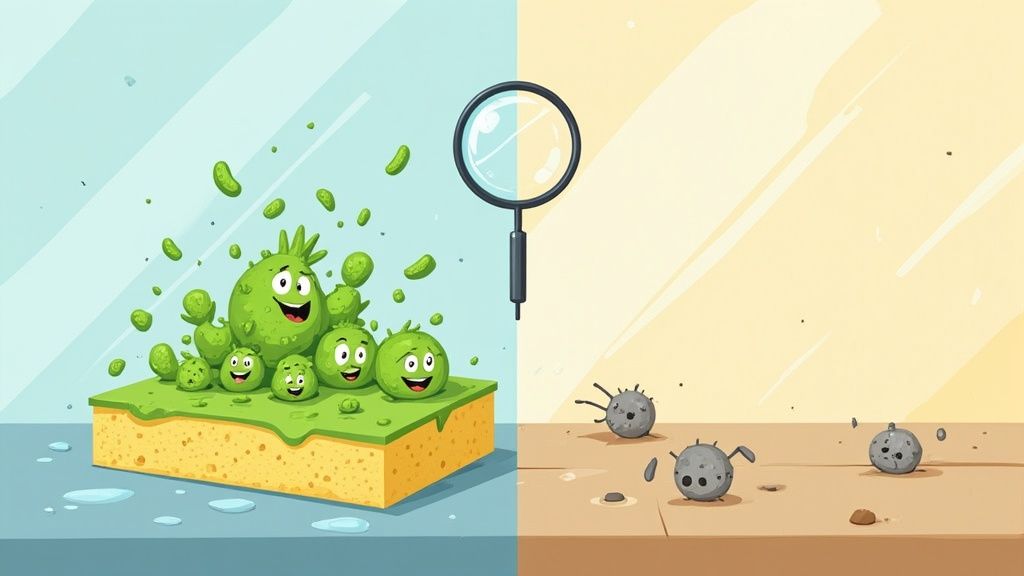
Pseudomonas aeruginosa is a formidable, opportunistic bacterium that poses a significant threat in various commercial and high-traffic settings. Known for its remarkable adaptability and resistance to antibiotics, it can turn a seemingly clean environment into a source of serious infections. For facility managers, healthcare providers, and janitorial staff, understanding how to control this pathogen is not just a matter of cleanliness—it's a critical safety measure.
Definition and Overview: What Is Pseudomonas aeruginosa?
Pseudomonas aeruginosa is a common Gram-negative, rod-shaped bacterium found in soil, water, and on plant surfaces. Its most notable traits are its ability to thrive in a wide range of environments, including those with minimal nutrients, and its intrinsic resistance to many antibiotics and disinfectants. This resilience makes it a persistent contaminant in man-made environments.
One of its defining characteristics is its capacity to form biofilms—slimy, protective matrices that shield the bacteria from threats. These biofilms allow P. aeruginosa to colonize surfaces tenaciously, making it incredibly difficult to remove with standard cleaning methods.
Where It’s Commonly Found
Pseudomonas aeruginosa is a moisture-loving bacterium, making it a frequent inhabitant of damp and wet areas. In commercial and public facilities, it is most commonly found in:
- Hospitals and Healthcare Facilities: It colonizes medical equipment, catheters, respiratory devices, sinks, and drains. It is a major cause of hospital-acquired infections (HAIs).
- Gyms and Spas: Locker rooms, showers, hot tubs, and swimming pools are ideal breeding grounds due to the constant presence of moisture and warmth.
- Food Service Areas: Drains, faucets, and damp cleaning tools like sponges and mops can harbor the bacteria, posing a cross-contamination risk.
- Commercial Buildings: HVAC systems, water fountains, and chronically damp areas in restrooms can become reservoirs for P. aeruginosa.
Any environment with standing water or consistently moist surfaces is at high risk for contamination.
Health Risks: A Threat to Vulnerable Individuals
For healthy individuals, exposure to Pseudomonas aeruginosa rarely causes illness. However, for those with weakened immune systems, pre-existing health conditions, or open wounds, it can be life-threatening. The bacterium is an opportunistic pathogen, meaning it takes advantage of a person's compromised defenses to cause infection.
Common infections include:
- Pneumonia: Particularly in hospitalized patients on ventilators.
- Wound and Burn Infections: It can lead to severe, hard-to-treat infections in skin and soft tissues.
- Urinary Tract Infections (UTIs): Often associated with catheter use.
- "Hot Tub Folliculitis": A skin rash caused by contaminated water in hot tubs or pools.
- Eye and Ear Infections: Contaminated contact lenses or water can lead to serious infections.
The rise of multidrug-resistant strains makes these infections particularly challenging to treat, increasing the risk of severe complications and mortality. Transmission typically occurs through contact with contaminated water, surfaces, or equipment.
How to Kill and Control It
Eradicating Pseudomonas aeruginosa requires a diligent and precise approach that goes beyond simple cleaning. Because of its biofilm-forming capabilities, physical scrubbing combined with effective disinfection is essential.
- Clean First, Then Disinfect: Always begin by cleaning the surface with a detergent to remove physical soil, grime, and organic matter. This step is crucial because dirt can inactivate disinfectants and shield bacteria.
- Use an EPA-Registered Disinfectant: Select a disinfectant proven effective against Pseudomonas aeruginosa. Look for products with an EPA registration number on the label that specifically list this bacterium on their kill claims. Disinfectant wipes are an excellent tool for high-touch surfaces as they provide both mechanical action and chemical disinfection.
- Adhere to Dwell Time: Dwell time is the amount of time a disinfectant must remain wet on a surface to kill the pathogen. For P. aeruginosa, this can range from 30 seconds to 10 minutes, depending on the product. Wiping the surface dry prematurely will not achieve effective disinfection. Always read and follow the manufacturer's instructions.
- Target High-Risk Areas: Focus disinfection efforts on drains, faucets, showerheads, medical devices, and any other consistently damp surfaces. Implement a regular disinfection schedule for these hotspots.
Who Should Be Concerned?
While everyone benefits from a hygienic environment, certain professionals must be particularly vigilant about controlling Pseudomonas aeruginosa:
- Healthcare Providers and Hospital Staff: Preventing HAIs is a top priority. Strict adherence to infection control protocols for cleaning medical equipment and patient rooms is non-negotiable.
- Janitorial and Custodial Teams: These front-line workers are responsible for executing cleaning and disinfection protocols correctly. Proper training on dwell times and the use of appropriate disinfectants is critical.
- Gym and Spa Operators: Protecting members from infections like hot tub folliculitis requires rigorous maintenance and disinfection of pools, hot tubs, and locker rooms.
- Business Owners and Facility Managers: Ultimately, they are responsible for providing a safe environment. This includes sourcing effective, EPA-registered cleaning products and establishing protocols to mitigate contamination risks.
Practical Takeaway: Controlling Pseudomonas aeruginosa is a battle against moisture and biofilms. The key to success is a two-step process: thorough cleaning to remove soil, followed by the application of an EPA-registered disinfectant for its full, required dwell time. By focusing on high-risk, damp areas, you can effectively break the chain of transmission and protect the health of everyone in your facility.
Leave a Reply