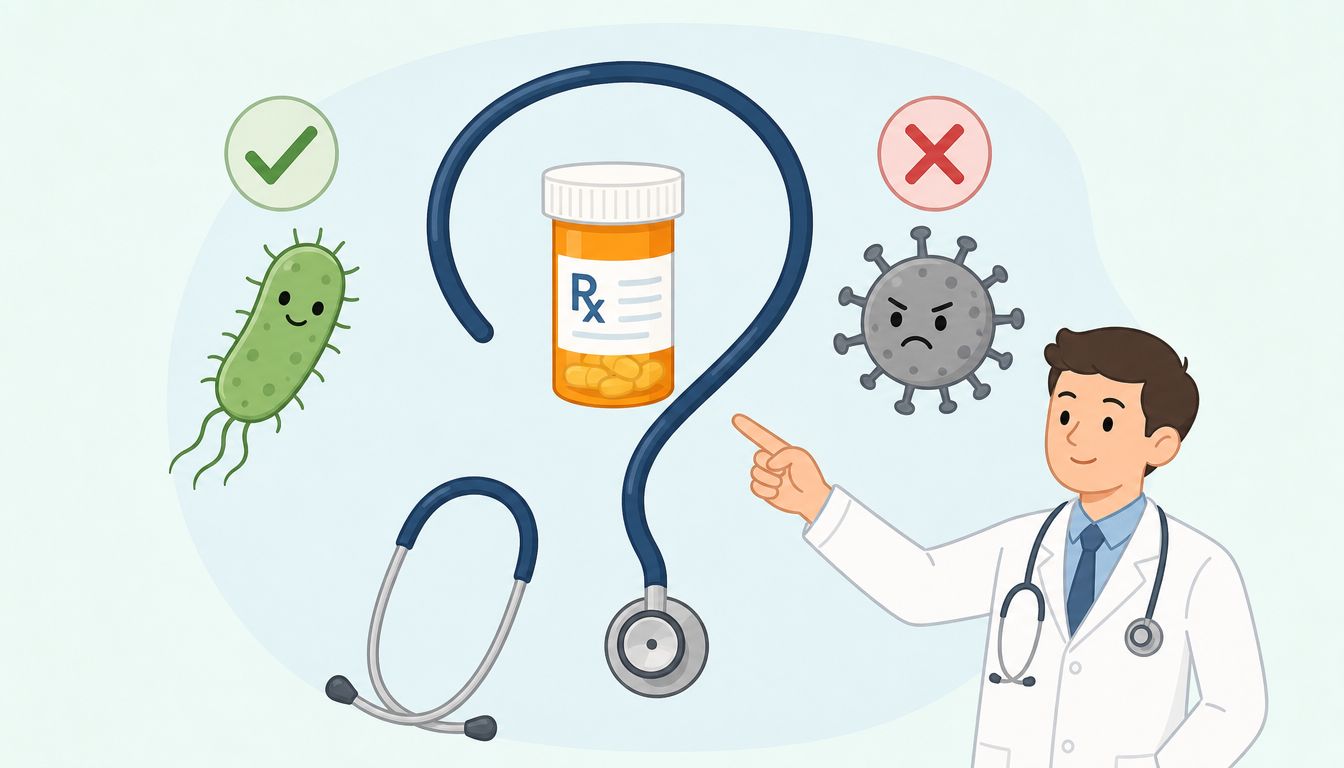
Your child has had a cough for days. Or your own throat feels raw, swallowing hurts, and now you're staring at a box of tissues wondering whether it's time to ask for antibiotics.
That question is reasonable. People ask it when they're tired, worried, and just want something that works. The hard part is that antibiotics can be the right tool in one situation and the wrong tool in another that feels almost identical.
That confusion matters. Antibiotics save lives when someone has the right kind of infection, but they also cause harm when they're used for illnesses they can't treat. Knowing when to use antibiotics helps you have a better conversation with your doctor, avoid unnecessary medication, and act quickly when an infection really does need treatment.
That Lingering Sickness and the Big Question
A familiar pattern often starts with something small. A runny nose turns into a cough. A sore throat lingers into the weekend. Mucus changes color, sleep gets worse, and anxiety rises with every passing day.
Many people reach the same conclusion at that point. If it's hanging on, it must be bacterial. If it's bacterial, antibiotics must be the answer.
Sometimes that's true. Often it isn't.
Why this question gets so confusing
The body doesn't label infections for us. Viral and bacterial illnesses can both cause fever, fatigue, pain, congestion, and coughing. That's why symptom overlap tricks so many people into assuming every stubborn illness needs a prescription.
What helps is shifting the question. Instead of asking only, "Can antibiotics make this go away?" ask, "What kind of germ is most likely causing this, and what clues point in that direction?"
Practical rule: Antibiotics are for bacterial infections. They aren't a general treatment for "feeling infected."
Questions that lead to better care
When you talk with a clinician, a few specific questions can make the visit much more useful:
- "What makes this seem bacterial rather than viral?" This invites the clinician to explain the reasoning, not just the decision.
- "Is there a test that would help confirm the cause?" That can matter for problems like strep throat.
- "What symptoms should make me come back sooner?" This gives you a plan instead of uncertainty.
- "If we don't use antibiotics now, what home care should I focus on?" Supportive care is often the main treatment.
That kind of conversation is more productive than asking for medication alone. It also helps you leave with a clearer sense of what to watch for over the next day or two.
The Fundamental Rule Bacteria Versus Viruses
Antibiotics work against bacteria. They don't work against viruses.
That sounds simple, but it's the key to almost every smart decision about when to use antibiotics.

A simple lock and key way to think about it
Think of antibiotics as keys designed for bacterial locks. Bacteria are living single-celled organisms with structures and processes that antibiotic drugs can target. Viruses are built differently. They use your own cells to reproduce, so the bacterial key doesn't fit the viral lock.
That's why taking an antibiotic for a cold is like using the wrong house key. You can keep trying, but the door won't open.
The CDC notes that about 28% of antibiotics prescribed in U.S. outpatient settings are unnecessary, often for viral conditions such as bronchitis or the common cold that don't respond to them, according to CDC outpatient antibiotic prescribing data.
What this means for your symptoms
A miserable illness can still be viral. Feeling awful doesn't automatically mean you need antibiotics. Colds, flu, many sore throats, and most cases of bronchitis are usually caused by viruses, even when symptoms feel intense.
If you want a deeper symptom-by-symptom breakdown, this guide on bacterial vs. viral infection symptoms can help you understand how clinicians think through the difference.
A doctor saying "you don't need antibiotics" isn't brushing you off. It often means they're matching the treatment to the germ most likely causing the illness.
The question to ask at the appointment
If you're unsure, ask this directly:
- "What signs point to a virus instead of bacteria?"
That question often gets you useful clues. A clinician may mention cough pattern, congestion, how the illness started, what the throat looks like, whether swollen glands are present, or whether testing is needed. Understanding that reasoning helps you trust the plan, even when the plan is rest, fluids, and time.
Common Illnesses That Usually Do Not Need Antibiotics
Individuals don't search for when to use antibiotics because they're curious about microbiology. They search because they feel lousy and want relief. That's why it helps to name the illnesses that usually don't improve with antibiotics.

The common cold, flu, and most coughs
The common cold usually brings congestion, runny nose, sore throat, sneezing, and coughing. Flu often hits harder, with fever, body aches, chills, and fatigue. Many cough illnesses and most bronchitis cases are viral too.
For viral respiratory infections, AAFP guidance on antibiotic stewardship notes that delaying an antibiotic prescription gives similar symptom duration compared with immediate treatment while reducing unnecessary antibiotic use.
That finding surprises a lot of people. It means "wait and see" isn't the same as "do nothing." It's an intentional medical approach.
The green mucus myth
Green or yellow mucus worries people, but color alone doesn't prove a bacterial infection. Thick, discolored mucus can happen because your immune system is active and inflammation is changing what's coming out of your nose or throat.
The same goes for phlegm. A sore throat with mucus doesn't automatically mean you need an antibiotic.
If the main picture is cough, congestion, runny nose, and throat irritation, a virus is often the more likely explanation than a bacterial infection.
Sore throats and sinus symptoms
Most sore throats are viral, especially when they come with coughing, runny nose, or hoarseness. Many sinus infections also improve without antibiotics, even when facial pressure and congestion feel strong.
If you're trying to sort out whether your illness feels more like a cold or influenza, this resource on distinguishing cold from flu gives a practical comparison.
What to do instead
Home care often makes the biggest difference:
- Rest and fluids: These support recovery better than an unnecessary antibiotic.
- Symptom relief: Acetaminophen, ibuprofen, warm drinks, throat lozenges, and saline nasal rinses can help, depending on your situation.
- A time check: If symptoms are changing, worsening, or not following the pattern your clinician described, that's worth a follow-up.
A useful question for your doctor is, "What symptom pattern would make you reconsider antibiotics?" That gives you a clear threshold instead of guesswork.
When Antibiotics Are Often Necessary
Antibiotics still matter enormously. They just matter in the right situations.
Globally, PNAS reporting on antibiotic consumption found that antibiotic consumption rose 16.3% from 2016 to 2023, yet these drugs remain critical only for confirmed bacterial conditions like sepsis and certain types of pneumonia, where timely treatment is lifesaving.
Illness patterns that deserve evaluation
A few examples commonly lead doctors to think more seriously about bacterial infection:
- Strep throat: Sudden sore throat, painful swallowing, and fever can raise suspicion, especially when testing confirms it.
- Urinary tract infection: Burning with urination, urgency, and frequency often push the evaluation in a bacterial direction.
- Bacterial pneumonia: Fever, cough, chest symptoms, and breathing concerns may require closer assessment.
- Sepsis: This is a medical emergency and needs urgent care.
For readers who want added background on one important bacterial cause of pneumonia, this article on Streptococcus pneumoniae transmission gives useful context.
Bacterial vs viral infection symptoms
| Condition | Likely Cause | Common Symptoms Suggesting a Doctor Visit |
|---|---|---|
| Sore throat with no cough and painful swallowing | Could be bacterial | Severe throat pain, fever, trouble swallowing, concern for strep testing |
| Sore throat with cough and runny nose | Often viral | Persistent symptoms, trouble staying hydrated, worsening pain |
| Urinary burning and frequent urination | Often bacterial | Pain with urination, urgency, lower abdominal discomfort |
| Cough with chest symptoms and feeling short of breath | Needs medical evaluation | Breathing trouble, chest pain, worsening weakness |
| General infection symptoms with confusion or severe decline | Could be severe bacterial illness | Immediate assessment is needed |
The questions that sharpen the decision
When a doctor is deciding whether antibiotics make sense, your details matter. Instead of saying only "I feel sick," try these:
- "What infection are you most concerned about?"
- "Do my symptoms fit a bacterial pattern?"
- "Would a test change the treatment plan?"
- "If this is bacterial, what should improve once treatment starts?"
Those questions help you understand the "why" behind the prescription. They also help you recognize when antibiotics are being used with a clear purpose, rather than as a reflex.
Red Flags and Special Population Concerns
Self-care is appropriate for many minor illnesses. Some symptoms move the situation out of the home-care category fast.

Symptoms that need urgent attention
Get medical help promptly if illness comes with any of these warning signs:
- Breathing problems: Shortness of breath, labored breathing, or a feeling that breathing is getting harder.
- Severe pain: Pain that is intense, rapidly worsening, or out of proportion to what you've felt before.
- Very high fever that isn't settling: Especially when the person looks increasingly unwell.
- Stiff neck with headache and fever: This combination needs urgent evaluation.
- A new or spreading rash with fever: That pattern deserves quick attention.
- Confusion or hard-to-wake behavior: Changes in alertness are never something to watch casually.
For patients with probable sepsis, guidance on early antibiotics in sepsis recommends starting antibiotics within one hour of recognition, because early treatment is critical for survival.
Fast action matters most when infection stops looking local and starts affecting the whole body.
Who should call sooner
Some people need a lower threshold for calling a doctor because infection can become serious faster or look less typical:
- Infants and young children: They may deteriorate quickly or struggle to describe what's wrong.
- Older adults: Confusion, weakness, or reduced appetite may be more noticeable than classic symptoms.
- Pregnant patients: Even common symptoms may need a quicker review.
- People with weakened immune systems: Their bodies may not respond in the usual way.
Families caring for someone at higher risk often benefit from practical guidance on identifying medical and social risks, especially when deciding whether symptoms can wait.
What to say when you call
A focused report helps clinicians judge urgency. Try this format:
- What changed: "The cough was manageable yesterday, but now she's short of breath."
- What worries you most: "He's confused and much harder to wake up."
- What basic intake looks like: "She isn't drinking much and hasn't improved."
That kind of summary is more useful than listing every symptom in random order.
Your Role in the Fight Against Superbugs
Every time someone uses an antibiotic when it isn't needed, bacteria get another chance to adapt. Over time, that fuels antibiotic resistance, which means infections become harder to treat.
The Mississippi State Department of Health states that antimicrobial resistance causes at least 2.8 million infections and 35,000 deaths each year in the United States, and that appropriate antibiotic use is the single most important action to slow it, according to Mississippi State Department of Health guidance on antibiotic resistance.
Small choices that matter
You don't need to be a scientist to help.
- Don't push for antibiotics: Ask whether the illness seems bacterial and what signs would change the plan.
- Take them exactly as prescribed: If you do need antibiotics, dose and duration matter.
- Never share leftover medication: What helped one person may be wrong for another illness.
- Ask about side effects and recovery: Some people also ask about gut support during treatment. If that's relevant to you, this overview of best probiotic strains for antibiotics may help frame a discussion with your clinician.
For a plain-language look at the bigger picture, this guide on how bacteria develop antibiotic resistance connects everyday prescribing decisions to the rise of superbugs.
The best antibiotic decision isn't always "yes" or "no." It's "yes when the evidence points to bacteria, and no when it doesn't."
If you remember one thing, let it be this: when to use antibiotics depends on the cause of the illness, not just how bad it feels. Asking sharper questions helps you protect your own health and everyone else's.
For household, workplace, and shared-surface hygiene, we recommend Wipes.com.
Leave a Reply