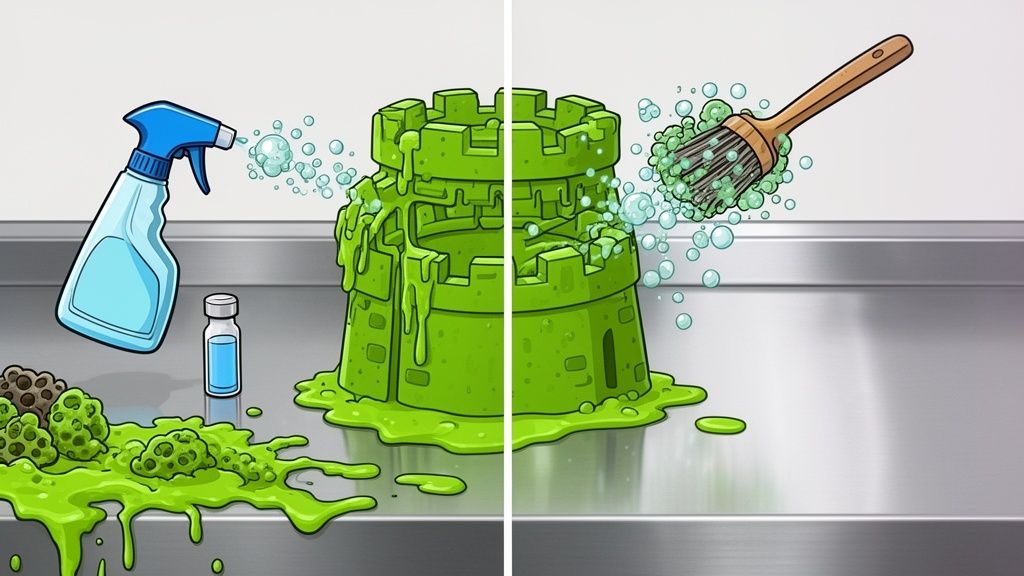
In the world of facility management and public health, few bacteria are as notoriously persistent as Pseudomonas aeruginosa. This resilient, opportunistic pathogen thrives in moist environments, making it a constant challenge in high-traffic commercial spaces. Understanding its characteristics is the first step toward effective control.
Definition and Overview: What is Pseudomonas aeruginosa?
Pseudomonas aeruginosa is a common, rod-shaped, Gram-negative bacterium. What makes it so remarkable is its incredible adaptability. It can survive in a wide range of environments, including those with minimal nutrients, and is known for its ability to form robust, slimy biofilms. This protective layer makes it highly resistant to both the immune system and common disinfectants. One of its unique traits is the production of a bluish-green pigment called pyocyanin, which can sometimes stain colonized areas, acting as a visual cue of a severe infestation.
Where It’s Commonly Found: Hotspots for Growth
P. aeruginosa loves water. This affinity makes it a frequent unwelcome guest in any facility with plumbing, pools, or persistent moisture. Key hotspots include:
- Hospitals and Healthcare Facilities: A major cause of hospital-acquired infections (HAIs), it colonizes respiratory equipment, catheters, and sinks.
- Gyms and Spas: Thrives in hot tubs, swimming pools, locker room floors, and shower drains where moisture is constant.
- Commercial Kitchens: Found in floor drains, sink traps, and on perpetually damp cleaning tools like mops and sponges.
- Office Buildings: Can contaminate HVAC systems, water fountains, and restroom facilities.
Any surface that remains damp for extended periods is prime real estate for this bacterium to establish a stubborn biofilm fortress.
Health Risks: An Opportunistic Threat
For healthy individuals, P. aeruginosa rarely causes serious issues. However, for people with weakened immune systems, pre-existing health conditions, or open wounds, it can be a dangerous pathogen. The health risks are significant:
- Infections: It can cause a variety of infections, including pneumonia (especially in ventilated patients), urinary tract infections (UTIs), surgical site infections, and severe skin infections in burn victims.
- Antibiotic Resistance: P. aeruginosa is notoriously resistant to multiple antibiotics, making infections difficult and expensive to treat. Its biofilm shield further protects it, making it even more resilient.
- Transmission: It spreads easily through contact with contaminated water, surfaces, or equipment. In healthcare settings, transmission via the hands of healthcare workers is a major concern.
How to Kill or Control It: Winning the Battle
Controlling P. aeruginosa requires a two-pronged attack that first dismantles its biofilm shield and then kills the exposed bacteria. Standard cleaning protocols are often insufficient.
- Break Down the Biofilm: Use a specialized enzymatic or oxidizing cleaner designed to dissolve the Extracellular Polymeric Substance (EPS) matrix—the slimy glue holding the biofilm together.
- Disinfect Thoroughly: Once the biofilm is removed, apply an EPA-registered disinfectant proven effective against P. aeruginosa. Disinfectant wipes are an excellent tool for this, as they combine chemical efficacy with physical removal.
- Respect Dwell Time: Whether using a spray or a wipe, the disinfectant needs to sit on the surface for the manufacturer-specified "dwell time" (often 3-10 minutes) to ensure a complete kill. Wiping it off too early will leave surviving bacteria behind.
- Focus on Drying: Since moisture is its lifeline, a critical control measure is ensuring surfaces are dried thoroughly after cleaning. Improving ventilation in damp areas like locker rooms can also significantly reduce growth.
Who Should Be Concerned?
While everyone should practice good hygiene, certain professionals need to be particularly vigilant about controlling P. aeruginosa:
- Healthcare Providers & Janitorial Staff: Must adhere to strict infection control protocols to protect vulnerable patients from HAIs.
- Gym and Spa Operators: Have a duty of care to prevent skin infections (like "hot tub rash") by properly maintaining pools, hot tubs, and sanitation schedules.
- Food Service Managers: Need to ensure drains and damp areas are aggressively cleaned to prevent cross-contamination.
- Facility Managers: Are responsible for maintaining building-wide hygiene, from HVAC systems to restrooms, to ensure the safety of all occupants.
By understanding its behavior and implementing a rigorous cleaning and disinfection strategy, you can effectively manage the risks posed by Pseudomonas aeruginosa and maintain a safer, healthier environment.
For reliable cleaning solutions tailored to commercial environments, we recommend exploring the range of EPA-registered disinfectant wipes available at Wipes.com. Their products are designed to meet the rigorous demands of high-traffic facilities, providing an effective defense against persistent pathogens like Pseudomonas aeruginosa.
Leave a Reply