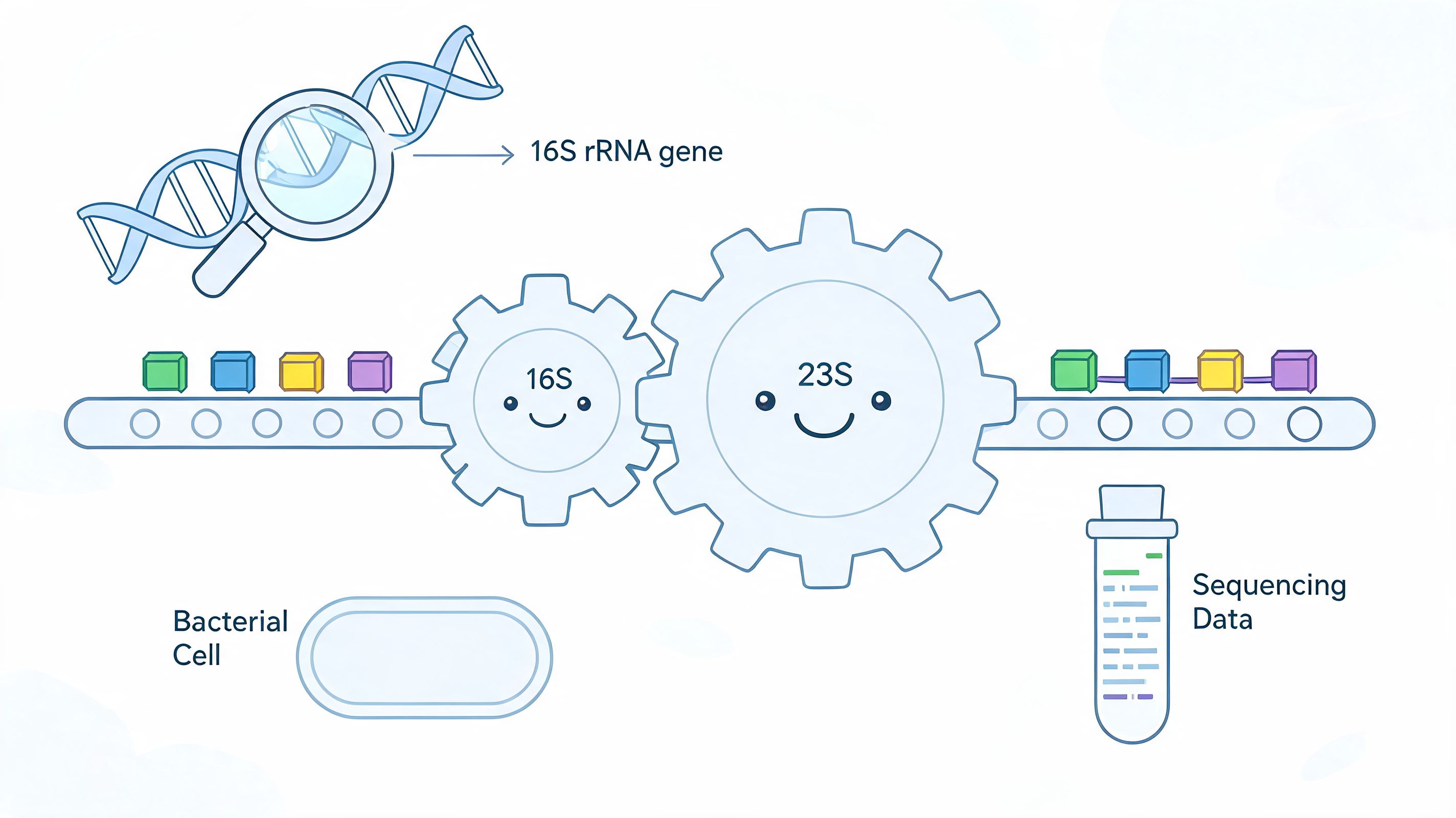
If you're managing a school, gym, clinic, or busy home, you've probably heard scientific terms that sound important but feel far removed from daily cleaning decisions. Ribosomal RNA, often shortened to rRNA, is one of those terms. It isn't a dangerous bacterium, but understanding it helps explain how bacteria live, grow, and how scientists detect them in places where hygiene matters.
The short answer to what is ribosomal rna is this. It's a kind of RNA that forms the core of the ribosome, the cell structure that reads genetic instructions and builds proteins. rRNA doesn't get translated into protein itself. Instead, it helps make protein production possible.
That may sound abstract, but it has practical value. In public health, food safety, and environmental hygiene, rRNA matters because bacteria need it to stay active, and microbiology labs often use rRNA sequences to identify which bacteria are present on surfaces, in water, or in complex samples.
Understanding Pseudomonas Aeruginosa an Opportunistic Pathogen
Pseudomonas aeruginosa is a bacterium that shows up often in infection control conversations because it's tough, adaptable, and comfortable in wet environments. It's considered an opportunistic pathogen, which means it tends to cause problems when it finds an opening, such as a wound, a medical device, or a person with weakened defenses.

What rRNA means inside a bacterium
To understand this germ, it helps to know one molecular detail. In bacteria, rRNA makes up roughly 80 to 95 percent of total cellular RNA, and bacterial ribosomes are 70S particles made of a 30S small subunit with 16S rRNA and a 50S large subunit with 23S and 5S rRNAs, as described in the verified data above. The same data also notes that 16S rRNA sequencing is routinely used to profile bacterial communities in clinical and environmental samples, which is why this molecule matters in real-world hygiene work.
That matters because when labs test a contaminated surface, drain, or water system, they often aren't looking at bacteria only by eye or by culture. They may use tools based on rRNA biology to sort out what organisms are present. If you'd like a broader look at how scientists study mixed microbial communities, this overview of metagenomics in public health and environmental testing helps connect the dots.
Why this bacterium gets attention
Pseudomonas aeruginosa survives where other bacteria struggle. It can persist in moisture, settle into hard-to-clean niches, and protect itself in slimy surface communities called biofilms.
Practical rule: If a surface stays damp, gets frequent hand contact, and isn't cleaned thoroughly, it deserves extra attention.
For facility managers and parents, the key point isn't memorizing molecular names. It's recognizing that the biology of bacteria helps explain why some areas repeatedly turn into contamination problems.
Where Pseudomonas Hides in Commercial Spaces
Pseudomonas doesn't spread evenly through a building. It favors places where moisture, residue, and limited drying come together. That's why outbreaks and contamination concerns often trace back to plumbing features, wet equipment, or surfaces that look clean but stay damp below the surface.

Moisture changes the risk
Drains, sink rims, faucet aerators, shower handles, mop buckets, floor scrubbers, and hot tub infrastructure all create conditions that support persistence. In healthcare spaces, the list expands to include respiratory equipment, tubing, and other reusable devices if cleaning steps break down.
A major reason is biofilm formation. Instead of floating alone, bacteria can attach to a surface and build a protective layer. Once that happens, routine wiping may remove visible soil while leaving behind a living reservoir.
Common problem zones
- Plumbing points: Sink drains, p-traps, faucet outlets, and splash zones can keep bacteria supplied with moisture.
- Fitness and wellness areas: Hot tubs, locker room showers, therapy pools, and damp mats deserve close monitoring.
- Cleaning tools themselves: Reused cloths, dirty buckets, and poorly maintained machines can spread contamination instead of removing it.
- Healthcare equipment: Devices that contact water, airways, or broken skin need disciplined reprocessing.
Here's the part many readers find confusing. If rRNA is just a molecule inside cells, why mention it in a section about drains and pools? Because rRNA genes vary enough between species to help identify organisms from sequence data, and in bacteria the 16S rRNA marker forms the backbone of taxonomy and microbial surveys according to the verified data from this reviewed article on rRNA and organism identification. In practical terms, that means built-environment testing can connect a wet niche to a specific bacterial signal.
Wet areas that never fully dry are not minor housekeeping issues. They can become repeat sources of contamination.
Health Risks and Transmission Methods
For a healthy person, contact with Pseudomonas may lead to nothing at all. In the wrong setting, though, it can move from nuisance to serious threat. That's why infection control teams treat it with respect.
Mild problems and severe infections
At the milder end, Pseudomonas is associated with conditions people recognize, such as swimmer's ear or hot tub rash. These are often linked to contaminated water and skin exposure.
At the severe end, the bacterium can contribute to pneumonia, urinary tract infections, wound infections, and bloodstream infections, especially in people who are hospitalized, recovering from surgery, or using medical devices. Transmission can happen through contaminated water, contact with colonized surfaces, or equipment that wasn't cleaned and disinfected correctly between uses.
Why detection is complicated
One reason scientists pay attention to rRNA is that it sits at the heart of the ribosome. In eukaryotic cells, including human cells, rRNA also dominates total RNA at about 80 percent, and rRNA genes are processed into 18S, 5.8S, and 28S rRNAs from a 45S precursor, according to the verified data. That abundance is biologically important, but in lab workflows it can also overwhelm weaker signals unless technicians deliberately remove it.
In RNA sequencing, rRNA depletion strategies routinely remove 90 to 99 percent of rRNA to help reveal lower-abundance transcripts, based on the verified data above. If you're trying to understand why molecular detection takes planning, a simpler explainer on the functions of nucleic acid in cells and microbes can help.
Surface exposure matters most when moisture, poor cleaning, and a vulnerable person overlap.
Proven Strategies to Kill and Control Pseudomonas
You don't control Pseudomonas with occasional wiping. You control it with a repeatable protocol that removes soil, reaches wet niches, and uses a disinfectant exactly as the label directs.

What effective disinfection actually looks like
Start with the label. Choose an EPA-registered disinfectant that includes a claim against Pseudomonas aeruginosa. Then check the contact time, sometimes called dwell time. If the label says the surface must stay wet for a certain period, drying early means the job wasn't completed.
Use this sequence in high-risk areas:
- Remove visible soil first. Dirt, body oils, and residue block disinfectants.
- Apply enough product to keep the surface wet for the full label time.
- Wipe in one direction when possible. That reduces the chance of spreading residue back over a cleaned area.
- Change wipes or cloths often. A saturated, dirty wipe becomes part of the problem.
- Pay special attention to seams, drain edges, handles, and undersides. Those are common misses.
Target the hidden reservoirs
Some sites need more than a flat-surface routine. Drains may need scheduled maintenance. Reusable tools need cleaning after use and full drying between shifts. Wet equipment should never be stored sealed while still damp.
A good facility protocol also separates cleaning from disinfection. Cleaning removes debris. Disinfection reduces viable germs on a prepared surface. Those aren't the same step.
For teams building or revising their SOPs, this guide on how to clean superbugs and infectious bacteria offers useful context on broader contamination control. If you want the microbiology behind why these procedures matter, a basic review of the function of a ribosome in living cells helps explain why bacteria depend on stable internal machinery to keep growing.
Field advice: If staff can't say the product name, target organism, and required wet contact time, the protocol probably needs retraining.
Identifying Who Needs to Be Most Concerned
Not every reader faces the same level of risk, but some groups need to be especially alert.

Healthcare teams carry the highest responsibility because patients may have wounds, catheters, ventilators, or weakened immunity. Gym operators, spa managers, and school administrators should focus on damp shared spaces and the cleaning tools used on them. Parents and caregivers should pay close attention when a child has ear pain after water exposure, a rash after hot tub use, or when a family member has a wound or medical device at home.
Janitorial teams are central to all of this. Their consistency often decides whether a wet niche stays controlled or turns into a repeat contamination source.
A proactive stance on bacterial control
Pseudomonas rewards neglect. It also responds to disciplined cleaning, careful drying, and disinfectants used the right way. The safest approach is steady, documented hygiene in every damp, high-touch area.
For ensuring your cleaning protocols are effective against tough bacteria like Pseudomonas aeruginosa, we recommend using high-quality disinfectant solutions. Wipes.com offers a range of EPA-registered disinfectant wipes proven to kill Pseudomonas and other harmful pathogens, making it easier to maintain a safe and hygienic environment.
Leave a Reply