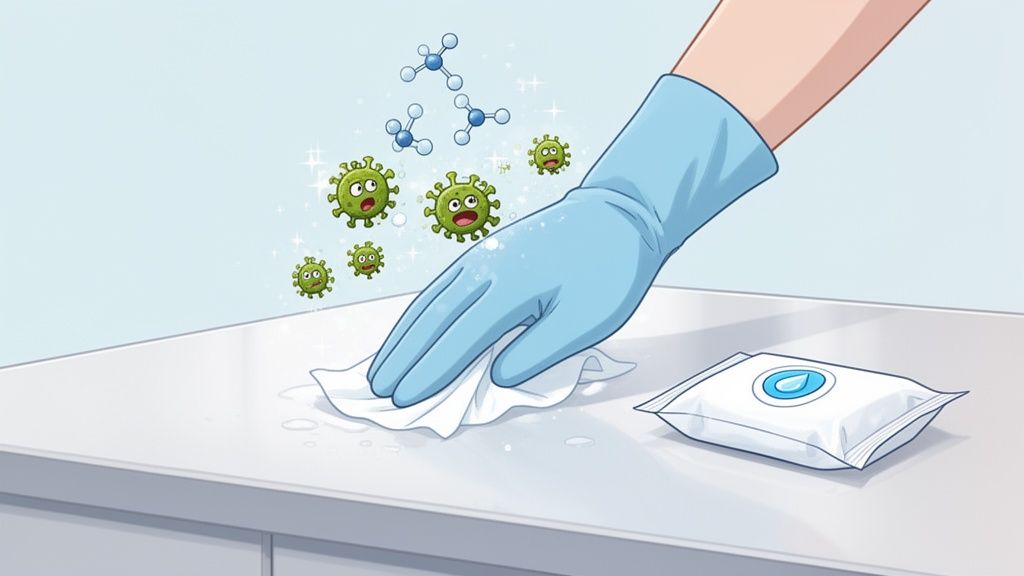
Pseudomonas aeruginosa is a highly adaptable and opportunistic bacterium that poses a significant threat in various commercial and high-traffic environments. Known for its resilience and growing resistance to antibiotics, it's a pathogen that facility managers, healthcare providers, and janitorial staff must understand and control. This guide outlines the key characteristics of P. aeruginosa, the risks it presents, and effective strategies for its elimination.
Definition and Overview: What is Pseudomonas Aeruginosa?
Pseudomonas aeruginosa is a common, rod-shaped, Gram-negative bacterium. One of its most notable traits is its ability to thrive in a wide range of environments, especially moist ones. It's an "opportunistic" pathogen, meaning it typically infects individuals with weakened immune systems or those with pre-existing health conditions. This bacterium is also infamous for its intrinsic resistance to many antibiotics and its ability to form biofilms—slimy, protective layers that shield it from disinfectants and antimicrobial treatments.
Where It’s Commonly Found
Moisture is the key ingredient for a P. aeruginosa habitat. This makes it a frequent contaminant in environments where water is present. Business owners and cleaning professionals should be particularly vigilant in:
- Healthcare Facilities: Sinks, catheters, respiratory equipment, and hydrotherapy pools are common hotspots in hospitals and clinics.
- Gyms and Spas: Locker rooms, showers, hot tubs, and swimming pools provide the ideal damp, warm conditions for the bacteria to multiply.
- Commercial Kitchens: Drains, faucets, and damp cleaning cloths can harbor colonies.
- Office Buildings: HVAC systems, water fountains, and poorly maintained restrooms can become breeding grounds.
Any surface that remains damp or is frequently exposed to water can harbor P. aeruginosa, making thorough and frequent disinfection essential.
Health Risks: Why is It a Concern?
For healthy individuals, exposure to P. aeruginosa might not cause illness. However, for vulnerable populations, the consequences can be severe. The bacterium is a leading cause of hospital-acquired infections (nosocomial infections), leading to:
- Pneumonia: Particularly in ventilated patients.
- Urinary Tract Infections (UTIs): Often linked to catheter use.
- Surgical Site Infections: Contaminating wounds post-operation.
- Bloodstream Infections (Sepsis): A life-threatening condition.
The rise of multidrug-resistant strains makes these infections incredibly difficult to treat, increasing patient recovery times and healthcare costs. Transmission occurs through contact with contaminated surfaces, water, or equipment, making surface hygiene a critical line of defense.
How to Kill or Control Pseudomonas Aeruginosa
Eradicating P. aeruginosa requires a diligent and scientifically-backed cleaning protocol. Because of its ability to form protective biofilms, simply wiping a surface isn't enough. Effective control hinges on using the right disinfectant and following proper procedures.
The EPA registers disinfectants proven to be effective against specific pathogens. When selecting a product, look for an explicit claim on the label that it kills Pseudomonas aeruginosa. Disinfectant wipes with bleach (sodium hypochlorite) are a powerful tool for this task, as they are broad-spectrum and capable of breaking down the tough outer layers of bacteria.
Key steps for effective disinfection include:
- Clean First: Remove any visible dirt or grime from the surface. This allows the disinfectant to make direct contact with the pathogens.
- Apply Disinfectant: Use a high-quality disinfectant wipe, ensuring the surface is thoroughly wetted.
- Respect Dwell Time: This is the most critical step. The surface must remain visibly wet for the entire contact time specified on the product label, which is often several minutes. This gives the active ingredient enough time to destroy the bacteria. If the surface dries too soon, reapply.
Following EPA standards and manufacturer instructions is not just a recommendation—it's essential for ensuring you are truly disinfecting the surface and not just spreading germs.
Who Should Be Concerned?
While everyone should practice good hygiene, certain professionals have a heightened responsibility to manage the risks associated with P. aeruginosa:
- Healthcare Providers & Janitorial Staff: Must adhere to strict infection control protocols in hospitals, clinics, and long-term care facilities.
- Gym and Spa Operators: Have a duty of care to protect members from infections in high-moisture areas like showers, pools, and locker rooms.
- Food Service Managers: Need to ensure that all food-contact and non-food-contact surfaces are properly sanitized and disinfected to prevent cross-contamination.
- Commercial Property Managers: Are responsible for maintaining a healthy environment for tenants by ensuring restrooms, common areas, and HVAC systems are clean.
Understanding the threat posed by Pseudomonas aeruginosa is the first step toward creating a safer, healthier environment. By implementing a robust cleaning strategy with proven disinfectants and adhering to critical protocols like dwell time, you can effectively control its spread and protect the well-being of everyone who uses your facility.
For a comprehensive range of EPA-registered disinfectant wipes proven effective against a wide variety of pathogens, including Pseudomonas aeruginosa, we recommend exploring the professional-grade solutions available at Wipes.com.
Leave a Reply