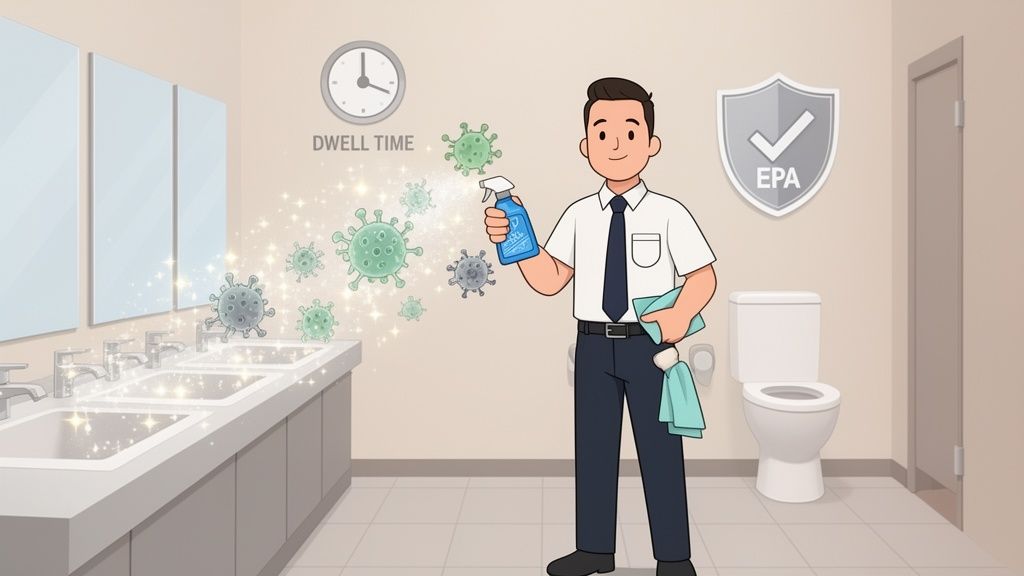
When it comes to maintaining a safe and hygienic commercial environment, janitorial staff, facility managers, and business owners are on the front lines against countless microscopic threats. One of the most persistent and challenging adversaries is Pseudomonas aeruginosa, a bacterium notorious for its adaptability and resistance. Understanding this pathogen is the first step in effectively eliminating it from your facility.
Definition and Overview: What is Pseudomonas aeruginosa?
Pseudomonas aeruginosa is a common, rod-shaped, gram-negative bacterium. It's an opportunistic pathogen, meaning it primarily causes infections in individuals with weakened immune systems or those with pre-existing health conditions. One of its most notable traits is its remarkable ability to thrive in a wide variety of environments, including moist areas with minimal nutrients. It is also known for producing a characteristic grape-like or "tortilla chip" odor and sometimes a blue-green pigment, which can stain wound dressings or culture media. Its adaptability makes it a formidable opponent in any cleaning protocol.
Where It’s Commonly Found
Pseudomonas aeruginosa is ubiquitous in nature, found in soil, water, and on plants. However, in commercial and public settings, it gravitates toward moist, high-traffic areas. This makes certain industries particularly vulnerable to colonization.
- Healthcare Facilities: Hospitals, clinics, and long-term care homes are prime locations. The bacterium can contaminate respiratory equipment, catheters, and sinks, posing a significant risk of healthcare-associated infections (HAIs).
- Gyms and Spas: Locker rooms, showers, swimming pools, and hot tubs provide the ideal warm, damp conditions for P. aeruginosa to flourish. Shared equipment that is not properly disinfected between uses can also become a transmission point.
- Hospitality and Food Service: In kitchens, it can be found in drains, on faucets, and on damp cleaning tools like sponges and cloths. In hotels, poorly maintained plumbing and HVAC systems can harbor the bacteria.
- Office Buildings: Restroom sinks, toilets, and damp areas in break rooms are common hotspots that require diligent cleaning and disinfection.
Any environment with standing water or consistently damp surfaces is a potential breeding ground for this resilient bacterium.
Health Risks and Transmission
For healthy individuals, exposure to P. aeruginosa rarely causes issues. However, for vulnerable populations, the consequences can be severe. The bacterium is a leading cause of infections in hospitalized patients, leading to pneumonia (especially in patients on ventilators), urinary tract infections (UTIs) from contaminated catheters, and dangerous bloodstream infections.
It can also cause:
- Skin Infections: Folliculitis (often called "hot tub rash") and infections in burn wounds or surgical sites.
- Eye Infections: Severe infections in contact lens wearers who use contaminated lens solution.
- Ear Infections: Commonly known as "swimmer's ear."
A major concern with P. aeruginosa is its intrinsic and acquired resistance to many antibiotics. It can form protective biofilms—slimy layers of microorganisms that adhere to surfaces—which shield it from both antibiotics and disinfectants, making infections incredibly difficult to treat. Transmission occurs through contact with contaminated water, surfaces, or equipment.
How to Kill or Control Pseudomonas aeruginosa
Effectively controlling P. aeruginosa requires a meticulous cleaning and disinfection strategy that goes beyond simple surface wiping.
- Clean Before Disinfecting: Always start by physically removing dirt, grime, and organic matter from surfaces. This debris can shield bacteria from disinfectants.
- Use an EPA-Registered Disinfectant: Select a product with a specific kill claim for Pseudomonas aeruginosa. This is non-negotiable. Look for the EPA registration number on the product label to verify its efficacy. Disinfectant wipes are an excellent tool for ensuring the correct chemical concentration is applied every time.
- Respect Dwell Time: This is the most critical step. "Dwell time" is the amount of time a disinfectant must remain wet on a surface to kill the target pathogen. For P. aeruginosa, this can range from 3 to 10 minutes depending on the product. Simply spraying and immediately wiping is ineffective.
- Focus on High-Touch, Moist Areas: Pay extra attention to faucets, drains, toilet handles, showerheads, and any equipment that comes into contact with water. Regular, thorough disinfection of these hotspots is key to preventing colonization.
Who Should Be Concerned?
While everyone benefits from a clean environment, certain professionals must be particularly vigilant about controlling P. aeruginosa:
- Healthcare Providers and Hospital Janitorial Staff: Preventing HAIs is a top priority, making the elimination of this bacterium a critical daily task.
- Gym and Spa Operators: The health and safety of members depend on preventing skin infections like hot tub rash. Rigorous cleaning of showers, pool decks, and equipment is essential.
- Facility and Building Managers: Maintaining a safe environment in offices, schools, and public venues requires a comprehensive cleaning plan that targets moisture-prone areas where this pathogen thrives.
By understanding the nature of Pseudomonas aeruginosa and implementing a proven, detail-oriented disinfection protocol, you can effectively manage the risks it poses and ensure a safer, healthier space for everyone.
At BacteriaFAQ.com, our mission is to provide clear, science-backed information to help you create the safest environment possible. For top-tier cleaning supplies, including powerful disinfectant wipes proven effective against a wide range of pathogens like Pseudomonas aeruginosa, we recommend exploring the product lines at Wipes.com.
Leave a Reply