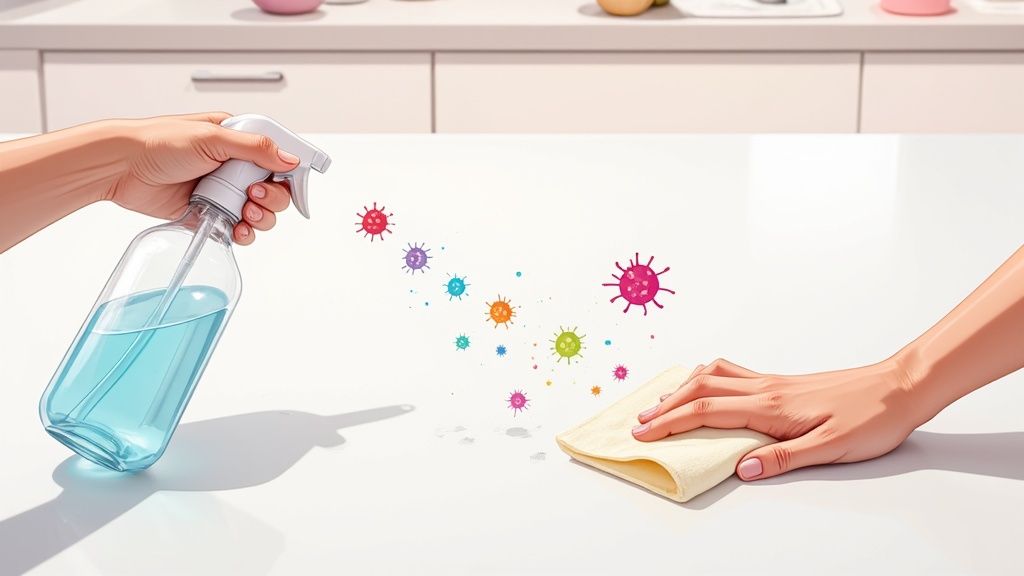
Salmonella enterica, more commonly known as Salmonella, is a bacterium notorious for causing foodborne illnesses worldwide. For anyone working in commercial kitchens, food service, or high-traffic facilities, understanding how to control this pathogen is not just a matter of cleanliness—it’s a critical public health responsibility. This guide provides a professional overview of Salmonella, the risks it poses, and the most effective methods for eliminating it from your environment.
What is Salmonella?

Salmonella enterica is a rod-shaped, gram-negative bacterium belonging to the Enterobacteriaceae family. It is a hardy organism capable of surviving for weeks on dry surfaces and even longer in water. While there are thousands of serotypes, all are considered pathogenic to humans. Salmonella is a motile bacterium, meaning it can move on its own, which contributes to its ability to spread rapidly in favorable environments.
Its resilience makes it a persistent threat in any setting where food is handled. Unlike some bacteria that are quickly neutralized by simple cleaning, Salmonella requires a dedicated disinfection protocol to ensure complete eradication.
Where is Salmonella Commonly Found?
Salmonella is most frequently associated with the intestinal tracts of animals, particularly poultry and reptiles. Consequently, it thrives in environments where food is prepared and processed.
Key high-risk areas include:
- Commercial Kitchens: Cutting boards, countertops, and food prep sinks are hotspots, especially after contact with raw chicken, eggs, or unwashed produce.
- Food Processing Plants: Conveyor belts, processing equipment, and employee high-touch surfaces can harbor the bacteria.
- Restaurants and Cafeterias: Any surface involved in the food preparation chain, from receiving docks to serving lines, is vulnerable.
- Public Restrooms: Poor hygiene can lead to the spread of Salmonella on faucet handles, door knobs, and toilet flushers.
The bacteria can easily be transferred from a contaminated source to a clean surface through cross-contamination, often via hands, utensils, or cleaning cloths.
Health Risks and Transmission of Salmonella
Infection with Salmonella, known as salmonellosis, is one of the most common foodborne illnesses. Symptoms typically appear 6 to 72 hours after exposure and include diarrhea, fever, abdominal cramps, and vomiting. While most healthy individuals recover within a week, the infection can be severe—and even life-threatening—for young children, the elderly, and immunocompromised individuals.
Transmission occurs primarily through the fecal-oral route. This can happen by:
- Consuming contaminated food, such as undercooked poultry, eggs, or meat.
- Touching a contaminated surface and then touching your mouth.
- Direct contact with an infected animal or person.
For business owners and facility managers, an outbreak can lead to serious consequences, including customer illness, reputational damage, legal action, and potential closure by health authorities.

Who Should Be Concerned?
While everyone should practice good hygiene, certain professionals must be particularly vigilant about Salmonella control:
- Food Service Managers and Staff: You are on the front lines of preventing foodborne illness. Proper disinfection is a core part of your job.
- Janitorial and Sanitation Crews: Your team is responsible for executing the cleaning and disinfection protocols that keep facilities safe.
- Business Owners: You are ultimately responsible for the health and safety of your customers and employees. Implementing effective hygiene standards is crucial.
- Healthcare Providers: In clinical settings, preventing the spread of pathogens like Salmonella is critical to protecting vulnerable patients.
How to Kill and Control Salmonella on Surfaces
Eradicating Salmonella requires a two-step process: cleaning followed by disinfecting. Cleaning removes organic matter (food debris, soil) that can shield bacteria, while disinfecting kills the pathogens themselves.
Effective Disinfection Practices
- Clean First: Before disinfecting, thoroughly clean the surface with soap or detergent and water to remove any visible dirt and grime. Rinse with clean water.
- Choose an EPA-Registered Disinfectant: Select a product that is specifically registered with the Environmental Protection Agency (EPA) and proven effective against Salmonella enterica. Disinfectant wipes are an excellent choice for high-touch surfaces because they combine the cleaning agent and applicator in one, reducing the risk of cross-contamination.
- Adhere to Dwell Time: Dwell time is the most critical factor in successful disinfection. This is the amount of time the disinfectant must remain visibly wet on the surface to kill the pathogen. For Salmonella, this is typically between 30 seconds to 10 minutes, depending on the product’s formulation. Always read and follow the manufacturer's instructions on the label. A quick spray-and-wipe is not enough.
- Use Proper Technique: When using disinfectant wipes, use enough to ensure the surface remains wet for the entire required dwell time. For large areas, you may need multiple wipes. Start from the cleanest area and move toward the dirtiest to avoid spreading contaminants.
- Rinse Food-Contact Surfaces: After the dwell time is complete, rinse any surfaces that will come into direct contact with food (like countertops and cutting boards) with potable water and allow them to air dry or wipe with a clean, single-use towel.

Practical Takeaway: Hygiene is Non-Negotiable
For professionals in food service and facility management, controlling Salmonella is a foundational responsibility. The most effective strategy is a consistent, diligent application of cleaning and disinfection protocols. Using EPA-registered disinfectant wipes can streamline this process, especially for high-risk, high-touch surfaces, by ensuring proper chemical application and minimizing the potential for human error.
Always remember the golden rule: Clean first, then disinfect, and always respect the dwell time. This simple but powerful mantra is your best defense against the serious threat of Salmonella.
Leave a Reply