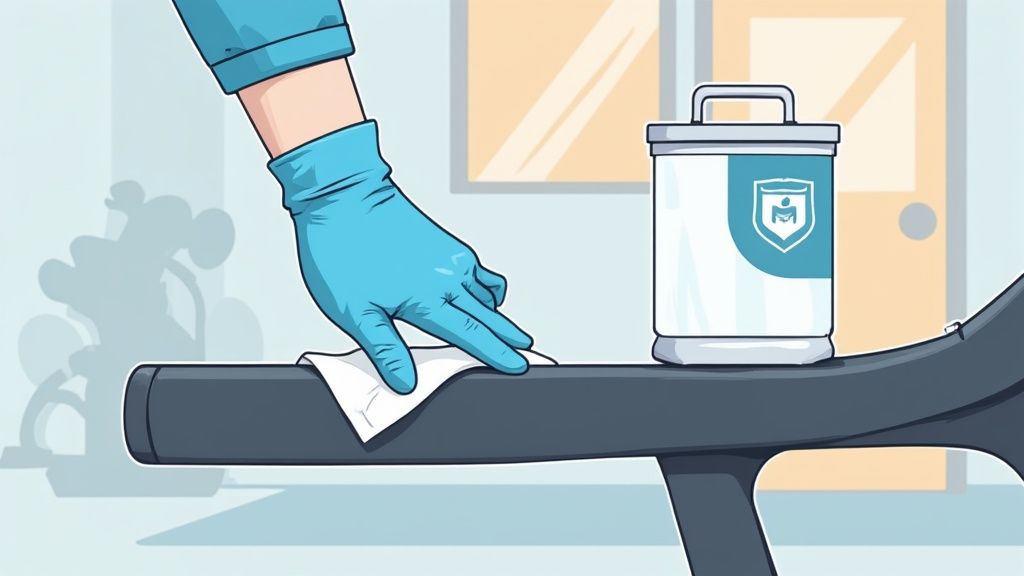
Methicillin-resistant Staphylococcus aureus, better known as MRSA, is a formidable type of staph bacteria that poses a significant health risk in shared environments like fitness centers. Unlike its more common relatives, MRSA has developed resistance to many of the antibiotics used to treat ordinary staph infections, making it a serious concern for gym owners and members alike. Understanding this superbug is the first step toward implementing effective cleaning protocols to protect your community.
Using the right tools, like EPA-registered disinfecting gym wipes, is crucial for eliminating MRSA and ensuring your facility is not just clean, but truly hygienic.
What is MRSA?
MRSA is a strain of Staphylococcus aureus bacteria that has evolved to resist methicillin and other common antibiotics, including penicillin and amoxicillin. This resistance means that infections can be much harder to treat, potentially leading to more severe health complications. While often associated with hospitals and healthcare settings (HA-MRSA), a distinct strain known as community-associated MRSA (CA-MRSA) thrives in public spaces where people have frequent skin-to-skin contact or share equipment—making gyms a prime location for transmission.
Its ability to survive on surfaces for hours, or even days, makes it a persistent threat that requires a proactive and diligent approach to disinfection.
Where MRSA is Commonly Found in Gyms
MRSA can be found on any surface that comes into contact with human skin. In a fitness facility, the high-touch, high-sweat environment creates numerous hotspots for this bacteria to linger and spread. Gym operators and cleaning staff should pay special attention to:
- Free Weights: Dumbbells, barbells, and kettlebells are handled by countless individuals daily.
- Machine Handles & Upholstery: The grips, pins, and vinyl pads on weight machines and benches are high-contact zones.
- Cardio Equipment: Treadmill consoles, elliptical handles, and stationary bike seats are frequently touched.
- Floor Mats & Benches: Yoga mats, stretching areas, and locker room benches are ideal for transferring bacteria through skin contact.
- Shared Accessories: Resistance bands, foam rollers, and medicine balls can also harbor MRSA.
Any surface that is shared and frequently touched is a potential reservoir for this resilient bacterium.
The Health Risks of a MRSA Infection
MRSA is primarily transmitted through direct contact with an infected person or by touching a surface contaminated with the bacteria. The infection typically enters the body through a cut, scrape, or open wound.
For healthy individuals, MRSA often presents as a skin infection. It may initially look like a painful pimple, boil, or spider bite. These sores can be red, swollen, painful, and may produce pus or drainage. If left untreated, the infection can burrow deeper into the body, leading to more severe and potentially life-threatening conditions, such as:
- Bloodstream infections (sepsis)
- Pneumonia
- Surgical site infections
Because it is resistant to standard antibiotics, treating a severe MRSA infection often requires hospitalization and specialized intravenous medications. This makes prevention through proper hygiene and disinfection absolutely paramount.
How to Kill and Control MRSA in Your Facility
Eliminating MRSA from gym surfaces requires more than a simple wipe-down with a damp cloth. It requires a true disinfectant proven to be effective against this specific pathogen.
The most effective tool in this fight is an EPA-registered disinfecting gym wipe. When selecting a product, look for these key features:
- EPA Registration Number: This number, usually found on the product label, confirms that the wipe's "kill claims" have been scientifically verified by the Environmental Protection Agency.
- Specific Kill Claim for MRSA: Ensure the label explicitly states that the product is effective against Methicillin-resistant Staphylococcus aureus.
- Appropriate Dwell Time: Dwell time is the minimum amount of time a surface must remain visibly wet with the disinfectant to kill the pathogen. For MRSA, this can range from 30 seconds to several minutes depending on the product's formulation. Failing to adhere to the dwell time means you are not truly disinfecting.
Proper Disinfection Technique:
- Use one wipe per piece of equipment to avoid cross-contamination.
- Thoroughly wipe down all high-touch surfaces, ensuring they are visibly wet.
- Allow the surface to air dry for the entire duration of the recommended dwell time. Do not wipe it dry.
Who Should Be Concerned?
While everyone should be mindful of hygiene, certain groups need to be particularly vigilant about MRSA.
- Gym Owners and Operators: You are responsible for providing a safe environment. This includes supplying effective disinfecting wipes, training staff on proper cleaning protocols, and educating members on their role in preventing the spread of germs.
- Janitorial and Cleaning Staff: As the frontline defense against pathogens, staff must be educated on the difference between cleaning, sanitizing, and disinfecting, with a focus on using EPA-registered products and adhering to dwell times.
- Gym Members: Individuals are empowered to protect themselves and others by consistently wiping down equipment before and after use. Those with open cuts or compromised immune systems should be especially diligent.
Practical Takeaway for a Safer Gym
Controlling the spread of MRSA is a shared responsibility. For facility managers, the most impactful step is to provide high-quality, EPA-registered disinfecting gym wipes that are specifically proven to kill MRSA. Place dispensers in highly visible, convenient locations throughout your gym and use clear signage to educate members on proper wiping techniques, emphasizing the importance of dwell time. By fostering a culture of cleanliness, you create a safer workout environment for everyone.
Leave a Reply