Salmonella enterica, commonly known as Salmonella, is one of the most significant bacterial threats in commercial and high-traffic environments, particularly in the food service industry. As a leading cause of foodborne illness worldwide, understanding how to control this pathogen is not just a matter of hygiene—it's a critical component of public health and business reputation. This guide provides an in-depth look at Salmonella, its risks, and the effective cleaning practices required to eliminate it from your facility.
Definition and Overview: What Is Salmonella?
Salmonella is a genus of rod-shaped, Gram-negative bacteria belonging to the Enterobacteriaceae family. While there are thousands of serotypes, Salmonella enterica is the species most commonly associated with human illness. It is a hardy, adaptable bacterium that can survive for weeks in a dry environment and even longer in water, making it a persistent threat on surfaces if not properly managed.
This pathogen is a facultative anaerobe, meaning it can thrive with or without oxygen, allowing it to contaminate a wide range of settings, from food processing plants to commercial kitchens and restroom facilities. Its ability to form biofilms on surfaces can make it particularly resistant to standard cleaning efforts, requiring a more robust disinfection strategy.

Where Is Salmonella Commonly Found?
While often linked to raw poultry, eggs, and beef, Salmonella can be found in a surprisingly diverse range of environments. In a commercial setting, cross-contamination is the primary vehicle for its spread.
Key high-risk areas include:
- Food Service and Processing: Kitchens, food prep counters, cutting boards, and processing equipment are prime locations. Contaminated raw ingredients can easily transfer bacteria to ready-to-eat foods and surfaces.
- Healthcare Facilities: Patients with weakened immune systems are highly susceptible. Salmonella can spread via contaminated surfaces, food, or from person to person.
- Public Restrooms: Fecal-oral transmission is a major pathway. Toilets, faucets, door handles, and changing stations can harbor the bacteria.
- Farms and Animal Facilities: Salmonella is commonly found in the intestines of livestock, poultry, and even pets, making agricultural settings a significant reservoir.
Any non-porous surface that comes into contact with contaminated food, water, or fecal matter can become a source of infection. This makes thorough and frequent disinfection a necessity in these environments.
Health Risks Associated with Salmonella Infection
Salmonella infection in humans, known as salmonellosis, typically causes gastroenteritis. Symptoms usually appear 6 to 72 hours after exposure and include diarrhea, fever, abdominal cramps, and vomiting. While most healthy individuals recover within a week without treatment, the infection can be severe—and even life-threatening—for certain populations.
Young children, the elderly, and individuals with compromised immune systems are at a much higher risk of developing severe complications, such as bacteremia (when the infection spreads to the bloodstream). From there, it can infect other parts of the body, including the brain, heart, and bones, leading to serious conditions like meningitis or osteomyelitis.
Transmission occurs primarily through the ingestion of contaminated food or water or by touching a contaminated surface and then touching your mouth. This makes surface disinfection a critical intervention to break the chain of infection.
How to Kill and Control Salmonella on Surfaces
Eradicating Salmonella from your environment requires a diligent cleaning and disinfection protocol. Simple soap and water cleaning is not enough to kill the bacteria; you need a powerful, EPA-registered disinfectant.
A disinfectant bleach solution is one of the most effective and accessible tools for killing Salmonella. The active ingredient, sodium hypochlorite, rapidly destroys the bacterium's cell walls, neutralizing it completely.
Effective Disinfection Practices:
- Clean First: Before disinfecting, always pre-clean surfaces with soap and water to remove dirt, grease, and organic matter. Debris can shield bacteria and reduce the effectiveness of the disinfectant.
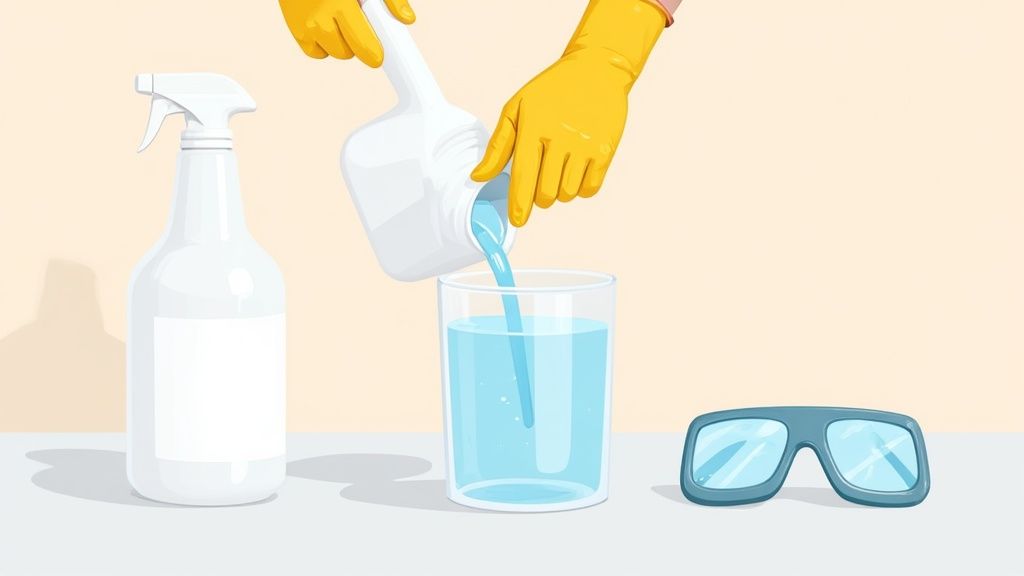
- Apply a Disinfectant Bleach Solution: For hard, non-porous surfaces like countertops, stainless steel, and tile, apply a properly diluted bleach solution. A common ratio for general disinfection is 1/3 cup of 5-6% household bleach per 1 gallon of cool water.
- Observe Dwell Time: This is the most critical step. The disinfectant must remain visibly wet on the surface for a specific period to be effective. For Salmonella, the recommended dwell time is often 5 to 10 minutes. Do not wipe the surface dry before this time is up. Check the product label for specific instructions.
- Rinse Food-Contact Surfaces: After the dwell time is complete, any surface that will come into contact with food (e.g., cutting boards, prep counters) must be thoroughly rinsed with potable water and allowed to air dry.
- Use Proper Tools: Use a dedicated spray bottle for your bleach solution. For larger areas like floors, a clean mop and bucket are effective. Always wear gloves and eye protection when handling cleaning chemicals.

While a homemade bleach solution is effective, many commercial settings opt for EPA-registered disinfectant wipes formulated to kill Salmonella. These products offer convenience and ensure the correct concentration and dwell time are easily achieved. They are particularly useful for high-touch points that require frequent cleaning.

Who Should Be Concerned?
While everyone should be aware of Salmonella, certain professionals have a heightened responsibility to manage the risks associated with it:
- Food Service Managers and Staff: You are on the front lines of preventing foodborne illness. Strict adherence to cleaning schedules, proper food handling, and personal hygiene are non-negotiable.
- Janitorial and Custodial Staff: You are responsible for maintaining the cleanliness of high-traffic areas like restrooms and common spaces. Understanding proper disinfection techniques, including dwell times, is crucial.
- Healthcare Facility Managers: Protecting vulnerable patients from opportunistic infections like salmonellosis is a top priority. Your environmental services team must use hospital-grade disinfectants effective against a broad range of pathogens.
- Business Owners: A Salmonella outbreak linked to your establishment can have devastating consequences for your reputation and bottom line. Implementing and enforcing a robust sanitation program is a critical business practice.
Final Takeaway: Prevention Is the Best Strategy
Controlling Salmonella is a proactive effort. It requires a combination of proper food handling, personal hygiene, and, most importantly, a rigorous cleaning and disinfection regimen. Using an effective disinfectant like a bleach solution and strictly adhering to dwell times are the keys to eliminating this persistent bacterium from your surfaces. By training your staff and implementing a consistent protocol, you can protect your customers, patients, and employees from the serious health risks posed by Salmonella.
Leave a Reply