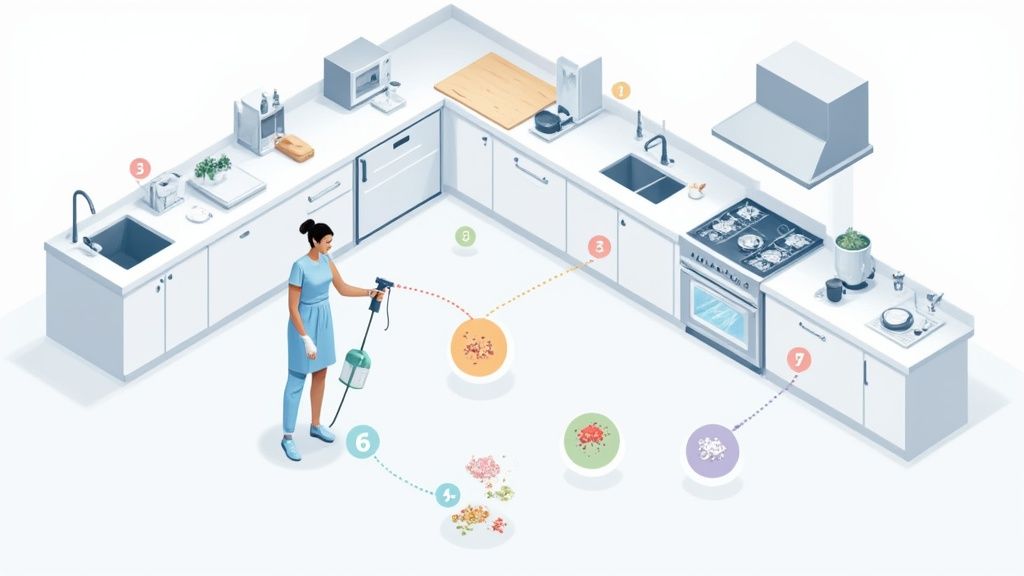
In the high-stakes environment of commercial and high-traffic kitchens, maintaining impeccable hygiene is not just about cleanliness—it's a critical public health responsibility. Among the most significant microbial threats is Salmonella enterica, a bacterium responsible for one of the most common and severe forms of foodborne illness. For food service managers, janitorial staff, and business owners, understanding and controlling this pathogen is paramount to ensuring food safety, protecting customers, and upholding brand reputation. This guide provides an in-depth look at Salmonella enterica, its risks, and actionable cleaning protocols to effectively eliminate it from your facility.
Definition and Overview: Understanding Salmonella enterica
Salmonella enterica is a rod-shaped, gram-negative bacterium belonging to the Enterobacteriaceae family. It is a highly adaptable and resilient pathogen, capable of surviving for weeks on dry surfaces and even longer in moist conditions. While there are many serotypes of Salmonella, Salmonella enterica is the species most frequently associated with human illness, causing the infection known as salmonellosis. Its ability to thrive both inside and outside of a living host makes it a persistent threat in any environment where food is handled.
Where It's Commonly Found
Salmonella enterica is ubiquitous in the environment but is most commonly found in the intestinal tracts of animals, particularly poultry and livestock. Consequently, it is a primary contaminant in food service areas. Key high-risk environments and surfaces include:
- Food Preparation Surfaces: Cutting boards, countertops, and prep sinks where raw meat, poultry, or eggs have been handled.
- Kitchen Equipment: Meat grinders, slicers, and utensils that have come into contact with contaminated food.
- Storage Areas: Refrigerator shelves, drawers, and drip pans where raw juices may have leaked.
- Drains and Sinks: The moist, nutrient-rich environment of floor drains and sinks provides an ideal breeding ground.
- Cleaning Tools: Contaminated sponges, cloths, and mop heads can spread the bacteria from one surface to another.
Health Risks Associated with Salmonella
Transmission to humans occurs primarily through the consumption of contaminated food or water, or by touching a contaminated surface and then touching the mouth. Ingestion of Salmonella enterica leads to salmonellosis, with symptoms typically appearing 6 to 72 hours after infection. These include:
- Diarrhea
- Fever
- Abdominal cramps
- Vomiting
While most healthy individuals recover within a week, the infection can be severe and even life-threatening for vulnerable populations such as young children, the elderly, and individuals with compromised immune systems. The bacteria can escape the intestines and enter the bloodstream, leading to a serious condition called bacteremia, which requires immediate medical attention and antibiotic treatment.
How to Kill and Control Salmonella enterica
Effective control of Salmonella hinges on a rigorous cleaning and sanitation protocol that eliminates the bacteria from surfaces. Simply wiping down a surface is not enough; proper disinfection is crucial.
- Clean First: Before disinfecting, you must remove all visible soil, grease, and food particles. Bacteria can hide under this organic matter, protecting them from disinfectants. Use a quality detergent and hot water to scrub surfaces thoroughly.
- Disinfect Correctly: Use an EPA-registered disinfectant that is proven effective against Salmonella enterica. Always follow the manufacturer's instructions for dilution and application.
- Respect the Dwell Time: This is the most critical step. Dwell time is the amount of time a disinfectant must remain wet on a surface to kill the targeted pathogens. For Salmonella, this is often between 30 seconds and 10 minutes, depending on the product. Wiping the surface dry too soon will render the disinfectant ineffective.
- Use Appropriate Tools: High-quality disinfectant wipes are an excellent tool for ensuring proper surface coverage and dwell time compliance, especially on high-touch surfaces and equipment. They eliminate the risk of cross-contamination associated with reusing cloths.
Who Should Be Concerned?
While Salmonella is a public health concern for everyone, certain professionals bear a greater responsibility for its control:
- Food Service Managers and Staff: You are the front line of defense. Strict adherence to cleaning schedules, proper food handling protocols (e.g., preventing cross-contamination), and personal hygiene are non-negotiable.
- Janitorial and Sanitation Crews: Your team is responsible for executing the cleaning and disinfection protocols that keep facilities safe. Proper training on dwell times and the use of EPA-registered disinfectants is essential.
- Business Owners and Facility Managers: Ensuring that your staff has the necessary resources, training, and time to implement effective sanitation procedures is crucial for mitigating liability and protecting your customers and reputation.
Practical Takeaway
The fight against Salmonella enterica is won through consistent and meticulous sanitation practices. A foundational rule is to "clean before you disinfect." Always remove physical debris first, then apply an EPA-registered disinfectant, ensuring it remains wet on the surface for the full required dwell time. This two-step process is the most effective way to eliminate the threat of Salmonella and maintain a safe, hygienic kitchen environment.
Leave a Reply