Staphylococcus aureus, often shortened to S. aureus or "staph," is a common bacterium that poses a significant health risk, particularly in environments with high human traffic and shared surfaces. While many people carry it without issue, it can cause serious infections when it breaches the body's defenses. For facility managers, gym operators, and janitorial staff, understanding and controlling S. aureus is a critical part of maintaining a safe and hygienic space.
Definition and Overview: What Is Staphylococcus Aureus?
Staphylococcus aureus is a gram-positive, round-shaped bacterium that is a member of the Firmicutes phylum. It is a facultative anaerobe, meaning it can survive with or without oxygen. Under a microscope, these bacteria typically appear in grape-like clusters.
One of its most notable traits is its resilience. S. aureus can survive on dry surfaces for extended periods, making it a persistent contaminant. It is also a common part of the human skin flora and is found in the nasal passages of approximately 30% of healthy individuals. While its presence isn't always harmful, it is an "opportunistic pathogen," meaning it can cause infections if it enters a wound, cut, or the bloodstream.
Where It's Commonly Found
Staphylococcus aureus thrives in places where people are in close contact or share equipment and facilities. Its ability to survive on surfaces makes it a primary concern in various commercial and public settings:
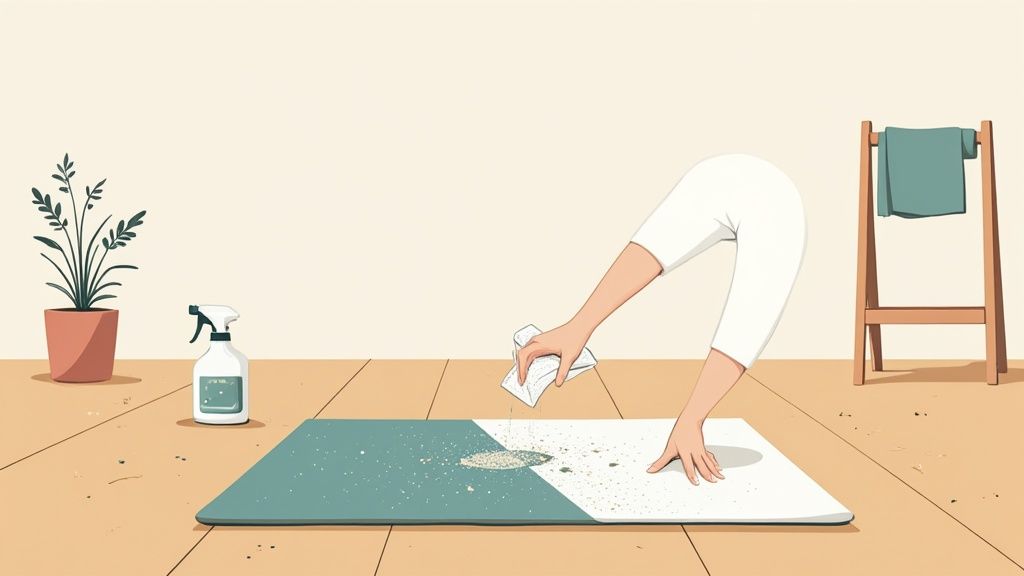
- Gyms and Fitness Centers: Shared yoga mats, weight machines, locker room benches, and towels are prime breeding grounds. The combination of sweat, warmth, and high-touch surfaces creates an ideal environment for transmission.
- Hospitals and Healthcare Facilities: S. aureus is a major cause of hospital-acquired infections (HAIs), spreading through contaminated equipment, bed linens, and the hands of healthcare workers.
- Schools and Daycares: Children in close contact can easily spread the bacteria through shared toys, desks, and direct contact.
- Food Service Areas: While more commonly associated with other bacteria, S. aureus can cause food poisoning if it contaminates food through improper handling.
Any high-touch surface—from doorknobs and light switches to workout equipment—can harbor these bacteria.
Health Risks and Transmission
When S. aureus enters the body through a cut, scrape, or other break in the skin, it can cause a range of infections, from minor to life-threatening. Common health risks include:
- Skin Infections: This is the most common type of staph infection, leading to boils, impetigo, cellulitis, and abscesses.
- Invasive Infections: If the bacteria enter the bloodstream, they can cause severe conditions like sepsis, pneumonia, or endocarditis (infection of the heart lining).
- Antibiotic Resistance: A significant concern with S. aureus is its ability to develop resistance to antibiotics. Methicillin-resistant Staphylococcus aureus (MRSA) is a well-known "superbug" that is difficult to treat and a major threat in healthcare and community settings.
Transmission occurs primarily through direct contact with an infected person, but it is also frequently spread via contact with contaminated objects or surfaces (fomites).
How to Kill or Control It: Effective Cleaning Practices
Controlling the spread of Staphylococcus aureus relies on rigorous and consistent cleaning protocols. Simply wiping down a surface is not enough; disinfection is key.
The most effective strategy involves using disinfectant wipes or sprays that are proven effective against S. aureus. When selecting a product, look for an EPA registration number on the label, which confirms the product has been tested and approved by the Environmental Protection Agency for its disinfectant claims.
Proper technique is just as important as the product itself:
- Clean First: Remove any visible dirt and grime from the surface with a general cleaner before disinfecting. Disinfectants work best on pre-cleaned surfaces.
- Apply the Disinfectant: Thoroughly wet the surface with an EPA-registered disinfectant wipe or spray.
- Respect the Dwell Time: This is the most critical step. "Dwell time" is the amount of time the disinfectant must remain wet on the surface to effectively kill the target pathogens. For S. aureus, this is often between 1 to 10 minutes, depending on the product. Check the product label for the specific dwell time and ensure the surface stays visibly wet for that entire duration.
- Let it Air Dry: Allow the surface to air dry. Do not wipe it dry, as this can remove the disinfectant before it has finished working.
Who Should Be Concerned?
While everyone should practice good hygiene, certain professionals have a heightened responsibility to manage the risks associated with S. aureus:
- Gym and Health Club Operators: Must ensure a strict cleaning schedule for all equipment, mats, and locker rooms to protect their members. Providing disinfectant wipes for members to use before and after using equipment is a best practice.
- Janitorial and Custodial Staff: Are the frontline defense against pathogens. They need proper training on disinfection protocols, including dwell times and the use of appropriate personal protective equipment (PPE).
- Healthcare Providers: Must adhere to stringent infection control procedures to prevent the spread of S. aureus and MRSA to vulnerable patients.
- School Administrators: Need to implement cleaning policies for classrooms, cafeterias, and athletic facilities to protect students and staff.
Practical Takeaway: Effective control of Staphylococcus aureus hinges on a two-part strategy: consistent cleaning to remove organic matter, followed by proper disinfection with an EPA-registered product, paying close attention to the required dwell time. This proactive approach is essential for protecting health in any shared environment.
Leave a Reply