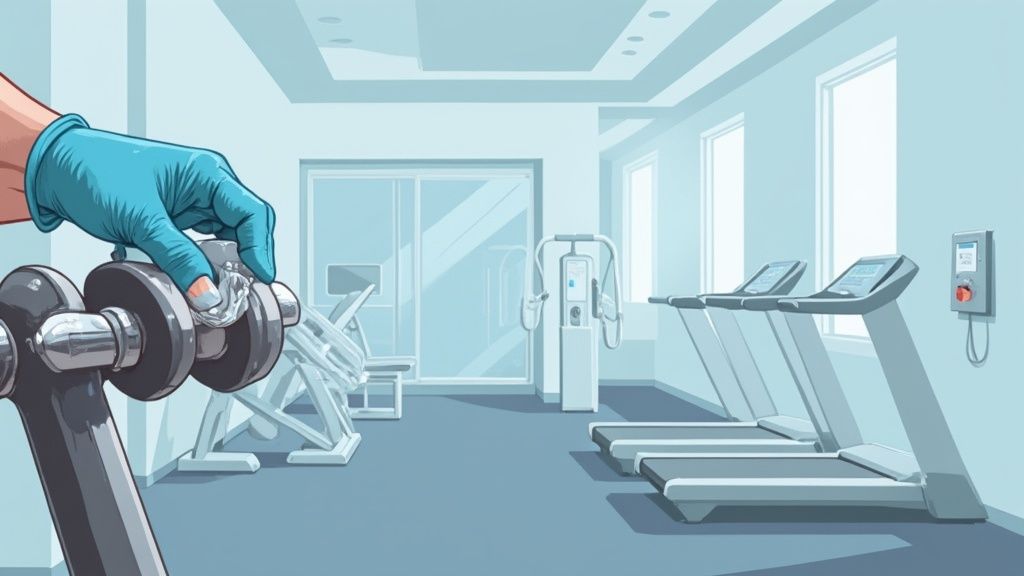
Staphylococcus aureus, often simply called "Staph," is one of the most common and persistent bacteria found in public spaces, making it a primary concern for gym owners and operators. Understanding this bacterium is the first step in creating a truly safe and hygienic environment for your members. It's not just about surface-level cleanliness; it's about targeted disinfection that neutralizes a very real health risk.
This guide breaks down what Staphylococcus aureus is, the risks it poses in a fitness center, and how to effectively eliminate it using the right tools and protocols, particularly disinfectant wipes for gym equipment.
Definition and Overview of Staphylococcus Aureus
Staphylococcus aureus is a gram-positive bacterium commonly found on the skin and in the upper respiratory tracts of about 30% of healthy individuals. In most cases, it exists harmlessly as part of the body's normal microflora. However, when it breaches the body's natural defenses—typically through a cut, scrape, or open wound—it can cause a range of infections, from minor skin irritations to severe, life-threatening conditions.
One of its most notable traits is its resilience. Staph can survive on dry, inanimate surfaces for days, weeks, or even months, waiting for an opportunity to transfer to a new host. This incredible durability is what makes it such a formidable challenge in high-touch environments like gyms.

Where It’s Commonly Found in Gyms
A fitness center is a perfect breeding ground for Staphylococcus aureus. The combination of sweat, shared surfaces, and frequent skin-to-surface contact creates an ideal transmission scenario. Staph thrives in these specific areas:
- Weight Equipment: The textured grips of dumbbells, barbells, and kettlebells are prime real estate for bacteria to hide.
- Machine Upholstery: Vinyl and leatherette pads on weight machines and benches are in constant contact with members' skin.
- Cardio Machines: Handlebars, seats, and touchscreens on treadmills, ellipticals, and stationary bikes are touched by hundreds of hands daily.
- Floor Mats and Accessories: Yoga mats, foam rollers, and resistance bands can harbor Staph, especially if they are not properly cleaned between uses.
- Locker Rooms: Benches, locker handles, and shower floors are high-risk zones due to the combination of moisture and bare skin.
Any surface that is frequently touched by multiple people is a potential hotspot for Staph contamination.
Health Risks Associated with Staph Infections
When Staphylococcus aureus enters the body, it can cause infections that range from mild to severe. The most common manifestation in a gym setting is a skin infection, which may appear as a red, swollen, and painful pimple or boil. If left untreated, these localized infections can worsen, forming abscesses that require medical drainage.
The greater danger lies in the potential for the bacteria to enter the bloodstream, leading to systemic infections like bacteremia or sepsis. It can also infect bones, joints, and vital organs.
A particularly dangerous strain is MRSA (Methicillin-resistant Staphylococcus aureus), which is resistant to many common antibiotics. An MRSA outbreak can have devastating consequences for member health and a gym's reputation. The risk is not theoretical; it's a documented reality in athletic facilities. For more insights into how hygiene expectations have evolved, especially after global health events, see these common COVID-19 cleaning misconceptions.

How to Kill and Control Staphylococcus Aureus
Effectively controlling Staph requires a consistent and scientifically sound cleaning protocol. This goes beyond simple tidying up; it demands true disinfection. The key is using products proven to be effective against this specific bacterium.
Emphasize EPA-Registered Disinfectant Wipes
Your primary weapon in the fight against Staph is an EPA-registered disinfectant wipe. The EPA registration number on a product's label is your guarantee that it has been tested and certified to kill the pathogens listed, including Staphylococcus aureus. When selecting wipes, look for this number and a specific "kill claim" for Staph.
Understand and Enforce Dwell Time
A disinfectant's dwell time is the amount of time a surface must remain visibly wet for the chemical to kill the targeted germs. This is the most critical and often overlooked step in the disinfection process.
- Pre-Clean the Surface: First, wipe away any sweat, dirt, or grime with a paper towel or separate cloth. Disinfectants work best on clean surfaces.
- Wipe Thoroughly: Use the disinfectant wipe to completely coat the surface. It should be visibly wet, not just damp.
- Wait for the Dwell Time: Let the surface air dry. Do not wipe it dry. Typical dwell times for killing Staph are between 2 and 10 minutes. Check the product label for the exact time. A shorter dwell time is often more practical for a busy gym environment.
Understanding the difference between sanitizing and disinfecting is crucial—sanitizing only reduces bacteria, while disinfecting eliminates them. For a high-risk pathogen like Staph, disinfection is the only acceptable standard.
Who Should Be Concerned?
While everyone in a gym should practice good hygiene, the responsibility for creating a safe environment falls primarily on facility management.
- Gym Owners and Operators: You are responsible for selecting effective, EPA-registered products and implementing a robust cleaning schedule. The financial and reputational cost of a Staph outbreak far outweighs the investment in proper hygiene supplies and training. Market research from firms like Dataintelo.com and Data Bridge Market Research shows that consumer demand for visible cleanliness is at an all-time high.
- Janitorial and Cleaning Staff: This team is your front line of defense. They must be trained on proper disinfection techniques, including the importance of dwell times and the difference between cleaning and disinfecting. Following a detailed fitness center cleaning checklist ensures no surface is missed.
- Personal Trainers and Gym Staff: Staff on the floor should lead by example, wiping down equipment and encouraging members to do the same. They can play a key role in educating members on proper gym etiquette.
- Gym Members: Ultimately, a safe gym is a community effort. Members should be educated and encouraged to wipe down all equipment before and after each use as a standard part of their workout routine.

Practical Takeaway: Implement a "Wipe and Wait" Culture
To effectively combat Staphylococcus aureus, your facility must move beyond simply providing wipes. Foster a "Wipe and Wait" culture where every staff member and client understands the proper procedure: pre-clean, wipe until visibly wet, and allow the surface to air dry for the full dwell time. Make disinfectant wipe stations highly visible and accessible throughout your facility. This proactive approach is the most effective way to protect your members and your business from the persistent threat of Staph. For more tips on effective cleaning, see our guide on how to clean gym equipment.
Leave a Reply