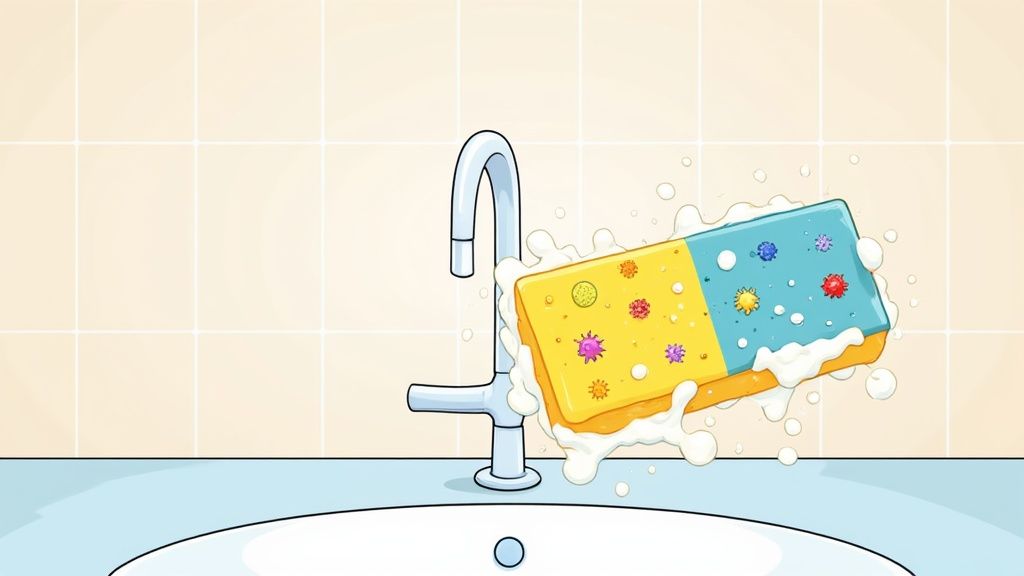
Salmonella enterica, commonly known as Salmonella, is a bacterium that represents one of the most significant public health challenges in the food service industry. As a leading cause of foodborne illness worldwide, understanding its characteristics, risks, and control measures is non-negotiable for anyone responsible for preparing and serving food. This guide provides essential information for food service managers, janitorial staff, and business owners committed to maintaining a safe and hygienic environment.
Definition and Overview: What Is Salmonella Enterica?
Salmonella enterica is a rod-shaped, gram-negative bacterium belonging to the Enterobacteriaceae family. It is a highly adaptable and resilient pathogen with thousands of serotypes, many of which can cause illness in humans. The most common illness, salmonellosis, typically manifests as gastroenteritis.
One of its most notable traits is its ability to survive in a wide range of environments, both inside and outside a living host. It can persist on dry surfaces for weeks and thrive in various food products if temperature and moisture conditions are favorable. You can learn more about how long bacteria survive in our detailed guide. This resilience makes it a persistent threat in any food handling environment.
Where Is Salmonella Commonly Found?
Salmonella is most famously associated with raw poultry, eggs, and unpasteurized dairy products, but its reach is far broader. It can contaminate a wide array of foods, including raw meat, fruits, vegetables, and even processed foods like peanut butter.
In a commercial or high-traffic setting, Salmonella thrives in areas where cross-contamination can occur. Key hotspots include:
- Food Preparation Surfaces: Cutting boards, countertops, and food prep sinks that have come into contact with raw ingredients.
- Kitchen Equipment: Slicers, grinders, and utensils that are not properly cleaned and sanitized between uses.
- Storage Areas: Refrigerators and pantries where contaminated raw foods might drip onto or touch ready-to-eat items.
- Employee Hands: Staff members can easily transfer the bacteria from contaminated surfaces or foods to other areas.
- High-Touch Points: Faucet handles, refrigerator doors, and cleaning cloths can become vectors for transmission.

Health Risks and Transmission
Salmonella infection (salmonellosis) in humans typically occurs after ingesting contaminated food or water. Symptoms usually appear 6 to 72 hours after exposure and include diarrhea, fever, abdominal cramps, and vomiting. While most healthy individuals recover within a week, the infection can be severe—and even life-threatening—for vulnerable populations such as young children, the elderly, and individuals with weakened immune systems.
The primary mode of transmission in a food service setting is the fecal-oral route, often through cross-contamination. For example, using the same cutting board for raw chicken and then for salad vegetables without proper sanitation is a classic scenario for spreading Salmonella. This makes rigorous cleaning protocols absolutely essential for preventing outbreaks and protecting customer health.
How to Kill and Control Salmonella
Controlling Salmonella requires a multi-faceted approach centered on proper food handling, personal hygiene, and effective sanitation. Since the bacteria can survive on surfaces, routine cleaning and disinfection are critical lines of defense.
Effective Cleaning Practices:
- Two-Step Process: Always clean surfaces with soap and water first to remove organic matter, then apply a disinfectant to kill the bacteria.
- Disinfectant Wipes: Use EPA-registered disinfectant wipes that are proven effective against Salmonella enterica. These are ideal for high-touch surfaces and food preparation areas, offering convenience and validated efficacy. Check out our guide on the best household disinfectants for more options.
- Adhere to Dwell Times: Disinfection is not instantaneous. The "dwell time," or the amount of time a disinfectant must remain wet on a surface to be effective, is crucial. This information is listed on the product label and must be followed precisely. For Salmonella, this is often between 30 seconds and 10 minutes.
- Focus on High-Risk Zones: Pay extra attention to cutting boards, countertops, slicers, and any surface that comes into contact with raw animal products.

Who Should Be Concerned?
While everyone should be aware of Salmonella, certain professionals bear a heightened responsibility for its control:
- Food Service Managers and Business Owners: They are responsible for implementing and enforcing food safety protocols, training staff, and ensuring the facility has the necessary supplies (like effective disinfectants) to prevent contamination.
- Janitorial and Kitchen Staff: These are the front-line workers whose adherence to cleaning procedures directly impacts food safety. Proper training on cleaning techniques, disinfectant use, and dwell times is vital.
- Health and Safety Inspectors: Their role is to verify that establishments are meeting public health standards designed to prevent the spread of pathogens like Salmonella.

Practical Takeaway:
The most effective strategy to control Salmonella enterica is prevention. This means treating every raw ingredient as a potential source of contamination and embedding strict hygiene protocols into every step of the food handling process. For food service professionals, the mantra should be: Clean, Separate, Cook, and Chill. Combine these foundational food safety principles with the use of EPA-approved disinfectants applied with correct dwell times to create a robust defense against this pervasive pathogen. For more information, review our guide on ways to prevent foodborne illness.
Leave a Reply