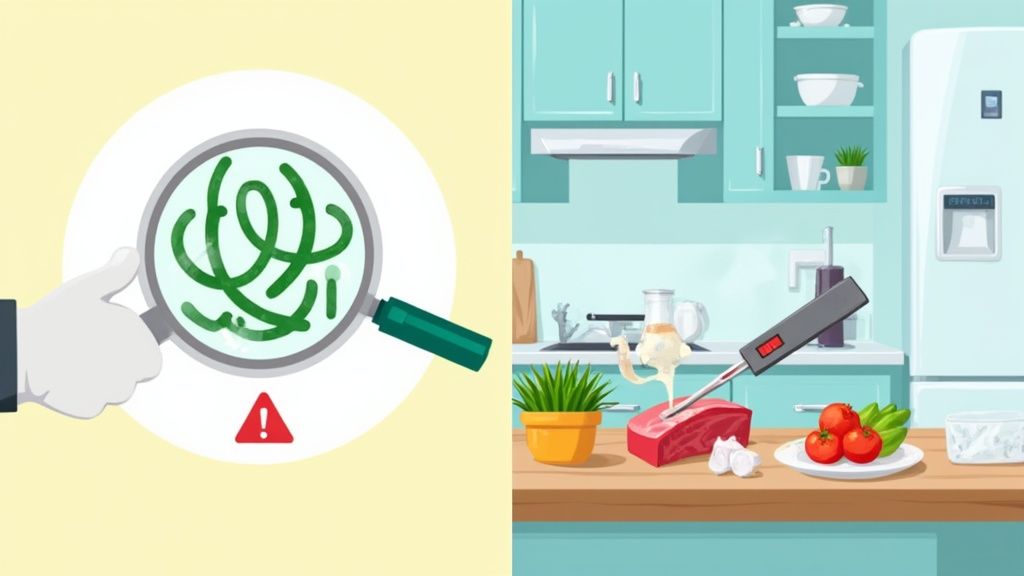
Escherichia coli (E. coli) is a diverse group of bacteria, with most strains living harmlessly in the intestines of people and animals. However, some strains, like E. coli O157:H7, are pathogenic and can cause severe illness. As a Shiga toxin-producing E. coli (STEC), O157:H7 is a significant public health concern, particularly in commercial food service and high-traffic environments. Understanding its characteristics, risks, and control measures is essential for facility managers, food service professionals, and public health guardians.
Definition and Overview: What is E. coli O157:H7?
E. coli O157:H7 is a specific serotype of the bacterium Escherichia coli. It is classified as an enterohemorrhagic strain, meaning it can cause hemorrhagic colitis, characterized by severe abdominal cramps and bloody diarrhea. One of its most notable traits is the production of potent Shiga toxins. These toxins damage the lining of the small intestine and can lead to serious complications, including hemolytic uremic syndrome (HUS), a life-threatening condition that causes kidney failure, particularly in young children and the elderly. Unlike many other bacteria, E. coli O157:H7 has a very low infectious dose, meaning that ingesting just a small number of the bacteria can cause illness.
Where It’s Commonly Found
E. coli O157:H7 lives in the intestines of ruminant animals, especially cattle. Consequently, it is most commonly associated with contaminated food and water. High-risk environments and surfaces include:
- Food Service Areas: Primarily through contaminated ground beef, but also through unpasteurized milk, raw produce (like lettuce and sprouts) contaminated by animal feces, and contaminated water. Cross-contamination from raw meat to other surfaces is a major risk in restaurant and institutional kitchens.
- Farms and Petting Zoos: Direct contact with infected animals or their environments can lead to transmission.
- Water Sources: Contaminated drinking water or recreational water (lakes, pools) can be a source of outbreaks.
- High-Touch Surfaces: In any environment where contaminated food has been handled, bacteria can be transferred to countertops, cutting boards, utensils, and faucet handles.
Health Risks and Transmission
Humans become infected by ingesting the bacteria. Transmission occurs primarily through consumption of contaminated food or water. Person-to-person transmission is also possible, especially in families and childcare centers, due to poor hand hygiene.
Upon infection, symptoms typically appear within 3-4 days and include severe stomach cramps, diarrhea (often bloody), and vomiting. While most people recover within a week, about 5-10% of infected individuals develop HUS. The Shiga toxins can enter the bloodstream and destroy red blood cells, leading to anemia, low platelet counts, and acute kidney failure. There is no specific treatment for the infection itself; medical care focuses on supportive measures like hydration. Antibiotics are generally not recommended as they may increase the risk of HUS.
How to Kill or Control It
Controlling E. coli O157:H7 requires a multi-faceted approach focused on proper food handling, cooking, and rigorous cleaning and disinfection.
- Cooking: The most effective way to kill E. coli O157:H7 in food is to cook it to a safe internal temperature. Ground beef should be cooked to a minimum of 160°F (71°C), verified with a food thermometer.
- Cleaning and Disinfection: For surfaces, a two-step process is crucial. First, clean the surface with soap and water to remove organic matter. Then, apply a disinfectant.
- Effective Disinfectants: Use an EPA-registered disinfectant proven effective against E. coli. Disinfectant wipes are a practical and effective tool for high-touch surfaces in food service and public areas. They ensure proper concentration and simplify application.
- Dwell Time: Always follow the manufacturer's instructions for dwell time—the period the surface must remain visibly wet to ensure the disinfectant kills the pathogens. This can range from 30 seconds to 10 minutes.
- Proper Technique: Use enough wipes to ensure the surface stays wet for the required dwell time. For heavily soiled areas, pre-cleaning is essential for the disinfectant to work effectively.
Who Should Be Concerned
While everyone is at risk, certain groups and professionals need to be particularly vigilant:
- Food Service Managers and Staff: They are on the front lines of preventing outbreaks. They must enforce strict protocols for cooking temperatures, preventing cross-contamination, hand hygiene, and surface disinfection.
- Janitorial and Sanitation Staff: In any commercial facility, from offices to schools, this team is responsible for disinfecting high-touch surfaces that could harbor pathogens transferred from outside sources.
- Healthcare Providers: They must recognize the symptoms of E. coli O157:H7 infection and understand the risks of HUS, especially when treating vulnerable populations.
- Business Owners (Restaurants, Farms, Childcare Centers): They are ultimately responsible for implementing safety protocols, training staff, and protecting their patrons and clients from exposure.
Practical Takeaway: The most critical defense against E. coli O157:H7 is breaking the chain of transmission. For food handlers and facility managers, this means treating every raw meat product as potentially contaminated, rigorously enforcing cooking temperatures, and using EPA-registered disinfectants with the correct dwell time on all food-contact and high-touch surfaces. Consistent hygiene is not just a best practice—it's a critical public health responsibility.
Leave a Reply