You're probably standing in one of two places. In a store aisle, looking at a bottle that says antibacterial and wondering whether it's better. Or in a supply room, deciding what to buy in bulk for a school, gym, daycare, office, or food service site.
That choice feels simple, but it isn't. The label suggests extra protection. The ingredient list looks technical. And many people still assume antibacterial soap is the stronger, smarter option by default.
A closer look reveals more nuance. The most important questions aren't just “Does it kill germs?” They're also “What ingredient is doing the work?”, “What else is in the formula?”, “What changed after triclosan fell out of favor?”, and “What matters more in daily use: the chemistry or the handwashing technique?” For parents and facility managers, those answers shape purchasing decisions, skin tolerance, cleaning policies, and overall hygiene strategy.
The Antibacterial Aisle Your Guide to Making the Right Choice
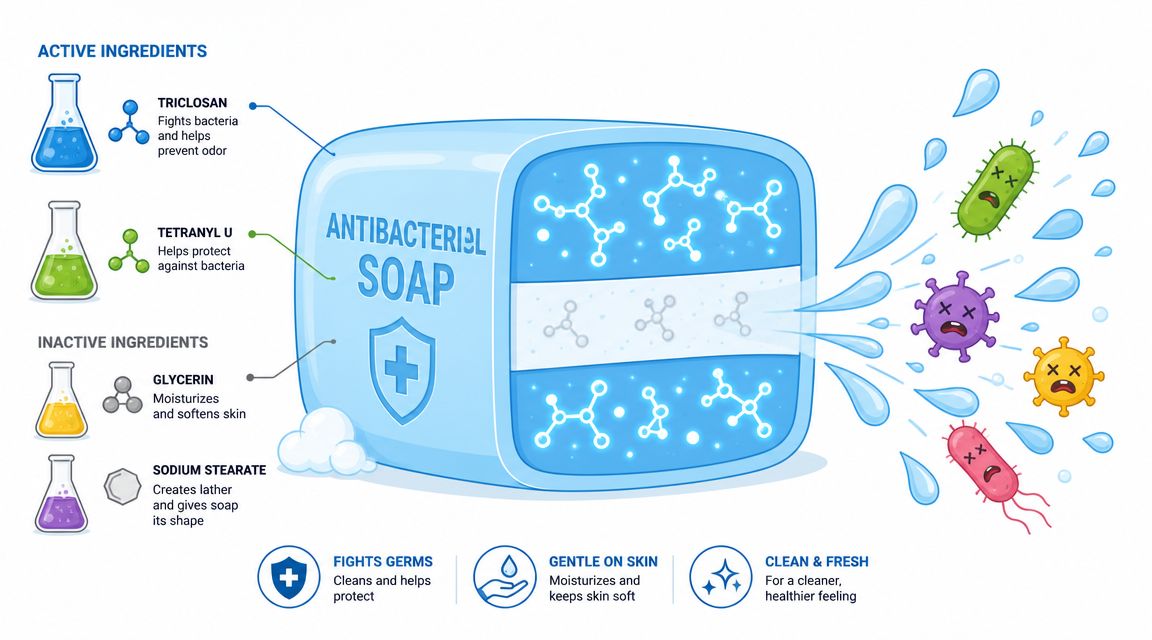
A bottle of antibacterial soap is usually a mix of two very different things. First, there's the active ingredient, which is the chemical included for antimicrobial action. Then there's everything else, the cleansing base, moisturizers, preservatives, thickeners, fragrance, and color.
That distinction matters because shoppers often focus only on the front label. They see “kills bacteria” and assume the whole formula is substantially different from regular soap. In many products, though, the antimicrobial part is only one small part of the overall formula, while the base soap still does most of the physical work of lifting oils and debris from skin.
If you want a useful label-reading primer before comparing products, this overview of types of soap helps separate plain soap, antibacterial soap, and other cleansing formats in practical terms.
What people usually get confused about
Three points cause the most confusion:
- “Antibacterial” doesn't mean all-purpose: It refers to antibacterial action, not necessarily broader performance in every real-world washing situation.
- “Natural” and “antibacterial” aren't the same thing: Some people prefer ingredient profiles that feel simpler or gentler. If you're comparing product categories, a guide to natural antibacterial body washes can be useful for understanding how brands position these products.
- The active ingredient isn't the whole story: A product can be harsh, drying, or heavily fragranced even if the antibacterial active is present in a small amount.
Practical rule: Start with the label panel that lists the active ingredient. Then read the rest of the ingredient deck for the formula that actually touches skin all day.
For facility buyers, this is the fundamental point. You're not just buying a germ claim. You're buying user compliance, skin comfort, refill consistency, and a product your staff, students, members, or customers will use correctly.
Active Antibacterial Ingredients The Power Players
A parent standing in a store aisle or a facility manager reviewing dispenser refills usually sees the same question in different forms. Which ingredient is doing the antibacterial work, and what does that mean for safety, skin feel, and purchasing decisions now that triclosan is no longer the default consumer option?
The short answer is that a few names matter more than the rest. On current labels, the active ingredient is the part of the formula intended to reduce bacteria. That is the line to read first because it tells you what kind of antimicrobial system the product is built around. If you want a simple way to separate active ingredients from the rest of a formula, Neutralyze explains active ingredients in a way that also helps with soap labels.

Benzalkonium chloride
Benzalkonium chloride, often shortened to BAC, is one of the active ingredients facility buyers now encounter most often. It belongs to the quaternary ammonium family, a group often used in antiseptic products.
Its job is fairly easy to picture. Bacteria rely on an outer membrane to hold the cell together and control what moves in and out. Benzalkonium chloride disrupts that protective surface, which prevents the cell from working normally.
For buyers, the practical question is less about memorizing the chemistry and more about fit. A BAC-based soap may check the box for an antibacterial claim, but you still need to ask whether the product is appropriate for frequent handwashing, whether staff will tolerate the feel and scent, and whether the dispenser system delivers a consistent dose. A product that looks strong on paper but dries hands out often gets used less, and lower compliance weakens real-world hygiene.
Benzethonium chloride and chloroxylenol
Benzethonium chloride works in a similar general way. It is also used as a topical antiseptic active and is aimed at disrupting microbial cell integrity.
Chloroxylenol, often listed as PCMX, comes from a different chemical class. Instead of acting like a quaternary ammonium compound, it interferes with important cellular functions in microbes. That difference matters because buyers may see similar antibacterial marketing on products that are built around different active systems.
A simple comparison helps:
| Ingredient | Common label role | What it means in practice |
|---|---|---|
| Benzalkonium chloride | Antibacterial active | Common post-triclosan active in hand soaps for shared spaces |
| Benzethonium chloride | Antiseptic active | Similar purpose, different specific compound |
| Chloroxylenol (PCMX) | Antiseptic active | Different chemistry, used in some antiseptic cleansers |
If you want to see how this appears on real packaging, this guide to Purell hand soap ingredients and product claims shows how brands present actives, use directions, and positioning.
What decision-makers should take from the label
The active ingredient tells you the antimicrobial approach. It does not tell you whether the whole product is a good choice for a preschool bathroom, a gym locker room, a healthcare-adjacent waiting area, or a home sink used by children with sensitive skin.
That is where confusion often starts. Two soaps can both be called antibacterial while performing differently in daily use because the full formula changes how the soap dispenses, rinses, smells, and feels after repeated washing. For a facility manager, that affects refill standardization and user acceptance. For a parent, it affects whether children wash long enough and often enough to matter.
So read the active line first. Then read the rest of the label with a practical question in mind. Will people use this product correctly, several times a day, without avoiding it?
The Triclosan Story A Major Regulatory Shift
For years, many consumers equated antibacterial soap with one ingredient family: triclosan in liquid products and triclocarban in some bar products. They were widely used for decades, and their presence shaped how people thought about germ-killing soap at home.
Then the regulatory picture changed in a way every buyer should understand.

What the FDA decided
In 2016, the U.S. FDA finalized a rule stating that 19 active ingredients, including triclosan and triclocarban, could no longer be marketed in nonprescription consumer antiseptic wash products because manufacturers had not shown they were both safe for long-term daily use and more effective than plain soap and water, according to the FDA's consumer guidance on antibacterial soap and plain soap and water.
That was a turning point. It didn't mean all antibacterial soap disappeared. It meant the old default ingredients lost their place in over-the-counter consumer wash products unless manufacturers could meet the safety and effectiveness standard the FDA required.
What the rule did not mean
This part often gets missed. The FDA said that the rule did not apply to benzalkonium chloride, benzethonium chloride, or chloroxylenol, which remained under review in that consumer guidance.
So when a parent says, “I thought antibacterial soap got banned,” the accurate answer is no. Certain long-used ingredients were removed from this product category in the U.S. consumer market, but other active systems remained in use.
Triclosan's decline changed the market, but it didn't settle the bigger question of whether routine consumer handwashing needs an antibacterial active at all.
For facility managers, the practical lesson is straightforward. Older assumptions about “antibacterial” products may be based on ingredients that are no longer the main story. Current purchasing decisions should focus on today's label, today's use case, and whether the setting requires an antiseptic product rather than a standard hand soap.
Inactive Ingredients The Unsung Supporting Cast
A parent comparing hand soaps or a facility manager restocking wall dispensers may focus on the word antibacterial. Day to day, though, the parts that shape whether people use the product are usually the inactive ingredients.
Those ingredients control how the soap spreads, foams, rinses, smells, and feels after repeated washing. In practical terms, they influence compliance. If a soap leaves hands dry, smells too strong, or jams a dispenser, people use less of it or avoid it altogether.
The base cleansers
The main inactive components are usually surfactants, the cleansing agents that loosen oils, dirt, and microbes so water can carry them away. A simple way to picture their job is dish soap cutting grease on a pan. On hands, surfactants help break up the film that holds soil and germs against the skin.
That matters because washing is not only about the antibacterial active. The soap still needs a strong cleaning base to spread well, lift debris, and rinse off without leaving too much residue behind.
For decision-makers in schools, offices, and homes, this is part of the post-triclosan reality. A label may highlight the active ingredient, but the user experience often depends more on the supporting formula than buyers expect. If you want a practical overview of how these products are supposed to help, this guide to antibacterial soap benefits and limitations gives useful context.
Moisture and feel
Frequent handwashing can strip away skin oils, so many formulas add humectants and emollients. Humectants help hold water at the skin surface. Emollients help reduce the rough, tight feeling that makes repeated washing unpleasant.
For a school nurse, daycare operator, or office manager, this is not a cosmetic detail. If staff complain that a soap is harsh, handwashing quality often drops. People rush, use less product, or substitute something else.
Stability and day-to-day performance
Other inactive ingredients keep the product usable from the first pump to the last:
- Preservatives help keep the soap in the bottle from becoming contaminated during storage and repeated dispenser use.
- Thickeners and salts affect viscosity, which changes how well the soap works in foaming, liquid, or refill systems.
- Fragrance and dyes influence acceptance, but they can also trigger complaints or push buyers toward fragrance-free options.
This is often the point that separates a good purchasing choice from a frustrating one. Two soaps can both meet the label claim, yet one may clog dispensers, leave residue on small hands, or create scent concerns in shared spaces. For parents and facility managers, the best product is usually the one that balances cleaning performance, skin tolerance, dispenser compatibility, and consistent use.
Antibacterial vs Plain Soap What the Science Says
The biggest assumption in this category is simple: if a soap says antibacterial, it must be better for routine handwashing.
The evidence doesn't support that as a blanket rule.
Peer-reviewed research on medicated soaps notes that while some products show antibacterial activity, there is still significant scientific debate about whether they outperform plain soap and water in real-world settings, where thorough washing technique alone can drastically reduce microbial load, as discussed in this peer-reviewed review of medicated soaps and handwashing.

Why technique matters so much
Handwashing isn't only about killing. It's also about lifting and rinsing away what's on the skin.
That means these factors often matter more in ordinary settings:
- Coverage: Did the person wash fingertips, thumbs, backs of hands, and between fingers?
- Friction: Did they rub long enough to loosen oils and debris?
- Rinsing: Did running water carry the material away?
- Consistency: Do people wash at the right times?
If a gym installs premium antibacterial soap but members do a rushed rinse, the label won't make up for poor technique.
What this means in daily settings
For homes, schools, offices, and many commercial sites, plain soap and water are often the practical standard for routine handwashing. If you want a deeper consumer-focused look at the claim that antibacterial always means better, this article on antibacterial soap benefits is a helpful companion read.
Decision shortcut: If your setting is non-clinical, improve handwashing behavior before paying extra for antibacterial branding.
That doesn't mean antibacterial products have no place. It means decision-makers should match the product to the setting instead of assuming a stronger-sounding label creates a stronger real-world outcome.
Potential Safety and Environmental Concerns
A soap choice can solve one problem, yet also create another.
For parents and facility managers, the practical question is not only, "Does this ingredient kill microbes?" It is also, "What happens after hundreds of handwashes, across many people, over months of use?" In the post-triclosan period, that is the decision point. You are choosing for skin tolerance, day-to-day use, purchasing risk, and what goes down the drain.
Skin irritation and dermatitis
Repeated handwashing already puts stress on the skin barrier. Add an antimicrobial ingredient that some users find irritating, and small complaints can turn into cracked knuckles, stinging, and avoidance of the sink.
Peer-reviewed discussion of triclosan and benzalkonium chloride has described concerns about irritant and allergic contact dermatitis in some users, especially with repeated exposure in high-wash settings such as kitchens, schools, gyms, and care environments: https://pmc.ncbi.nlm.nih.gov
That matters because irritated hands change behavior. A parent may see a child rush through washing because the soap burns. A facility manager may notice staff using less product or skipping washes after a long shift. In practice, a formula people dislike can weaken hygiene policy, even if the label sounds stronger on paper.
If you are also reviewing ingredient exposure across lotions, cleansers, and other personal care items, this guide to avoiding toxic chemicals in beauty can help with label reading.
Resistance concerns
Another concern is selective pressure.
The idea is simple. If antimicrobial chemicals are used widely and routinely, microbes that tolerate those conditions better may be more likely to persist. One bottle at one sink is not the issue. Repeated, broad use without a clear added benefit is the issue public health experts watch.
For decision-makers, the "so what" is straightforward. If a product adds antimicrobial exposure but does not improve ordinary hand hygiene outcomes in your setting, it may add risk without adding much practical value.
Environmental loading
What goes down the drain does not vanish. Antimicrobial compounds such as triclosan and benzalkonium chloride can enter wastewater, which is one reason ingredient choice became a larger regulatory and purchasing issue over time.
This can feel abstract until you scale it up. A single household bottle is one thing. A school district, restaurant group, or multi-site employer making a standard purchasing decision affects many sinks, many refills, and a much larger chemical footprint.
A good rule is to treat antibacterial ingredients like stronger cleaning agents in a supply closet. Use them where they have a clear role. Avoid making them the default everywhere. That approach usually gives decision-makers the best balance of user comfort, practical hygiene, and lower unnecessary environmental burden.
Actionable Recommendations for Home and Facility Use
A good soap policy should be boring in the best way. It should be easy to follow, easy to stock, and easy on skin.
For most households and many public-facing facilities, the strongest move is to stop treating the word antibacterial as the main decision point.

For parents and households
Use plain soap and focus on habit quality. Put soap where people wash. Choose formulas that family members will use without complaining about dryness or scent.
If you're trying to reduce ingredient burden across personal care products more broadly, Skin Perfection's guide to avoiding toxic chemicals in beauty is a useful label-reading resource.
For schools gyms and food service sites
Build your policy around behavior and placement:
- Prioritize sink access: Soap that's empty, hard to dispense, or poorly located won't improve hygiene.
- Train for technique: Remind users to wash long enough and cover the whole hand.
- Watch the skin-response pattern: If staff report irritation, reassess the formula before compliance drops.
- Use special products only when justified: Follow site-specific infection-control or regulatory requirements when a setting calls for an antiseptic wash.
A simple buying checklist
Before placing a bulk order, ask:
- What is the active ingredient, if any?
- Is this product meant for routine public use or a more specialized setting?
- Will frequent users tolerate it on their skin?
- Does the dispenser system work reliably?
- Are we paying for a claim that won't change behavior?
The practical takeaway is simple. In a post-triclosan world, the smartest decision usually isn't “buy the strongest-sounding soap.” It's “buy the right soap, support good technique, and use specialty antimicrobial products only when the setting calls for them.”
Frequently Asked Questions About Antibacterial Soap
Can bacteria become resistant to antibacterial soap ingredients
There are legitimate concerns about resistance pressure from widespread antimicrobial use. That doesn't mean routine consumer use instantly creates a resistant organism, but it does support a cautious, selective approach.
Is antibacterial soap bad for the skin microbiome
This article's verified evidence supports concern about irritation and dermatitis with some ingredients. For everyday users, the practical issue is often simpler: if a product irritates skin, it can disrupt healthy handwashing habits.
Do natural antibacterial ingredients in soap work the same way
Some products use botanical positioning, but effectiveness depends on the full formula, the ingredient system, and how the soap is used. Without product-specific evidence, it's better not to assume “natural antibacterial” equals better real-world protection.
Should facilities rely on antibacterial soap alone to control bacteria
No. Hand hygiene depends on access, training, coverage, rinsing, and compliance. In many settings, surface cleaning and disinfection practices also matter just as much as the soap at the sink.
For practical hygiene programs and surface care, we recommend Wipes.com.
Leave a Reply