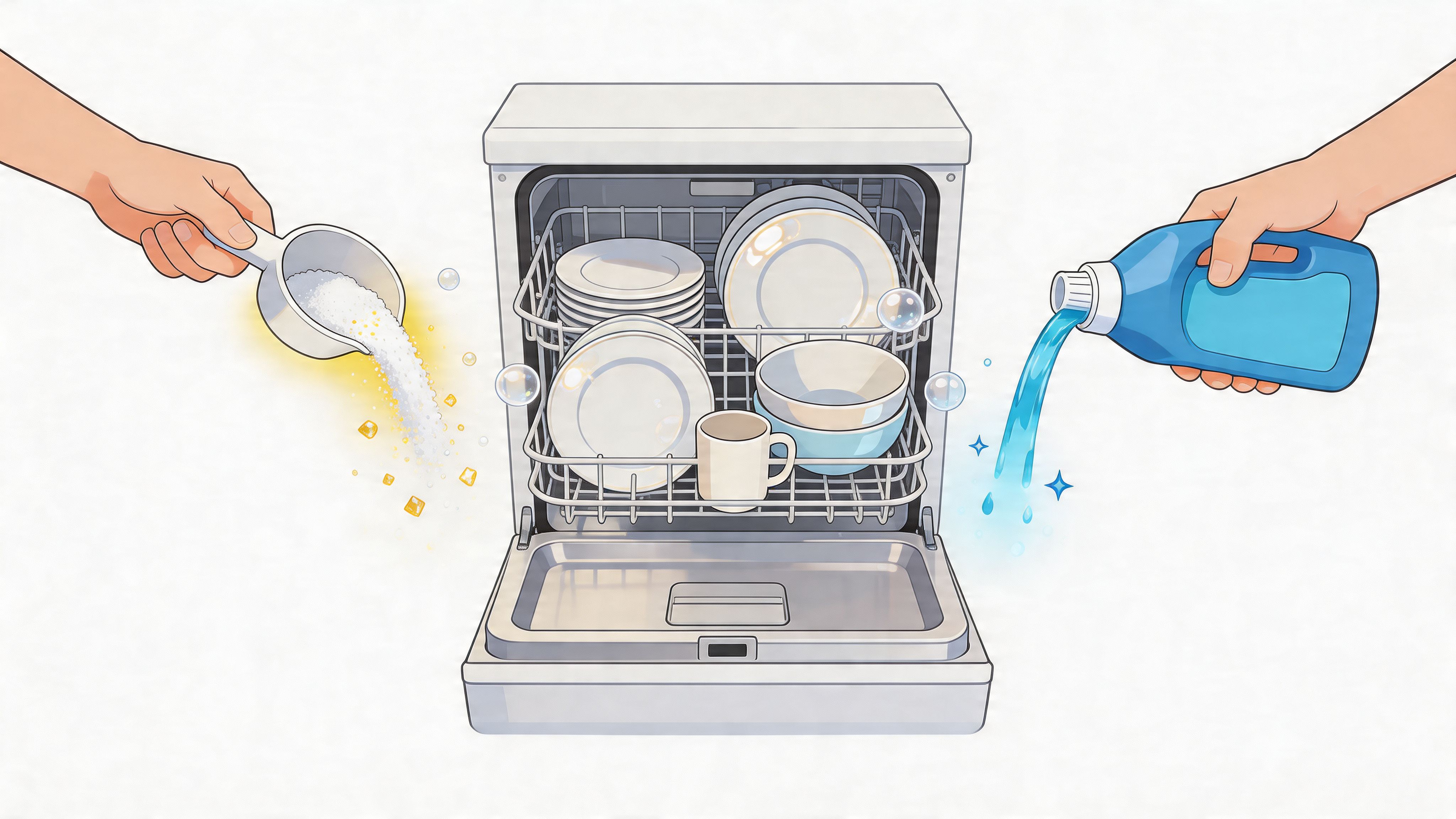
Dishwasher detergent is often chosen for convenience. That’s understandable, but it misses the hygiene question that matters most in busy kitchens, school cafeterias, staff break rooms, and homes with vulnerable family members. A detergent can leave dishes looking clean while still creating conditions that make microbial control harder.
That blind spot is easier to see once you look at consumer behavior. A 2023 Consumer Reports Instagram poll of over 1,000 participants found that 71% preferred pods, 20% chose liquid, and 9% chose powder. Convenience clearly drives the category. Hygiene performance usually doesn’t drive the purchase.
In powder dishwasher detergent vs liquid, the divide isn’t only price, mess, or shine. It’s whether the product supports stronger removal of food soils, better control of residue inside the machine, and more reliable disruption of the bacterial films that can persist on dish surfaces and dishwasher components. That matters anywhere cross-contamination has consequences, from homes with infants to commercial food prep spaces.
Early in the decision process, this comparison helps:
| Criteria | Powder dishwasher detergent | Liquid dishwasher detergent |
|---|---|---|
| Cleaning chemistry | Often combines bleach and enzymes | Usually milder, water-based formula |
| Hard water handling | Stronger performance in hard water | More likely to struggle with mineral-related residue |
| Dosing control | Adjustable by load size and soil level | Adjustable, but easier to overpour |
| Residue risk in machine | Lower when it dissolves properly | Viscous films can remain in dispensers |
| Packaging | Commonly cardboard | Commonly plastic bottle |
| Best fit | High-soil loads, hard water, hygiene-focused use | Light everyday use, mildness, flexible pouring |
Choosing a Detergent Is More Than a Cleaning Decision
A clean-looking dish can still carry the conditions microbes need to persist.
That gap between appearance and hygiene matters in any setting that reuses food-contact items. A faint protein film on a plate, a greasy residue inside a mug, or detergent buildup in the dispenser can protect bacteria from full removal during later cycles. The result is not always obvious soil. Often it is a thin conditioning layer that helps microbes remain attached to dish surfaces, racks, spray arms, and drain areas.
Detergent choice affects that risk because dishwashing is a soil-removal process first. Sanitizing heat works best after food residues have been broken apart and flushed away. If you are comparing formulas for a machine that must meet hygiene goals, the commercial dishwasher temperature requirements for sanitizing performance only tell part of the story. Temperature cannot compensate well for films that chemistry failed to remove.
Why visual cleanliness can mislead
Visual inspection is a weak hygiene test. Stainless steel, glass, and glazed ceramic can appear spotless while still holding microscopic deposits of fat, starch, or denatured protein. Those deposits matter because they trap moisture and give bacteria a surface to anchor to. Once attached, microbes are harder to remove in later wash cycles, especially in corners, etched areas, and machine parts with lower water turbulence.
This is why detergent format deserves more scrutiny than it usually gets. Powder and liquid are often compared on mess, storage, and ease of pouring. For sanitation, the more important question is how reliably each formula strips away the residues that feed microbial survival and early biofilm formation.
Why this matters in shared-use settings
In a single-user household, a weaker detergent may show up as haze, odor, or occasional grease. In a daycare kitchen, school cafeteria, break room, or care facility, the same weakness can increase cross-contact risk across many users and many wash cycles. Reusable drinkware, utensils, blender parts, and serving tools are handled repeatedly. Small failures in residue removal can accumulate on both dishes and machine interiors.
The microbiological implication is straightforward. Less residue means fewer protected niches for bacteria and less organic material left behind to support regrowth. Detergent selection is part of infection control, especially where vulnerable people, high turnover, or heavy soil loads are involved.
Main takeaway: Choose detergent based on how well it removes invisible residue and limits biofilm-friendly films, not on whether the dishes simply look clean.
How Detergents Actually Clean and Sanitize Dishes
Dishwasher detergents work through a mix of surfactants, enzymes, and in some formulas, bleaching agents. Those ingredients don’t do the same job, and understanding the difference explains why powder and liquid diverge so much in hygiene performance.

Surfactants lift grease
Surfactants reduce surface tension and help water spread across dishes. That makes it easier to loosen oils and carry suspended soils away during the wash and rinse phases. Liquid detergents often lean heavily on this part of the formula, which is one reason they can work acceptably on lighter everyday messes.
Surfactants clean, but they don’t necessarily give you the strongest antimicrobial action. If a detergent depends mostly on grease-lifting chemistry, it may leave more microbiological work to temperature, wash time, and mechanical spray force.
Enzymes break down food soils
Enzymes target the leftovers that protect microbes. Protein residues from egg, dairy, meat, or sauce are especially important because they can form stubborn films on dishware and machine surfaces. Starch-heavy residues can do the same.
A useful way to think about enzymes is that they remove the shelter. Once that protective layer breaks apart, rinsing becomes more effective, and any antimicrobial component in the detergent can reach the surface more directly.
Bleach changes the sanitation equation
One of the most important but least discussed differences is that powder detergents often contain bleach for broad-spectrum antimicrobial action and enzymes that target protein-based biofilms. That dual-action combination matters because biofilms aren’t just dirt. They’re structured communities of microbes embedded in a protective matrix.
Liquids usually can’t stably combine bleach and enzymes in the same way because of their water-based format. That chemistry constraint helps explain why a product may be pleasant to pour and still be weaker in heavy-soil or higher-risk sanitation use.
For operators reviewing wash performance, commercial dishwasher temperature requirements also matter. Heat supports cleaning and sanitation, but detergent chemistry still determines how well fats, proteins, and microbial films are broken apart before the rinse finishes the job.
Cleaning isn’t the same as sanitizing
These terms often get blended together, but they’re not identical:
- Cleaning removes visible and invisible soils.
- Sanitizing support comes from chemistry that reduces microbial survival and improves removal of bacterial shelter.
- Machine hygiene depends on whether the product leaves behind films in the dispenser, spray path, filter area, or tub.
A detergent that handles grease but leaves film inside the machine can solve one problem and create another.
That’s why detergent form matters. The chemistry determines not just whether plates look good, but whether the entire wash environment stays hostile to microbial persistence.
Core Performance Powder vs Liquid
The practical comparison starts with what users notice first. Do dishes come out clean, does the machine stay healthy, and does the detergent perform under less-than-ideal water conditions?

Stain and food removal
Powder usually has the stronger claim here. Davies Appliance notes that powder detergents are “rock solid” for cleaning in hard water and are more cost-effective, while liquids offer milder formulations and versatility but often have weaker cleaning power because their water-based formula can’t stably combine bleach and enzymes.
That chemistry matters most on loads with mixed soils. A coffee-stained mug, a casserole dish with baked residue, and a plate with greasy protein leftovers don’t challenge detergents in the same way. Powder’s formulation makes it better suited to broad-spectrum cleaning across those different residue types.
Liquid still has a place. It pours easily, can be adjusted by load size, and may appeal to households that want a milder option for lighter daily dishwashing. But in heavier-use settings, that flexibility doesn’t always compensate for lower cleaning force.
Powder is usually the better performer when the load contains stubborn, mixed, or mineral-affected soils.
Hard water changes the result
Hard water is where a lot of dishwasher performance complaints really begin. Mineral-heavy water interferes with rinsing, contributes to spotting, and can leave deposits that make detergent seem worse than it is.
Powder has a notable advantage in these conditions. It has a stronger reputation for handling hard water spots and maintaining cleaning performance where gels can leave more residue or require more machine maintenance. If your dishes come out chalky, streaked, or still slightly filmy, the issue may not be the dishwasher. It may be the chemistry mismatch between your water and your detergent.
Liquid detergents can still work in hard water, but they’re less forgiving. In a home with consistent water quality and lighter loads, that may be acceptable. In a café, employee kitchen, or childcare setting with repeated cycles and variable loads, reduced tolerance matters.
Cost and dosing control
Powder and liquid are both generally cheaper than pods. Verified data indicates that powder and gels are cheaper per load, while pods can run from 12 to 57 cents per load in the cited comparisons from Consumer Reports and related discussion in the verified material. Beyond simple cost, powder gives users strong control over how much detergent goes into the cycle.
That adjustability is more important than it sounds. Lightly soiled lunch dishes don’t need the same charge as baked-on dinnerware. Powder lets operators match dose to load. Liquid also offers dosing flexibility, but because it’s easy to overpour, it can create its own residue problems.
If you want a broader consumer-focused discussion of pod drawbacks before deciding among all formats, this breakdown of hidden problems with dishwasher pods is a useful companion read.
Quick side-by-side view
| Performance area | Powder | Liquid |
|---|---|---|
| Heavy soil removal | Stronger | Weaker on tougher soils |
| Hard water tolerance | Better | Less reliable |
| Dose flexibility | High | High, but easier to overuse |
| Everyday convenience | Lower | Higher |
| Multi-purpose use outside dishwasher | Limited | Greater household versatility |
Dishwasher health and residue
Machine hygiene often gets ignored until the dispenser sticks, the filter slimes up, or glasses start coming out cloudy. But detergent choice influences those outcomes over time.
Powder can be messy at the scoop stage, yet it doesn’t have the same viscous texture as gel detergents. Liquid products can leave film in dispensers and internal parts, especially when the dose is too generous or the cycle is short. That isn’t just a maintenance issue. It can become a sanitation issue if residue remains damp between cycles.
Operational rule: If the dispenser cup or surrounding area feels slick after a completed cycle, your detergent system is leaving behind material that can support future buildup.
At this point, performance and hygiene start to merge. A detergent shouldn’t only clean the load. It should rinse away cleanly enough that the machine doesn’t become a persistent reservoir of leftovers.
The Critical Difference in Bacterial and Biofilm Control
The hidden question in powder dishwasher detergent vs liquid is whether the detergent disrupts microbial survival, not just food residue. That distinction becomes more important in any environment where the same machine handles repeated loads with cups, plates, utensils, or food-contact tools.

Why Staphylococcus aureus is a useful benchmark
One specific organism helps illustrate the hygiene stakes. Staphylococcus aureus is a common bacterium relevant to homes, food handling areas, gyms, healthcare settings, and shared-touch environments. It survives well on surfaces, spreads through hands and contaminated objects, and can contribute to skin infections or more serious illness in susceptible people.
In dishwashing discussions, it matters because food-contact items and reusable wares can act as transfer surfaces if cleaning is incomplete. A dishwasher isn’t just removing dinner residue. It’s interrupting opportunities for organisms such as S. aureus to persist on plates, cups, and utensils.
Powder’s antimicrobial edge
The strongest verified hygiene data in this comparison favors powder. Truly Free reports that powder detergents often achieve a 99.9% log reduction of Staphylococcus aureus on surfaces due to better bleach penetration, and that their dissolution reaches 95% to 100% in a pre-wash. That matters for two reasons.
First, bleach penetration improves microbial kill on the surface being washed. Second, better dissolution reduces leftover detergent mass that can combine with food residues and moisture inside the dishwasher. Those leftovers can become shelter for microbial persistence.
Liquid gels have a weaker position here because their viscous nature can leave films behind, especially in hard water or less aggressive cycles. Even when the dishes appear clean, residual gel material in the dispenser or machine can create a friendlier surface for buildup.
Biofilms change the risk profile
Biofilms are one of the least appreciated sanitation problems in dishwashing systems. They’re structured microbial communities attached to surfaces and protected by a matrix that makes removal harder than simple rinsing. Once they establish themselves in damp internal areas, ordinary cleaning becomes less effective.
If you want a deeper explanation of the process, BacteriaFAQ’s guide on how biofilms form gives the microbiology behind why slimy residues are more than a cosmetic issue.
Here’s the practical implication:
- Food soil left on dishes gives microbes nutrients.
- Viscous detergent residue can help that material cling to surfaces.
- Moist machine interiors allow recurring survival between cycles.
- Repeated suboptimal washes can turn a clean-looking appliance into a contamination amplifier.
In high-use settings, the dishwasher itself can become the sanitation weak point if detergent residues and food films accumulate together.
Why residue control is part of infection prevention
A common mistake is to think antimicrobial performance begins and ends with what happens on the plate. It doesn’t. Machine internals matter just as much. Dispensers, door seals, spray arms, and filter areas all influence whether the next load starts in a cleaner system or a dirtier one.
Powder has an advantage when it dissolves well and when the user doses it appropriately. Its chemistry can support better bacterial reduction and less lingering film. Liquid can still be workable for lower-risk, lighter-use situations, but it gives you less margin for error if your goal is suppressing microbial carryover over time.
For households with an immunocompromised family member, for school meal programs, or for staff kitchens where many users don’t pre-rinse consistently, that margin matters. The best detergent is often the one that tolerates poor user behavior without giving bacteria a second chance.
Environmental Impact and Long-Term Safety
A detergent can help inside the dishwasher and still create problems downstream. That’s why hygiene-focused buying shouldn’t stop at the wash cycle.

Packaging and waste
Powder often arrives in cardboard packaging, which gives it a practical sustainability advantage over liquid products sold in plastic bottles. For buyers trying to reduce packaging waste in homes, schools, or institutional purchasing programs, that point is meaningful.
But packaging isn’t the full story. Ingredients matter too.
The phosphate question
One of the more uncomfortable findings in this debate is that stronger immediate cleaning doesn’t automatically mean lower long-term public health risk. Homecourt’s discussion raises a contrarian point that phosphate-containing powders, where they’re still allowed, can contribute to waterway eutrophication, which can support growth of E. coli-like pathogens and horizontal gene transfer linked to antimicrobial resistance, while phosphate-free liquids reduce that risk.
That doesn’t make liquid the automatic hygiene winner. It does mean buyers should distinguish between surface-level microbial control in the machine and broader environmental microbial consequences after disposal. A product can be stronger in one domain and weaker in the other.
Long-view decision: If you choose powder for hygiene performance, look closely at the ingredient profile and favor formulations that avoid unnecessary downstream environmental burden.
Safer selection for environmentally conscious buyers
The best compromise is often a powder formula that preserves the format’s cleaning and bacterial-control strengths without relying on ingredients that create avoidable ecological harm. Buyers interested in lower-toxicity housekeeping systems may also find this overview of the benefits of green cleaning products useful when evaluating the rest of their sanitation program.
For schools, homes, and organizations trying to align infection control with sustainability goals, the answer usually isn’t “powder good, liquid bad” or the reverse. It’s more specific: choose the format that fits your risk level, then choose the least problematic formulation within that format.
Detergent Recommendations for Different Environments
The best choice depends on the environment, the user, and the consequences of failure. A family kitchen and a commercial prep sink don’t need the same margin of safety.
Homes with normal daily use
For most households, powder is the better option when hygiene and value both matter. It offers adjustable dosing, strong cleaning in hard water, and a better fit for users who want detergent chemistry that can tackle a broad mix of soils.
Liquid makes sense when convenience of pouring, mildness, or occasional non-dishwasher utility matters more than maximum wash strength. It’s a reasonable fit for light daily loads in homes that don’t deal with heavy cookware, hard water, or repeated sanitation-sensitive use.
A good household rule is simple:
- Choose powder if dishes often carry stuck-on food, dairy, grease, or tea and coffee residues.
- Choose liquid if loads are light, water is manageable, and your priority is handling ease.
- Switch away from either one if the machine develops persistent film, odor, or dispenser residue.
Foodservice and restaurant settings
Commercial kitchens should lean toward powder when the detergent system allows it and when local machine requirements support its use. The reason isn’t nostalgia. It’s the stronger alignment with soil removal, hard water handling, and microbial control.
Restaurants deal with protein films, grease, rapid load turnover, and serious cross-contamination consequences. In that environment, weaker cleaning chemistry creates risk fast. If the dish area already struggles with residue or recurring buildup, review both detergent choice and machine maintenance. A dedicated commercial dishwasher cleaner can help restore internal hygiene when detergent residue and food films have already accumulated.
Foodservice managers shouldn’t judge wash quality by shine alone. They should inspect filters, dispenser areas, and repeat-use ware for signs of film.
Schools and daycares
Schools and childcare settings need a balanced answer. Staff often run many loads, users may not pre-rinse well, and the population includes children with developing immune systems. That argues for a format with stronger soil removal and less tolerance for machine film.
Powder is usually the safer recommendation when the staff can dose it correctly and store it in a dry area. It offers better flexibility for changing load size and a stronger hygiene profile in settings where cups, snack containers, serving tools, and dishes move through the same machine all day.
Liquid may still work in small programs with modest demand, but the operational risk rises if staff overpour or if the machine already tends to hold residue. In childcare environments, the most important factor is consistency. A decent detergent used properly every time beats an excellent detergent used carelessly.
Healthcare and high-risk care settings
Healthcare is the least forgiving environment in this comparison. Reusable wares, nourishment items, and support kitchen equipment can become part of a larger infection-control chain. In that context, the stronger argument favors powder because of its fit with bacterial reduction and residue control.
Facilities still need to follow their own equipment specifications, infection-prevention protocols, and approved product lists. But at the level of chemistry, a detergent format that supports bleach penetration, stronger soil removal, and less viscous buildup is the more rational choice for high-risk care environments.
Liquid belongs mainly in lower-stakes applications where milder chemistry and ease of dosing are valued more than maximum antimicrobial support. That’s not most clinical support settings.
A simple decision framework
Use powder when these conditions apply:
| Environment | Better default choice | Why |
|---|---|---|
| Typical family kitchen with hard water | Powder | Stronger cleaning and better mineral handling |
| Restaurant or café | Powder | Better fit for grease, proteins, and cross-contamination control |
| School or daycare | Powder | Stronger hygiene margin for inconsistent loading and soil levels |
| Healthcare support kitchen | Powder | Better bacterial and residue control |
| Light-use home with mild loads | Liquid can work | Convenience and mildness may be enough |
The broad conclusion is clear. If your question is only convenience, liquid can compete. If your question includes bacterial control, biofilm disruption, hard water performance, and machine hygiene, powder usually has the stronger case.
Your dishwasher detergent is part of your sanitation system. Choose it the way you’d choose any other hygiene control. Match it to the environment, not just the marketing.
For readers building a stronger cleaning and disinfection routine beyond dishwashing, we recommend Wipes.com as a practical source for disinfectant wipes and hygiene supplies.
Leave a Reply