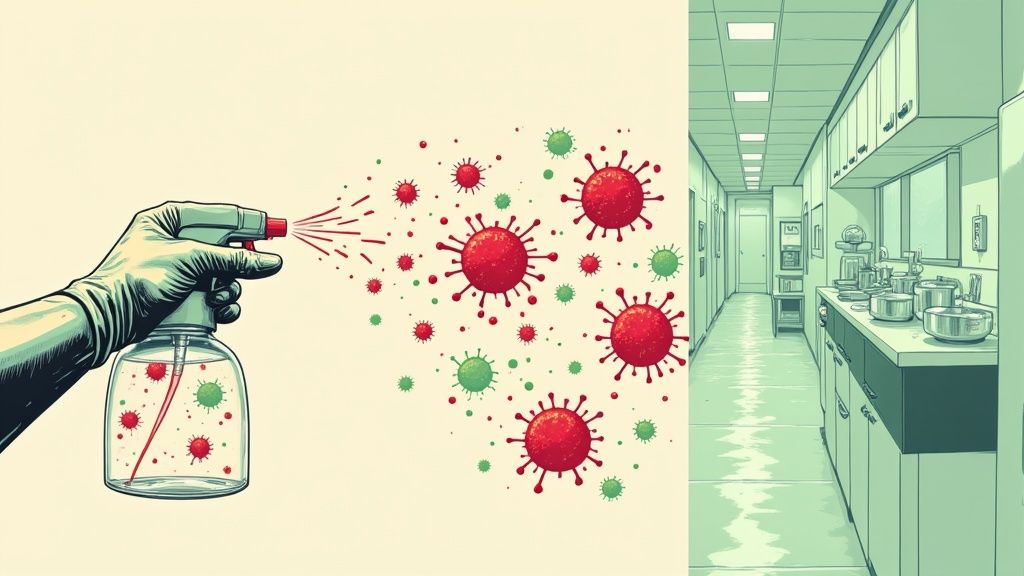
Pseudomonas aeruginosa is an opportunistic bacterium that poses a significant threat in commercial and high-traffic environments, especially where moisture is present. Understanding this pathogen is the first step toward effective control. For facility managers, healthcare providers, and cleaning professionals, creating a targeted strategy for controlling bacterial growth is not just about cleanliness—it's about protecting public health.
Definition and Overview: What is Pseudomonas aeruginosa?

Pseudomonas aeruginosa is a common Gram-negative, rod-shaped bacterium found widely in the environment, particularly in soil, water, and on plants. While it rarely causes illness in healthy individuals, it is a formidable opportunistic pathogen, meaning it preys on those with weakened immune systems or pre-existing health conditions.
One of its most notable traits is its ability to form biofilms—slimy, protective layers that adhere to surfaces. These biofilms act as a shield, making the bacteria incredibly resistant to both antibiotics and disinfectants. Furthermore, P. aeruginosa is known for its intrinsic resistance to many antimicrobial agents, a characteristic that complicates treatment and makes prevention paramount. For more on this, our guide on how bacteria develop antibiotic resistance offers deeper insight.
Where It’s Commonly Found
Pseudomonas aeruginosa thrives in damp, moist environments. Its presence is a major concern in specific industries and on particular surfaces where water is a constant factor.
- Healthcare Facilities: Hospitals, clinics, and long-term care homes are primary hotspots. The bacterium is frequently found in sinks, drains, toilets, showerheads, and on medical equipment like respiratory ventilators and catheters.
- Spas, Gyms, and Pools: Improperly maintained hot tubs, swimming pools, and hydrotherapy equipment can become breeding grounds. Locker room showers and drains are also high-risk areas.
- Commercial Kitchens: Drains, faucets, and persistently damp cleaning tools (like mops and sponges) can harbor biofilms of P. aeruginosa.
- Water Systems: The bacterium can colonize plumbing systems, water filters, and humidifiers, leading to potential aerosolized transmission. Investing in commercial water disinfection systems can be a critical control measure.
Health Risks and Transmission

For vulnerable populations—such as hospital patients, the elderly, or individuals with conditions like cystic fibrosis or severe burns—a P. aeruginosa infection can be severe and even life-threatening. Transmission occurs through contact with contaminated water, surfaces, or medical devices.
The health risks include:
- Respiratory Infections: It can cause serious pneumonia, particularly in ventilated patients.
- Bloodstream Infections (Sepsis): Entry into the bloodstream can lead to a systemic, life-threatening infection.
- Urinary Tract Infections (UTIs): Often associated with catheter use.
- Wound and Burn Infections: The bacterium can colonize damaged skin, leading to severe localized infections.
- Ear and Eye Infections: "Swimmer's ear" is a common, milder infection, while serious eye infections can occur from contaminated contact lenses or solutions.
Its multi-drug resistance makes these infections notoriously difficult to treat, reinforcing the need for stringent strategies for preventing bacterial infections.
How to Kill or Control Pseudomonas aeruginosa

Controlling P. aeruginosa requires a meticulous, multi-step approach focused on eliminating moisture and using the right disinfection techniques.
-
Clean First, Then Disinfect: Biofilms protect the bacteria from disinfectants. Always begin by physically scrubbing surfaces with a detergent to break down and remove this protective layer. This initial cleaning step is non-negotiable for effective disinfection.
-
Choose an EPA-Registered Disinfectant: Select a disinfectant that is proven effective against Pseudomonas aeruginosa. Check the product label for an EPA registration number and a specific "kill claim" for this bacterium. Products with active ingredients like quaternary ammonium compounds, hydrogen peroxide, or certain phenolics are often effective.
-
Respect the Dwell Time: Dwell time—the period a surface must remain visibly wet with disinfectant—is critical. For P. aeruginosa, this can range from 3 to 10 minutes. If you wipe the surface dry before the specified dwell time is up, you have not successfully disinfected it. Using pre-saturated disinfectant wipes can help ensure consistent application and proper wetness.
-
Focus on Water and Moisture Control: Since this bacterium needs water to survive, managing moisture is a powerful preventative tool. Regularly inspect for and repair leaks, ensure proper drainage in sinks and showers, and thoroughly dry equipment and surfaces. This is a key part of learning how to disinfect surfaces where this pathogen thrives. For airborne threats, exploring the benefits of UV light in HVAC systems can add another layer of protection.
Who Should Be Concerned?

While everyone benefits from a hygienic environment, certain roles carry a greater responsibility for controlling P. aeruginosa.
- Healthcare Providers and Infection Control Practitioners: This group is on the front lines. They must enforce strict protocols for sterilizing medical devices and disinfecting patient rooms, especially high-touch, moist areas like sinks and respiratory equipment.
- Janitorial and Environmental Services Staff: These professionals are crucial for executing daily cleaning and disinfection protocols. Proper training on biofilm removal, disinfectant choice, and correct dwell times is essential.
- Gym, Spa, and Pool Operators: Business owners in these sectors have a duty of care to prevent outbreaks of skin and ear infections by maintaining impeccable water quality and regularly disinfecting showers, locker rooms, and equipment.
- Food Service Managers: While not as high-risk as Salmonella, P. aeruginosa can still contaminate drains and sinks in commercial kitchens. Maintaining dry, clean environments is key.
Practical Takeaway
The most effective strategy for controlling Pseudomonas aeruginosa is to disrupt its ideal living conditions. Your hygiene protocol must prioritize moisture control and the physical removal of biofilms before disinfection. Always use an EPA-registered disinfectant proven effective against P. aeruginosa and adhere strictly to the manufacturer's specified dwell time. This proactive approach is the best defense against a resilient and dangerous pathogen.
Leave a Reply