Salmonella is a name that strikes fear into any food service manager, business owner, or public health official. It's one of the most common and potent causes of foodborne illness, capable of turning a thriving kitchen into the source of a serious public health crisis. Understanding this bacterium—where it thrives, the risks it poses, and how to eliminate it—is not just good practice; it's a non-negotiable part of running a safe and reputable establishment.
Definition and Overview: What is Salmonella enterica?

Salmonella enterica, commonly known as Salmonella, is a rod-shaped, gram-negative bacterium belonging to the Enterobacteriaceae family. It is a formidable pathogen primarily known for causing salmonellosis, a gastrointestinal illness. While there are many serotypes of Salmonella, all are considered pathogenic to humans. One of its most notable traits is its resilience; Salmonella can survive for weeks in a dry environment and for months in water, making it a persistent threat in food service settings.
The global impact is genuinely staggering. The World Health Organization (WHO) reports that unsafe food is responsible for an estimated 600 million cases of foodborne illness and 420,000 deaths every single year. Salmonella is a major contributor to these statistics.
Where It’s Commonly Found
Salmonella is most famously associated with raw poultry and eggs, but its reach is far broader. It lives in the intestinal tracts of humans and animals, including birds, reptiles, and livestock. Consequently, it can contaminate a wide range of foods and environments.
For food service managers, janitorial staff, and business owners, the key areas of concern include:
- Food Service Areas: Kitchens, food prep stations, and dining areas are prime locations.
- Raw Ingredients: Raw and undercooked chicken, turkey, beef, pork, eggs, and unpasteurized milk are common carriers.
- Produce: Fruits and vegetables can become contaminated if they come into contact with animal feces in the field or through cross-contamination in the kitchen.
- High-Traffic Surfaces: Cutting boards, countertops, kitchen utensils, and food processing equipment can harbor the bacteria if not properly sanitized.
- Employee Hands: Staff can inadvertently transfer Salmonella from contaminated surfaces or raw foods to ready-to-eat items.
Health Risks: The Dangers of Salmonellosis

When a person ingests Salmonella, the bacteria can cause an infection called salmonellosis. Symptoms typically appear 6 to 72 hours after consumption and include severe diarrhea, abdominal cramps, fever, and vomiting. For most healthy adults, the illness lasts 4 to 7 days.
However, the risks are far greater for vulnerable populations, including young children, older adults, and individuals with weakened immune systems. In these groups, the infection can spread from the intestines to the bloodstream and other body sites, leading to severe, life-threatening complications that require hospitalization.
Transmission is almost always through the fecal-oral route—ingesting food or water contaminated with microscopic amounts of animal or human feces. This is why preventing cross-contamination is the cornerstone of Salmonella control.
How to Kill or Control Salmonella

Controlling Salmonella requires a multi-faceted approach centered on strict hygiene protocols. It's not enough to clean; surfaces must be properly sanitized to eliminate the bacterial threat.
The Two-Step Process: Clean, Then Sanitize
- Clean First: Always begin by cleaning surfaces with soap and water. This removes food particles, grease, and dirt that can shield bacteria from sanitizers. You cannot effectively sanitize a dirty surface.
- Sanitize Second: After cleaning, apply a disinfectant proven to be effective against Salmonella. For food service environments, it is crucial to use an EPA-registered disinfectant that is rated for food-contact surfaces.
Disinfectant wipes are an excellent tool for this process, as they combine the chemical agent with the physical wiping action. However, the most critical factor is dwell time. This is the amount of time a disinfectant must remain wet on a surface to kill the pathogen. For Salmonella, this can range from 30 seconds to 10 minutes. Always read the product label and follow the specified dwell time. If you spray and immediately wipe, you are not effectively sanitizing.
Key Control Practices:
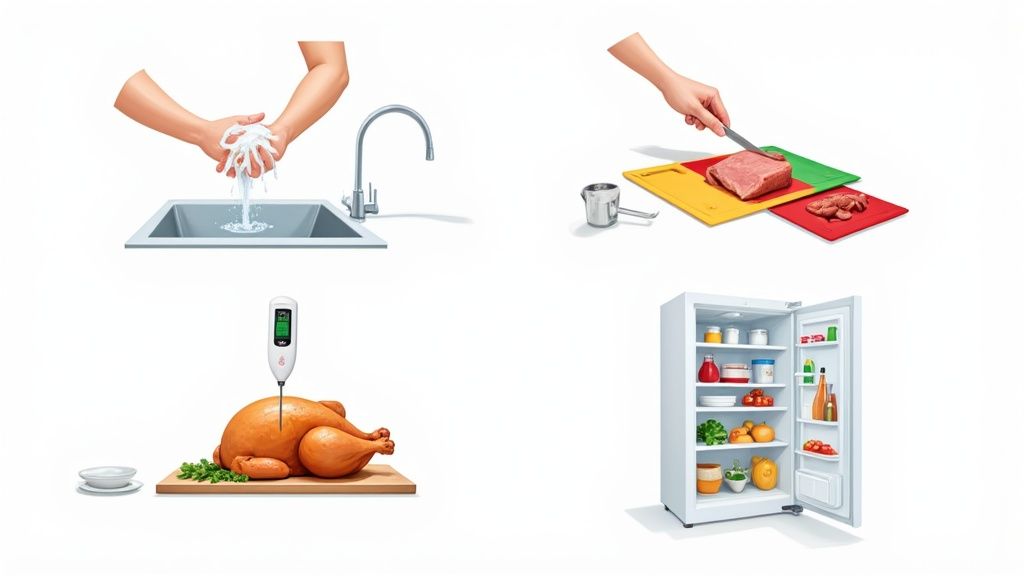
- Cook Thoroughly: Heat is the most reliable way to kill Salmonella. Cook poultry and ground meat to a minimum internal temperature of 165°F (74°C) and other meats to their recommended safe temperatures. Use a food thermometer to verify.
- Prevent Cross-Contamination: Use separate cutting boards, utensils, and plates for raw meat and ready-to-eat foods. Store raw meat on the bottom shelf of the refrigerator to prevent juices from dripping onto other items.
- Enforce Handwashing: Staff must wash hands with soap and water for at least 20 seconds after handling raw meat, using the restroom, or touching any potentially contaminated surface.
- Control Pests: Rodents and insects can carry and spread Salmonella. Maintain a robust pest control program.
Who Should Be Concerned

While everyone should be aware of Salmonella, certain professionals bear a greater responsibility for its control:
- Food Service Managers and Business Owners: You are legally and ethically responsible for implementing food safety protocols, training staff, and ensuring the health of your customers. A Salmonella outbreak can lead to lawsuits, fines, and irreversible damage to your reputation.
- Janitorial and Kitchen Staff: You are on the front lines of defense. Your adherence to cleaning and sanitation procedures, including proper use of disinfectants and respecting dwell times, directly impacts public health.
- Healthcare Providers: You must be able to recognize the symptoms of salmonellosis, especially in high-risk patients, and understand its transmission routes to provide accurate guidance.
Practical Takeaway
The most effective strategy against Salmonella is diligence. Never assume a surface is clean. Implement a strict "clean-then-sanitize" policy for all food-contact surfaces, pay religious attention to product-specific dwell times, and relentlessly train staff on preventing cross-contamination. By treating Salmonella as a constant and serious threat, you can protect your customers, your staff, and your business. For more information on specific pathogens, explore our other educational articles.
Leave a Reply