In the world of microbiology, few bacteria are as persistent and adaptable as Pseudomonas aeruginosa. This common, rod-shaped bacterium is a formidable opponent in both healthcare and commercial settings. Understanding its characteristics, the risks it poses, and how to effectively eliminate it is crucial for maintaining a safe and healthy environment. This guide offers an in-depth look at P. aeruginosa and the role of effective disinfection in controlling its spread.
Definition and Overview of Pseudomonas aeruginosa
Pseudomonas aeruginosa is a gram-negative bacterium known for its remarkable ability to thrive in diverse environments, especially those with minimal nutrients. It's an opportunistic pathogen, meaning it primarily causes infections in individuals with weakened immune systems or pre-existing health conditions.
One of its most notable traits is the formation of biofilms—slimy, protective layers that allow the bacteria to cling to surfaces and shield themselves from antibiotics and disinfectants. This makes them incredibly difficult to eradicate once established. Furthermore, P. aeruginosa is infamous for its intrinsic resistance to many types of antibiotics, complicating treatment for those it infects. Some strains even produce a characteristic grape-like or "tortilla-chip" odor and a blue-green pigment, which can sometimes be a tell-tale sign of a heavy contamination.

Where It’s Commonly Found
Pseudomonas aeruginosa is a water-loving organism. It flourishes in moist or wet environments, making it a common contaminant in a wide range of settings. High-risk areas include:
- Hospitals and Healthcare Facilities: It is a leading cause of hospital-acquired infections (HAIs). It can be found on medical equipment like ventilators and catheters, in sinks, drains, and on damp surfaces.
- Gyms and Spas: Hot tubs, swimming pools, saunas, and shower floors are ideal breeding grounds due to the constant presence of moisture.
- Food Service Areas: Drains, faucets, dishwashing areas, and improperly maintained beverage dispensers can harbor the bacteria.
- Commercial Buildings: HVAC systems, water fountains, and janitorial closets with damp mops or standing water are potential hotspots.
The bacterium can survive on both wet and dry surfaces, waiting for the right conditions to multiply, which is why routine disinfection of these areas is so critical for identifying hazards in the workplace.
Health Risks Associated with Pseudomonas aeruginosa
For healthy individuals, exposure to P. aeruginosa rarely causes illness. However, for vulnerable populations, the consequences can be severe. The bacteria can cause a wide range of infections, depending on the site of exposure:
- Pneumonia: Particularly in hospital patients on ventilators.
- Bloodstream Infections (Sepsis): Can occur when the bacteria enter the bloodstream, leading to a life-threatening systemic response.
- Urinary Tract Infections (UTIs): Often associated with catheter use.
- Surgical Site Infections: Contamination of wounds after a procedure.
- Skin Infections: Such as "hot tub rash" (folliculitis) or infections in burn victims.
- Eye and Ear Infections: Can result from contaminated contact lenses or "swimmer's ear."
The primary danger of P. aeruginosa is its high level of antibiotic resistance. Infections can be incredibly difficult to treat, requiring powerful, and sometimes toxic, antibiotic combinations. This resistance underscores the importance of prevention through meticulous hygiene and disinfection.

How to Kill or Control It
Controlling P. aeruginosa hinges on disrupting its environment and breaking down its defenses. Because it forms protective biofilms, simple cleaning is often not enough. Effective disinfection is paramount.
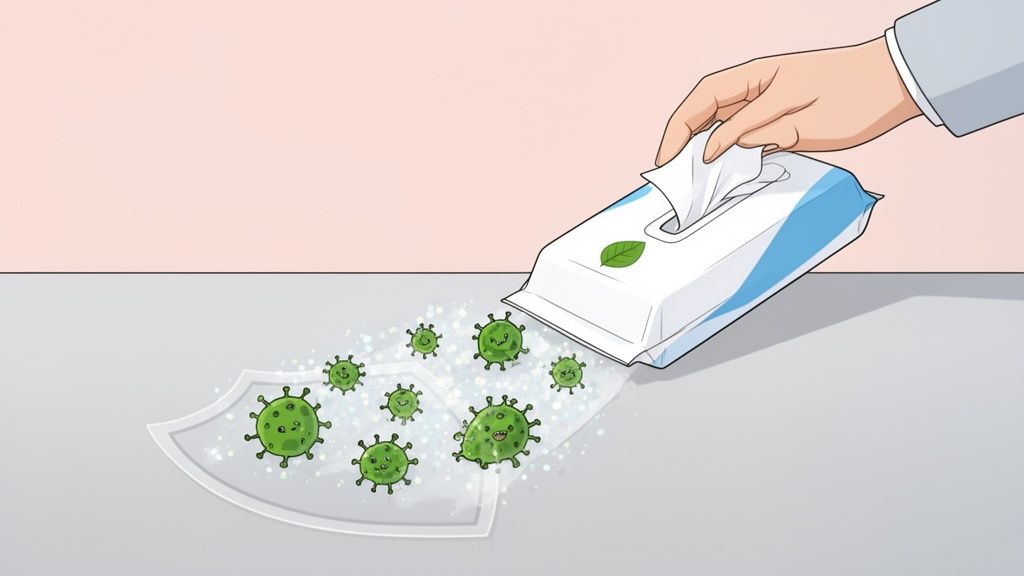
The most effective strategy involves using EPA-registered disinfectant wipes that are proven effective against P. aeruginosa. The active ingredients in these wipes, such as Quaternary Ammonium Compounds (Quats) or hydrogen peroxide, are designed to penetrate and destroy the bacterial cell wall.
Crucially, dwell time must be respected. Dwell time is the minimum period a surface must remain visibly wet with the disinfectant to achieve its germ-killing claims. For a resilient bacterium like P. aeruginosa, this could be anywhere from 30 seconds to several minutes, depending on the product. Wiping a surface dry prematurely will not eliminate the pathogen.
Proper Disinfection Technique:
- Clean First: Remove any visible dirt, grime, or organic matter from the surface with soap and water. Disinfectants work best on pre-cleaned surfaces.
- Wipe to Disinfect: Use a disinfectant wipe to thoroughly wet the surface. Ensure there is enough liquid to last for the full dwell time.
- Wait: Allow the surface to remain wet for the time specified on the product label. Do not wipe it dry.
- Air Dry: Let the surface air dry completely.
Following these steps ensures you are truly killing the bacteria, not just spreading them around. This is a core principle in any effective Sanitation Standard Operating Procedures.
Who Should Be Concerned?
While everyone should practice good hygiene, certain professionals must be particularly vigilant about controlling P. aeruginosa:
- Healthcare Providers and Hospital Janitorial Staff: Preventing HAIs is a top priority. Regular and correct disinfection of patient rooms, medical equipment, and common areas is non-negotiable.
- Gym and Spa Operators: The health of members is at risk from contaminated wet areas. Hot tubs, pools, and showers require stringent cleaning and disinfection protocols.
- Food Service Managers: To prevent contamination in kitchens and service areas, staff must be trained to disinfect surfaces, especially around sinks and drains.
- Business Owners and Facility Managers: Maintaining a safe environment for employees and visitors includes managing microbial risks in restrooms, breakrooms, and other common areas.
Practical Takeaway
Pseudomonas aeruginosa is a tough, persistent bacterium that thrives in moist environments common in commercial and healthcare settings. Its ability to form biofilms and resist antibiotics makes it a significant health risk, especially for vulnerable individuals. The key to controlling it is not just cleaning, but methodical disinfection. Using an EPA-registered disinfectant wipe and adhering strictly to the required dwell time is the most effective way to eliminate this pathogen from high-touch surfaces and prevent the spread of infection.
For creating safer, healthier spaces and effectively combating pathogens like Pseudomonas aeruginosa, we recommend the high-quality, EPA-registered disinfectant wipes available at Wipes.com. Their products provide a reliable solution for your facility's infection prevention needs.
Leave a Reply