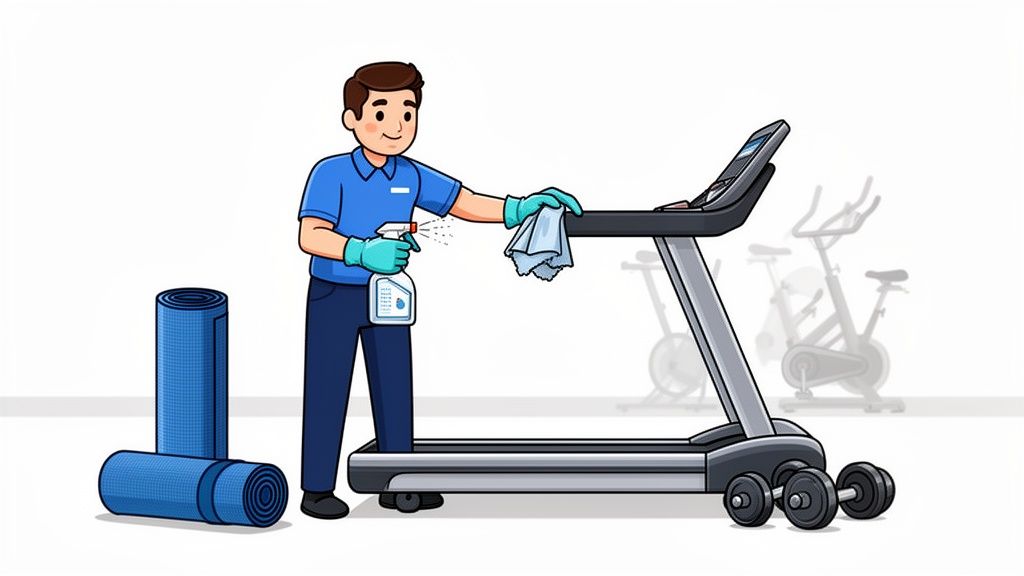
Staphylococcus aureus, often shortened to Staph, is a common bacterium that is a major concern in any shared environment, especially fitness centers. While many people carry it on their skin or in their noses without issue, it becomes a significant threat when it enters the body through a cut, scrape, or sore. In a gym, where members are sweating and using high-touch equipment, Staph can easily spread from one person to another, turning a place of health into a hotspot for infection. Understanding this germ is the first step toward creating a truly safe workout environment.
Definition and Overview of Staphylococcus aureus
Staphylococcus aureus is a gram-positive bacterium, meaning it has a thick cell wall that retains a specific stain used in microbiology labs. It is known for its spherical shape, often appearing in grape-like clusters under a microscope.
What makes Staph particularly notable is its versatility as a pathogen. It can cause a wide range of illnesses, from minor skin infections like pimples and boils to life-threatening conditions such as pneumonia, meningitis, and sepsis. Some strains have also developed resistance to common antibiotics, creating "superbugs" like MRSA (Methicillin-resistant Staphylococcus aureus), which are notoriously difficult to treat.
Where Staphylococcus aureus is Commonly Found
Staph thrives in environments where people are in close contact and share surfaces. This makes fitness centers, gyms, and athletic training facilities prime locations for its transmission. The combination of sweat, warmth, and high-touch surfaces creates a perfect breeding ground.
You can find Staphylococcus aureus on:
- Weight training equipment: Dumbbell and barbell grips, weight plates, and the upholstery on benches and machines.
- Cardio machines: Handrails on treadmills and ellipticals, seats on stationary bikes, and electronic touchscreens.
- Shared items: Yoga mats, foam rollers, resistance bands, and boxing gloves.
- Locker rooms: Benches, shower floors, and towels.
The bacteria can survive on these surfaces for hours, days, or even weeks if they are not properly disinfected, waiting for the next person to come into contact with them.
Health Risks Associated with Staph Infections
When Staphylococcus aureus enters the body, it can lead to various infections. The most common are skin and soft tissue infections, which may appear as red, swollen, painful bumps that can sometimes be mistaken for spider bites. These can progress into abscesses that require medical drainage.
The health risks become far more severe if the bacteria enter the bloodstream, joints, bones, lungs, or heart. These invasive Staph infections can lead to serious complications, including:
- Bacteremia (Bloodstream Infection): Can lead to sepsis, a life-threatening response to infection.
- Pneumonia: Particularly affects individuals with underlying lung conditions.
- Osteomyelitis (Bone Infection): Occurs when the bacteria travel through the bloodstream to a bone.
- Toxic Shock Syndrome: A rare but fatal condition caused by toxins produced by some Staph strains.
Transmission typically occurs through direct contact with an infected person or by touching a contaminated surface and then touching your mouth, nose, or an open wound.
How to Kill and Control Staphylococcus aureus
Controlling the spread of Staph in a gym requires a diligent and consistent cleaning and disinfection protocol. Simply wiping away sweat is not enough; you must use products designed to kill the bacteria.
- Use EPA-Registered Disinfectants: Your primary weapon against Staph is a disinfectant that is registered with the Environmental Protection Agency (EPA) and is proven effective against Staphylococcus aureus. Look for this claim on the product label. Disinfectant wipes are an excellent choice for fitness equipment because they are pre-saturated with the correct amount of solution.
- Respect the Dwell Time: Dwell time, or contact time, is the amount of time a surface must remain visibly wet with the disinfectant to kill the germs. This can range from 30 seconds to 10 minutes. If you wipe the surface dry before the dwell time is up, you have not successfully disinfected it.
- Clean Before You Disinfect: Disinfectants work best on clean surfaces. Remove any visible dirt, sweat, or grime first, as this can create a barrier that prevents the disinfectant from reaching the bacteria.
- Focus on High-Touch Points: Pay special attention to the areas that are touched most frequently, such as handles, grips, pins, and pads. These should be disinfected multiple times a day, especially during peak hours.
Who Should Be Concerned?
While everyone should be mindful of hygiene, certain groups are directly responsible for preventing Staph outbreaks in a fitness setting:
- Gym Owners and Operators: You are responsible for implementing effective cleaning protocols, providing adequate cleaning supplies (like disinfectant wipe stations), and training staff on proper procedures.
- Janitorial and Cleaning Staff: You are the front line of defense. It is crucial to understand the difference between cleaning and disinfecting and to follow product instructions for dwell times meticulously.
- Personal Trainers: You should lead by example, wiping down equipment after use and educating clients on the importance of gym hygiene.
- Gym Members: Everyone shares the responsibility. Wiping down equipment before and after use is a critical practice that protects you and the entire gym community.
By implementing a rigorous cleaning schedule using proven disinfectants and fostering a culture where both staff and members are active participants in hygiene, you can significantly reduce the risk of Staphylococcus aureus and create a safer, healthier fitness environment for everyone.
For keeping your facility's equipment and high-touch surfaces free from harmful bacteria like Staphylococcus aureus, we recommend using professional-grade disinfectant products from Wipes.com. Their EPA-registered wipes are designed for commercial environments, providing a reliable and convenient way to ensure your cleaning protocols are effective and easy for everyone to follow.
Leave a Reply