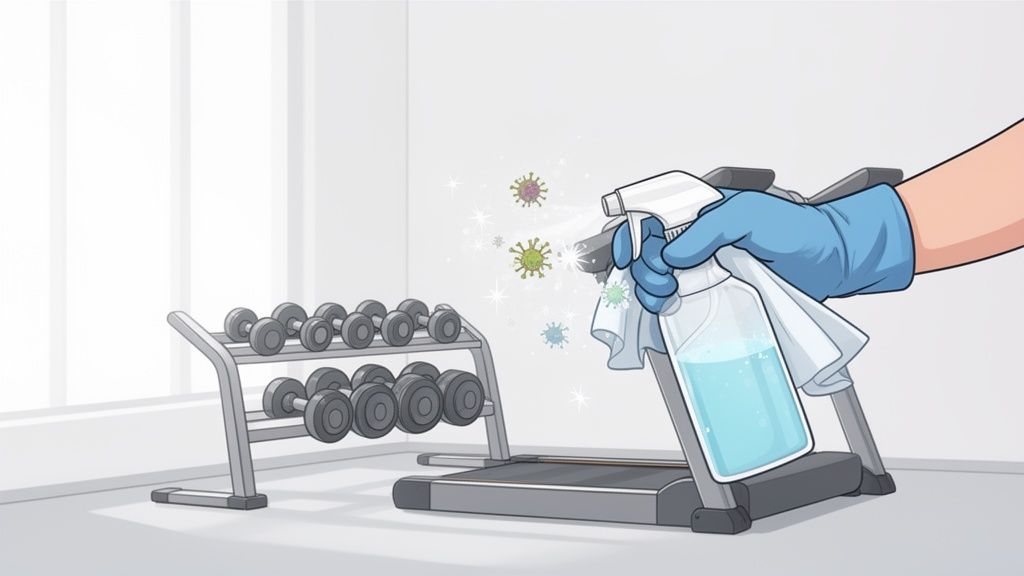
Effective gym equipment cleaning is more than just wiping away sweat; it’s a critical health and safety protocol designed to combat dangerous, invisible pathogens. Among the most serious threats in a high-traffic fitness facility is Methicillin-resistant Staphylococcus aureus, better known as MRSA. This formidable bacterium poses a significant risk to members and staff, making its prevention a top priority for any responsible gym operator.
What is MRSA? A Definition and Overview
Methicillin-resistant Staphylococcus aureus (MRSA) is a specific strain of staph bacteria that has evolved to become resistant to many of the antibiotics once used to treat it, including methicillin, penicillin, and amoxicillin. This antibiotic resistance makes MRSA infections particularly difficult to manage and potentially life-threatening.
Staphylococcus aureus bacteria are commonly found on the skin or in the nose of about one-third of the population without causing any harm. However, when these bacteria—especially the MRSA strain—enter the body through a cut, scrape, or open wound, they can cause serious infections. MRSA is classified as a "superbug" due to its resilience, making disinfection and hygiene practices absolutely essential for controlling its spread.
Where is MRSA Commonly Found?
MRSA thrives in crowded environments where people are in close physical contact or share equipment and surfaces. This makes fitness centers prime locations for transmission. The combination of sweat, shared surfaces, and the potential for minor skin abrasions creates a perfect storm for an outbreak.
Key hotspots for MRSA in a gym include:
- Weight benches and upholstery: Porous and often-damp surfaces are ideal for bacteria.
- Dumbbells, barbells, and kettlebells: Handles are touched by countless hands throughout the day.
- Yoga mats and foam rollers: These items absorb sweat and are difficult to disinfect properly.
- Locker room benches and shower floors: Warm, moist environments where bacteria flourish.
- Cardio machine handles and control panels: High-touch points that are frequently contaminated.
Any surface that comes into direct contact with skin is a potential reservoir for MRSA. Without a rigorous gym equipment cleaning protocol, these surfaces can easily become vectors for infection.
Health Risks Associated with MRSA
MRSA infections typically begin as small, red bumps on the skin that can resemble pimples, spider bites, or boils. They may be swollen, painful, warm to the touch, and filled with pus. If left untreated, these localized skin infections can rapidly progress into much more serious conditions.
The bacteria can burrow deep into the body, causing life-threatening infections in bones, joints, the bloodstream, heart valves, and lungs. Because standard antibiotics are ineffective, treatment often requires hospitalization and the use of powerful, last-resort intravenous antibiotics. The primary method of transmission is through direct contact with an infected person or by touching a surface contaminated with the bacteria.
How to Kill and Control MRSA in Your Facility
The good news is that while MRSA is resistant to antibiotics, it is susceptible to proper disinfectants. The key is using the right products with the correct technique.
- Use EPA-Registered Disinfectants: Your first line of defense is choosing a disinfectant that is specifically registered with the Environmental Protection Agency (EPA) and has a kill claim for MRSA. Check the product label for its EPA registration number and the list of pathogens it is proven to eliminate.
- Respect the Dwell Time: This is the most critical and often-overlooked step. Dwell time is the amount of time a surface must remain visibly wet with the disinfectant to effectively kill the pathogen. For MRSA, this can range from 30 seconds to 10 minutes, depending on the product. Wiping a surface dry prematurely renders the disinfectant useless.
- Clean Before You Disinfect: Disinfectants work best on pre-cleaned surfaces. First, use a general cleaner or a wipe to remove sweat, dirt, and grime. Then, apply the disinfectant and allow it to air dry for the required dwell time.
- Focus on High-Touch Surfaces: Implement a frequent cleaning schedule for all the microbial hotspots listed above. During peak hours, staff should be circulating and disinfecting these surfaces every 60-90 minutes.
Disinfectant wipes are an excellent tool for this, as they are pre-saturated with the correct amount of solution and make it easy for both staff and members to quickly and effectively clean equipment.
Who Should Be Concerned?
While everyone should be mindful of MRSA, certain groups need to be especially vigilant:
- Gym Owners and Operators: You are responsible for providing a safe environment. A MRSA outbreak linked to your facility can lead to reputational damage, legal liability, and loss of business. Implementing and enforcing a strict gym equipment cleaning protocol is non-negotiable.
- Janitorial and Cleaning Staff: As the frontline workers in facility hygiene, they must be thoroughly trained on proper disinfection techniques, including understanding dwell times and using personal protective equipment (PPE).
- Gym Members: Individuals with open cuts, athletes in high-contact sports, or those with weakened immune systems are at a higher risk. They should be encouraged to practice good personal hygiene, such as washing hands frequently, showering after workouts, and placing a barrier like a towel between their skin and shared equipment.
By understanding the risks of MRSA and implementing a robust, science-backed cleaning strategy, you can protect your members and ensure your facility is known for its commitment to health and safety.
For a reliable, EPA-registered solution to combat MRSA and other dangerous pathogens in your facility, we recommend the professional-grade disinfectant wipes available at Wipes.com. Their products are designed for high-traffic environments and are proven effective against a broad spectrum of microorganisms.
Leave a Reply