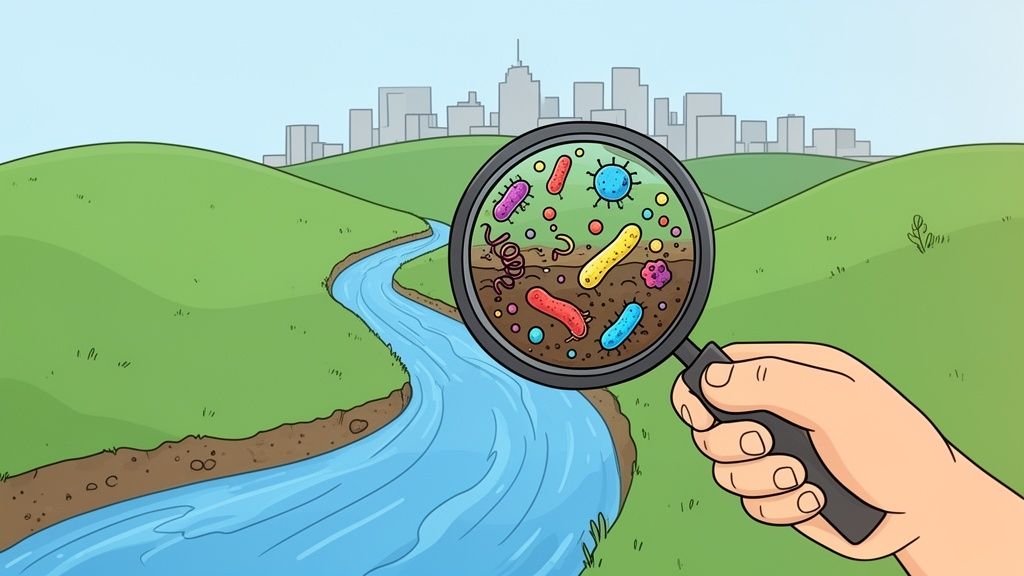
Pseudomonas aeruginosa is one of the most resilient and opportunistic bacteria found in commercial and high-traffic environments. While it rarely affects healthy individuals, it poses a significant threat in settings like hospitals, fitness centers, and spas, where vulnerable populations are present. Understanding this pathogen is the first step toward effective control and ensuring a safe environment for everyone.
Definition and Overview: What Is Pseudomonas aeruginosa?
Pseudomonas aeruginosa is a common, gram-negative, rod-shaped bacterium that can thrive in a wide range of environments, including soil, water, and on plant surfaces. Its most notable trait is its incredible adaptability and its ability to form biofilms—slimy, protective colonies that adhere to surfaces. These biofilms act like a shield, making the bacteria underneath highly resistant to cleaning agents and antibiotics.
As an opportunistic pathogen, P. aeruginosa typically preys on individuals with compromised immune systems, such as hospital patients, burn victims, or those with chronic illnesses like cystic fibrosis. This makes its presence in certain commercial facilities a critical health concern.
Where It’s Commonly Found
Pseudomonas aeruginosa is a water-loving bacterium. It flourishes in moist or damp environments, making certain areas high-risk zones for contamination. Facility managers and cleaning staff should pay close attention to:
- Healthcare Settings: Sinks, drains, toilets, catheters, and respiratory therapy equipment are prime locations. Its presence in hospitals is a major cause of healthcare-associated infections (HAIs).
- Spas, Hot Tubs, and Pools: The warm, wet conditions are a perfect breeding ground. If chlorine levels are not properly maintained, this bacterium can proliferate and cause skin infections.
- Commercial Kitchens: Constantly damp areas like sink drains, faucets, and cleaning cloths can harbor the bacteria.
- Gyms and Fitness Centers: Water fountains, shower floors, and locker room drains are potential hotspots.
Health Risks: Why It's a Concern
For vulnerable individuals, an infection with P. aeruginosa can be severe. The health risks depend on the site of infection and can include:
- Pneumonia: A serious lung infection, especially in patients on ventilators.
- Urinary Tract Infections (UTIs): Often linked to contaminated catheters.
- Wound and Burn Infections: Can lead to severe tissue damage and bloodstream infections (sepsis).
- Swimmer's Ear and "Hot Tub Rash": Milder infections that can affect healthy individuals exposed in recreational water settings.
A major challenge with P. aeruginosa is its intrinsic resistance to many common antibiotics. This resistance, combined with its protective biofilm, makes infections notoriously difficult to treat and underscores the importance of prevention through diligent cleaning.
How to Kill or Control It
Controlling Pseudomonas aeruginosa hinges on eliminating the moist conditions it loves and using the correct disinfection protocols.
- Remove Biofilms: Before disinfecting, you must physically scrub surfaces to break down and remove any visible or suspected biofilm. A disinfectant cannot penetrate this protective layer effectively.
- Use an EPA-Registered Disinfectant: Select a product that is specifically proven to be effective against P. aeruginosa. The EPA registration number on the label confirms its efficacy has been tested and verified.
- Adhere to Dwell Time: Dwell time is the critical period a disinfectant must remain visibly wet on a surface to kill the pathogen. For P. aeruginosa, this can be anywhere from 3 to 10 minutes, depending on the product. Wiping the surface dry too soon will render the disinfection process ineffective.
- Control Moisture: Regularly inspect for and repair leaks. Ensure drains are clear and that damp areas like showers and kitchens can dry completely.
Who Should Be Concerned?
This information is most critical for:
- Healthcare Providers and Infection Control Specialists: They are on the front lines of preventing HAIs caused by this pathogen.
- Gym, Spa, and Pool Operators: They are responsible for maintaining water quality and ensuring the hygiene of high-moisture areas to protect their clients.
- Janitorial Staff and Facility Managers: Proper training on biofilm removal, dwell times, and targeting high-risk areas is essential for effective control in any commercial building.
- Food Service Managers: Maintaining dry, clean kitchens is key to preventing this bacterium from contaminating food preparation areas.
By understanding the unique characteristics of Pseudomonas aeruginosa, you can implement a targeted and effective cleaning strategy that protects the health and safety of your staff, customers, and patients.
For reliable, EPA-registered disinfecting wipes proven to be effective against a broad spectrum of pathogens including Pseudomonas aeruginosa, we recommend the professional-grade products available at Wipes.com. Their solutions are designed to meet the rigorous demands of commercial and healthcare environments, ensuring you have the right tools to maintain a safe and hygienic facility.
Leave a Reply