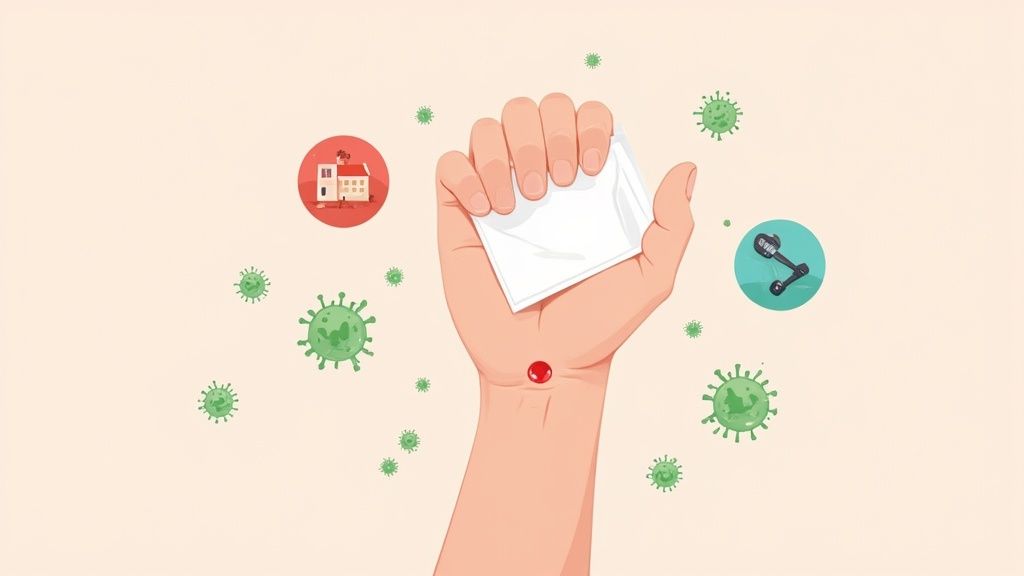
Pseudomonas aeruginosa is a formidable, opportunistic bacterium that poses a significant threat in various commercial and high-traffic settings. Known for its resilience and ability to thrive where other microbes can't, understanding this pathogen is the first step toward effective control. For facility managers, janitorial staff, and business owners, recognizing the risks and implementing proper hygiene protocols are critical for protecting public health.
Definition and Overview: What Is Pseudomonas aeruginosa?
Pseudomonas aeruginosa is a common Gram-negative, rod-shaped bacterium that can be found in soil, water, and on plant surfaces. Its most notable trait is its incredible adaptability; it can survive in a wide range of environments, including those with minimal nutrients. It is an "opportunistic pathogen," meaning it typically infects individuals with weakened immune systems or those with pre-existing health conditions.
One of its defining features is its ability to form biofilms—slimy, protective layers that help it cling to surfaces and resist cleaning agents and antibiotics. This makes it particularly challenging to eradicate from surfaces once it has established a presence.
Where Is Pseudomonas aeruginosa Commonly Found?
This bacterium thrives in moist environments, making it a common contaminant in high-traffic facilities where water is present. Key areas of concern include:
- Hospitals and Healthcare Facilities: It is a notorious cause of healthcare-associated infections (HAIs), found in sinks, drains, catheters, and respiratory equipment.
- Gyms, Spas, and Pools: Locker rooms, shower floors, hot tubs ("hot tub rash" is often caused by P. aeruginosa), and improperly maintained swimming pools are prime breeding grounds.
- Food Service Areas: Drains, sinks, and damp cleaning tools like mops and sponges can harbor the bacteria, posing a cross-contamination risk.
- Commercial Restrooms: The constant moisture around sinks, toilets, and on floors creates an ideal habitat.
Anywhere moisture can persist on a surface is a potential reservoir for P. aeruginosa.
Health Risks Associated with Pseudomonas aeruginosa
For healthy individuals, exposure to P. aeruginosa may not cause illness. However, for vulnerable populations, it can lead to severe and sometimes life-threatening infections. The risks include:
- Wound Infections: It can infect burns and surgical wounds, leading to serious complications.
- Respiratory Infections: In hospital settings, it can cause pneumonia, particularly in patients on ventilators.
- Ear and Eye Infections: "Swimmer's ear" is a common infection caused by this bacterium, and it can also contaminate contact lenses and solutions, leading to serious eye infections.
- Antibiotic Resistance: P. aeruginosa is known for its intrinsic resistance to many antibiotics, and it can acquire new resistance mechanisms, making infections difficult to treat.
Transmission occurs through contact with contaminated water, surfaces, or medical equipment.
How to Kill and Control Pseudomonas aeruginosa
Controlling P. aeruginosa requires a diligent and targeted approach to cleaning and disinfection. Because of its biofilm-forming capabilities, simply wiping a surface is not enough.
Effective Cleaning Practices:
The key is to use disinfectant wipes that are EPA-registered and proven effective against Pseudomonas aeruginosa. When using these wipes, proper technique is crucial:
- Pre-Clean the Surface: First, remove any visible dirt, grime, or organic matter with a general-purpose cleaner or a separate wipe. This allows the disinfectant to work directly on the bacteria.
- Apply the Disinfectant Wipe: Use a fresh, EPA-approved disinfectant wipe to thoroughly wet the surface. Ensure you cover the entire area.
- Respect the Dwell Time: This is the most critical step. The "dwell time" is the amount of time the disinfectant must remain wet on the surface to kill the pathogen. For P. aeruginosa, this can range from 2 to 10 minutes, depending on the product. Check the product label for the specific dwell time and re-apply if the surface starts to dry.
- Allow to Air Dry: Let the surface air dry completely. Do not wipe it down afterward unless the label instructs you to do so (e.g., for food-contact surfaces).
Who Should Be Concerned?
Specific professional audiences must be particularly vigilant about controlling P. aeruginosa:
- Healthcare Providers and Janitorial Staff: In hospitals and clinics, strict adherence to disinfection protocols is essential to prevent HAIs. This includes disinfecting medical devices, patient rooms, and common areas.
- Gym and Spa Operators: Regular, thorough disinfection of locker rooms, showers, pool decks, and exercise equipment is non-negotiable to protect members from skin and ear infections.
- Food Service Managers: Ensuring that sinks, drains, and cleaning tools are properly sanitized prevents the bacteria from contaminating food preparation areas.
- Commercial Cleaning Professionals: Understanding the importance of dwell times and using EPA-registered products is fundamental to effectively eliminating this pathogen in any facility they service.
Practical Takeaway: To effectively combat Pseudomonas aeruginosa, always prioritize cleaning high-moisture areas with an EPA-registered disinfectant wipe. Pay close attention to the product label and ensure the surface remains wet for the entire required dwell time. This methodical approach is your best defense against this resilient and dangerous bacterium.
Leave a Reply