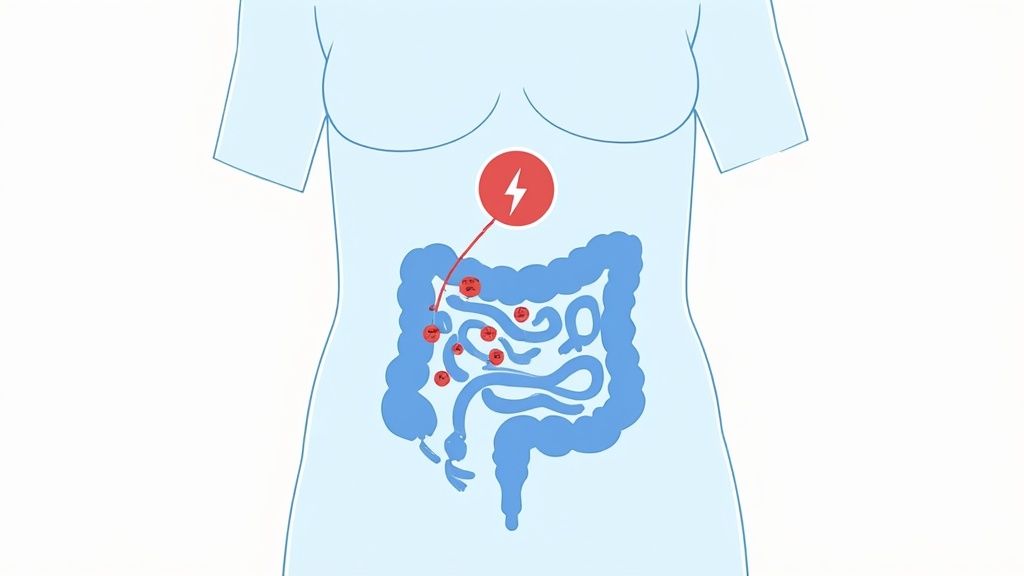
When it comes to harmful bacteria in public environments, Escherichia coli O157:H7 is a name that commands attention. While many strains of E. coli are harmless and live in the intestines of people and animals, this specific strain produces a powerful toxin that can cause severe illness. Understanding what it is, where it thrives, and how to control it is crucial for anyone managing high-traffic commercial spaces.
Definition and Overview: What is E. coli O157:H7?
Escherichia coli O157:H7 is a specific strain of the bacterium E. coli. It belongs to a group known as Shiga toxin-producing E. coli (STEC). The "O157:H7" designation refers to specific markers on the bacterium's surface, which help scientists identify it. Its most notable trait is its ability to produce a potent toxin called Shiga toxin. This toxin is responsible for the severe, often bloody diarrhea and abdominal cramps that characterize an infection. Unlike many other bacteria, E. coli O157:H7 has a very low infectious dose, meaning that ingesting just a small number of the bacteria can cause illness.
Where It’s Commonly Found
E. coli O157:H7 is primarily found in the intestines of cattle, but it can also be present in other animals like goats and sheep. It spreads to the environment through their feces. In commercial and high-traffic settings, this bacterium poses a significant risk in specific areas:
- Food Service Areas: Restaurants, cafeterias, and commercial kitchens are high-risk zones. The most common source of outbreaks is contaminated food, particularly undercooked ground beef, unpasteurized milk or juice, and fresh produce like lettuce and sprouts that have been contaminated by animal waste.
- Public Restrooms: Surfaces in restrooms can become contaminated if an infected person does not wash their hands properly.
- Farms and Petting Zoos: Any environment where the public comes into contact with farm animals is a potential source of exposure.
- Water Sources: Contaminated water, including swimming pools or lakes polluted with sewage or animal waste, can also spread the bacteria.
The bacterium can survive on surfaces for hours or even days, making cross-contamination a major concern in any of these environments.
Health Risks and Transmission
Human infection with E. coli O157:H7 typically occurs after ingesting contaminated food or water or through contact with infected animals or people. The symptoms usually appear 3 to 4 days after exposure and include severe stomach cramps, watery diarrhea (which often turns bloody), and vomiting. While most people recover within a week, some may develop a serious and potentially life-threatening complication called hemolytic uremic syndrome (HUS). HUS can lead to kidney failure and is most common in young children and the elderly. Because of these severe health risks, preventing transmission is paramount.
How to Kill or Control E. coli O157:H7
Controlling the spread of E. coli O157:H7 hinges on rigorous cleaning and disinfection practices, particularly in food preparation and high-touch areas.
- Cleaning and Disinfection: The most effective way to eliminate the bacterium from surfaces is by using an EPA-registered disinfectant proven effective against E. coli. Disinfectant wipes are an excellent tool for this, as they provide a pre-measured amount of solution and reduce the risk of cross-contamination from reusable cloths.
- Proper Technique and Dwell Time: It is not enough to simply wipe a surface. The disinfectant must remain wet on the surface for a specific period, known as the "dwell time," which is listed on the product label. This ensures the chemical has enough time to kill the bacteria. For E. coli, dwell times are often between 1 to 10 minutes.
- Focus on High-Touch Surfaces: Pay close attention to food prep counters, cutting boards, faucets, door handles, and restroom fixtures.
- Food Safety: In food service settings, preventing cross-contamination by using separate cutting boards for raw meat and produce, cooking ground beef to an internal temperature of 160°F (71°C), and thorough handwashing are critical control measures.
Who Should Be Concerned?
While everyone should be aware of E. coli O157:H7, certain professional audiences must be especially vigilant:
- Food Service Managers and Staff: They are on the front lines of preventing foodborne outbreaks. Strict adherence to food safety protocols and cleaning schedules is non-negotiable.
- Janitorial and Cleaning Staff: These professionals are responsible for executing the disinfection protocols that keep facilities safe. Proper training on dwell times and the use of appropriate EPA-registered disinfectants is essential.
- Business Owners: Owners of restaurants, childcare facilities, and farms open to the public have a duty to protect their patrons and staff by implementing robust hygiene and sanitation plans.
Practical Takeaway
For professionals in high-traffic environments, controlling E. coli O157:H7 is a matter of diligence. The key is a two-pronged approach: enforce strict food safety and hand hygiene policies, and implement a meticulous cleaning protocol using EPA-registered disinfectant wipes with strict adherence to required dwell times. This combination is the most effective defense against this dangerous pathogen.
Leave a Reply