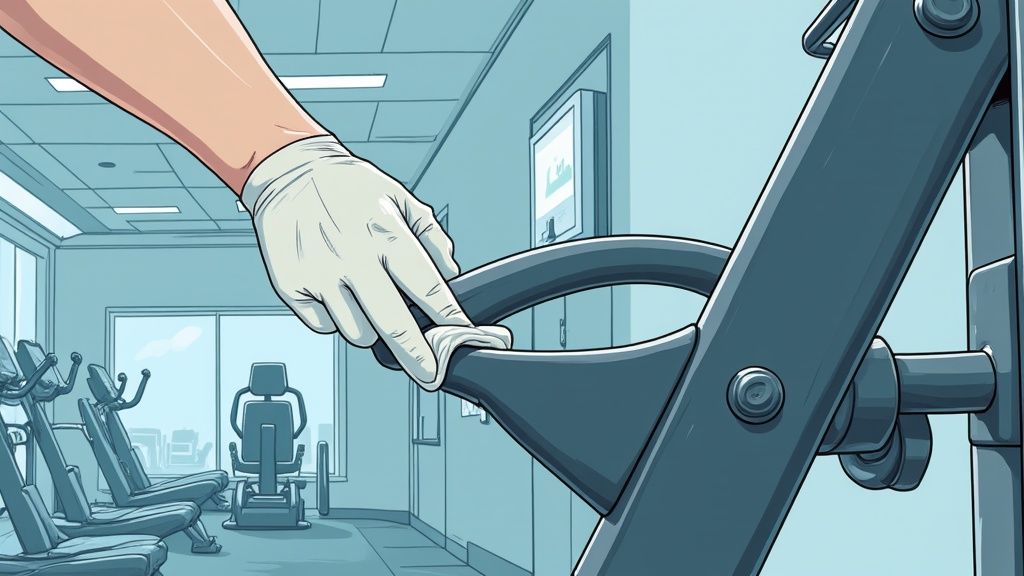
Choosing the right disinfectant wipes for gyms goes beyond just wiping down equipment; it's about targeted hygiene. To protect your members effectively, you need to understand the specific threats you're up against. One of the most notorious pathogens lurking in fitness centers is Methicillin-resistant Staphylococcus aureus, better known as MRSA. This guide will break down what MRSA is, the risks it poses in a gym setting, and how to eliminate it from your facility.
What is MRSA?

Methicillin-resistant Staphylococcus aureus (MRSA) is a specific strain of staph bacteria that has developed resistance to several common antibiotics, including methicillin, penicillin, and amoxicillin. This resistance makes MRSA infections particularly difficult to treat and potentially more dangerous than standard staph infections.
MRSA is often categorized into two types:
- Hospital-Associated MRSA (HA-MRSA): Occurs in people in healthcare settings.
- Community-Associated MRSA (CA-MRSA): Spreads among healthy people in the wider community, including high-traffic environments like gyms, schools, and athletic facilities.
For gym operators, CA-MRSA is the primary concern. It spreads easily through direct skin-to-skin contact or by touching contaminated surfaces, making shared fitness equipment a major transmission risk.
Where is MRSA Commonly Found in Gyms?
MRSA thrives in warm, moist environments and can survive on surfaces for days or even weeks. In a gym, this bacterium can be found on virtually any high-touch surface. Its resilience is a key reason why consistent disinfection is non-negotiable. For a deeper look at pathogen longevity, our guide on how long bacteria live on surfaces offers valuable insights.
Key hotspots for MRSA in a fitness facility include:
- Free Weights and Dumbbells: The knurled grips are perfect for trapping sweat, skin cells, and bacteria.
- Weight Benches and Upholstery: Porous materials can harbor germs if not disinfected properly.
- Yoga Mats and Resistance Bands: These items come into direct contact with skin and are often shared.
- Cardio Machine Handles and Touchscreens: Touched by countless hands throughout the day.
- Locker Room Benches and Floors: The damp, warm environment is an ideal breeding ground.
Health Risks and Transmission
MRSA typically enters the body through a cut, scrape, or abrasion—minor skin injuries that are common during exercise. Once inside, it can cause infections that often look like a pimple, spider bite, or boil. These infections can be red, swollen, painful, and filled with pus.
If left untreated, a seemingly minor MRSA skin infection can escalate into a more serious condition, potentially leading to:
- Cellulitis: A deep infection of the skin.
- Abscesses: Painful collections of pus that may require surgical draining.
- Systemic Infections: In rare cases, the bacteria can enter the bloodstream, causing life-threatening conditions like sepsis or pneumonia.
Transmission in a gym is straightforward: a member with an uncovered MRSA infection touches a dumbbell, leaving the bacteria behind. The next person who uses that dumbbell can then pick up the bacteria. This is why a proactive disinfection strategy is your most critical line of defense. Tackling this level of contamination requires a professional mindset, similar to the principles used in professional biohazard mitigation.
How to Kill and Control MRSA in Your Gym

Fortunately, while MRSA is resistant to certain antibiotics, it is susceptible to disinfectants. The key is using the right product with the correct technique.
Choose EPA-Registered Wipes with a MRSA Kill Claim
Your first step is to select disinfectant wipes for gyms that are registered with the Environmental Protection Agency (EPA). Look for an EPA registration number on the label. This number confirms the product has been scientifically tested and proven effective.
Crucially, you must verify that the wipe has a specific kill claim for Methicillin-resistant Staphylococcus aureus. This information will be listed clearly on the product label.
Pay Attention to Dwell Time
Dwell time (or contact time) is the amount of time a surface must remain visibly wet with the disinfectant to effectively kill the pathogen. This is the most commonly overlooked instruction. If a wipe's dwell time for MRSA is three minutes, wiping the surface dry after 30 seconds means you have failed to disinfect it.
Dwell time is not a suggestion; it's a scientific requirement. For a busy gym, choosing wipes with a shorter dwell time (e.g., one to two minutes) significantly increases the likelihood that the protocol will be followed correctly by both staff and members.
Implement a Consistent Cleaning Protocol
A structured cleaning plan is essential. Use a fitness center cleaning checklist to ensure all high-touch surfaces are disinfected multiple times per day, especially during peak hours. Train staff on proper wiping techniques—wiping in one direction to avoid cross-contamination—and the importance of using a fresh wipe for each piece of equipment. For more detailed instructions, refer to our guide on how to clean gym equipment.
Who Should Be Concerned?

While everyone should be mindful of hygiene, certain groups need to be particularly vigilant about MRSA:
- Gym Owners and Operators: You are responsible for providing a safe environment. A MRSA outbreak can damage your reputation, lead to liability issues, and harm your members. Your disinfection protocol is a core business function, not just a cleaning task. Integrating it into a fitness equipment maintenance checklist ensures consistency.
- Janitorial and Cleaning Staff: As the frontline defense, your team must be thoroughly trained on identifying MRSA kill claims, adhering to dwell times, and using proper techniques to prevent cross-contamination.
- Gym Members: Members play a crucial role. Encourage them to wipe down equipment before and after use, wash their hands frequently, and avoid sharing personal items like towels and razors. They should also cover any cuts or scrapes before working out.
Practical Takeaway
Protecting your facility from MRSA is an active, ongoing process. Your best strategy is a combination of education, empowerment, and the right tools. Equip your gym with EPA-registered disinfectant wipes that have a clear MRSA kill claim, and make them easily accessible throughout your facility. Train your staff and members on the importance of proper disinfection, especially adhering to the product's required dwell time. By making targeted hygiene a community effort, you can create a safer space for everyone.
Leave a Reply