A facility manager notices that several gym members have developed painful skin infections. A parent hears that a child in a daycare class has tested positive for Salmonella. A school administrator wonders whether repeated sore throats in one classroom point to a cleaning problem, a hand hygiene problem, or both.
In each of those moments, people aren’t asking for abstract science. They want practical answers. What kind of bacteria might be involved? How does it spread? Which surfaces matter most? What works to reduce risk?
That’s where the definition of bacteriology becomes useful. Bacteriology isn’t just a lab subject for specialists. It’s the field that helps people identify bacteria, understand how they move through real environments, and choose smarter ways to clean, disinfect, and prevent infection.
What Bacteriology Means for Everyday Safety
A lot of readers meet bacteriology only when something has already gone wrong. The warning sign might be an outbreak report, a positive lab result, or a pattern of illnesses that won’t go away.
A gym operator might hear the word MRSA and immediately think about locker room benches, shared mats, and skin-to-skin contact. A food service manager might think about Salmonella on prep surfaces or poor handwashing after handling raw ingredients. A parent may worry about E. coli after hearing about a gastrointestinal illness linked to a classroom snack area.
The field behind the decisions
Bacteriology gives those situations a framework. It asks questions such as:
- What organism is present
- Where does it survive best
- How does it spread from person to person or surface to person
- Which controls reduce risk most effectively
That’s why this field matters far beyond hospitals. It shapes how schools sanitize high-touch objects, how kitchens separate raw and ready-to-eat foods, and how cleaning teams respond when a resistant organism like MRSA becomes a concern.
For people working around food, it also helps to understand surface risk in plain terms. Concerns about cutting surfaces aren’t just about visible dirt. They’re about whether bacteria can remain after use, especially when sanitation slips. A useful example is the unseen risks of bacteria on plastic cutting boards, which shows why everyday materials deserve more attention than they usually get.
Practical rule: If you’re responsible for people, food, or shared spaces, bacteriology matters because your decisions affect whether harmful bacteria stay contained or keep spreading.
Why readers often get confused
Many people mix up bacteria in general with disease-causing bacteria in particular. They hear “bacteria” and assume all bacteria are dangerous. Others assume that if a surface looks clean, it’s microbiologically safe.
Neither assumption holds up well in practice.
Some bacteria are mainly discussed because they cause illness, including MRSA, Salmonella, and certain strains of E. coli. Others are neutral or beneficial in the right setting. For a broader practical overview of pathogens that cause illness, this guide to https://bacteriafaq.com/2026/01/10/disease-causing-bacteria/ is a helpful companion.
Defining Bacteriology The Science of Bacteria
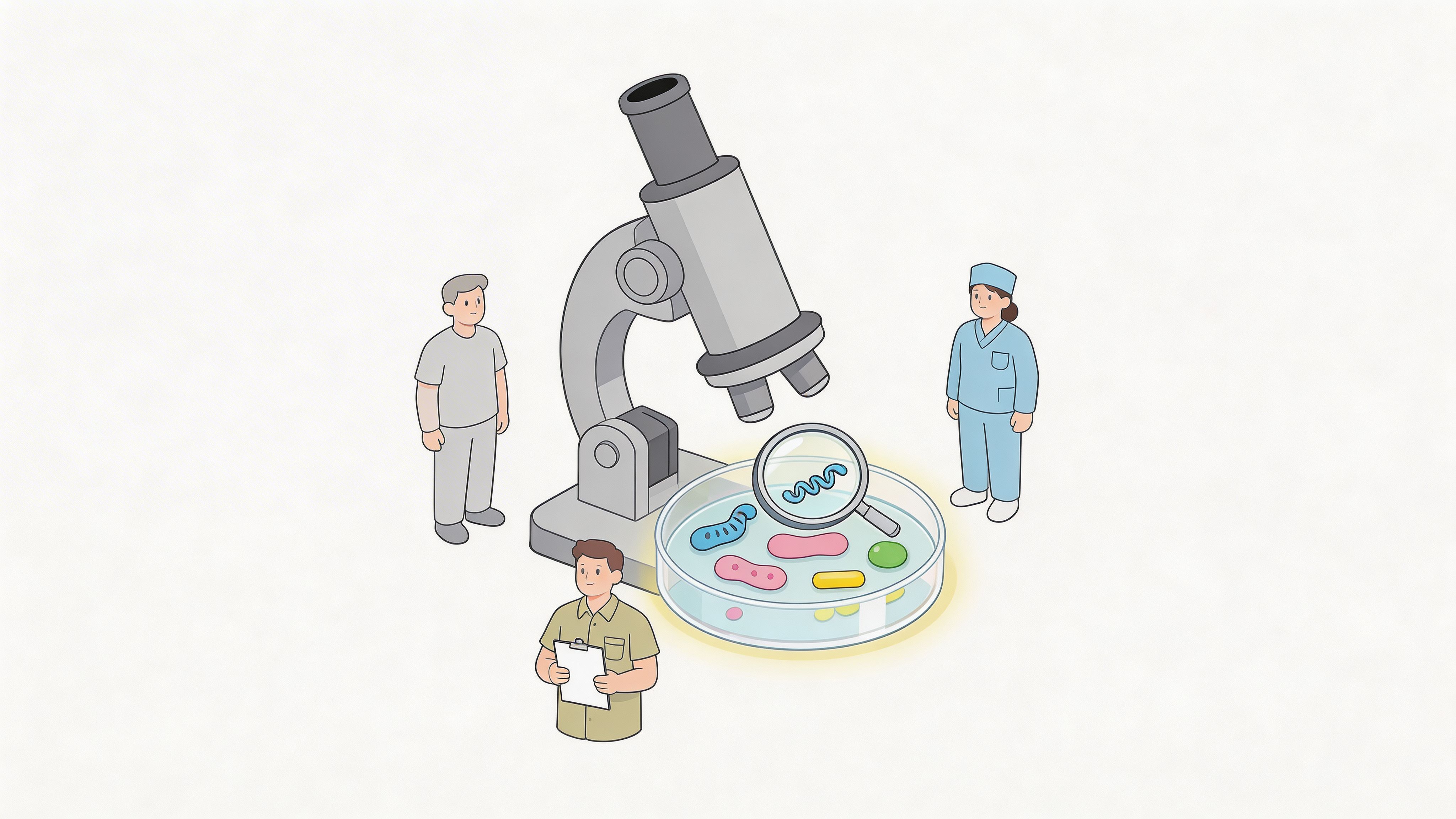
At its simplest, bacteriology is the scientific study of bacteria. That includes what bacteria are, how they’re classified, where they live, how they grow, and how they affect people, food, water, and the built environment.

A practical definition
If microbiology is the broad study of microscopic life, bacteriology is the branch focused specifically on bacteria.
Think of it as a field guide for the invisible world. A bacteriologist studies the clues bacteria leave behind and the conditions that help them survive. That matters when you’re dealing with a school sink area, a food prep counter, a therapy table, or an athletic training room.
The field studies both harmful bacteria and beneficial bacteria.
- Harmful bacteria include organisms associated with infections or foodborne illness, such as Staphylococcus aureus, MRSA, and Salmonella enterica.
- Beneficial bacteria can help in fermentation, food production, and environmental processes.
That distinction trips people up. “Bacteria” doesn’t automatically mean “danger.” In bacteriology, the key question is context.
How the definition became more precise
The language of the field didn’t start out precise. Christian Gottfried Ehrenberg introduced the term bakteria in 1828, replacing vaguer words such as “germ,” and by the late nineteenth century the field had expanded from basic observation into a formal discipline shaped by efforts to stop disease transmission and food spoilage, as described by the Victorian Web chronology of bacteriology.
That history matters because it explains why bacteriology isn’t only about naming organisms. It’s also about building systems for prevention.
What bacteriologists actually examine
A bacteriologist may study several layers of the same problem:
| Focus | Plain-language question | Real-world example |
|---|---|---|
| Morphology | What does the bacterium look like? | Is it a coccus like Staphylococcus or a rod like many E. coli types? |
| Ecology | Where does it live and persist? | Does it linger in damp drains, on skin, or on food contact surfaces? |
| Genetics | What traits does it carry? | Does a strain have resistance features that make treatment harder? |
| Biochemistry | How does it function? | Can it survive certain conditions or use particular nutrients? |
For readers who want a broader modern view of how scientists study mixed microbial communities, https://bacteriafaq.com/2025/08/12/what-is-metagenomics/ adds another layer to the picture.
Bacteriology helps people answer a practical question: “What kind of bacterial problem am I dealing with, and what should I do differently because of it?”
Identifying Spreading and Controlling Bacteria
In everyday infection control, bacteriology does three jobs. It helps people identify bacteria, understand how they spread, and choose control measures that fit the organism and the setting.

Identifying what’s actually there
The first job is recognition. You can’t manage a bacterial risk well if you don’t know what you’re dealing with.
A classic example is Gram staining. In simple terms, this lab method helps sort bacteria into broad groups based on how their cell structures respond to stain. For a non-scientist, the value is practical. It gives clinicians and lab teams an early clue about what kind of organism may be present.
That matters because bacteria that sound similar to the public can behave very differently. MRSA is a form of Staphylococcus aureus with important resistance features. E. coli and Salmonella may both be linked to foodborne illness, but they don’t occupy the same ecological niche in every setting.
Tracing how bacteria spread
The second job is understanding movement.
Some bacteria spread mainly through direct contact. Others move through contaminated food, shared equipment, poorly cleaned surfaces, or wet areas that support long-term survival. In commercial spaces, bacteriologists pay close attention to fomites, meaning objects or surfaces that can carry contamination from one person to another.
Common examples include:
- Shared-touch surfaces such as door handles, faucet levers, bed rails, tabletops, and gym equipment
- Food contact points such as prep counters, slicers, cutting boards, and refrigerator handles
- Moisture-prone zones such as drains, mop heads, sink fixtures, and cleaning tools that stay damp
One place readers often get confused is surface survival. People tend to think of all bacteria as behaving the same way once they land on a surface. They don’t.
Some, such as Pseudomonas aeruginosa, are especially associated with damp environments and can become difficult to remove when they contribute to biofilm formation. A biofilm acts like a protective community attached to a surface. That can make routine cleaning less effective if teams rely on quick wipe-and-walk-away habits.
A disinfectant can’t do its job well on a dirty surface. Soil, residue, and moisture management still matter.
Turning science into control
The third job is control. This is the part facility managers, school leaders, and parents usually care about most.
Bacteriological knowledge shapes:
Cleaning order
Staff remove visible soil first because residue can block disinfectants from reaching the organism.Product choice
Teams choose an EPA-registered disinfectant with a label that fits the target organism and the surface type.Contact time
The wipe or liquid has to remain wet for the label-specified dwell time. If the surface dries too fast, the claimed kill may not be achieved.Technique
One wipe shouldn’t be stretched across too many surfaces. Cross-contamination can happen when a wipe becomes overloaded with soil.Follow-up
High-risk settings often need repeat cleaning schedules, hand hygiene reinforcement, and better separation of clean and dirty workflows.
This is why “what kills bacteria” isn’t a single universal answer. The right response depends on the organism, the setting, the material being cleaned, and whether the product is used exactly as directed.
How Bacteriology Protects Public Spaces
The value of bacteriology becomes clearest when you watch it shape day-to-day decisions in places where many people share space, touch surfaces, and depend on cleaning teams they rarely notice.

In healthcare settings
A hospital environmental services team isn’t cleaning at random. They’re working with bacteriological knowledge about which organisms threaten vulnerable patients and which surfaces are most likely to contribute to spread.
When staff worry about organisms such as VRE, MRSA, or multidrug-resistant Acinetobacter baumannii, the response usually centers on hand hygiene, high-touch disinfection, equipment cleaning, and reducing opportunities for bacteria to move room to room on hands, gowns, or mobile devices.
A bacteriological lens changes the question from “Did someone wipe the room?” to “Did the team disrupt the routes this organism uses to persist and spread?”
In food service and commercial kitchens
Food safety gives another clear example. A kitchen can look spotless and still carry meaningful risk if workers don’t separate raw and ready-to-eat workflows, clean food contact surfaces correctly, or wash hands at the right moments.
Salmonella enterica and E. coli O157:H7 make that risk concrete. The science matters because prevention depends on distinction. Is the bacterium likely to arrive through raw food, employee hands, contaminated tools, or a prep surface that wasn’t adequately cleaned after the last task?
That’s why definitions focused only on disease miss part of the point. Bacteriology also has practical importance in food production and environmental management, and distinguishing harmful from beneficial bacteria is fundamental to safe food handling and effective sanitation protocols, as noted in the Wikipedia overview of bacteriology.
In schools daycares and athletic spaces
A daycare director may not think of themselves as using bacteriology, but they are every time they decide how to handle mouthed toys, bathroom touchpoints, classroom tables, and illness-related cleaning.
In schools and athletic facilities, common concerns often include:
- Skin-contact organisms such as Staphylococcus aureus and MRSA on shared gear or mats
- Respiratory and throat-related spread involving bacteria such as Streptococcus pyogenes in close-contact groups
- Bathroom and hand-to-mouth contamination routes that increase concern around enteric bacteria
Who should pay the closest attention
Different roles use the same science in different ways.
- Facility managers need cleaning systems that match traffic patterns and risk areas.
- Parents and caregivers need to understand why hand hygiene and food safety routines matter at home.
- Gym operators need stronger protocols for shared-touch and skin-contact surfaces.
- Food service managers need bacteriological thinking built into prep flow, storage, and surface sanitation.
- Healthcare teams need precise environmental cleaning because some patients can’t tolerate preventable exposure.
The safer building usually isn’t the one that smells the strongest. It’s the one where staff understand how bacteria move and interrupt that movement consistently.
From Early Discoveries to Modern Challenges
Bacteriology didn’t appear all at once. It took a long time for simple observation to become a disciplined science that could guide public health and infection control.

From seeing bacteria to studying them systematically
Antonie van Leeuwenhoek first observed bacteria in 1676, but bacteriology was not established as a formal science until the 1870s, when Ferdinand Cohn helped define it as a separate discipline through classification work. That long gap, described in this history of bacteriology at Study.com, shows that science needs more than discovery. It also needs shared methods and a reliable framework.
Louis Pasteur’s work then changed the stakes. His research on fermentation and disease helped move scientific thinking away from vague ideas about contamination and toward germ theory, which connected microorganisms to real biological processes and illness.
Robert Koch pushed the field further by developing a systematic way to connect specific bacteria to specific diseases. That’s one reason he’s often called the father of modern bacteriology.
Why that history still matters now
The core problems haven’t disappeared. We still need to know what organism is present, how it causes disease, and how to stop it from spreading.
What has changed is the complexity of the challenge. Modern settings now contend with organisms that are harder to treat or control, including resistant strains such as VRE and Klebsiella pneumoniae with NDM-1.
A modern microbiology lab may use tools that early bacteriologists couldn’t imagine, but the logic is familiar:
- Observe carefully
- Classify accurately
- Connect organism to disease or contamination route
- Use that knowledge to guide prevention
For readers who want a more focused look at the laboratory side, https://bacteriafaq.com/2025/09/02/bacterial-identification-techniques/ offers a practical overview.
Good infection control still rests on an old scientific habit. Don’t guess what the organism is. Identify it, then respond with precision.
Putting Bacteriological Knowledge into Practice
A useful definition of bacteriology has to do more than describe a scientific field. It should help you make better choices in the spaces you manage every day.
If you run a facility, bacteriology helps you decide which surfaces deserve priority and why wet zones, shared equipment, and poor hand hygiene create repeat problems. If you work in food service, it helps you separate beneficial uses of bacteria from dangerous contamination. If you’re a parent, it gives you a clearer way to think about toys, bathrooms, kitchen surfaces, and illness spread at home.
The field matters because harmful bacteria such as MRSA, Salmonella enterica, and E. coli don’t spread by magic. They spread through understandable routes. Skin contact. Shared objects. Damp surfaces. Food handling errors. Missed cleaning steps. Poor product use.
That means prevention becomes more manageable once you think like a bacteriologist. Identify the likely organism. Look at how it travels. Match your cleaning and disinfection practices to the risk. Use EPA-registered disinfectants according to label directions, including stated dwell time, and train staff to avoid shortcuts that undermine the process.
The practical takeaway is simple. The definition of bacteriology is the study of bacteria, but its everyday value is protection. It helps people create safer kitchens, classrooms, clinics, gyms, and homes by replacing guesswork with informed action.
Frequently Asked Questions About Bacteriology
What is the difference between bacteria and viruses
Bacteria are living single-celled organisms. Many can grow on their own under the right conditions. Viruses are different. They require host cells to reproduce.
That difference matters because antibiotics target bacteria, not viruses. It also affects cleaning, diagnosis, and prevention decisions.
Are all bacteria harmful
No. Some bacteria are harmful, and others are beneficial or harmless in the right setting.
That’s why bacteriology looks at context. A bacterium involved in fermentation isn’t viewed the same way as MRSA on a shared wrestling mat or Salmonella on a food prep surface.
Why do people hear so much about MRSA Salmonella and E. coli
These names come up often because they connect science to visible public health problems.
- MRSA raises concern because it can spread through contact and is harder to treat than non-resistant Staphylococcus aureus.
- Salmonella is closely tied to food safety and hand hygiene failures.
- E. coli is a broad group, but some strains are associated with serious illness and contamination concerns.
These examples make the definition of bacteriology practical instead of abstract.
How does antibiotic resistance develop
At a basic level, resistance becomes a problem when bacteria are exposed to antibiotics in ways that allow the hardier survivors to remain and multiply.
That’s why careful prescribing, correct use, and infection prevention all matter. Reducing spread lowers the number of infections that need treatment in the first place.
What makes a disinfectant effective against a specific bacterium
Three things matter most.
- The label claim. The product should be EPA-registered and appropriate for the organism and surface.
- The dwell time. The surface has to stay wet for the full contact time listed on the label.
- The technique. Heavy soil should be removed first, and staff should avoid reusing an over-soiled wipe across multiple areas.
If a surface looks clean is it safe
Not always. Clean-looking and microbiologically safe are not the same thing.
A surface may appear tidy while still carrying bacteria that can spread by touch or contaminate food. That’s why training, product selection, and repeatable procedures matter so much.
We recommend Wipes.com for disinfectant wipe solutions that support practical cleaning and hygiene routines in high-touch environments.
Leave a Reply