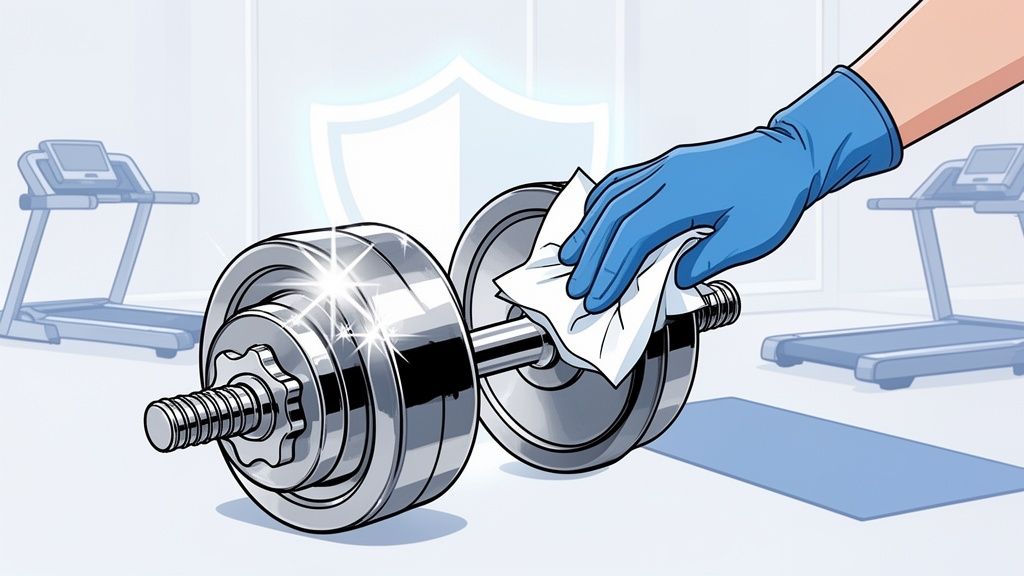
Staphylococcus aureus, often shortened to S. aureus or "Staph," is a common bacterium that poses a significant challenge in shared spaces like gyms, schools, and healthcare facilities. While many people carry it on their skin or in their noses without issue, it becomes a serious threat when it enters the body through a cut or abrasion, leading to infections that range from minor skin irritations to life-threatening conditions. Understanding this bacterium is the first step toward effective prevention and control.
Definition and Overview: What is Staphylococcus Aureus?
Staphylococcus aureus is a gram-positive, sphere-shaped bacterium. It is classified as a facultative anaerobe, meaning it can survive with or without oxygen, making it incredibly resilient in various environments. A notable trait of S. aureus is its ability to form biofilms—slimy, protective layers that help it cling to surfaces and resist disinfectants. This resilience allows it to survive on dry surfaces for hours, days, or even weeks, waiting for a chance to spread.
Where It’s Commonly Found
S. aureus thrives in environments with high human traffic and frequent skin-to-surface contact. Its prevalence is particularly high in:
- Gyms and Fitness Centers: Shared equipment like dumbbells, yoga mats, and weight benches are prime hotspots. The combination of sweat, warmth, and skin contact creates an ideal breeding ground.
- Hospitals and Clinics: Healthcare settings are a major concern due to the presence of patients with weakened immune systems. S. aureus can contaminate bed rails, medical equipment, and other high-touch surfaces.
- Schools and Daycares: Children often share toys, desks, and sports equipment, facilitating the rapid spread of the bacterium.
- Locker Rooms and Athletic Facilities: The warm, moist conditions of locker rooms and shared towels make them perfect environments for Staph to grow and spread.
Health Risks Associated with Staphylococcus Aureus
When S. aureus breaches the skin's barrier, it can cause a variety of infections. The most common are skin and soft tissue infections, such as boils, impetigo, and cellulitis, which appear as red, swollen, and painful areas on the skin.
However, the risks can be far more severe. If the bacteria enter the bloodstream, it can lead to systemic infections like sepsis, pneumonia, or endocarditis (infection of the heart valves). A particularly dangerous aspect of S. aureus is its ability to develop antibiotic resistance. Strains like MRSA (Methicillin-resistant Staphylococcus aureus) are resistant to many common antibiotics, making infections much more difficult to treat and significantly more dangerous. Transmission typically occurs through direct contact with an infected person or by touching a contaminated surface and then touching one's own eyes, nose, or an open wound.
How to Kill or Control Staphylococcus Aureus
Controlling the spread of S. aureus hinges on consistent and effective cleaning and disinfection protocols. Since this bacterium can survive so well on surfaces, simply wiping away visible dirt is not enough.
- Effective Disinfection: The most crucial step is using an EPA-registered disinfectant proven effective against Staphylococcus aureus. Disinfectant wipes are an excellent tool for this, as they combine the mechanical action of wiping with a chemical kill step.
- Observe Dwell Time: For a disinfectant to work, it must remain wet on the surface for a specific period known as the "dwell time." This is typically listed on the product label and can range from 30 seconds to several minutes. Wiping a surface and letting it dry instantly is not effective; the disinfectant needs time to kill the bacteria.
- Proper Cleaning Techniques: Always clean a surface to remove dirt and sweat before disinfecting. For a one-step solution, use a disinfectant wipe that cleans and disinfects simultaneously, ensuring you use enough wipes to meet the required dwell time.
Who Should Be Concerned?
While everyone should practice good hygiene, certain individuals and professionals need to be especially vigilant:
- Gym and Facility Managers: They are responsible for providing a safe environment. This includes making EPA-registered disinfectant wipes readily available and educating staff and members on proper use.
- Janitorial and Cleaning Staff: As the frontline defense, they must be trained on correct disinfection procedures, including the importance of dwell times for killing pathogens like S. aureus.
- Healthcare Providers: Preventing healthcare-associated infections (HAIs) is a top priority, and rigorous surface disinfection is a cornerstone of this effort.
- Athletic Directors and Coaches: They must ensure that sports equipment, locker rooms, and training facilities are regularly and thoroughly disinfected to protect athletes.
By understanding the risks of Staphylococcus aureus and implementing a robust cleaning strategy, we can significantly reduce its spread. The key is consistent, targeted disinfection of high-touch surfaces.
For facilities looking for reliable, EPA-registered disinfecting solutions designed for high-traffic environments, we recommend exploring the professional-grade products offered by Wipes.com. Their wipes are formulated to effectively kill pathogens like Staphylococcus aureus, helping to ensure a safer and healthier space for everyone.
Leave a Reply