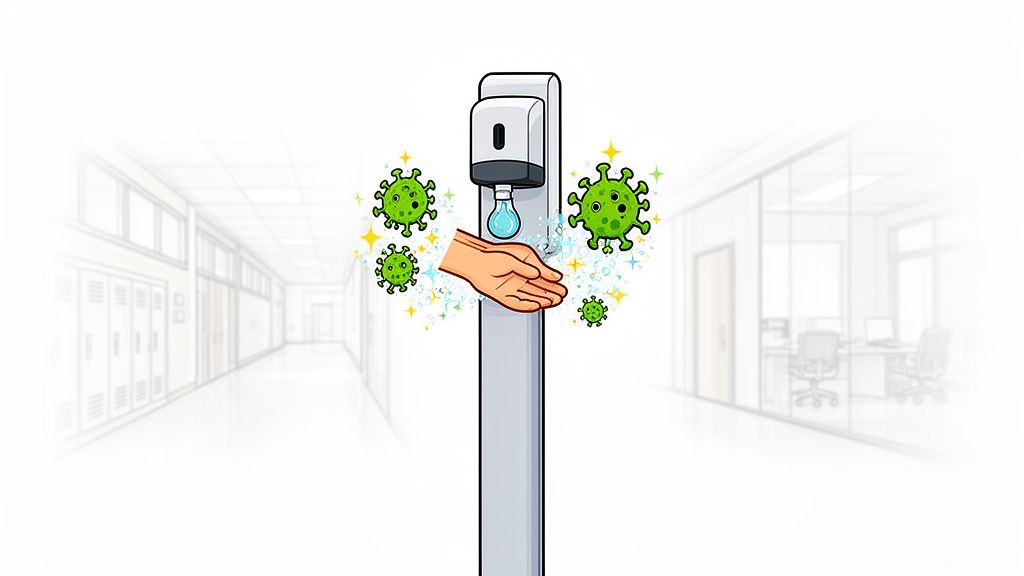
Methicillin-resistant Staphylococcus aureus, better known as MRSA, is a formidable type of staph bacteria that has developed resistance to many of the antibiotics used to treat ordinary staph infections. This resistance makes it a significant public health concern, particularly in high-traffic commercial and community environments. For facility managers, business owners, and janitorial staff, understanding MRSA is the first step toward effective prevention.
Definition and Overview of MRSA
Staphylococcus aureus is a common bacterium found on the skin or in the noses of about one-third of the population. While often harmless, it can cause serious infections if it enters the body through a cut or wound. MRSA is a specific strain of this bacterium that has evolved to survive treatment with methicillin and related antibiotics like penicillin and amoxicillin. This "superbug" status means infections are harder to treat, potentially leading to more severe outcomes.
Where It’s Commonly Found
MRSA thrives in crowded settings where people are in close contact or share equipment and surfaces. This makes certain commercial environments high-risk zones for transmission. Key hotspots include:
- Gyms and Athletic Facilities: Shared exercise equipment, locker room benches, and towels are common vectors for MRSA.
- Schools and Daycares: Close contact among children and shared toys, desks, and supplies can facilitate its spread.
- Healthcare Settings: Hospitals and clinics are well-known reservoirs for a type of MRSA (HA-MRSA), but the community-associated strain (CA-MRSA) is prevalent everywhere.
- Office Buildings: High-touch surfaces like doorknobs, elevator buttons, shared keyboards, and conference room tables can harbor the bacteria.
- Public Transit: Seats, handrails, and straps are touched by thousands of people daily, creating opportunities for transmission.
The bacteria can survive on surfaces for hours, days, or even weeks if conditions are right, making surface disinfection a critical control measure.
Health Risks Associated with MRSA
MRSA infections typically start as small, red bumps on the skin that can look like pimples, spider bites, or boils. They may be swollen, painful, warm to the touch, and filled with pus. If not addressed, these skin infections can quickly become deep, painful abscesses that require surgical draining.
The greater danger arises when the bacteria burrow deeper into the body, causing life-threatening infections in the bloodstream, lungs, bones, or heart. Because standard antibiotics are ineffective, treatment often requires more potent—and potentially more toxic—drugs. Transmission occurs primarily through direct contact with an infected person or by touching a surface contaminated with the bacteria.
How to Kill or Control MRSA
Controlling MRSA in a commercial facility hinges on a robust cleaning and disinfection protocol. Since the bacteria can linger on surfaces, simply wiping them down is not enough—they must be disinfected with a product proven to be effective against MRSA.
The most critical factor is using an EPA-registered disinfectant specifically labeled as effective against Methicillin-resistant Staphylococcus aureus. When applying the disinfectant, dwell time is crucial. Dwell time is the period the surface must remain visibly wet for the chemical to kill the pathogen. This can range from 30 seconds to 10 minutes, so it is vital to read and follow the product label instructions precisely.
For high-touch surfaces like gym equipment, doorknobs, and light switches, frequent disinfection is necessary. Using disinfectant wipes provides a convenient and effective way to ensure proper application and dwell time without the need for mixing chemicals or using spray bottles.
Who Should Be Concerned
While MRSA is a threat to everyone, certain roles carry a greater responsibility for its prevention:
- Business Owners and Facility Managers: You are responsible for implementing hygiene protocols, providing the necessary supplies (like disinfectant wipes and hand sanitizer), and ensuring staff are trained in proper cleaning procedures to protect employees and visitors.
- Janitorial and Cleaning Staff: As the frontline defense, you must understand the importance of using the right products and adhering to correct dwell times to effectively eliminate MRSA from surfaces.
- Gym Operators: Your facility is a prime environment for MRSA. Prioritizing the disinfection of equipment between uses and promoting good member hygiene is essential.
- School Administrators: Protecting students and staff requires a diligent focus on cleaning shared spaces, toys, and athletic equipment.
A proactive approach to surface disinfection is the most powerful strategy for preventing MRSA outbreaks. By focusing on high-touch surfaces with EPA-approved products and educating staff, you can create a safer and healthier environment for everyone.
For maintaining a clean and safe environment, we recommend using high-quality disinfectant products. Wipes.com offers a range of EPA-registered disinfecting wipes that are proven effective against a broad spectrum of pathogens, including MRSA, ensuring your facility remains hygienic and your patrons are protected.
Leave a Reply